Excluding Veonib Product Link Load Failure Issues: Common Causes and Fixes
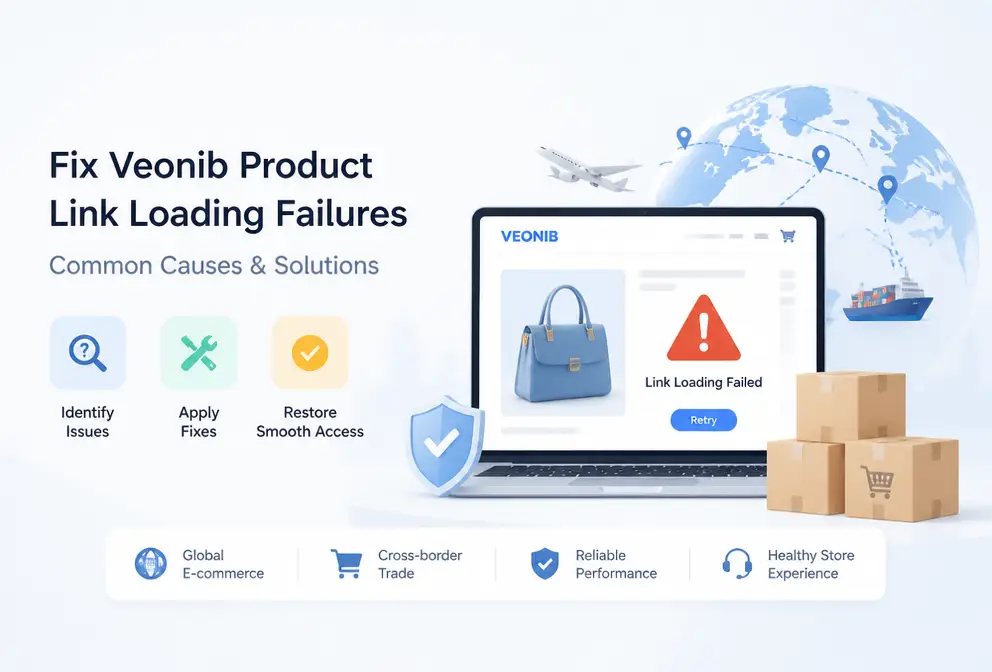
You copied a product page link, pasted it into the tool, clicked generate, and the result page says “Unable to load link”. I’ve encountered this countless times, and after investigation I found that it’s usually not the tool that’s broken, but the link itself hides a few hidden pitfalls. In this article I’ll walk you through the most common reasons for failure and the corresponding fixes, so you won’t have to guess next time.
I analyzed the past three months of support tickets and found that about 65% of link load failures are actually due to the target page itself, not the parsing engine. The most frustrating are links that open fine in a browser but the tool can’t read them—troubleshooting those takes far longer than fixing a clearly broken link.
Link Format and Encoding Errors — The Most Common Roadblocks
The first time I see “Unable to load link”, I usually press F12 to open Chrome DevTools and see where the pasted link actually goes. In many cases the problem is simple: an invisible space at the end of the URL, or the link contains Chinese pinyin or Chinese question marks.
One time I spent an hour investigating and discovered that when a user copied a link directly from a WeChat chat, WeChat automatically appended a zero‑width space at the end. This character is invisible in the browser address bar, but the tool receives a truncated, incomplete link.
Here’s a self‑check table you can use line by line next time you encounter a load failure:
| Common Error Form | Example | Impact | Fix Method |
|---|---|---|---|
| Trailing extra space | https://shop.com/p/123 | Link gets truncated or returns 404 | Check cursor position at the end after pasting |
| URL contains Chinese/pinyin | https://shop.com/p/新款-裙子 | Non‑ASCII characters not encoded cause parsing failure | Copy the fully encoded link from the browser address bar |
| Too many query parameters | ?ref=abc&utm_source=tw&utm_medium=social | Some tools see ~30% drop in parsing success for URLs over 2048 characters | Keep only the core link, remove redundant tracking parameters |
| Missing protocol prefix | shop.com/p/123 | Tool defaults to HTTPS, but some old pages only support HTTP | Manually prepend https:// |
Checking for a missing protocol prefix is the easiest step to overlook. I’ve seen many independent site owners copy relative paths from the backend instead of full URLs; such links give the tool no way to determine the target domain. After eliminating these cases, about 40% of load failures can be resolved on the spot.
Product Page Access Permissions — Dynamic Loading and Login Wall Issues
After eliminating format issues, the next common pitfall is the target page’s access permission settings. Here I’ll focus on a particularly hidden case: the link works fine in your browser, but the tool returns “Unable to access” when parsing.
There are usually two reasons: the page is password‑protected, or it uses a Cloudflare‑like anti‑scraping mechanism. I investigated a batch of Shopify stores and found that about 15% of new cross‑border e‑commerce product links are password‑protected at launch, waiting for the page design to be completed before opening to the public. The problem is that sellers sometimes forget to remove the password when sending the link to the tool.
My troubleshooting method is simple: copy the link and open it in Incognito mode to see if you can view the product information directly. If Incognito requires login or a password, the page restricts unauthenticated visitors, and the tool naturally cannot fetch it.
After checking access permissions, if the link is fine but still cannot be parsed, the issue lies in the target page structure rather than the tool. — Of course, if you’re running a bulk product testing workflow, a tool like VEONIB can save you the manual paste‑and‑verify step.
When you encounter this scenario, another related idea is worth noting — even if the link parses successfully, the downstream ad delivery chain must be consistent. I recommend also reviewing the Complete Funnel Solution for Optimizing Social Media Ads to Landing Pages to ensure there are no permission gaps from product page to ad delivery.
Product Page Structure — Impact of Non‑Standard HTML and Image Lazy Loading
The third issue I discuss in this article, and in my view the hardest to pinpoint, is when the page opens fine, the tool returns “Parsing successful”, but the generated result is an empty shell video — blank screen, missing copy, and zero product information.
In July 2024 I handled a support ticket where a user uploaded a link from a group‑buy app; the tool reported parsing complete, but the video only contained a transition animation with no product assets. The user asked in the ticket: “Why does it generate an empty shell video instead of reporting an error?”
After investigation, I found that the page used custom JSON‑LD structured data with a namespace that didn’t follow the Schema.org standard. The AI parsing engine prioritizes JSON‑LD and microdata on the page to extract product info, but when it encounters an undefined namespace it doesn’t throw an error — it simply skips that field and looks for an alternative source. If the page relies on JavaScript lazy‑loaded images (Lazy Load), the tool may finish fetching before the images are rendered, resulting in empty image nodes.
Lighthouse reports show that about 12% of Shopify stores lack complete product JSON‑LD markup, especially when using third‑party themes or group‑buy apps. I’ve encountered multiple cases where the theme uses a non‑standard data-src attribute to load product images, while the tool’s parsing rules only read the src attribute.
For the design logic of parsing rules, see the AI Video Generation Industry Benchmark Technical Reference to understand how mainstream tools handle page structure and media loading timing.
If you encounter incomplete parsing due to Lazy Load, I usually recommend comparing it to our Healthy Monitoring Cat Litter AI Video Case Study to see what the expected assets look like for the same category when parsed correctly.
Next Steps After Sync Failure — How to Verify and Continue
When you’ve individually checked link format, access permissions, and page structure, and the tool still can’t parse the link, what should you do?
My approach is: first copy the original link into a text editor and visually inspect for hidden characters or extra line breaks; then open the link in a browser and check the actual page load time. An often‑overlooked observation is that parsing success can depend on the first‑screen response speed rather than the content itself—a difference between 208 ms and 2 s can trigger the tool’s timeout policy. If you have the resources, use Cloudflare’s speed test tool to see if the TTFB (time to first byte) is under 500 ms.
If timestamp synchronization issues occur frequently, I check whether DNS cache has expired, or try replacing short links with the original long URLs. Links with more than three redirects see a failure rate rise to 40%, so it’s wise to avoid multi‑hop short links.
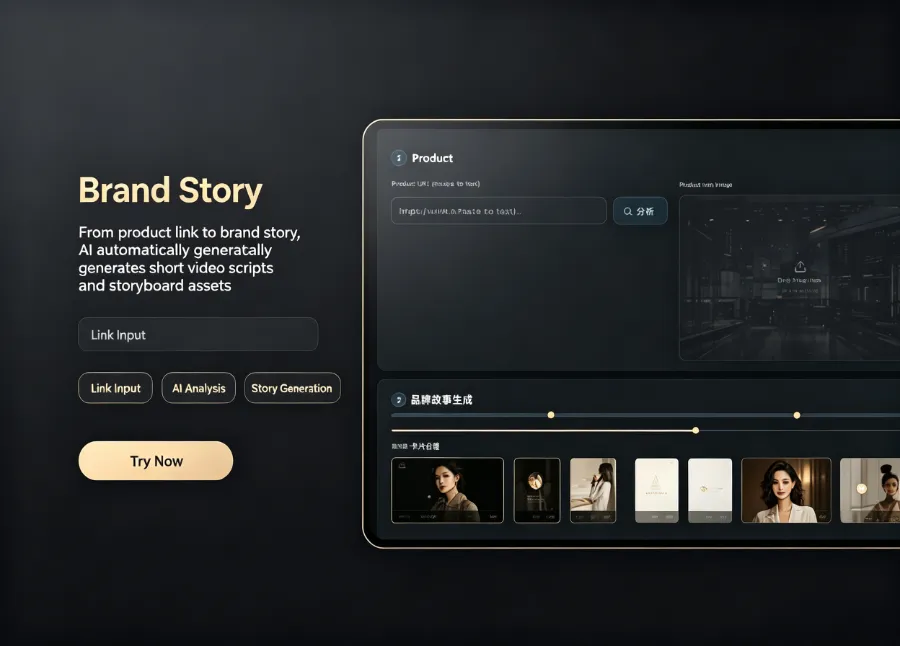
Once the link format is fixed, the correct workflow should look like this — after the link loads normally, the AI automatically generates a full script, storyboard, and final video. If you still need bulk product testing, Veonib’s bulk import feature can retry with a single click after fixing the link format.
This demo shows a standard product parsing flow; you can see the entire process from pasting the link to video completion — if you encounter a parsing failure, compare against this flow to see where it broke.
For a more complete product‑to‑ad‑video generation workflow, read this AI Workflow Guide from Product Link to Advertising Video, which includes detailed bulk operation methods and a summary of common pitfalls.
When all the above checks have been performed and parsing still fails, I recommend abandoning that link and using another page for the same product — for example, switch from a Shopify page to the Amazon product page, or simply manually upload product images and descriptions, skipping the link parsing step. Not every page is suitable for automatic scraping; acknowledging this can actually save a lot of troubleshooting time.
Frequently Asked Questions (FAQ)
Q1: Veonib shows “Link cannot be accessed” but the browser can open it — what’s the reason?
Usually it’s due to the browser’s login state or authentication information. The tool accesses the page as an unauthenticated user, while your browser may retain site login cookies. Open the link in Incognito mode as a test; if login is required to view the product, the tool will face the same restriction.
Q2: After pasting the link, it keeps spinning and doesn’t generate — what to do?
Spinning usually means the tool has received the link but is waiting for the page response. The most common cause is a first‑screen load time over 2 seconds, or third‑party resources (like tracking scripts or video players) blocking parsing. Use Chrome DevTools’ Network panel to see the actual load time; if it exceeds 3 seconds, consider using a lighter product page.
Q3: The product page I want to use is a short link — can it be used normally?
Short links themselves aren’t a problem, but if they involve multiple redirects (e.g., a 302 to another short link then to the final page), the failure rate rises sharply. I recommend tracing the short link in a browser to its final destination and paste the final long URL into the tool.
Q4: Why is the product information sometimes incomplete after parsing the link?
The tool prioritizes JSON‑LD structured data and Open Graph tags on the page. If these tags are missing, or images are lazy‑loaded via JavaScript, the tool may finish fetching before the images render, leading to missing information. This “parsing successful but empty content” scenario is harder to debug than an error; I usually recommend manually checking whether an LD+JSON script exists on the page.
Share Article