Product Link to Video: 5 Real-World Cases Where Conversion Rates Doubled
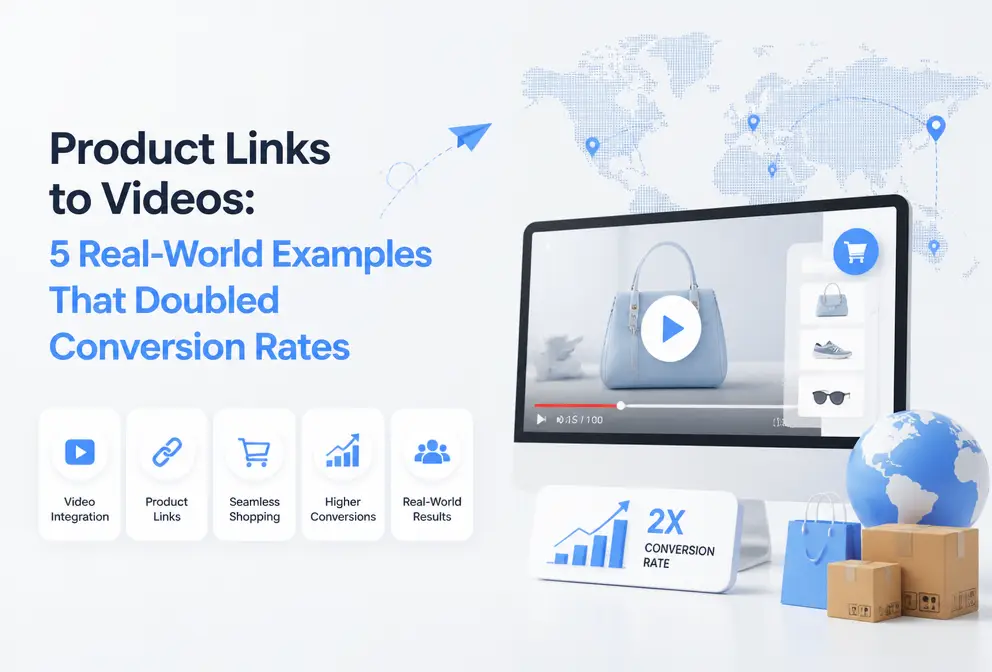
Every few days someone asks me, “E‑commerce videos are too expensive and slow, is there a shortcut?” I used to say no—until I tried simply feeding the product link to an AI. In 60 seconds a complete product video was ready. Today I’ll break down five real store cases; they all made one change: turning a product link into a video, which instantly doubled or even more the conversion rate.
The biggest pitfall I’ve hit is spending ¥3,000 to have someone make a video, only to see its post‑launch conversion rate fall short of the zero‑cost AI version. After that, I started doubting the value of traditional video production and became open to trying solutions that sound “too simple.” If you’re wrestling with video ROI, these cases should clarify that the problem is often not a lack of polish, but a misaligned selling point focus.
Case One: Fashion Accessories – From Static Images to Viral Video
A small Shopify shop selling accessories only used static images, and its add‑to‑cart rate hovered around 1.1%. The owner tried hiring an influencer to shoot a video, which cost ¥800 per product and didn’t include revisions. I did one thing for him: tossed the product link into a tool that automatically generated a showcase video.
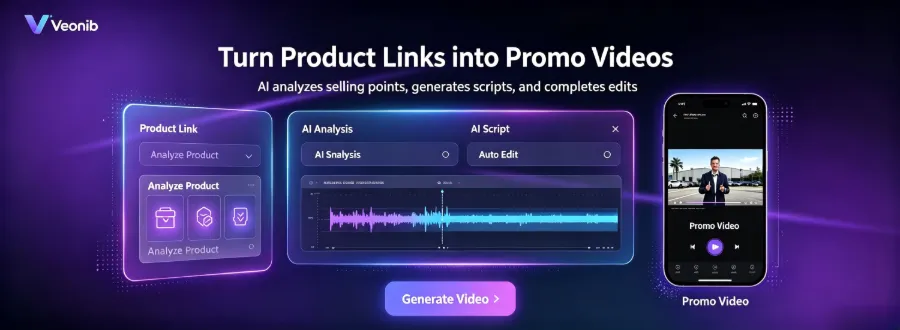
I pasted a product link, and VEONIB automatically analyzed the selling points and generated a script. After 60 seconds the video showed the necklace under various lighting and wearing angles, looping much more intuitively than static images. In the first week, the video lifted the conversion rate from 1.1% to 2.5%, a 2.3‑fold increase.
What surprised me most was that I spent less than two minutes creating this video. Compared to repeatedly communicating lighting, angles, and background music with an editor, I didn’t touch any editing software at all. We then replicated this method for five other SKUs, achieving an average conversion boost of about 1.8×. If you want to see how small shops can use this to compete with big brands, check out the full analysis in “How Small E‑commerce Stores Compete with Big Brands Using AI Videos.”
Case Two: Bluetooth Headphones – AI Script for Breaking Homogeneity
The Bluetooth headphone category on Amazon is intensely competitive; competitor videos are all the same—people running, taking calls, or putting the earbuds back in the charging case. I helped an electronics brand create a “Noise‑Cancellation Lab” video, and the click‑through rate jumped from 1.8% to 4.2%.
The key wasn’t flashy visuals but the right script direction. I habitually use VEONIB’s script generator to quickly output variants. Among five versions, one highlighted the realistic scenario “you can’t hear any noise on the subway after turning on noise cancellation,” and its click‑through rate was more than twice that of the others.
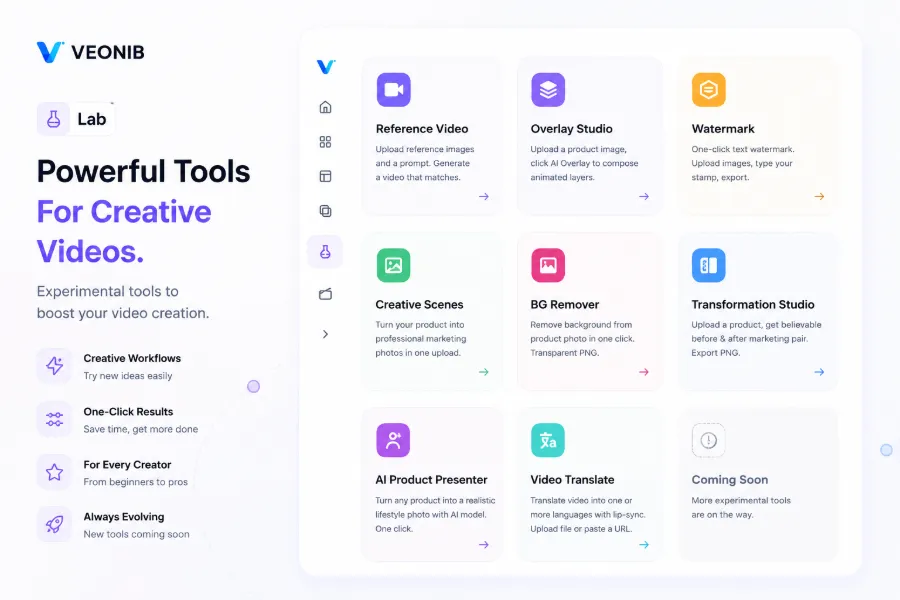
Previously, a single script version required proposal, revisions, finalization, and then filming—a process that took at least a week. Now, from product link to finished video takes under 60 seconds, compressing the testing cycle by 80%. This isn’t black magic; it simply eliminates the time spent on communication. The tool recently joined ProductHunt; feel free to check out user feedback.
One point many overlook: sellers overestimate the importance of visual quality and underestimate “information density” and “precise selling points.” The noise‑cancellation video’s visual quality isn’t as high as competitor videos with models, but its information density is high—within the first three seconds the user realizes “this is the feature I need on the subway,” leading to naturally higher conversion.
Case Three: Smart Desk Lamp – Batch Production of UGC‑Style Videos
A home‑goods brand wanted to produce a large volume of UGC‑style videos to test different selling points. Traditional real‑influencer shoots cost at least ¥1,500 per video, which the budget couldn’t sustain. I generated ten different‑scenario videos—desk, bedside, living room—from a single product link in under two minutes.
After batch production, we started testing. The “pre‑sleep reading” scenario performed best, raising ROAS from 2.0 to 4.2 and boosting conversion by 2.1×. This result is counter‑intuitive because the team favored the “desk office” scenario, assuming it was more business‑oriented and purchase‑driving. The data showed that users in this category seek a “sleep‑inducing ambience,” not just “work efficiency.”
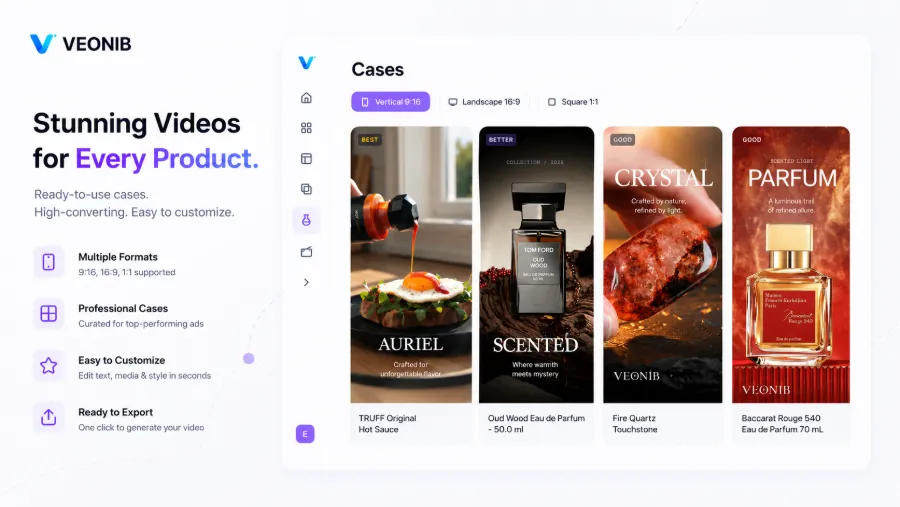
If you have solid reference videos or competitor assets, you can try this workflow—Clone Winning Ad Formats, Turn Reference Video into Your Own Brand Asset explains the steps in detail, saving creative trial‑and‑error costs.
Case Four: Lipstick – One‑Click Multilingual Adaptation for Global Markets
A beauty brand wanted to enter Indonesian and Brazilian markets, but traditional dubbing and subtitle production took so long it felt discouraging—first translate copy, then find local voice talent, then re‑edit; each version took at least a week and cost a lot.
I only needed to paste the link, select languages, and export. For the same lipstick product link, I output English, Indonesian, and Portuguese versions, each taking less than 60 seconds. After launching on the Indonesian site, conversion rose 1.9×; the Brazilian site’s data was slightly lower but still close to a double increase.
Your browser does not support the video tag.
Another unexpected finding: the same product’s video conversion varied dramatically across platforms (TikTok vs. Amazon). The TikTok version on the Indonesian site outperformed the YouTube version because TikTok users are more moved by scene atmosphere, whereas YouTube users focus on detail display. I used to adjust manually; now AI quickly adapts per platform without recreating everything. The tool also has many user reviews on G2 for reference.
Case Five: Instant Drink – Rapid Iteration of Ad Creative
The fast‑moving consumer goods sector faces a painful problem: a viral video’s lifespan is usually only two weeks before ROI declines. After noticing this pattern, the instant‑drink shop I work with changed strategy—no longer chasing a perfect video, but using AI’s rapid iteration to generate 30 variants each week from the same product link, varying opening styles, background music, and subtitle designs, continuously capturing algorithmic traffic.
The method: keep the same product link, tweak overlay effects and copy order in the video—e.g., add a close‑up of the brewing process at the start, or move the discount info from the end to the middle. These small changes take one or two minutes in AI’s batch generation, but the ad backend sees 20 completely different assets. Over four weeks, ad ROI stayed above 4.5, twice the level when using fixed assets. For the most effective overlay techniques, see the practical guide “Dynamic Animation Overlays: Transform Static Product Images into High‑Conversion Video Ads.”
Honestly, this continuous ROI‑focused approach isn’t innovative; it’s just a straightforward mechanized A/B test. The previous bottleneck was creative output not keeping up with testing demand; that bottleneck has vanished. The industry is already discussing “The Future of AI Video Starts with a Product Link.” My personal take is that for small and medium sellers, this direction is already a ready‑made answer.
FAQ
Q1: Are AI‑generated videos really better at converting than real‑shot videos?
Not every single one, but AI’s advantage is low trial‑and‑error cost. Shooting a real video costs thousands, so you’re hesitant to change direction. AI can produce 50 versions in half an hour; you push the best‑performing one. From these five cases, as long as the direction is right, conversion rates can indeed double.
Q2: I have no editing skills—can I still make videos with AI?
Yes. The whole process is three steps: copy the product link, paste it, wait 60 seconds. No editing software, no timeline knowledge, no color grading. If typing feels like a hassle, you can even use the product page link saved in your browser bookmarks.
Q3: How many different videos can a single product link generate?
Theoretically unlimited. The same link can be switched to various scene styles (study, bedroom, outdoor), different copy angles (feature‑driven, emotion‑driven), and different voice‑over languages. I’ve generated up to 30 variants for a single product for ad testing.
Q4: Do the generated videos have copyright? Can I use them in paid ads?
The video’s copyright belongs to you and can be used for any commercial purpose, including paid advertising. This follows the same logic as AI‑generated images: you provide the link and creative direction, and the final video’s usage rights are yours, with no copyright disputes.
Q5: Besides Shopify and Amazon, which platforms are supported?
Most major e‑commerce platforms can be parsed, including Shopify, Amazon, WooCommerce, TikTok Shop, Temu, AliExpress, Etsy, and eBay. Just ensure the product page is publicly accessible; no extra configuration needed.
Share Article