Localization of UGC Videos in Emerging Markets: How to Approach the Three Major Markets of the Middle East, Southeast Asia, and Latin America
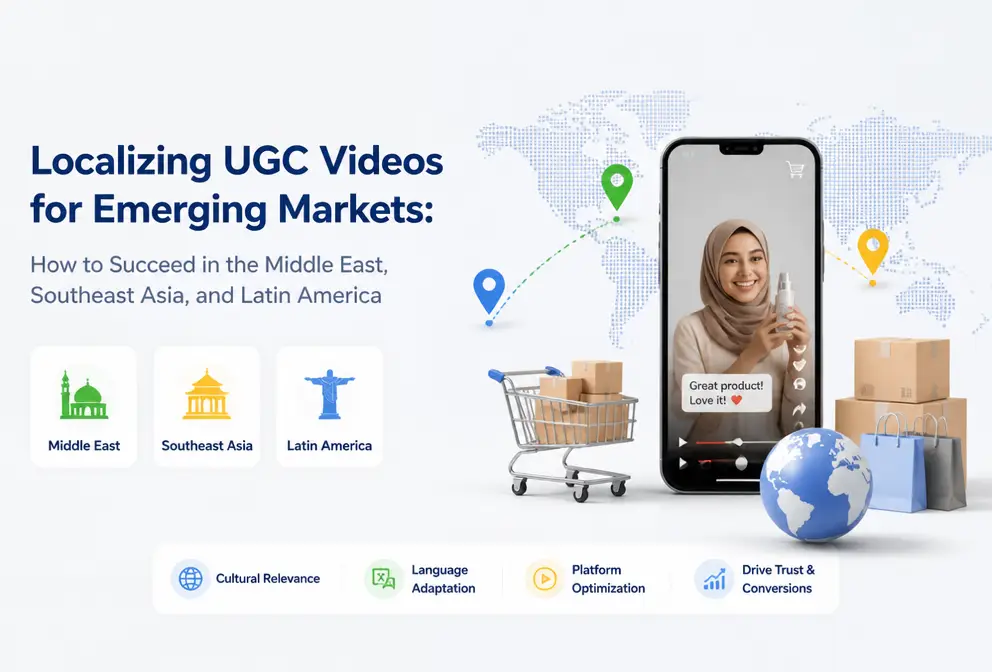
When ad spend shifts from Europe and the United States to the Middle East, Southeast Asia, and Latin America, many sellers encounter the same problem: English UGC assets that consistently performed in the Western market see click‑through rates and conversion rates plummet in the new markets. The product and price remain unchanged; only the geographic targeting changes. The issue is usually not the product itself but the content context—characters, accents, settings, and even subtitle layout do not align with local consumers’ expectations.
UGC video localization is not just translating English subtitles into Arabic or Indonesian. Translation only swaps language; localization is a complete recreation.
E‑commerce growth rates in the Middle East, Southeast Asia, and Latin America remain double‑digit, with year‑over‑year growth of roughly 15%–30%, clearly outpacing the single‑digit growth of mature Western markets. Platforms such as TikTok, Shopee, Lazada, Instagram Reels, Noon, SHEIN, and Temu are penetrating these markets faster than expected. When consumers in a market get used to ordering through short videos while your assets still feature Western faces speaking English, budget waste becomes almost inevitable. An even more direct cost is damage to brand trust—consumers in emerging markets are more sensitive to genuine recommendations and are more likely to abandon a purchase if an ad looks “non‑local,” leading to higher return rates.
Localization Differences Across the Three Markets: Language, Platform, and Aesthetics
The first hurdle in the Middle East is Arabic’s right‑to‑left reading direction. Simply overlaying English subtitles results in a chaotic layout and reversed reading order for the audience. Religious and cultural taboos must also be avoided: content cannot feature alcohol, certain clothing, or overly revealing scenes, and even background music choices need to be cautious. Simultaneous use of TikTok and Instagram is common in the Middle East, but the aesthetic preferences of users on the two platforms do not fully overlap.
Southeast Asia has the highest mobile video penetration among the three regions, with more than 400 million active short‑video users across six major countries. The language landscape is highly fragmented—Indonesian, Thai, and Vietnamese each dominate their own markets, and no single language covers the whole region. Mobile‑first consumption means videos must capture attention on small screens, in noisy environments, and during brief moments. A notable observation is that Southeast Asian users are far more tolerant of “local language + rough visual quality” than Western audiences; over‑polished post‑production can actually reduce trust. Rougher, more authentic assets often achieve better conversion.
Latin America features both Spanish and Portuguese, with a very strong social‑media interaction culture. Consumers there prefer “authentic” content over polished ads—they care more about the speaker’s accent and face being local rather than the production quality itself. A user‑generated recommendation video filmed with a Mexican accent can drive conversions better than a high‑budget brand commercial.
All three markets share a common pain point: local creator resources are scarce, outsourcing costs are high, and internal teams generally lack small‑language capabilities. Language is only the first, surface layer of localization; the real differences lie in platform ecosystems and aesthetic preferences.
Four Key Dimensions for Implementing Localization
Language layer is the most basic step. Subtitle translation quality directly affects comprehension, while lip‑sync (dubbing) has a larger impact on completion rates than most people expect—localized videos with lip‑sync achieve 30%–40% higher completion rates than pure subtitle translations. Viewers instinctively feel a disconnect when they see a person speaking their language but the mouth movements don’t match. If lip‑sync isn’t feasible at the moment, at least ensure high‑quality localized subtitles; tools like the AI video translation and lip‑sync solution can lower the barrier.
Visual layer differences are often overlooked. The Middle East prefers warm tones and family settings; Southeast Asia favors vivid colors and fast‑paced editing; Latin America leans toward “everyday scenes + local faces.” Platform rules also need separate handling: TikTok, Instagram Reels, and YouTube Shorts each have distinct specifications, durations, and ad policies. Cutting a single asset to fit all three platforms usually degrades performance.
Trust layer is the core of UGC. Genuine faces, local accents, and scenes that reflect local lifestyles are all indispensable. Process layer determines cost—how to reduce the replication cost of “one asset → multiple markets & versions” is the key concern for small teams. Some teams have used low‑cost tool combos to run high‑traffic stores daily; a case study of a low‑cost AI tool stack for high‑volume e‑commerce stores shows that small teams can control replication costs, with the crucial step being to automate repetitive work.
Practical Workflow: From One Asset to Three Market Versions
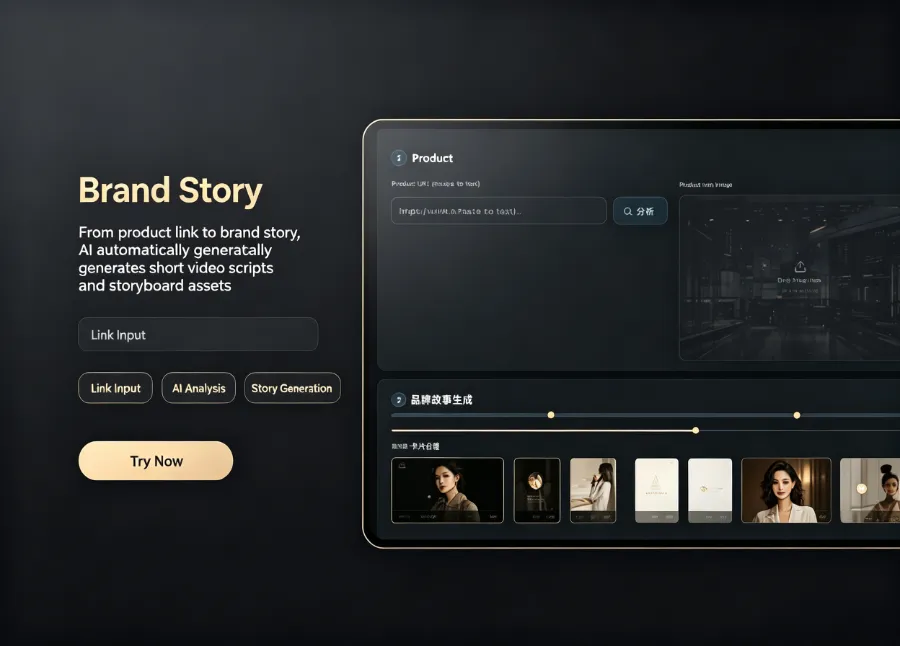
A common starting point is to feed a product URL or image into a system that automatically extracts selling points and generates a script and storyboard. No video‑editing expertise or complex prompts are required. For a detailed breakdown of how to generate UGC videos directly from product links, see the guide on one‑click UGC video creation from a product link.
After the script and storyboard are generated, the next step is multilingual adaptation. The same creative concept is adapted for the Middle East, Southeast Asia, and Latin America—Arabic requires right‑to‑left layout, Indonesian and Thai need accurate translations, and Spanish and Portuguese must be split into accent‑specific versions. The most error‑prone part of this stage is synchronizing subtitles and voice‑overs: first finalize subtitles, then dub, then verify the timeline for each language version.
When scaling up, tools like VEONIB shine—paste a product link, AI automatically parses the title, selling points, price, etc., and generates the script, storyboard, and video within minutes. Traditional outsourcing for a three‑language UGC video takes 3–5 days; an AI workflow can shrink that to minutes.
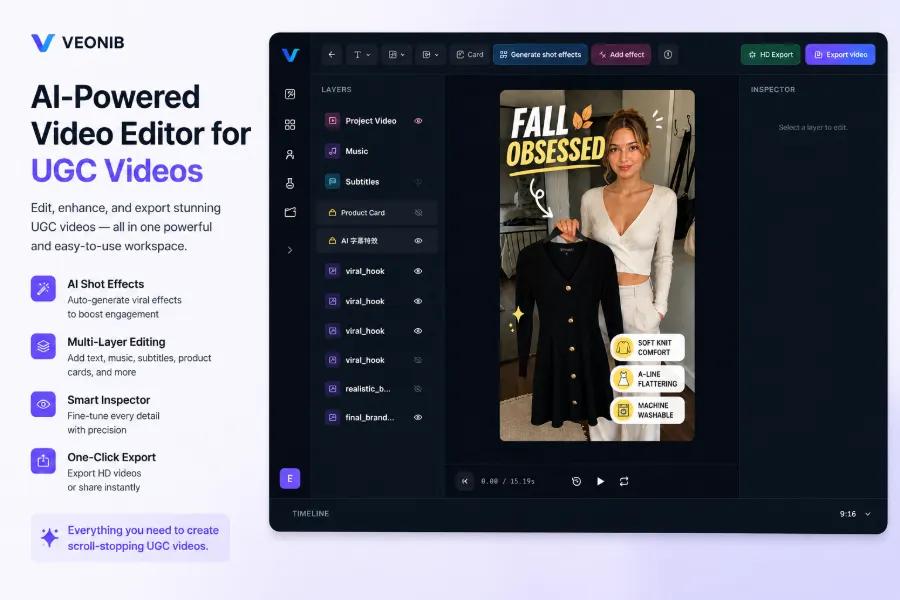
For a solo operator or a small team to cover all three markets within budget, bulk production capability is essential. VEONIB’s style library includes UGC templates that can generate an exportable MP4 in under 60 seconds, ready for TikTok, Instagram, Shopee embedded videos, etc. When selecting tools, compare the mainstream options in the e‑commerce AI video generator comparison before deciding which workflow fits your needs.
A real failure case serves as a warning. In 2023, a cross‑border team placed English UGC assets with Arabic subtitles into the Middle Eastern market without adjusting right‑to‑left layout or cultural context. The ad’s click‑through rate dropped, the account was throttled, and they spent two weeks reworking the assets. This illustrates the wide gap between translation and localization—skipping contextual adaptation saves time upfront but ends up costing double in rework and platform restrictions.
FAQ
Can I localize UGC videos for emerging markets without a local team?
Yes. Break “localization” into three independent layers—language, visual, and platform—and address each with tools. Use AI translation plus human proofreading for language, adjust templates to match each market’s aesthetic preferences for visuals, and export according to TikTok and Instagram Reels specifications for platforms. A single person can produce multilingual versions of one asset for all three markets in a day, provided the workflow is standardized.
Is localization just translating subtitles into the local language?
No. Subtitle translation is only the language layer. Localization also includes lip‑sync, visual aesthetics, platform rules, and building trust. The Middle East’s right‑to‑left layout, Southeast Asia’s tolerance for rough visuals, and Latin America’s sensitivity to accent and face are issues that translation alone cannot solve. Pure subtitle translation typically yields 30%–40% lower completion rates than versions with lip‑sync.
How can I control video production costs while covering all three markets?
The core idea is “create once, adapt many times.” Produce a base asset first, then generate language versions rather than filming from scratch for each market. Replace outsourcing with AI workflows; the cost of three language versions can be reduced to less than a tenth of traditional outsourcing. Subscription fees plus minimal human proofreading constitute the most realistic cost structure for small teams.
What content taboos must be avoided in Middle Eastern video ads?
Alcohol, specific clothing, overly revealing scenes, and religious‑related background music must be excluded. Arabic right‑to‑left layout must be handled, or subtitles will appear chaotic. Women’s attire and behavior should conform to local cultural norms. It’s advisable to have a culturally knowledgeable reviewer check the ad before launch to avoid platform throttling due to cultural missteps.
Which platforms should be prioritized for Southeast Asia and Latin America?
Southeast Asia: prioritize TikTok and Shopee embedded videos—short‑video penetration is high, and Shopee’s on‑site traffic drives direct conversions. Latin America: prioritize TikTok and Instagram Reels—social interaction culture is strong, and Reels’ sharing and commenting mechanisms suit UGC distribution. YouTube Shorts can be used as a supplementary channel in both regions, but it ranks lower in priority.
Share Article