The Lifecycle of a Hot‑Selling Creative Is Only 30 Days? How to Set the Rotation Rhythm

The most painful part of ad placement isn’t getting volume, but the downhill slope after the volume spikes. Many campaign managers have encountered a similar scenario: a creative runs for two or three weeks, exposure surges, but CTR and conversions start to drop simultaneously. The first reaction is usually “the creative is dead,” so they cut budget or swap in a new creative, only to find the new creative’s acquisition cost even higher. The problem may not be the creative itself, but how we judge its decay.
Creative decay isn’t determined solely by days; it’s driven by exposure frequency, audience overlap, and memory fatigue. In other words, a creative may be exhausted after two weeks in Account A but can run for two months in Account B. The difference usually isn’t quality but the delivery structure. This article, from the perspective of ad‑account operators, breaks down the signals for judging decay, methods for calculating lifecycle, and an actionable rotation rhythm.
Do Hot‑Selling Creatives Really Only Live 30 Days? The Real Source of Creative Fatigue
The “30‑day lifecycle” notion is widely circulated in the ad community, but it’s more of an empirical rule than a law. It assumes stable account budget, fixed audience size, and average creative quality. Under those conditions, after a user sees the same creative more than 3–4 times in a high‑frequency campaign, CTR usually drops significantly—the exact number varies by category, but the trend is consistent.
Creative fatigue isn’t driven by time alone; it’s the result of ad frequency combined with audience overlap. A typical example: an account concentrates budget on a few creatives, and the system, to spend the budget, repeatedly serves the same creative to the same high‑intent audience. The first view feels fresh, the second is tolerated, the third is ignored. CTR falls, CPM rises, yet the creative itself hasn’t changed.
We need to distinguish two decay patterns: one is “quality degradation” (e.g., outdated selling points, seasonal mismatch, competitor advances that erase advantage); the other is “audience boredom,” where the creative stays the same but the audience’s aesthetic threshold rises. The former requires a new creative; the latter may need a new audience segment. Many optimizers mix the two, leading to misjudgment.
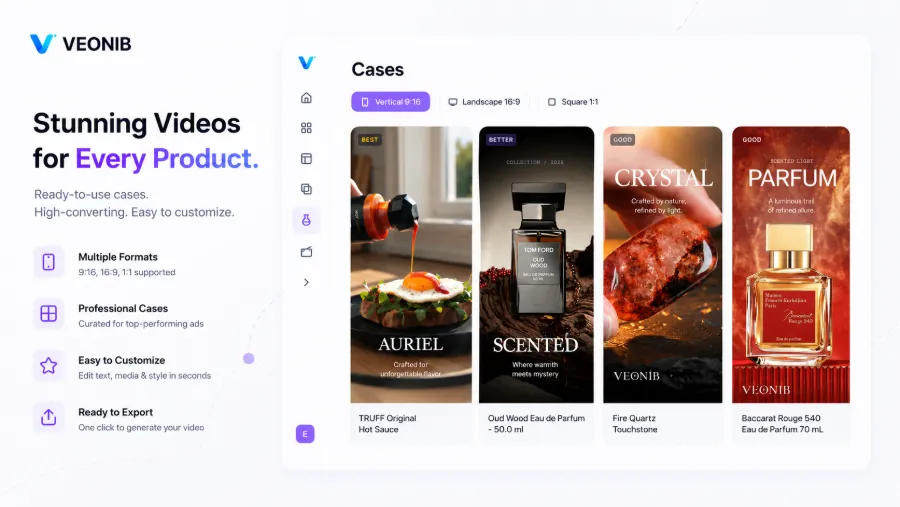
In accounts with a small audience pool but large budget, the lifecycle is noticeably compressed; conversely, with a sufficiently large audience pool, a creative can run for two or three months without issue. Thus, “30 days” is only a reference line, not a removal rule. The industry’s technical background is also shifting—the current state and evolution of AI video generation technology shows that decreasing creative production costs are changing the economics of rotation—when a new creative’s cost is low enough, rotation density can naturally increase.
Three Sets of Metrics to Identify Creative Decay
You can’t rely on intuition to judge decay; you need data signals. Instead of using days as the benchmark, cross‑validate with three metric groups: exposure‑click group, conversion group, and frequency‑audience‑overlap group. Each group alone can be misleading; the combination is persuasive.
| Metric Group | Decay Signal | Normal Fluctuations to Ignore |
|---|---|---|
| Exposure‑Click Group (CTR, CPC) | CTR continuously falling while CPC rises | Single‑day spikes, holiday traffic structure changes |
| Conversion Group (CVR, ROAS) | CVR drops and ROAS falls below target | Temporary landing‑page changes, market‑wide competition increase |
| Frequency‑Audience‑Overlap Group (ad frequency) | Average exposures per user exceed 4 and keep rising | Brief rise when a new audience segment is first introduced |
In practice, optimizers should start weekly tracking of these metrics after a creative accumulates 30–50 k exposures (varying by category). The difference between random spikes and structural decay lies in persistence—only when the same decline persists for 7 consecutive days is it considered structural decay. Switching creatives after a day or two of dip often cuts off a creative that’s still on the upswing.
An often‑overlooked point: a CTR drop doesn’t necessarily mean the creative is ineffective. If the conversion side (CVR, ROAS) remains stable, the creative is still effective for high‑intent users; it’s just reaching too many low‑intent users. In that case, adjust targeting or audience segments first, not the creative. Conversely, if conversions collapse first while CTR holds up, the creative itself is the problem.
How to Set the Rotation Rhythm – A Three‑Stage Process: Test, Scale, Retire
Managing a creative’s lifecycle in three stages is far more reliable than a blanket‑by‑day approach: testing phase (small budget validation), scaling phase (budget increase after proof), and fatigue phase (handling decay signals). Each stage has a different rotation goal—speed in testing, budget allocation in scaling, replacement/reuse in fatigue.
The testing phase’s core is quickly filtering promising creatives with small budgets, short cycles, and parallel variants. The scaling phase focuses on budget distribution, tilting spend toward proven creatives while keeping a portion for new‑creative experiments. The fatigue phase tests judgment: whether to retire the creative outright or re‑edit and relaunch it. Re‑editing an old creative—changing the hook, tweaking the first 3 seconds—often yields a cold‑start effect close to a brand‑new creative, at a fraction of the production cost.
A counter‑example: a team forced all active creatives out after a fixed 30‑day cycle, ending up cutting high‑performing creatives during a stable‑profit scaling period. Budget was forced onto testing creatives, raising cost‑per‑conversion by about 40 %. “One‑size‑fits‑all” day‑based rotation, instead of signal‑based rotation, incurs real costs. Creative lifespan should be data‑driven, not calendar‑driven.
A reference framework: keep at least 20%–30% of new creatives in the account each week; retire or replace a creative after it’s been live for over a month with no further creative value. For seasonal or major‑promotion periods, accelerate the rotation rhythm—two weeks before a big promotion is an intensive testing window, because traffic costs are high during the promotion and creatives must be pre‑validated. When re‑processing old creatives, tools like AI one‑click video watermark removal can save a lot of rework time.
Matching “Re‑creation” Speed to “Fatigue Speed” – The Production Rhythm
Once the rotation rhythm is set, the prerequisite is that production speed matches consumption speed. Manual editing of a placement creative takes hours to days, which conflicts with the earlier mentioned weekly 20%–30% new‑creative quota. If supply can’t keep up, the rotation plan stays on paper. Teams often lower production standards per creative or extend the live period—both harming quality or accelerating fatigue.
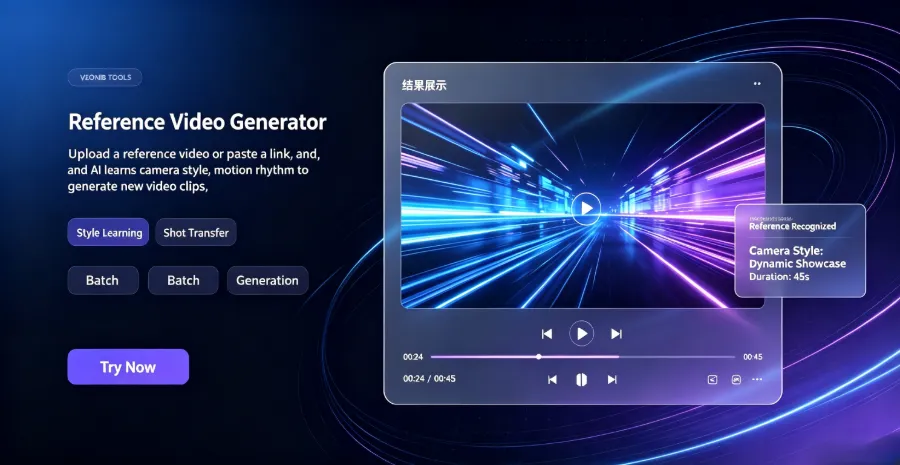
From the perspective of a creative library and re‑creation, cost‑reduction methods are limited to a few: restructuring old creatives, deduplication, and secondary editing. Changing a creative’s intro, pacing, or BGM can often revive it. However, re‑creation has limits; eventually the library is exhausted. Then new supply channels are needed. A common approach is to feed product URLs into AI video‑generation tools, letting the system automatically produce scripts and storyboards. Using product‑URL‑based AI video generation, a single creative can be produced in under a minute, dramatically increasing feasible rotation density. Manual production now can output dozens of test variants in bulk.
Tools like VEONIB serve a specific role in the creative pipeline: they don’t replace ideas but fill the gap in test‑creative supply. Their six AI‑UGC story templates—problem‑solving, TikTok review, unboxing, lifestyle, social proof, custom—let teams launch quickly without waiting for shoot schedules. Once the supply side catches up, the rotation rhythm truly materializes. If the team also needs to bulk‑supply affiliates and influencers, they can follow the method in Bulk‑producing content for affiliates and influencers, turning production from a bottleneck into an assembly line.

FAQ
A creative performed well for a week—should I immediately increase budget to scale?
Don’t dramatically increase budget right away. One week of data is a small sample and may only reflect a cold‑start boost. A safer approach is to raise the budget by 20%–30%, monitor for 3–5 days, and confirm that CTR and CVR aren’t simultaneously dropping before scaling further. If frequency metrics spike quickly after the budget increase, the audience pool is insufficient—expand the audience instead of pouring more money.
When judging creative fatigue, should I focus on CTR or CVR? Which takes priority?
CVR takes priority. CTR reflects the creative’s attractiveness; CVR reflects its relevance to the product. If CTR falls but CVR stays stable, the creative remains effective for high‑intent users, and the issue is over‑reaching low‑intent users. Conversely, if CVR collapses first while CTR holds, the creative itself is failing. Look at conversion metrics first, then clicks.
If I change a creative’s intro and relaunch it, is it considered a new creative?
Yes, but the impact depends on the extent of the change. Changing only the intro while keeping the main content leads the system to treat it as a new creative entering a cold start, though audience memory still lingers, so ramp‑up is usually faster than a completely new creative. Changing just the BGM or color grading may be flagged as a near‑duplicate, reducing cold‑start benefits. Tweaking the first 3 seconds hook is the most cost‑effective edit.
How long can a creative stay live before it must be replaced? Is there a universal upper limit?
There’s no universal limit, but a practical rule of thumb is: after a creative accumulates 30–50 k exposures, start weekly tracking of decay signals; if the same decline persists for 7 consecutive days, consider replacement. If a creative has been live for over a month with no further creative value, retire or re‑edit it. The two weeks before a major promotion are an exception—testing rhythm should be intensified, and creatives must be pre‑validated.
Share Article