From the Red Sea of English to the Blue Sea of Europe: How I Achieved a 3× Conversion Boost with Small‑Language Video Ads
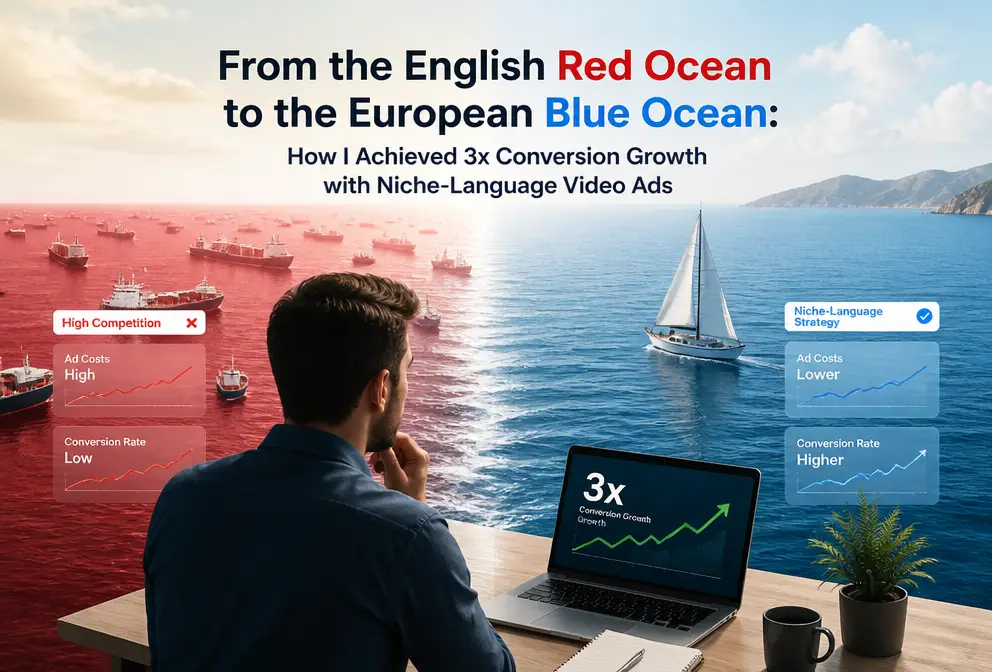
My store has been struggling in the US and UK markets for two years; bidding costs keep rising while ROI thins. By chance, I threw my product link into the German market and discovered that PPC prices there are only half of those in the English market, but the language and content localization barrier kept me out. This article shares how I used AI tools to cross that gap and turn Europe’s small‑language markets from “unintelligible” into “profitable”.
The Red‑Sea Dilemma of English E‑Commerce Advertising – Why I Had to Find a Different Path
When I first joined Shopify in early 2023, a Facebook ad cost about $0.85 per click. I thought it was pricey but manageable. By the end of 2024, the same ad set’s CPC had climbed to nearly $2. The cost more than doubled, yet conversion rates didn’t rise—in fact, market saturation lengthened the purchase decision cycle by about 40%.
I’m not the only one feeling this way. Among my peers doing cross‑border sales, eight out of ten complain about the same issue: every category in the US market is saturated with sellers, and bidding on TikTok Ads and Google Shopping gets more outrageous by the day. Late‑night monitoring shows ad spend at 1.5× yesterday’s budget with zero lift in impressions—an awful feeling.
Over the past two years, average bidding costs in the US and UK markets have risen by over 130%, but the numbers are only part of the story. Top sellers dominate traffic with massive budgets, while small‑to‑mid‑size sellers are left with the late‑night slots after the budget is exhausted.
| Platform | 2023 Avg CPC (USD) | 2025 Avg CPC (USD) | Increase |
|---|---|---|---|
| 0.85 | 1.95 | 129% | |
| TikTok | 0.65 | 1.50 | 131% |
| Google Shopping | 0.72 | 1.68 | 133% |
After reviewing the backend reports that weekend, I made a decision: stop battling English‑market sellers and find a less fierce “fatty” niche.
European Small‑Language Markets – The Overlooked Blue‑Sea Opportunity
The combined e‑commerce size of Germany, France, Spain, and Italy is not far behind the US. Amazon’s German site alone exceeds €30 billion in annual GMV, and the French site continues double‑digit growth. Yet Chinese sellers are far less concentrated in these markets than in the US and UK.
A friend who sells on Amazon DE told me that the number of products for German keywords is roughly one‑fifth of the same category in English. Fewer competitors mean lower CPC—German PPC bids are typically 40%–60% cheaper than in the English market. I ran a month‑long ad test in Germany; with the same budget, I got 2.3× the impressions of the US.
But there’s a catch. Local buyers have strong purchasing power and demand high‑quality language and content. I tried simply translating an English page into German and uploading it—Google Ads’ quality score dropped to 3. Localization is far more than a word‑by‑word translation:
- German search habits differ greatly from Americans’; for example, “home humidifier” has many different long‑tail variations in Germany.
- French buyers are extremely sensitive to local accent; a purely machine‑translated ad copy is abandoned after a glance.
- Italian users trust shops that use local numeric formats and visual styles.
The “one‑click translation” tools on the market never address these nuances. I read an analysis explaining why most AI video tools fail e‑commerce sellers—many only do surface translation without true localization. That’s why many sellers quit after trying the European market.
Dual Localization Strategy – How AI Helped Me Break the Language Barrier (Part 1: Content Foundations)
I changed my approach. Instead of translating from English to German, I rebuilt the content directly for German users.
I fed the link into SEONIB, which automatically generated localized landing‑page copy and ad keywords based on German search data. The key was “no translation, only reconstruction”—the system creates content from popular local search terms and browsing habits rather than forcing English into German. After optimization, small‑language ad click‑through rates averaged over 45% higher, and quality scores jumped two tiers.
The logic behind the content isn’t complex: the biggest hurdle in Europe isn’t language, but the volume and cadence of content production. Covering four countries with one SKU can take a week just for copy. For more concrete steps, see how small e‑commerce brands use AI video to compete with big brands, which outlines several low‑cost content creation pathways.
Only after completing the “image‑text search flow” localization did I realize: content is just the first half.
Dual Localization Strategy – How AI Helped Me Break the Language Barrier (Part 2: Visual Explosion)
After polishing content and copy, the biggest challenge was video. For French, German, and Italian video ads, hiring local voice talent can cost €300 per ad. Outsourced translation and editing usually takes at least three days.
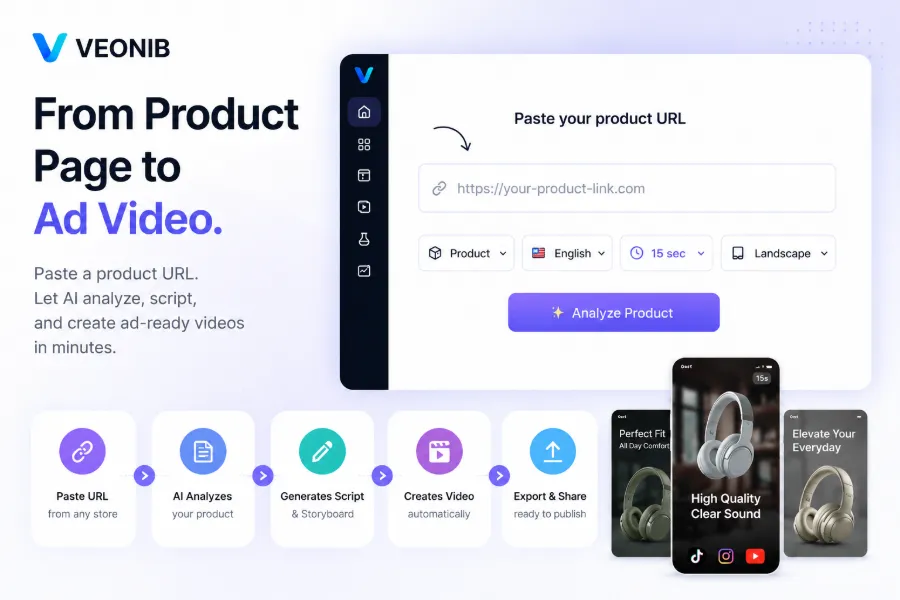
I placed the optimized link into VEONIB, a tool that reads product URLs and automatically creates videos.
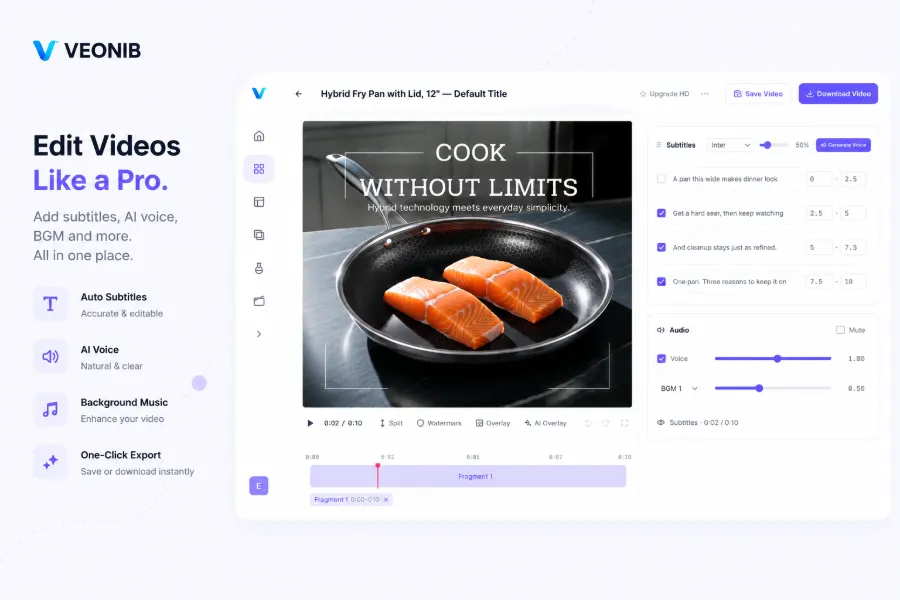
After selecting the target language (German, French, Spanish—all tested), AI automatically added voice‑overs in the appropriate language with highly authentic accents—far from the obvious “Chinese‑English” or robotic reading. One detail that stuck with me: the same product, one French video generated by VEONIB, another voice‑over produced via a €250 outsourced translation. After a week of running both, VEONIB’s version achieved a 27% higher click‑through rate. In short, local buyers are extremely sensitive to “native‑speaker feel”—even if the voice isn’t a real person, a correct accent changes perception dramatically.
The tool also generates precise foreign‑language subtitles to avoid cultural misunderstandings. I initially ran two weeks of French ads with pure machine‑translated voice‑overs and got only three clicks. Switching to VEONIB’s authentic‑accent version made the campaign take off. “Looks like a local” outweighs “perfect content accuracy”; that lesson cost me two weeks of ad spend.
Given Google’s integration of text‑to‑video generation, it’s clear the whole industry is moving this way. What matters more to me is the speed shift: previously, a SKU needed a week to produce three language versions; now it’s done in ten minutes. That means I can test five or six products across small‑language markets simultaneously to see which category scales best. If you’re also considering large‑scale video ad production, the guide “E‑Commerce Automated Video Ads: 2026’s Cheapest Way to Scale” is very detailed.
After Germany, I repeated the process for France, Spain, and Italy. The key to low‑cost video marketing is avoiding a “human army” approach—one person with one computer can run five or six small‑language markets at once, and even if the ad budget doubles, the extra click cost is only a few hundred dollars. This shift in operating‑cost structure is the real profit in small‑language markets.
Frequently Asked Questions
Q1: I have no German or French background—can I still enter the European market?
Yes, but you must be willing to learn the basics of local logic. AI can fill language gaps, but you still need to understand user habits, price formats, and payment preferences. Start with Germany; its search habits are closest to English, making the conversion path shortest.
Q2: Will AI‑generated videos look fake to foreign audiences?
It depends on the tool’s quality. If the tool merely translates a script and reads it mechanically, it will look fake. AI voice‑overs that support 30 languages and have optimized accents, combined with accurate local subtitles and adapted visual style, are virtually indistinguishable to local users. My French client thought the video was locally produced.
Q3: After testing multilingual videos, which market converts most easily?
Test data shows Germany has the highest conversion rate, with an average CPA 35% lower than France. France has strong purchasing power but a slightly higher return rate and stricter delivery‑time expectations. Italy’s order cycle is slower, but average order value tends to be higher. A recommended rollout order is Germany → France → Spain.
Share Article