Live e‑commerce breaks 5 trillion, should cross‑border sellers hop on the “live + short‑video” dual engine?
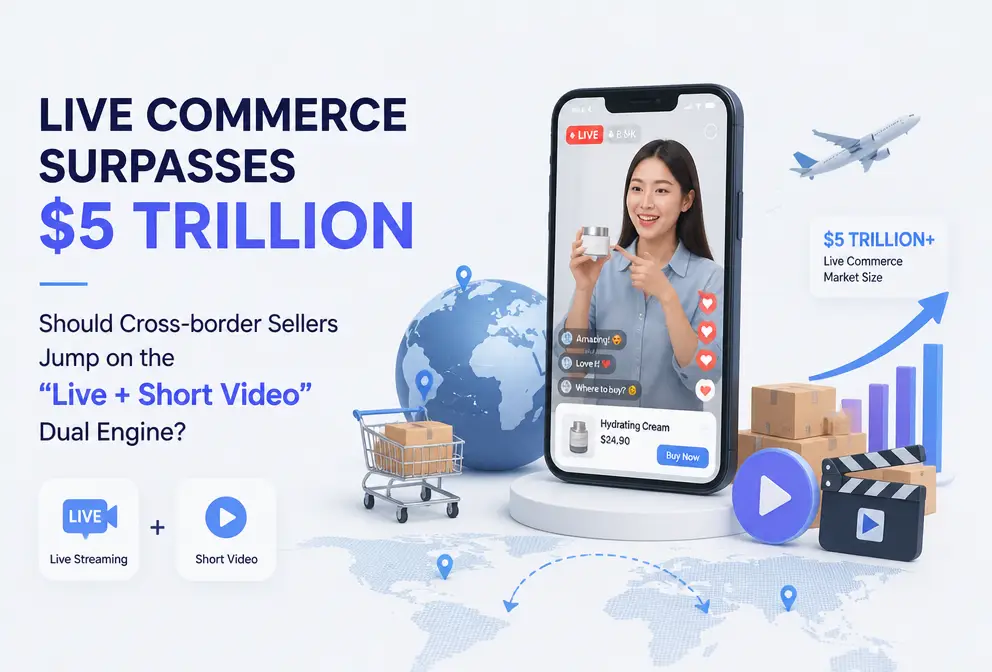
A cross‑border seller friend who works the European and American markets posted a screenshot in a group chat last month: domestic live‑commerce annual transaction volume has surpassed 5 trillion RMB, with a double‑digit year‑over‑year growth rate. The caption read only one sentence – “We are still relying on static listings and image‑text ads.” His shop has been operating for three years, and the conversion rate has shown no noticeable change for two consecutive quarters, while ad spend keeps rising. This is not his solitary dilemma. Short videos and live streams have long been standard in China, but cross‑border sellers still stick to product photos, five‑point descriptions, and occasional unboxing videos.
Should you adopt the “live + short‑video” dual engine? My judgment: yes, but only after you understand the traffic‑logic differences between the two paths and whether your content production capacity can keep up with the pace. Blindly following the trend of real‑person live streams may waste budget on the wrong stage. This article does not stoke anxiety; it merely breaks down the structural changes behind the market size and the truly executable entry points for cross‑border scenarios.
5 trillion is not a slogan: how live e‑commerce is turning from a hype into infrastructure
Three years ago, the 5 trillion figure was a forecast; today it is a fact. More important is its composition: live‑selling is no longer the exclusive play of top‑tier hosts. Brand self‑broadcasts, store‑broadcasts, and industry‑wide live streams now occupy an ever‑larger share. This means live e‑commerce has shifted from a “whether to do it” choice to a “you’ll fall behind if you don’t” infrastructure.
The difference between domestic and cross‑border scenarios lies in traffic allocation logic. In China, Douyin and Taobao algorithms have already made video content the core distribution unit, continuously lowering the weight of image‑text detail pages. For cross‑border sellers, TikTok Shop’s GMV growth in the US, UK, and Southeast Asia is also pushing sellers to change content formats; Amazon’s post feature and brand video slots are tilting toward video; Shopify independent‑store sellers are beginning to use Reels and Shorts as the main channels for external traffic.
For cross‑border sellers, the reality is: platform algorithms and traffic allocation are shifting toward video, not a short‑term strategy of any single platform but a long‑term trend of e‑commerce contentization. Static listings won’t become obsolete overnight, but their traffic ceiling is visibly shrinking.
Dual‑engine breakdown: live streams and short videos have completely different traffic logic and conversion paths
Treating “live + short‑video” as a single whole is the first pitfall many sellers fall into. The traffic logic, conversion rhythm, and content cost of these two paths are completely different; conflating them leads to resource misallocation.
Live selling’s core is real‑time interaction and impulse buying. The host showcases the product on camera, answers comments, creates a sense of urgency with limited‑time offers; the conversion path is short and direct. However, its cost is labor‑intensive – a real‑person host needs time‑zone alignment, multilingual ability, and continuous content maintenance. Short‑video selling is entirely different; it follows a “seeding” and long‑term exposure route, where a single piece of content can continue to attract traffic for weeks or months, creating content compounding.
| Comparison Dimension | Live Selling | Short‑Video Selling |
|---|---|---|
| Content Form | Real‑time video stream, interaction‑driven | Pre‑produced short video, content‑driven |
| Production Cost | High (host, venue, equipment) | Medium‑low (script, filming, editing) |
| Conversion Rhythm | Immediate impulse purchase | Delayed seeding conversion |
| Traffic Lifecycle | Single session of a few hours | Weeks to months |
| Suitable Product Types | Low‑price, high visual impact | Mid‑to‑high price, requiring decision education |
| Human Investment | Ongoing high input | Front‑loaded input |
For cross‑border sellers, these two paths are not an either/or choice but a sequential relationship. Short videos act as a reservoir for live streams, continuously building brand awareness and potential customers; live streams are the harvesting stage that converts already‑seeded users into immediate orders. Determine the main engine by product category and price: low‑price, impulse products suit a live‑first approach; high‑price products that need comparative decision‑making benefit more from short‑video seeding.
The average production cycle for short‑video content has already shrunk from several days to minutes, while a typical live session lasts 1–3 hours. This rhythm gap means that if content production capacity can’t keep up, the dual engine can easily degrade into a single‑engine idle state.
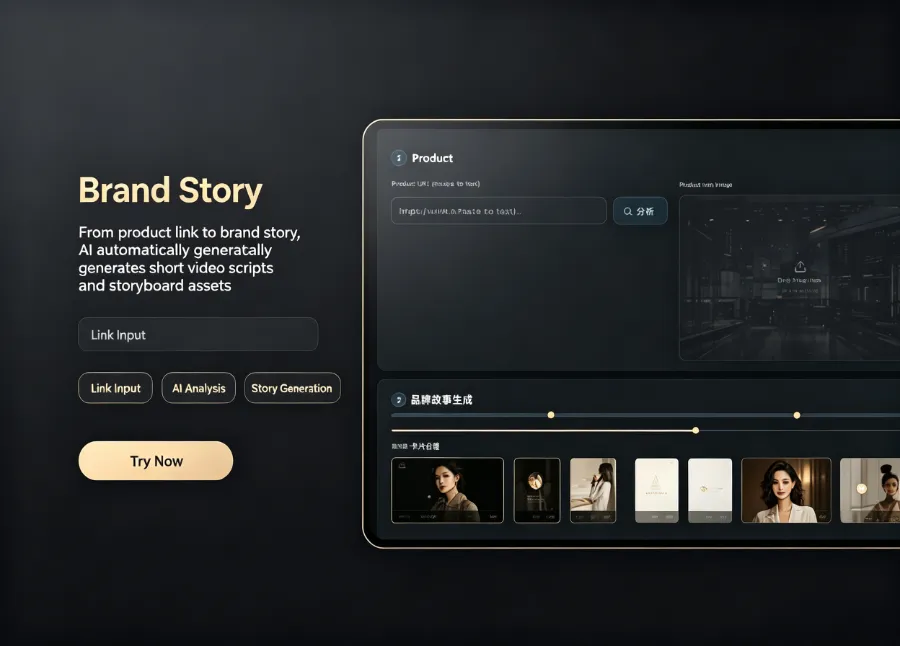
The core competitive advantage of short‑video selling lies in the structured output of content. A 30‑second brand story ad requires an opening hook, product showcase, feature breakdown, and CTA – four segments, each corresponding to a different shot language. This structured production logic is exactly where tools can intervene. Cross‑border sellers don’t need to learn video production from scratch; they need a workflow that automatically transforms product information into storyboard scripts. In this regard, the approach of automatically turning product links into short‑video ads is worth referencing; it lowers the barrier to content creation from “knowing how to shoot a video” to “providing a product link”.
The real hurdle for cross‑border sellers: content capacity and labor cost block most people
The biggest obstacle to implementing the dual engine is not willingness but content capacity. Real‑person live streams need hosts, who face time‑zone issues, language challenges, and turnover risk; short videos need scripts, filming, and editing, with each 15–30‑second seeding video costing a few hundred to over a thousand RMB when outsourced. Cross‑border teams typically have only 2–5 people and must cover operations, customer service, product selection, and ad placement, making daily content output impossible.
I have seen a real negative case. A seller in the home‑goods category, inspired by the domestic live‑commerce boom, decided to invest in TikTok Live. He hired two English hosts, rented a venue, bought equipment, and burned through a six‑figure budget in three months. The result? Time‑zone differences limited the live stream to US East Coast evenings; the hosts quit one after another due to time‑zone and shift issues; multilingual script translation quality was inconsistent; ultimately, almost zero output. This case shows that before solving the content capacity issue, the dual engine is merely a strategic statement, not an executable operational plan.
Automation tools are the realistic path to bridge the capacity gap. Paste a product link, and AI automatically analyzes product images, descriptions, and selling points, generating scripts, storyboards, and final videos—all within 60 seconds. This is exactly what VEONIB does – it compresses the production time of a seeding short video from days to under a minute, allowing a 2–5‑person team to maintain a daily‑content rhythm. Moving from manual creation to AI‑automated content production has become an unavoidable option for cross‑border sellers.
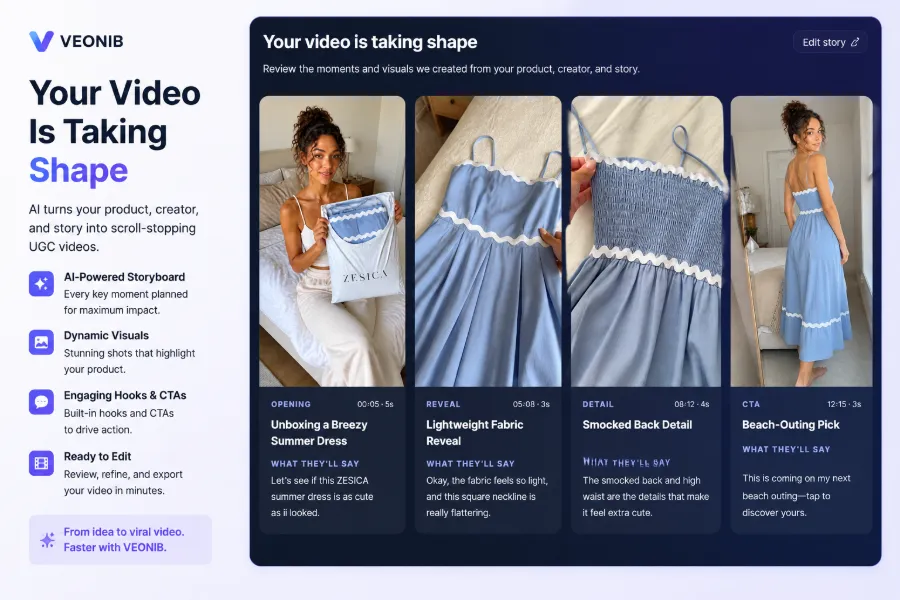
Another dimension of content capacity is batch production. One video cannot solve the traffic problem; continuous content supply is needed to create a compounding effect. VEONIB supports batch generation of UGC seeding videos; after entering a product link, it automatically matches multiple Story templates – problem‑solving, unboxing, lifestyle, social proof, etc. – enabling sellers to produce in a day what would normally take a week. This batch‑production capability determines whether a seller can seize the traffic window. The competitive focus for cross‑border sellers has shifted from “product visuals” to “content production speed”; whoever can output a video in 60 seconds captures the traffic window.
For teams that have mastered the basic workflow, scaling up is the next step. E‑commerce ad creative consumption outpaces traditional advertising; a set of creatives decays after two weeks and needs continuous replenishment. In this regard, the automated solution for large‑scale e‑commerce ad deployment provides a practical approach to link creative production with ad‑placement cadence.
FAQ
What does the “live e‑commerce breaks 5 trillion” data mean for cross‑border sellers?
The figure shows that video content has become the mainstream distribution format for e‑commerce traffic, not just a short‑term hype on a single platform. For cross‑border sellers, the takeaway is that platform algorithms are shifting toward video, and the traffic ceiling for static listings is shrinking. You don’t need to copy domestic live‑commerce models verbatim, but you must incorporate video content into daily operations.
My small team has no host resources; can we just do short videos and skip live streams?
Yes. Short videos are the reservoir for live streams. First, get the short‑video content production and ad‑placement rhythm working, accumulate stable traffic and conversion data, then consider adding live streams. For a 2–5‑person team, the ROI of short videos is far higher than live streams, and there’s no risk of time‑zone or host turnover.
Which is more suitable for high‑price products: short videos or live streams?
High‑price products are better suited to short videos. These products require decision education; users compare and search repeatedly, and the long‑term exposure of short videos meets that need. Live‑stream impulse logic fits low‑price, high‑visual‑impact products.
How to solve time‑zone and language issues for cross‑border live streams?
Time‑zone issues can be addressed by pre‑recording live content instead of real‑person streaming, or by concentrating live sessions during the target market’s evening peak. For language, first generate multilingual scripts with AI, then have native speakers review and fine‑tune – this is more controllable than direct translation. The cost and risk of real‑person live streams are often underestimated.
I have no video‑production experience; how can cross‑border sellers quickly accumulate assets?
Start from product links and use automation tools to generate basic assets, then iterate based on placement data. Don’t chase perfect production at the start; first establish the “asset generation → placement testing → data feedback → content optimization” loop. Quantity of assets outweighs individual quality, especially during the cold‑start phase.
Share Article