How to Turn Fashion Product Links into 30‑Second Short Videos with One Click
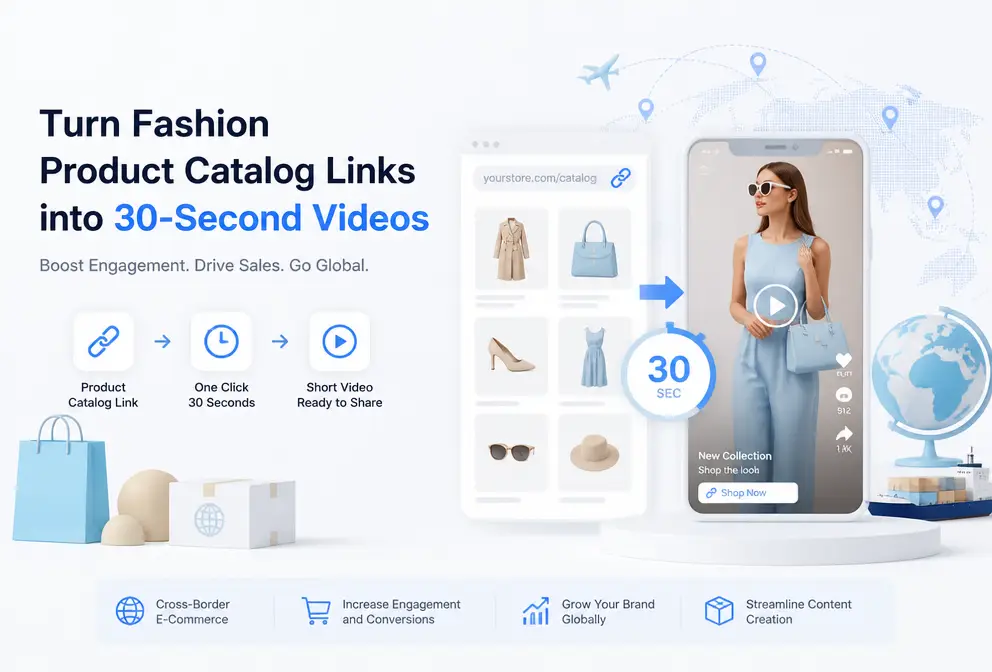
Fashion e‑commerce weekly new arrivals are a rhythm that people both love and hate. The love is the traffic and conversion that new items bring; the hate is the bottomless video production demand behind each new arrival. TikTok and Reels have a golden length of only 30 seconds—sounds short, but if each product requires a model, a scene, editing, and packaging, even three days to produce one video is considered fast. Our operations colleagues face 50 or more new items each week—the content team is always burning out, the market is always urging.
Our team has been looking for ways to compress the workflow since last year. We tried outsourcing editing, using templates, and the most naïve screenshot stitching. In the end, we found that the real bottleneck is not the shooting itself, but the repetitive intermediate steps from product information to the final video. The workflow we break down today requires no camera, no editing software—just drop the product catalog link in, and in about 30 seconds you get a ready‑to‑publish video.
Step 1: From Catalog Link to Asset Extraction — How AI Understands Your Fashion Product
Initially we tried screenshot‑plus‑copy approach—grab the main product image, drop it into CapCut, write a few lines of selling points, add music, and export. It sounds simple, but anyone who has done it knows a single item takes at least 20 minutes per workflow. That doesn’t even count time for music selection, subtitle adjustment, or transitions. Fifty products become nearly 17 hours of pure editing work, and each product’s visual style must stay consistent.
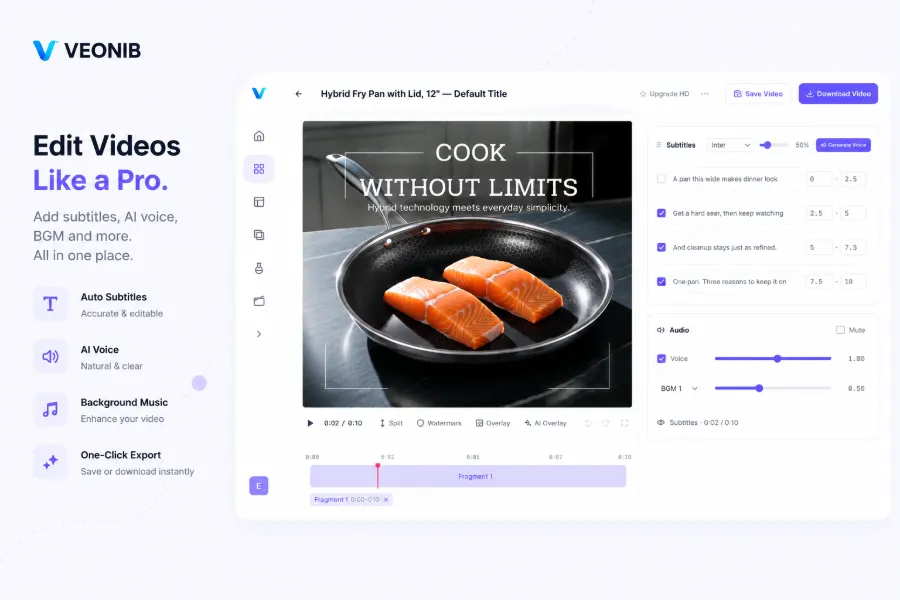
Later we started using VEONIB and simply pasted the product link. The AI automatically parses everything in the link: main image, model images, fabric material description, selling‑point list, size information, and even extracts style keywords like “minimalist,” “streetwear,” “elegant” from the copy. The whole parsing process—from pasting the link to completing asset extraction—takes less than 5 seconds. The real savings isn’t those 5 seconds; it’s the elimination of manual copy‑pasting and asset organization.
A key difference between fashion and other categories is the heavy reliance on visual style consistency—a dress’s visual language is completely different from a hoodie’s. During parsing, the AI automatically does this: based on fabric descriptions (e.g., “silk,” “chiffon,” “wool blend”) and the overall tone of the product page, it matches an appropriate video scene template. No extra manual parameters needed.
If you want to dig deeper into conversion‑rate impact, check out our previous article How AI Video Boosts Amazon Conversion Rate, which includes concrete comparative data.
Step 2: AI‑Generated Script and Storyboard — From Popular Lookbooks to Hook Logic
This step is what I personally find most impressive. After assets are extracted, the AI automatically analyzes the product’s core selling points and generates a complete 30‑second script structure. Thirty seconds is a very strict timeframe: 0‑3 seconds must have a hook, 3‑15 seconds showcase the product overall, 15‑25 seconds focus on detail close‑ups and fabric texture, and the final 5 seconds are CTA. If the order is wrong, completion rates collapse.
The AI has a very practical ability here—it doesn’t rely on hard‑coded rules, but generates script variants based on high‑performing fashion ad data. Once you paste the link, you get 3‑5 complete storyboard versions in one go: runway‑style showcase, lifestyle‑scene, and detail‑deconstruction. Each version pre‑plans every frame’s scene type: model runway position, fabric close‑up focal length, styling comparison composition, etc.
You don’t need to act like a creative director to design the script structure. Just paste the link, and the AI automatically generates the storyboard logic based on the product’s actual selling points and style attributes. This is especially useful for fast‑moving teams—no one has to stay up at 2 a.m. brainstorming copy for a seasonal coat.
For operational reference, see our workflow How to Automatically Turn AliExpress Products into Video Ads. Although the platform differs, the parsing logic and script generation path are similar.
If you’re interested in the technical underpinnings of AI video generation, check out the Latest Trends in AI Video Industry for a framework overview. That article discusses current model suitability for e‑commerce scenarios—some pitfalls we’ve already encountered, which makes the read resonate.
Step 3: One‑Click Rendering and Multi‑Platform Adaptation — Mass‑Producing Fashion Short Videos
After selecting a layout, the AI completes video rendering in about 60 seconds. What does that speed mean for a content team? It means that while you’re holding a product review meeting, the backend can finish 30‑40 different video variants.
Rendering automatically adapts to TikTok’s 9:16, Instagram Reels, YouTube Shorts, and other aspect ratios. In a test we ran, a video rendered once was exported to three platforms, and the performance metrics were within 5% of manually crafted versions. That gap is acceptable, but the key point is—manual version took 3 hours, AI version took 60 seconds.
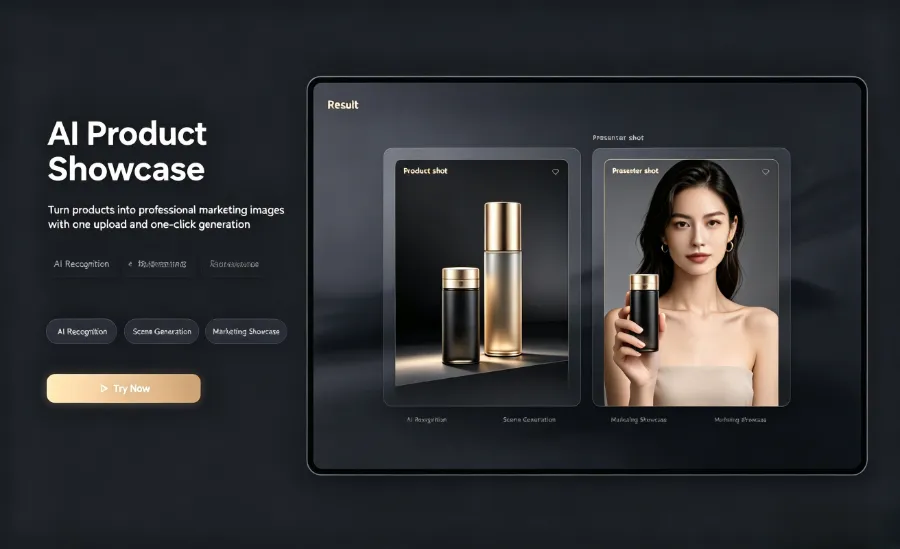
The most useful feature for us is multilingual voice‑over and automatic subtitles. Many cross‑border fashion brands need to target the US, Japan, the Middle East, etc., with the same product. Traditional workflow requires re‑recording voice‑overs or at least swapping subtitle files for each market. The AI can generate all language versions in one go, keeping voice style and tone consistent, avoiding mismatched accents across regions.
Another often‑underestimated scenario is bulk generation of multiple variants for A/B testing. We launched 50 new products in a week and tested different script styles and music pairings. Traditionally, creating five A/B assets per product would take a designer two days. Using this workflow, 50 products × 3 variants each = 150 videos, from link parsing to full export, completed in about 2 hours. After publishing, data runs the next day, revealing which script logic converts better.
For detailed rendering and export steps, see our breakdown of A Skincare Gift Set’s End‑to‑End Production, which shows every node from URL to final product.
Step 4: Operational Efficiency After the Full Workflow — From 3 Days to 30 Seconds: Trade‑offs
Having discussed time and effort savings, we must also address the costs.
AI‑generated videos still lag behind traditional shoots in brand‑tone precision. Especially for brands that require a specific model identity—e.g., a fixed face for a series endorsement, or a particular street scene as a visual symbol. The best AI can achieve now is “style‑close,” not “identical.”
Our team experienced a concrete incident: in the third week we discovered that a similarly styled asset was being used by another store. The content wasn’t identical, but the scene type was indeed similar. The tool is a content amplifier, not a brand‑differentiation tool. When everyone uses the same AI tool, visual differentiation falls back to the product itself and brand positioning—AI can’t solve the “stand‑out” problem.
Another common cognitive trap is “AI replaces shooting.” In reality, it alleviates the bottleneck in editing, but decisions about shooting—what styles to feature this quarter, which models, which visual direction—still require human judgment. 80% of fashion brands can’t produce enough videos after weekly new arrivals not because they lack footage, but because they lack editing capacity. This workflow solves the “editing and rendering” stage, not the “what to shoot” stage.
Which brands benefit most? Fast‑fashion brands with high new‑product frequency, social‑content‑focused shops, small teams where one person handles all video production. Not suitable: high‑end ads requiring real models and real‑world locations, such as brand films or product lines needing extensive external scenery.
A practical approach is hybrid: use AI to batch‑produce social assets for daily testing, follower growth, and consistent posting, while reserving traditional shoots for premium ads and brand films. Our VEONIB users average over 40 short videos per week via this workflow, primarily for daily social content updates and ad testing. For truly high‑end brand‑promotion projects, you still need a shooting team.
For tool‑selection considerations, see the article Complexity Issues of E‑commerce AI Video Tools, which thoroughly discusses hidden learning‑curve barriers despite powerful features.
FAQ
Q1: Are AI‑generated short video qualities sufficient for TikTok ad campaigns?
Yes. We’ve run ad tests; AI video assets achieve completion and click‑through rates close to manually produced averages. However, if the target market demands extremely high visual fidelity (e.g., high‑end Japanese/Korean beauty), AI may lack fine detail, so a manual preview before launch is recommended.
Q2: What if my product lacks model images—can AI handle it?
Yes. The AI will automatically use the main product image and selling‑point text to build the video, though the result leans toward product‑showcase style rather than lifestyle scenes. If you need a model feel, you can upload a few reference images of similar style, and the AI will generate comparable scenes.
Q3: Can I edit the copy or replace footage after generation?
Yes. Before export, you can edit the script, voice‑over, subtitles, and scenes frame‑by‑frame. After changing the copy, re‑rendering takes only a few seconds, producing a new version without restarting the whole pipeline.
Q4: Can multiple product links be batch‑processed at once?
Yes. Bulk import of product links is supported; the system parses and generates videos for each link individually. Production time per video remains essentially independent, without significant slowdown due to quantity.
Q5: Will AI assets duplicate those of other brands?
Scene composition and style may show similarities, but the specific content—product visuals, copy, color palette—is generated from your link, so it won’t be identical. Keep in mind this isn’t a brand‑differentiation tool; visual distinctiveness still relies on your product and brand positioning.
Share Article