AI Video Pipeline for Fast Fashion: One Link, One Minute Production
I work in fast‑fashion cross‑border. The most exhausting part of this job isn’t product selection or supply chain; it’s shooting videos. Every week I must release 15‑20 new styles, each with its own video. Finding models, renting locations, editing clips, adding voice‑overs—each round costs a few hundred dollars and takes another two to three days.
Then I thought, since AI can already write copy and create images, can it also handle product videos for me? I tried the AliExpress Automatic Video Ad Generator and found most tools are too fragmented and the results look fake at first glance. The direction is right, though—what matters is finding a truly automated pipeline rather than a patchwork of tools. Fast fashion’s logic is “speed,” not “precision.” Whoever can produce enough test material in the shortest time will stay ahead.
The Creative Dilemma for Fast‑Fashion Sellers: Not Unwilling, Just Too Busy
When I first started, my video‑making process could be described as “primitive steel‑making.” I filmed fabric details with my phone, cobbled clips together in CapCut, recorded voice‑overs with the phone’s built‑in recorder, and grabbed background music from popular TikTok tracks. A 15‑second video took at least two to three hours from concept to export.
The team is small, the budget limited, so outsourcing to a third‑party shooter? Communication costs exceed production costs. You ask for a “French‑lazy vibe,” and they deliver something that looks like a street‑market clearance. After three rounds of revisions, a single style drags on for a week, and the novelty is already stale.
Later I turned to AI video tools, hoping they were a lifesaver. I discovered that most AI video generators are still too complex for e‑commerce (Why Most AI Video Generators Still Feel Too Complicated for Ecommerce). They’re more like creative suites for professional marketers, not for sellers who are scrambling. High operation barriers and learning curves run counter to fast fashion’s “rapid iteration” core.
The pace of new styles is relentless; you can’t pause to learn a new tool. The deepest feeling during that time was: it’s not that I don’t want to do it, I’m just out of time.
My Solution: One Link, One Video
The breakthrough came after I changed my mindset—no longer hunting for the “most feature‑rich” tool, but for the “fastest output” pipeline.
Fast fashion’s essence is rapid validation. Whether a garment sells well isn’t determined by how polished the video is, but whether a user stops within the first three seconds. So I needed a fool‑proof tool that creates a video just by pasting a link, not a full‑blown editing suite.
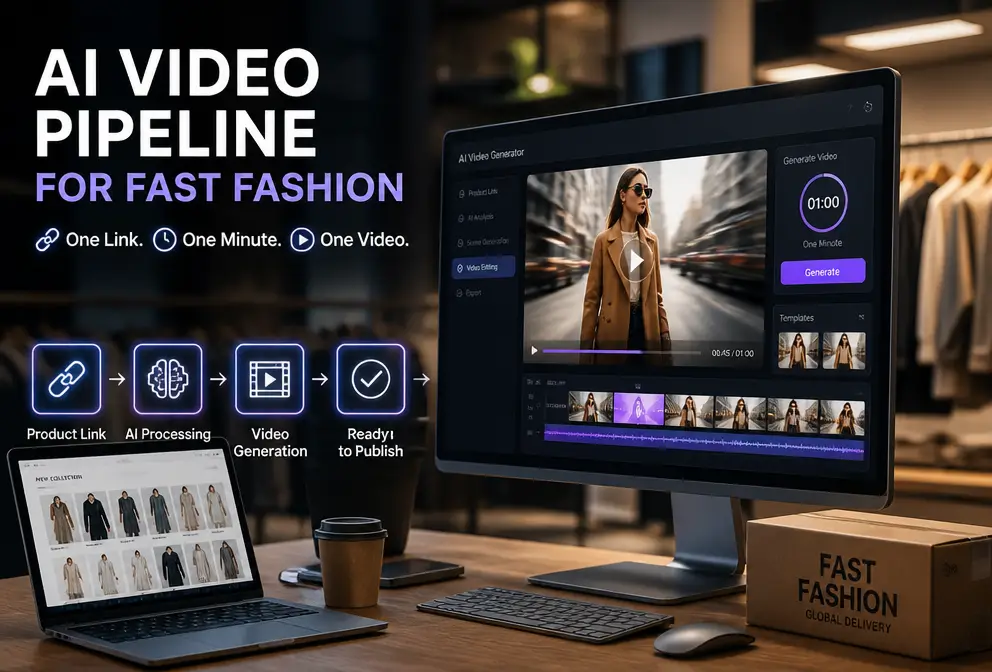
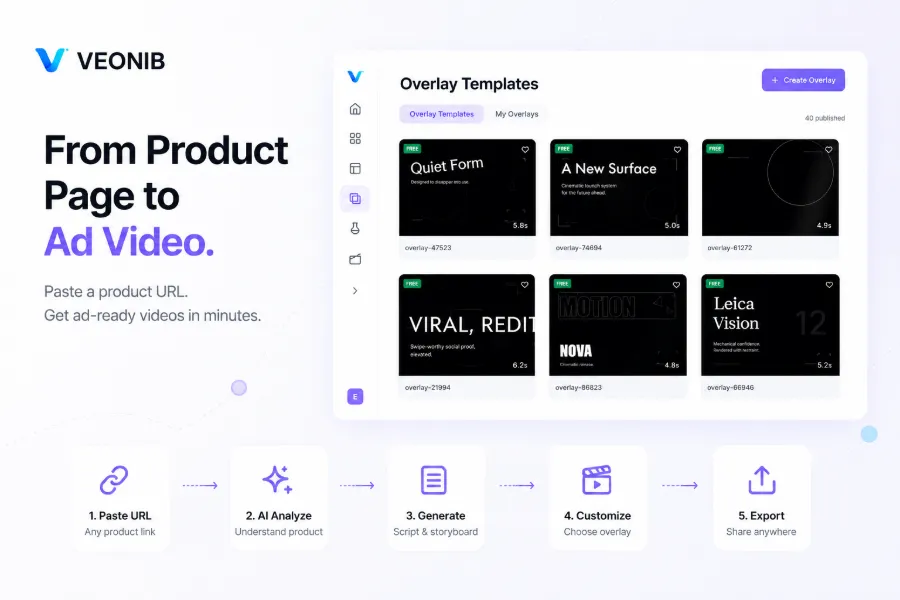
The process is simple: copy the product’s Shopify or AliExpress link → paste it into the tool → AI automatically parses images, title, and selling points → generates 3‑5 scripts and storyboards from different angles → choose voice‑over language and background music → export the final video. No need to film a single frame, write any copy, or learn any editing.

Where does this pipeline bring the most value for fast fashion? Not the visual fidelity (AI image quality is already impressive), but the script‑generation efficiency. For the same garment, AI can simultaneously produce “slim‑fit review,” “date‑night outfit,” and “price‑vs‑value comparison” scripts. Previously, you’d need three separate copywriters or spend an entire day writing them yourself.
If you want a more detailed walkthrough, see the guide on how to use AI to create high‑conversion video ads for Shopify products (Shopify High‑Conversion Video Ad Guide).
Manual Editing vs. AI Automation: Time and Mood Costs
Let’s do a quick accounting. For a 15‑second fast‑fashion product video, what steps are involved manually?
| Step | Manual Time | AI Time | Notes |
|---|---|---|---|
| Script writing | 30 min | 10 sec | AI can batch‑generate 3‑5 variants |
| Video stitching | 45 min | 0 sec (automatic) | No editing experience required |
| Voice‑over recording | 30 min | 15 sec | Instant multilingual generation |
| Export & format adaptation | 15 min | 5 sec | Auto‑fits 9:16, 1:1, 16:9 |
| Total | ~2 h | min | Energy and mood cost difference is even larger |
The time savings are obvious, but I want to emphasize the “mood” cost. After the fifth video, novelty still carries you through. By the tenth, just opening CapCut makes you irritable. Repeating the same steps ten times while keeping rhythm and visual consistency is draining.
What takes a few hours manually, tools like VEONIB finish in under a minute. Moreover, it’s not just fast—it enables batch testing. For a single garment, AI can run five different hooks simultaneously to see which performs best, something manual editing can’t achieve. Even AliExpress links can be converted with a single click; the workflow is unified.
Scaling Up: More Videos Don’t Equal Higher Conversion
At this point you might think that having VEONIB means effortless profit. I thought the same at first, but reality quickly humbled me.
AI tools can churn out videos fast, but fast fashion’s core is “testing styles,” not “producing videos.” More videos don’t guarantee higher conversion. My biggest mistake was generating dozens of videos in a day and dumping them all into TikTok’s ad backend, hoping one would become a hit. The CTR was abysmal, and the spend exceeded the ROI.
I later realized that AI’s value lies in providing “variant quantity,” while the operator still has to do the heavy lifting—analyzing data, tweaking strategy, and retesting. The same dress might flop with a “slim‑fit” hook but take off with a “what to wear on a date” hook within 24 hours. Machines can’t make that judgment.
Another lesson: don’t worship every AI‑generated version. Some hooks are too formal for TikTok and get no views; some voice‑overs are too slow, killing completion rates. Delete the poor ones without guilt. Fast fashion’s “speed” logic dictates that rapid elimination is more valuable than perfect creation. You don’t need every video to go viral; you need to find the three that consistently drive sales out of a hundred produced each month.
So my current workflow is: generate 30‑50 assets with AI each week → split them into 5‑6 groups for small‑budget tests → eliminate low‑CTR versions within 48 hours → scale the remaining ones. The faster this loop runs, the higher the chance of hitting a breakout hit.
FAQ
Q1: Do AI video generators produce repetitive footage?
Yes. Especially when batch‑generating, if the product images have a single angle, the background and composition can look similar. Most tools let you manually tweak storyboard descriptions or switch templates to reduce repetition. I usually generate five versions and pick the two or three that are most distinct.
Q2: Do fast‑fashion product videos need real models? Can AI fully replace them?
It depends on the niche. If you’re selling “vibe” and “styling” aspects, real models are still hard to replace in the short term. If the selling points focus on “fabric details,” “construction,” or “price advantage,” a pure product‑showcase video generated by AI is sufficient, and its conversion can match real‑shoot footage.
Q3: How well do AI‑generated videos perform when directly used as TikTok ads?
Performance depends on material quality and targeting. AI videos excel at producing “above‑threshold” outputs quickly and in volume, which is ideal for rapid material testing. My data shows that AI videos’ initial CTR is comparable to real‑shoot footage, but long‑term success requires constantly refreshing creative—something AI handles very well.
Q4: How many different video versions can a single product link generate?
In theory, unlimited, because each generation can combine different hooks, scripts, BGMs, and voice‑overs. It depends on tool limits; some have no monthly caps. I usually generate 5‑10 versions per product for testing.
Q5: Do AI tools require any editing background, or just basic operation skills?
The basic barrier is almost zero—copy‑paste is enough to start. However, to produce high‑conversion material you still need to understand “selling‑point breakdown” and “ad pacing”: how to speak naturally and capture attention in the first three seconds. The machine provides the draft; fine‑tuning relies on experience.
Share Article