Generate Beauty UGC “Grass‑Planting” Videos in Bulk with AI: From Product Link to High‑Conversion Short‑Form Ads
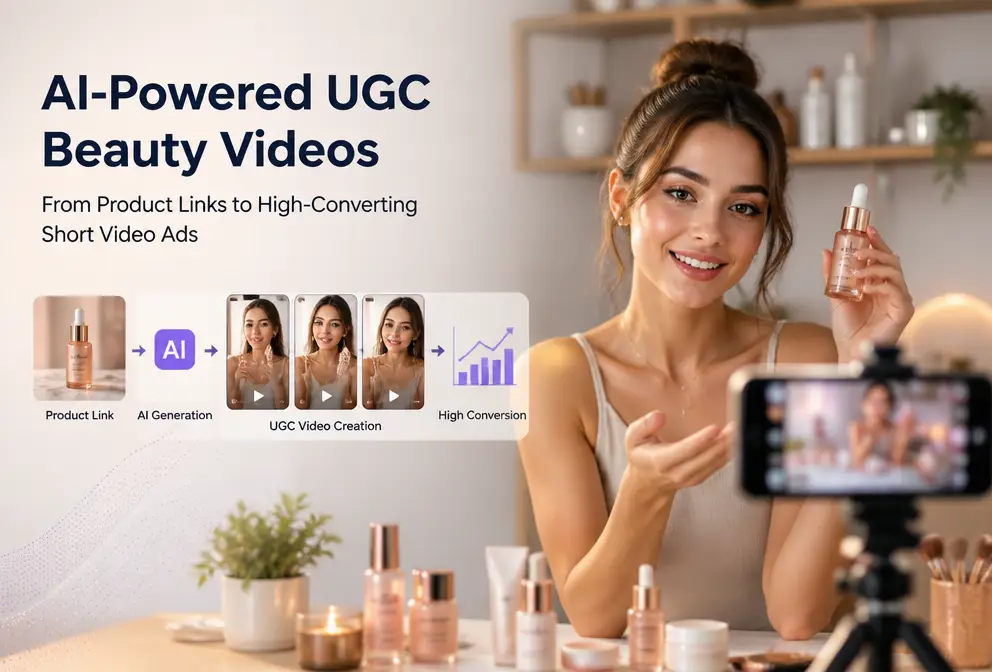
You spent a week filtering influencers, sending samples, and coordinating scripts, only to end up with three UGC video clips that performed modestly after launch. The production cycle and cost of traditional “grass‑planting” videos make most small‑ and medium‑size sellers reluctant to try. A qualified UGC video typically takes 3–7 days from communication to final cut, costing between ¥500 and ¥3,000 per clip, assuming the influencer is cooperative and the return footage is smooth. For beauty sellers handling dozens of SKUs, this output speed can’t keep up with the material consumption required for multi‑platform campaigns.
The conversion logic for beauty categories heavily depends on “trust”—users prefer genuine consumer feedback over polished brand ads. Traditional UGC production suffers from several pain points: sample shipping takes time, communication requires back‑and‑forth, and filming/editing are uncontrollable. When you’re simultaneously running TikTok Shop, Instagram Reels, and China’s Xiaohongshu, the gap between material demand and actual output only widens.
Why Beauty Categories Rely Heavily on “UGC Feel” Content Yet Struggle to Scale Production
In the purchase decision journey for beauty and personal‑care products, “seeing real results” is almost the most critical step. The blendability of foundation, the coverage of lipstick, the delicacy of highlighter—these details are hard to convey fully with a single retouched product image. Users are more inclined to trust a casual video shot by an ordinary person in natural light than a brand’s high‑budget TVC. This is why beauty UGC on TikTok Shop and Instagram Reels converts far better than official brand content.
However, when you need to cover three platforms, five SKUs, and update material more than ten times a week, the sample‑and‑manual‑shoot model can’t handle that volume. Each influencer requires at least a week from onboarding, sample receipt, to footage return. If the shooting style isn’t suitable, you have to find someone else. I’ve seen many sellers try to build their own UGC teams, only to discover management costs double the expected budget and the resulting video styles are inconsistent. If you want to learn how AI can fill this capacity gap, refer to our compiled reading material on e‑commerce AI video ad generators.
How AI Dissects a Product Link and Automatically Generates “Grass‑Planting” Videos
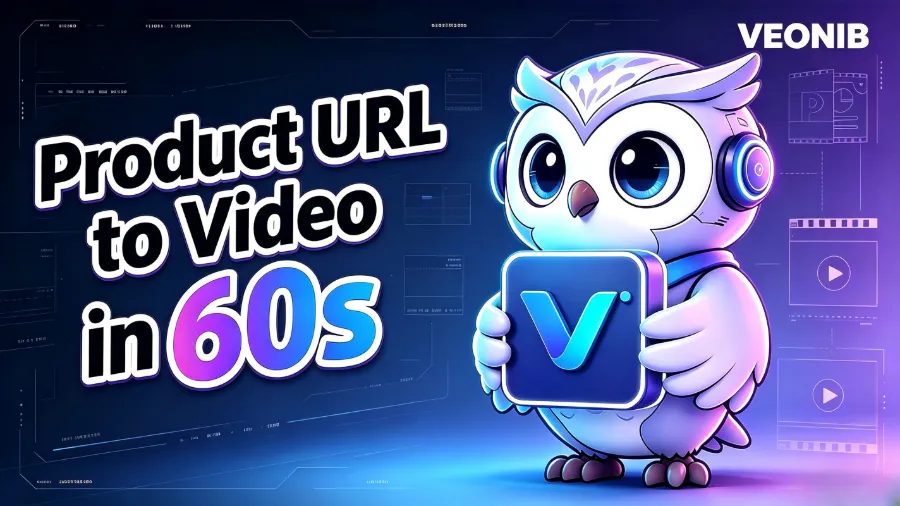
The core capability of the AI video generation tool lies in extracting structured information hidden within a product URL. When you paste a Shopify or Amazon product link, the tool reads keywords in the title (e.g., “matte lip gloss”, “24‑hour wear”), efficacy statements in the description, color codes and capacities in the specifications, and visual information from the main and auxiliary images. The algorithm uses this data to identify the product’s core selling points and the usage scenarios likely to interest the target audience.
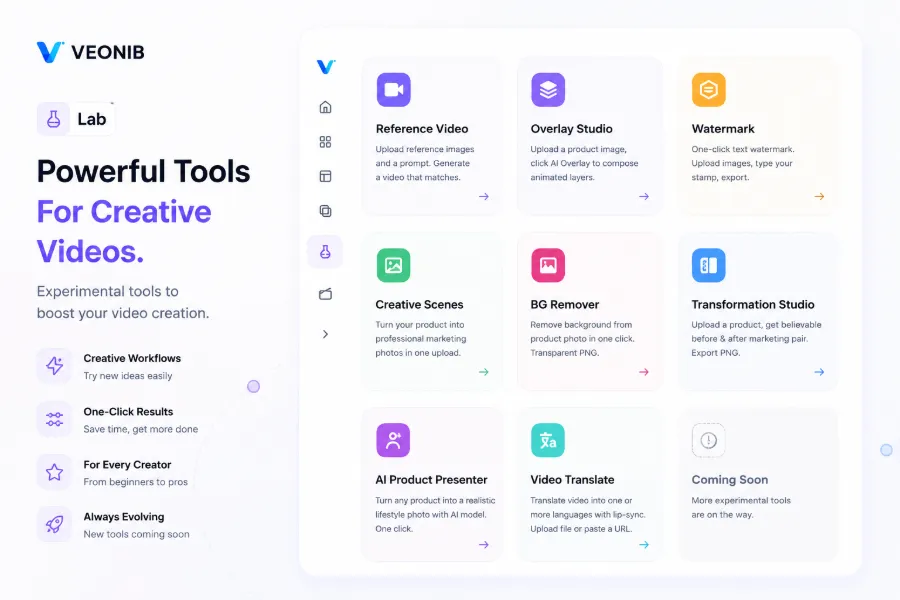
The generation process is more than mechanical stitching. Take VEONIB as an example; its model is trained on a large dataset of high‑conversion beauty ads and knows which camera language conveys “realness”: a finger dipping into lipstick paste instead of applying directly to lips, foundation being spread on the inner arm to show texture, skincare serum displayed under lighting to highlight fluidity—these seemingly “unprofessional” shots are precisely what give UGC its charm. From pasting the link to producing a full script and storyboard preview, the entire parsing and generation usually finishes within 60 seconds.
Core Workflow Demo: From “One Link” to “One Complete Set”
The actual workflow is simpler than most people imagine. Copy the product URL, paste it into the tool, and click “Generate.” Within a few seconds you’ll see multiple hook copy variants, corresponding scripts, and storyboard previews. No prompt writing or video editing knowledge is required.
I usually skim the generated hook list first. The AI’s opening copy often includes several types: pain‑point direct hit, “POV” perspective, and effect‑comparison. Choose the one that best matches the product’s tone, then go to the script page. If the shot order feels off, you can manually rearrange storyboard positions or ask the AI to regenerate a specific scene description. Voice‑over supports 30 languages; I typically select a regional accent for the target market—American English for the U.S., local European accents for Europe—to make it feel more authentic.
After confirming all details, you can export in the desired aspect ratios: 9:16 for TikTok and Instagram Reels, 1:1 for Facebook, 16:9 for YouTube. One‑click export gives you three video files ready for upload. For a more detailed case study, see the analysis on converting a beauty product link into a TikTok ad.
Data Shows Why “Batch Testing” Beats “Meticulous Polishing”
The logic of feed‑stream ads and beauty content consumption habits dictate the lifespan of a single creative. Industry data shows a beauty ad’s effective period is typically 3–7 days. After creative fatigue sets in, click‑through rates can drop 30%–50%, causing CPM to rise and ROI to fall sharply if you don’t refresh the material. For small sellers, spending a week polishing a single video is economically untenable—by the time you finish the eighth revision, its CTR may have already halved from its peak.
A more effective strategy is to produce many versions in bulk and test different hooks, shot orders, and voice tones. Tools like VEONIB make “hundreds of variants per product” possible; you can obtain 20 different videos within an hour, launch them, and on day three cut the poor performers based on data, scaling up the best ones. This “quantity wins” approach yields a far higher ROI in fast‑fatigue categories like beauty than painstakingly refining a single piece.
Common Pitfalls and Trade‑offs: AI UGC Isn’t a Magic Bullet, but It’s Sufficient When Used Wisely
Honestly, AI‑generated videos still lag behind human‑shot UGC in “real‑world feel.” In early 2022 I tested a first‑generation AI tool to create a grass‑planting video for a matte lip gloss. The footage was clean, but the lipstick hue was noticeably orange, a discrepancy obvious to the naked eye. After launch, the CTR was less than half the normal level, and users commented that “the color in the video doesn’t match what I received.” This was a common early‑stage issue—models misinterpret color information from product images or lack sufficient beauty‑color samples in their training data.
Another often‑overlooked issue is that relying solely on AI can make brand tone converge. If all competitors use the same tool without any human tweaks, the resulting footage may become visually similar. The essence of beauty UGC’s “grass‑planting feel” isn’t about polished shots; it’s about looking “unprofessional.” This paradox explains why AI must deliberately emulate ordinary users’ filming angles rather than brand‑style promos.
A third subtle point: the textual information in a product URL (title, description, specs) is more “structured” than the images themselves. Therefore, the quality of AI‑extracted data directly determines the conversion power of the resulting video. Optimizing your listing copy is essentially optimizing ad material quality. If your title is vague or the efficacy description is generic, the AI‑generated video will veer off target.
About 70% of AI‑generated videos need only 5–10 minutes of human fine‑tuning to meet launch standards: tweaking a scene’s description, swapping voice‑over tone, or adding a more realistic hook. That’s my view of “human‑AI collaboration”—AI handles 90% of repetitive creative work, while humans make selections and minor adjustments. For a complete Shopify product video generation workflow, see the detailed guide. Additionally, the article on replacing traditional video production with product URLs discusses AI video feasibility in e‑commerce scenarios.
FAQ
Q1: Can AI‑generated UGC videos be used directly for paid ad campaigns?
Yes. AI‑generated videos include full visuals, voice‑overs, and subtitles, and can be uploaded straight to TikTok Ads, Facebook Ads Manager, or Google Ads. In my own tests, pure AI‑generated assets performed similarly to manually shot UGC in CPM during the first launch. The key is to test multiple versions rather than relying on a single output.
Q2: How many different ad versions can be generated from a single beauty product link?
It depends on the tool’s configuration, but a single product can usually yield dozens to hundreds of distinct variants. Each generation produces different hook copy, script combos, and shot sequences. In practice, I generate 15–20 versions per product for an initial pool, then use data‑driven testing to create and refine further versions.
Q3: Are color‑shift issues severe when AI videos display foundation, lipstick, etc.?
Early AI tools indeed had noticeable color inaccuracies, especially for dark shades and pearl finishes. Models after 2023 have markedly improved color fidelity, but I still recommend capturing key frames before export and visually comparing them with the actual product. If a discrepancy appears, you can adjust the color description in the script or replace the product image to guide the AI toward a more accurate rendering.
Share Article