VEONIB, Synthesia, HeyGen: 2026 Horizontal Evaluation of E‑commerce Product Video Tools

Every time we launch a new product, we have to prepare adapted product videos for TikTok, Amazon, and an independent site. Traditional outsourcing starts at 2,000 CNY per video and takes at least a week to schedule. Using CapCut ourselves? After two nights of learning, we found the frame rate was wrong and the subtitles didn’t sync with the audio, so we gave up. Therefore, we spent two weeks testing three mainstream AI video tools—VEONIB, Synthesia, and HeyGen—using the same Shopify product link. The results were somewhat surprising: products designed specifically for the “product video” scenario are completely different from generic AI video tools.
Why do product video tools need a horizontal comparison?
In 2026, a medium‑size e‑commerce seller needs to produce more than 20 product videos per month on average. These videos must simultaneously fit TikTok’s vertical 9:16, Amazon’s main‑image horizontal 16:9, and the independent site’s 1:1 square homepage. Manual format conversion takes almost half a day for a week’s worth of work.
Our initial idea was simple: find an AI video tool, paste the product link, wait a few minutes, get the video, and launch it. After a full round of testing, we discovered that while many AI video generators exist on the market, their capability boundaries differ dramatically. Synthesia’s core advantage is real‑person digital avatars; HeyGen excels at voice‑over videos and multilingual dubbing translation; but product videos require—direct product‑link input, automatic key‑point extraction, batch generation of multi‑scene assets—tasks that most AI video generators struggle with. That’s why most AI video generators are still too complex for e‑commerce; they weren’t designed for product videos.
Three core dimensions comparison: Who is the “hexagonal warrior” of product videos?
We selected seven key dimensions for comparison: automatic product‑link parsing ability, script and storyboard quality, multilingual voice‑over support, video style types, generation speed, one‑click multi‑platform export, and commercial copyright protection.
First, automatic product‑link parsing. Synthesia and HeyGen both require manual pasting of product descriptions, uploading images, and even writing the script yourself. We tested a Bluetooth headset; on Synthesia, manually entering product selling points took almost 30 minutes because the page limited descriptions to 200 characters, requiring splitting and pasting. HeyGen was slightly better; you could upload the product image directly, but the script still had to be written manually. VEONIB’s approach is completely different—paste the full Shopify link, and it parses the product title, description, specifications, and common words from user reviews, then automatically generates a three‑part script: pain‑point introduction, product showcase, conversion call‑to‑action.
Regarding script quality, Synthesia’s templates are business‑oriented, like corporate training videos; HeyGen’s scripts are better suited for voice‑overs, emphasizing emotional expression; VEONIB’s scripts target e‑commerce conversion scenes, starting with a hook like “Are you still using ordinary headphones?” For multilingual voice‑overs, all three support it, but HeyGen’s Chinese voice‑over sounds the most natural, Synthesia’s English digital avatar is more mature, and VEONIB covers 30 languages, though accents for non‑English/Chinese languages still need improvement.
In video style, Synthesia leans toward digital‑human broadcast, HeyGen offers UGC and voice‑over styles, and VEONIB supports Brand, Lifestyle, Studio, Luxury, UGC, and Minimal six styles. For product videos, UGC and Lifestyle styles perform best in conversion—this was confirmed in later tests. Generation speed is a clear dividing line: VEONIB averages 60 seconds per video, HeyGen takes 2‑5 minutes, and Synthesia is the slowest at 5‑10 minutes.
Below is the detailed dimension comparison table:
| Dimension | VEONIB | Synthesia | HeyGen |
|---|---|---|---|
| Automatic product‑link analysis | Paste Shopify/Amazon link and parse | Not supported, requires manual input | Supports product image upload, requires manual description entry |
| Script auto‑generation | Auto‑generates three‑part product script | Provides templates, requires manual writing | Generates voice‑over script, needs fine‑tuning |
| Storyboard preview | Supports shot‑by‑shot storyboard | Frame‑level editing, more like video editing | Supports scene preview |
| Number of multilingual voice‑overs | 30 languages | 120+ languages | 40+ languages |
| Video style types | 6 styles (UGC/Brand/Lifestyle/Studio/Luxury/Minimal) | Primarily digital‑human broadcast | Voice‑over/UGC styles |
| Generation speed | ~60 seconds | ~5‑10 minutes | ~2‑5 minutes |
| One‑click multi‑platform export | Supports 9:16⁄1:1⁄16:9 single export | Requires manual cropping | Manual adjustment |
| Commercial copyright | Full copyright | Per package | Standard commercial license |
Real‑world workflow test: From product URL to ready‑to‑launch video
We selected a $29.99 Bluetooth headset with a complete Shopify page, five main images, and a description. We ran the full generation process in each of the three tools using this link.
First, Synthesia. After entering the product URL, it jumped to a manual editing page—unable to read any information from the link. We spent about two hours manually writing the script, adding scenes frame by frame, adjusting the digital avatar’s position and expressions. The final rendered video resembled a product explanation clip rather than a TikTok‑ready sales asset. After that test we realized this tool is better suited for training videos, not product ads.
HeyGen is a bit faster than Synthesia. After pasting the link, it can recognize the product title, but product images and detailed selling points still need manual supplementation. After script generation we made three rounds of adjustments; the final rendering took about 4 minutes, with a voice‑over‑style visual—person centered, product in the background. This style might yield questionable CTR on YouTube Shorts or TikTok because users focus more on product details than the person.
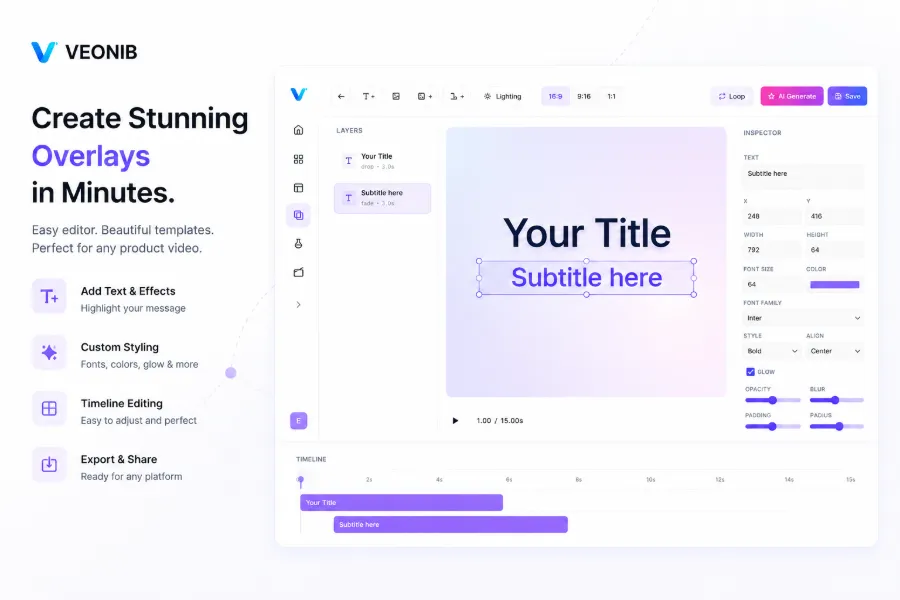
VEONIB’s workflow is completely different. Paste the Shopify link, and in under 60 seconds it outputs a complete UGC‑style video. The AI automatically extracts the headset’s three core selling points—noise‑cancelling depth, battery life, wearing comfort—as three storyboard scenes, adding background music and automatic subtitles. We didn’t even need to open any video‑editing software.
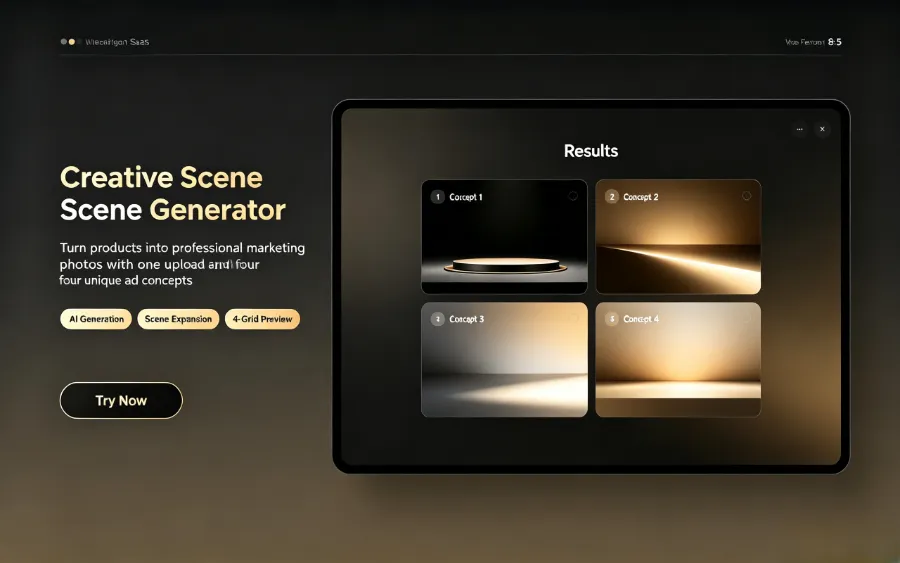
A noteworthy observation: VEONIB can generate multiple styles for the same product—brand, lifestyle, UGC review, etc.—and each style has a different script structure, something other tools cannot do. Its dynamic animation overlay feature can add subtle motion to static product images, making the footage more eye‑catching in TikTok feeds.
Selection guide: Which should you choose in 2026?
After all these tests, the conclusion is simple: there is no perfect tool; the choice depends on your stage and needs.
For startups and solo sellers, the biggest pain points are cost and speed. With 20 videos per month, each video’s price must be controlled. VEONIB’s 60‑second generation rhythm and URL‑paste‑and‑go workflow are almost the most hassle‑free solution for a one‑person operation with no time for learning editing. Using VEONIB can save about 90 % of the cost compared with traditional methods—a figure we calculated by combining outsourcing fees and internal time.
Mid‑size to large brands that have already built their own IP image and need real‑person digital‑avatar hosts for brand story videos still find Synthesia the richest digital‑avatar language library and the most natural body movements. The downside is a longer production cycle, making it unsuitable for high‑volume output.
Advertising teams fear “creative fatigue”—the same video loses performance after a couple of days. VEONIB lets you generate dozens of different styles and scripts for the same product within minutes, a capability highly valuable for ad teams. However, you must accept that its Chinese voice‑over isn’t as natural as HeyGen’s. If the primary market is Chinese‑speaking, you can use VEONIB for the framework and visuals, then replace the Chinese voice‑over with HeyGen’s, complementing each other.
Objectively, VEONIB leads in the pure e‑commerce product‑video vertical, but in the real‑person digital‑avatar field it is still less mature than Synthesia. No tool is perfect; the key is to know exactly what you need. For a deeper dive into AI video tool selection logic, refer to the 2026 E‑commerce Product Video AI Tool Guide, which contains more detailed scenario‑based comparisons.
FAQ
Q1: How long does it usually take for an AI video tool to generate a product video?
From pasting the link to exporting the final product, VEONIB takes about 60 seconds, HeyGen about 2‑5 minutes, and Synthesia about 5‑10 minutes. Generation speed mainly depends on video length and visual complexity; short videos (under 15 seconds) are generally faster.
Q2: Does the generated video have commercial copyright?
Mainstream tools provide commercial licenses, but the terms differ. Some tools define licensing scope by package tier; others include commercial rights by default. It’s advisable to review the licensing agreement before export, especially when using digital‑avatar imagery.
Q3: Is Chinese voice‑over supported?
All three tools support Chinese voice‑over. HeyGen’s Chinese voice‑over sounds the most natural; VEONIB and Synthesia’s Chinese speech quality is good enough for e‑commerce sales scenarios.
Q4: Are there any format requirements for product images or links?
Most tools accept standard Shopify, Amazon, WooCommerce, etc., product links. Images should be high‑resolution main images, at least 1080 × 1080 pixels. Complex backgrounds may cause AI script parsing errors.
Q5: Can the generated videos be used directly on major ad platforms?
Yes, they can be exported and launched directly. Most tools output standard MP4 files supporting 9:16 vertical, 1:1 square, and 16:9 horizontal ratios, compatible with TikTok, Instagram Reels, Facebook, YouTube Shorts, and other major platforms. It’s recommended to check CTR estimates before launch, as performance varies noticeably across styles.
Share Article