Static Images Are Losing to “Low‑Fidelity Video”: The Trend of DTC Advertising Materials Has Shifted

A DTC brand put its entire budget on polished product images for two consecutive ad cycles, but CTR and ROAS kept dropping. Someone on the team casually filmed a noisy unboxing video on a phone—grainy quality, chaotic lighting—and after launching, its click‑through rate was more than twice that of the polished images. This result left the entire creative team silent.
Static images didn’t do anything wrong; the platform and consumer preferences have simply shifted elsewhere. In TikTok and Meta’s recommendation algorithms, “authenticity” is becoming a more valuable signal than “polish.” Low‑fidelity (Lo‑fi) UGC videos—those that look like ordinary users shot them—are replacing polished static images and becoming the new dividing line in DTC material strategy. This article breaks down the underlying logic and three actionable production paths for teams.
Why “Low‑Fidelity” UGC Videos Outperform Polished Static Images
The distribution logic of the algorithms naturally favors video. TikTok and Meta’s recommendation systems use completion rate, interaction rate, and share rate as core weights, and video assets have structural advantages that static images can’t match: a 15‑second video can show product unboxing, usage, and before‑after comparison, whereas a static image is limited to a single frame.
The trust gap between “real usage scenarios” and “polished staged shots” is widening. After repeatedly seeing multiple studio‑shot white‑background images, users develop clear ad fatigue; a modest‑quality video that clearly shows a real home environment, however, is more likely to be accepted as a “real user share.” This trust difference shows up directly in the data: in DTC ad accounts, UGC video assets typically have a 2–3× higher average CTR than static images, and each asset’s effective lifespan is longer, with slower decay.

Another often‑overlooked point: the algorithm’s reward for “native feel” is essentially “high contextual relevance,” not merely low visual quality. A casually shot video wins by naturally presenting the product’s fit within a living scene—e.g., a cat litter box in a living‑room corner, hand cream on a bathroom sink. This scene matching is hard to replicate cheaply with polished images. The direction of generating AI videos directly from product links is standardizing this capability.
The Three Hidden Costs of Static‑Image Assets: Fatigue, Cycle, and Missed Windows
Creative fatigue – Facebook Ads Manager data is clear: static‑image ad CTR typically drops 40‑50 % after 2‑3 weeks of running, forcing teams to constantly create new images to combat decay, each shoot costing a non‑trivial amount. Video assets decay more slowly, so the same budget lasts longer.
Production cycle – A professional static shoot, from prep and set‑up to final output, usually takes 2‑3 weeks. This timeline is acceptable for routine operations but too long for a new‑product launch window. One team spent three weeks preparing and shooting a “perfect blockbuster” static image, only to have competitors capture the launch search traffic with rough UGC videos. By the time the polished images went live, the launch window had closed, and high CPC and low conversion forced the assets to be pulled and redone. Missing the window often costs an order of magnitude more than the production cost itself.
Platform weighted‑exposure logic – Google Ads and Meta continuously tilt exposure toward video content; static images get an increasingly limited share of impressions at equal bids. This trend is reflected in industry‑tool adoption—VEONIB’s public discussion on Product Hunt shows more e‑commerce teams are integrating video production into daily workflows. A healthy‑monitoring cat‑litter brand that converts product links directly into TikTok ad videos is a classic example of a window‑strategy play.
Three Practical Paths: Real‑Person Shooting, User Collection, and AI Generation
Lo‑fi video production isn’t limited to a single route. Teams usually choose among three approaches:
| Production Method | Up‑front Cost | Production Cycle | Scalability | Ideal Use Cases |
|---|---|---|---|---|
| Real‑person shooting | High | 1‑2 weeks | Low | Core products that demand strong brand tone |
| User UGC collection | Medium | 2‑4 weeks | Medium | Building social proof, cold start |
| AI tool generation | Low | Minutes | High | Bulk testing, multi‑platform distribution |
Hiring influencers for shoots offers the most controllable quality, but it’s costly, time‑consuming, and often requires extra negotiations over asset ownership. Collecting submissions from seed users is a classic way to get authentic material, but the collection, screening, and licensing process is cumbersome and output is unstable.
AI‑tool generation has been the most discussed path in the past six months. With AI tools, a UGC video containing script, storyboard, and voice‑over can be generated directly from a product link in under a minute. For small sellers without a filming team, this is the only way to keep up with the rapid iteration of creative assets. Take VEONIB as an example: after past a product link, the AI automatically parses the title, selling points, and price, then applies a UGC story template to generate a “grass‑planting” video featuring a real‑person avatar, dramatically reducing friction in bulk‑producing authentic‑looking assets.

Here’s a counter‑intuitive observation: Lo‑fi video is essentially an “information‑structure upgrade.” Static images keep information at the “product specification” level, while video restructures it into a visual narrative of “usage scenario and problem solving.” So UGC videos win not because of visual quality but because of information density.
Re‑engineering the Creative Workflow: Test Volume Over Production Precision
Many DTC teams still operate under the mindset of “crafting a perfect ad.” That approach worked when traffic was cheap, but it’s obsolete now that algorithmic decay accelerates. Leading DTC teams test 20‑30 video variants each week to fight decay and discover breakout hooks. Prioritizing test quantity over production precision is the core principle at this stage.
Establishing a weekly iteration loop is more important than chasing perfection in a single asset. Produce multiple low‑cost variants each week, run A/B tests across different audience segments, keep the hooks that perform well, and discard fast‑decaying assets. Once this loop is running, the “hit rate” of assets gradually improves.
Batch testing requires controllable costs. Real‑person shoots and user collections can’t sustain a weekly output of 20‑30 assets; the value of AI tools shines here. Tools like VEONIB act as a “mass‑production base” in the iteration cycle—quickly generate many variants for testing, then decide whether to invest in a polished shoot based on data. Cross‑platform adaptation is also part of the workflow: a single video asset has different specs and pacing requirements on TikTok, Reels, and Shorts; AI generation’s advantage is rapid multi‑version output.
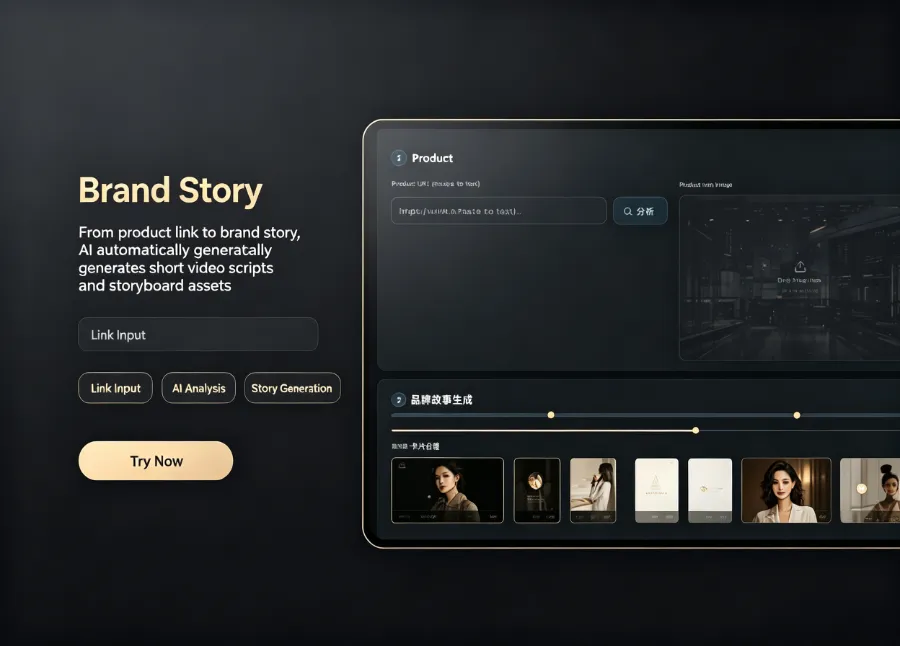
Regarding cross‑platform sync, a noteworthy synergy is the combination of SEO content and video assets—SEONIB and VEONIB’s one‑click integration turns blog posts directly into videos, allowing the same material to work simultaneously in search and social traffic. For budget‑constrained teams, this reuse dramatically lowers the marginal cost of assets. In 2026, low‑cost video marketing strategies will revolve around bulk testing and cross‑platform reuse.
FAQ
What is a low‑fidelity (Lo‑fi) UGC video?
A short video that does not chase high visual polish, styled like an ordinary user’s handheld recording, usually featuring a real user or an AI‑generated avatar, emphasizing authentic usage scenarios rather than studio staging. The core trait is “looks like a user‑generated share,” not a brand‑official ad.
Are static images completely obsolete in DTC advertising?
No. Static images still have value for brand‑tone display, detail‑page conversion, and retargeting, but for cold‑start and testing phases, video assets have clearer advantages in CTR and lifespan. A balanced approach is to use video as the primary ad format and static images as supplemental support, rather than abandoning one entirely.
How can small sellers without a filming team quickly obtain low‑cost UGC video assets?
Three routes: (1) solicit unboxing videos from existing customers with coupon incentives; (2) contact willing micro‑influencers on platforms like TikTok; or (3) use AI video‑generation tools that produce a real‑person‑style UGC video from a product link in minutes, ready for deployment.
Will AI‑generated UGC videos be flagged as low‑quality content by ad platforms?
Currently, major ad platforms have no uniform ban on AI‑generated content; evaluation still hinges on completion rate, interaction rate, and conversion performance. As long as the video truthfully presents the product and avoids false claims, AI‑generated assets are treated the same as real‑person‑shot assets in placement.
Share Article