Brand Digital Human Building Guide: Making AI Personas Truly Resonate with Target Users

Cross‑border e‑commerce teams often don’t lack product selling points; they simply hand those points to a “professional‑looking” AI avatar, and the video instantly becomes a generic ad. The picture is clear, the lighting is nice, but the character’s speech sounds like it’s speaking for any brand. Comments such as “looks like an ad actor” or “too fake” are usually not about video resolution but about a mismatch between the character’s identity, expression style, and the target user.
The configuration order for a brand digital human should not start with picking a pretty face and then forcing a script onto it. A safer approach is to first break down the user persona, then translate that persona into age, clothing, tone, actions, and usage scenarios, and finally calibrate with small‑scale rollout feedback. The judgment is not whether the character is attractive, but whether users believe this person would actually use the product, understand their concerns, and have a reason to recommend it.
First Translate the Target User Persona into Configurable Character Parameters
Before building, the team should define at least five categories of information: region & language, age range, core needs, main concerns, and typical usage scenarios. For a Shopify store, the target user might be a young consumer quickly browsing on a phone; Amazon product‑page users care more about size, functionality, durability, and return‑policy risk. UGC on TikTok needs to make people stop scrolling, while a digital human on a product page should help reduce the user’s decision‑making cost.
These personas should not stop at vague descriptors like “Western women” or “quality‑focused”. They need to be translated into configurable parameters: appearance and temperament determine closeness vs. professionalism; clothing style determines the distance between the character and the product; camera distance influences a sense of pressure; speech speed affects information reception; language habits affect local feel; emotional intensity decides whether the content feels like a genuine share or a hard‑sell. Users’ trust judgments usually stem from the alignment of the character with the product usage scenario, not from higher visual fidelity.
If the product is clothing, converting flat‑lay images into proportions, poses, and lifestyle environments of a real person influences credibility more than simply adding facial detail. A similar configuration mindset can be found in the Virtual Fashion Model case study. At this stage, appearance and clothing are clues for users to decide “Does this person belong in my life?” rather than mere decoration.
Character identity must be clarified first. A user representative creates empathy, a brand spokesperson maintains consistent brand recognition, and a product explainer clarifies complex features. Having a lifestyle‑experience character continuously explain technical specs, or a serious professional suddenly use exaggerated facial expressions for an unboxing, will cause identity drift.
Localization for global markets is more than swapping subtitles. Forms of address, body distance, gesture amplitude, background objects, aesthetic preferences, and how users talk about safety and return risk can all affect credibility. The same face with different languages does not equal a locally authentic character for each market. Scalable production is pushing these configurations into finer content workflows; see the Content Production Automation Trends. However, the easier batch generation becomes, the easier identity errors can be duplicated across batches.
| Character Position | Applicable User Psychology | Appearance & Clothing | Expression Style | Suitable E‑commerce Scenarios |
|---|---|---|---|---|
| Professional Explainer | Reduce functional comprehension cost | Neat, stable, professional | Logical, low exaggeration | Electronics, B2B hardware |
| Real‑User‑type UGC | Seek similar experiences | Everyday wear, lifestyle | Short sentences, showing reactions | TikTok recommendation, unboxing |
| Lifestyle Experience Provider | Imagine post‑use life | Scene‑appropriate clothing & environment | Narrative, immersive | Home, beauty, pet supplies |
| Brand Story Role | Remember brand attitude | Fixed visual anchor | Emotional but not product‑stealing | Independent sites, brand ads |
Use Character Settings to Unify Appearance, Tone, and Product Expression
A character setting sheet should lock at least six items: identity, appearance, clothing, tone, actions, and prohibited expressions. Identity determines what judgments the character can make; appearance and clothing must match the scene; tone decides whether the user perceives the speech as advice, explanation, or sales pitch; actions must follow the camera and product; prohibited expressions prevent unverifiable promises like “lowest price online” or “absolutely safe”.
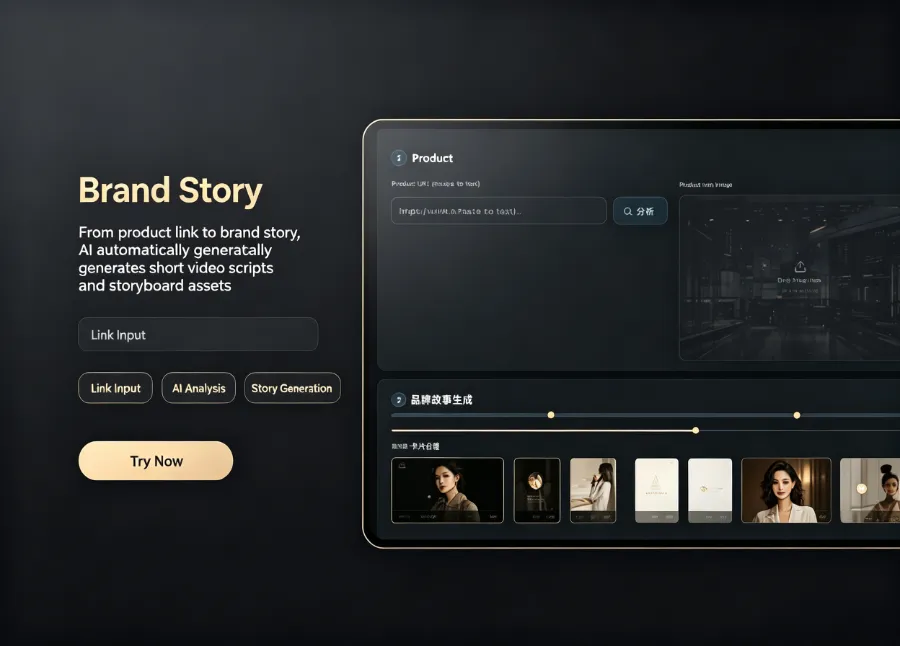
VEONIB parses product URLs, generates scripts, plans storyboards, and outputs videos, but manual confirmation is still needed to ensure the character settings are correctly applied. Automatically reading product titles and selling points saves time copying data, but it cannot replace the team’s judgment on whether “water‑resistance” should be explained by a professional explainer or naturally mentioned by a user using the product in rain.
Functional products need clear explanations; lifestyle products need enhanced immersion; high‑trust‑barrier products should lower emotional intensity and add verifiable evidence. Parameters, visuals, copy, and user perception should correspond: professional attire with close‑up breakdown, copy covering size and limits, user feels controlled; home attire with medium‑shot usage, copy describing real hassles, user feels familiar; exaggerated facial expressions with complex medical or safety claims, user perceives risk.
Product expression can be organized as “User Question → Usage Context → Key Selling Point → Verifiable Information”. A kitchenware ad that only says “enhances cooking experience” lacks concrete connection between character and product; if it first mentions a hard‑to‑clean pan bottom, then shows sauce collection and cleaning, and finally adds material, capacity, and limits, the character appears to be solving a problem. The Kitchenware Ad Dissection case is useful for checking whether selling points and character expression match.
Clothing, background, lighting, camera, and actions must also be coherent. A person in a suit demonstrating a household cleaning tool in a chaotic kitchen, or someone in home wear explaining an industrial sensor in a pure white studio, creates visual dissonance. Visual style testing can use a video production reference platform, but the focus should be on the identity and distance perceived by users, not on whether a single frame is sufficiently polished.
Create Different Digital Human Versions for Each Distribution Channel

The same brand should not copy a single set of digital‑human assets verbatim to TikTok, Amazon product pages, and independent sites. Consistent brand recognition means keeping visual anchors, voice characteristics, and expression boundaries stable, not using the same character version on every platform.
TikTok versions should create a lifestyle conflict in the first few seconds, using natural reactions and short sentences to keep viewers watching; Amazon versions must clearly show function, size, usage method, and limitations; independent‑site versions can add brand background, after‑sale info, and purchase trust. Platform back‑ends usually treat the first 2–3 seconds of retention as a short‑video diagnostic node, so TikTok intros should not start with a full brand introduction. Amazon’s viewing task differs, and over‑pursuing a “UGC‑like” feel may crowd out specification details.
Teams can plan three length versions: 15 seconds for quick testing, 20 seconds to add a core selling point, 30 seconds for a full showcase of problem, usage, and evidence. When length increases, it isn’t just stuffing more points into the script; it adds a necessary action or evidence shot. More shots increase the chance of continuity errors in facial expression, hand position, and product state.
B2B hardware needs professional expression; functional product hardware video examples can be used to verify that the digital human explains features rather than stealing product focus. For cat litter, whose value is hard to capture visually, scent control, health monitoring, or cleaning burden need before‑after comparisons and user reactions; the cat litter ad case is better for checking how “invisible value” is expressed.
Before launching cross‑border versions, verify subtitle language, currency, measurement units, cultural symbols, and the character’s local credibility. Teams can use the video tool demo entry to check overlay material and cross‑platform visuals, but the demo should not be treated as the adaptation itself.
Calibrate Digital Human Credibility with Small‑Scale Tests
The pre‑launch review order should be fixed: first check character consistency, then product facts, then language & culture, and finally placement metrics. Whether the character’s face has been swapped, voice drifted, product name/price/size is accurate, and subtitles/gestures suit the local market must be verified before looking at data. Otherwise, when click‑through rates drop, the team cannot tell if it’s a creative issue or a factual error.
Each A/B test should change only one core variable and retain at least two comparable digital‑human versions. You might change only tone while keeping clothing and background the same; or change only the opening action while using the same script. Observe early‑second retention, completion rate, click‑through, add‑to‑cart, conversion, and comment feedback, especially noting recurring skeptical words in comments.
A typical failure occurred when a team finished character configuration, produced multiple market versions, and launched them simultaneously. About a week later, the videos still got views and clicks, but comments repeatedly questioned the character as an ad actor and the unnatural tone. The solution was not a simple re‑edit but a re‑segmentation of character, copy, and selling‑point variables, new material creation, and a delayed rollout schedule.
The review checklist can be compressed into four steps:
- Compare face shape, voice, clothing, actions, and identity settings across videos.
- Verify product facts, price, specifications, and promise boundaries line‑by‑line.
- Check subtitles, units, currency, gestures, background objects, and channel specifications.
- Record retention, completion, clicks, add‑to‑cart, and comment doubts together for each version.
Batch generation does not automatically reduce maintenance costs. When using VEONIB, if a product page updates price or selling points, old scripts, storyboards, and exported videos may still be out of sync; version naming, asset archiving, and re‑generation all require responsibility. Teams have repeatedly refreshed data dashboards only to discover the problem originated when product facts changed; looking at metrics later only slows troubleshooting.
Confirm Brand Recognition Is Not Overshadowed by the Digital Human Before Launch
During final acceptance, the team should ensure users can quickly understand the product, are willing to believe the character actually uses it, and remember the brand rather than just a face. The character’s appearance, voice, tone, and actions must stay consistent across videos, while preserving necessary differences in address, distance, and risk expression for each market.
Complete four pre‑launch checks: character consistency, product information accuracy, channel specification compliance, and user‑feedback interpretability. Unverifiable exaggerated promises, vague professional jargon, and dramatics unrelated to the product should be removed outright. The more polished the visuals, the more they must be examined for whether they unrealistically embellish the product’s usage environment.
Digital‑human credibility is not a fixed result after a single generation. Teams need to continuously maintain the “persona → configuration → channel version → test feedback → iteration” loop, making the character a content asset rather than an abandoned template after release.
FAQ
Which user‑persona information should be configured first for a brand digital human?
First configure region & language, age range, core needs, main concerns, and typical usage scenarios (the five categories). Afterwards translate them into clothing, speech speed, camera distance, and emotional intensity, avoiding the “pick a face first, then add identity” approach.
Does the same brand need different digital‑human versions for TikTok, Amazon, and independent sites?
Yes. At a minimum adjust the opening, information density, and character actions. A 15‑second version suits retention testing, a 20‑second version adds a selling point, and a 30‑second version includes usage process and evidence.
How to tell if an AI persona looks like the target user rather than a generic ad actor?
Observe whether the character naturally fits the product usage scenario and check if comments repeatedly mention “looks like an ad” or “not a real share”. Typically, testing two versions and changing only one variable at a time reveals whether the issue stems from the character or the script.
Which appearance or expression issues in digital‑human videos most often reduce conversion credibility?
Over‑polished looks, clothing mismatched to the scene, exaggerated gestures, stacked selling points, and unverifiable promises are common culprits. If product specs are spoken incorrectly, even high completion rates may still cause drops in add‑to‑cart and conversion stages.
When testing digital‑human material, which data should be prioritized?
First look at early‑second retention and completion rate, then click‑through, add‑to‑cart, and conversion, combined with comment feedback for diagnosis. A version may have high clicks but low add‑to‑cart, indicating that the character or opening attracted attention but failed to build sufficient product trust.
Share Article