Localizing Cross‑Border E‑Commerce Content with Regionalized Character Imagery: Covering Middle East, Southeast Asia, and Western Markets

When the same product is launched in multiple countries, low engagement is often not due to a translation error but because the people on screen appear as “outsiders”: the character’s temperament, clothing, camera distance, home or living setting, and the narrative style in the first few seconds do not match the viewing habits of local users. Teams usually replicate the ad within a few hours, only swapping subtitles and voice‑overs, and by the time click‑through rates, 3‑second retention, and comment feedback deteriorate, the entire batch of assets has already gone live.
First, Determine Which Content Must Be Regionalized
When reusing assets across markets, product facts usually do not need to be rewritten—such as capacity, material, compatible models, price units, delivery promises, and after‑sales policies. If these details are altered excessively in the name of “localization,” inconsistencies can arise between Amazon product pages, Shopify pages, and ad landing pages. Elements that must be adjusted include the character image, living scenes, language expression, holiday context, and user pain points.
Each product should be split into at least three regional versions: Middle East, Southeast Asia, and Western markets. Here, “version” does not mean just three subtitle tracks; it means retaining different character directions, opening shots, and copy pacing for each market. TikTok, Instagram, Amazon in‑site video, and TikTok Shop have different viewing environments; platform aspect ratios, opening information density, and call‑to‑action prompts cannot be copied verbatim. For production differences across these platforms, see the Cross‑Platform Advertising Video Strategy.
Skin tone should be treated only as a visual variable, not as a proxy for nationality, religion, culture, or purchase motivation. Regionalized character imagery must first make the audience feel that the character and setting naturally belong together, and only then showcase the diversity required by the brand. A home‑goods ad aimed at Western markets should not assume that a change in skin tone means users care more about “personal expression”; likewise, consumers in the Middle East are not a monolithic group defined solely by a single style of clothing or interior design.
Middle Eastern content often requires more careful handling of clothing, body exposure, family relations, and religious holiday contexts, yet there are still clear differences between countries. The Southeast Asian market comprises many languages, income tiers, and urban lifestyles, so a single “tropical life” template cannot cover all regions. Western market assets can usually retain more direct product comparisons or personal experience narratives, but brands still need to adjust narrative distance based on age, category, and platform moderation policies.
When defining boundaries, content can be split into two layers: product selling points remain unchanged, while the expression style is adjusted. Beauty products can continue to discuss coverage, ingredients, and duration of use, but the character’s action of picking up the product, bathroom or vanity setting, camera distance, and the opening line should be dictated by market context. Click‑through rate, conversion rate, and completion rate only indicate outcomes; they cannot alone prove that a particular skin‑tone character is the cause. Comments and drop‑off points in user‑generated content often help the team pinpoint issues.
Building Regionalized Character Imagery for the Middle East, Southeast Asia, and Western Markets
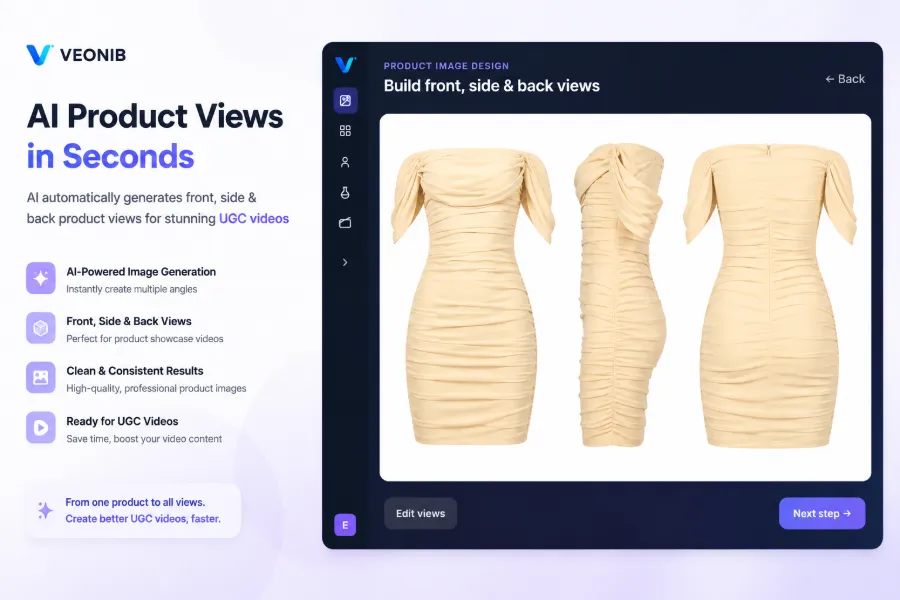
Regionalized character imagery should not only “represent locals” but also help the audience understand within seconds how the product is used, why it appears in that setting, and why the character is trustworthy. Beauty ads need to show application, mirror observation, and skin texture details; apparel ads must make body shape, fabric, and movement clearly visible; home‑goods rely on spatial proportions; consumer electronics must demonstrate hand operation, screen feedback, and usage distance.
Middle Eastern assets can start from indoor environments, clothing layers, and family or personal usage scenarios that better match the product category, avoiding a mechanical overlay of Arabic subtitles, traditional dress, and gold décor. Southeast Asian markets should first differentiate between urban commuting, family consumption, and outdoor lifestyle scenarios before deciding on character age, attire, and camera pacing. Western markets should also not rely on a single “white model in a minimalist apartment” template; profession, age, body type, and living space similarly affect product credibility.
Each region should prepare at least two character direction variants and compare them with one no‑character version. One direction may lean toward lifestyle, another toward product demonstration; the no‑character version serves to assess whether the product itself has sufficient visual appeal. The script skeleton remains the same, only swapping characters, scenes, subtitle tone, and a few camera variables, so ad testing does not become an indecipherable mix of creative elements.
| Market Region | Character Variable | Scene Variable | Copy Emphasis | Main Risks |
|---|---|---|---|---|
| Middle East | Clothing layers, age, camera distance | Family, indoor, holiday context | Trust, practicality, usage boundaries | Religious and dress misinterpretation |
| Southeast Asia | Urban life, skin‑tone diversity, action pacing | Commute, family, outdoor | Value for money, convenience, authentic experience | Treating multiple national markets as one |
| Western | Age, body type, profession & lifestyle | Home, work, personal use | Experience, comparison, functional proof | Over‑reliance on a single model template |
A single set of regionalized character imagery may not suit every category. Hand‑cream benefits from close‑up shots that emphasize texture; kitchenware needs clear countertops and workspace; headphones require clear depiction of wearing action and commuting environment. The team once found in a skincare asset set that while the characters felt very “local,” the camera was too far from the face, so viewers could not see any skin‑tone changes, and the regionalization effort yielded no effective insight.
Character directions should also be divided into primary visual characters, alternative characters, and no‑character versions. The primary visual character serves brand consistency, alternative characters are used for compliance, age‑group, and style testing, and the no‑character version acts as a baseline for product information. Similar regional decomposition cases can be seen in the Product Advertising Character Example, but the character choices in that example should not be directly copied to another category.
Integrating Localized Assets into a Bulk Production Workflow
The actual workflow typically starts with a product link or screenshot. The team first extracts the title, main image, selling points, price, specifications, and usage restrictions, then uses the script skeletons for the Middle East, Southeast Asia, and Western markets to generate opening scenes, storyboards, subtitles, and ad videos, finally exporting platform‑compatible MP4 files. If product information is incompletely captured, even a perfectly cast character is meaningless, as the video may display the wrong color, price, or nonexistent features.

In this step, VEONIB is logged in the production record as the workflow node that converts a product link into a video: the system reads product information, analyzes images, descriptions, and selling points, then generates scripts and storyboards. Product page data show that videos can usually be generated within 60 seconds, but this metric only reflects production speed and does not guarantee click‑through or conversion rates; after generation, a manual review is still required to ensure the regional character aligns with the product style.
Fields on product links, Shopify pages, Amazon detail pages, and TikTok Shop back‑ends are not always complete. Prices may be captured as outdated promotional values, the main image may lack backside details, and variant names may not be incorporated into the script. If the team does not retain the original link, screenshot, and capture timestamp, it becomes difficult after a few days to determine whether the product information changed or the script read the wrong field. A more transparent technical reference can be found in the Open‑Source Video Generation Project, but there remains a gap of moderation and version control between the open‑source process and actual ad deployment.
Naming conventions should be defined before bulk generation, e.g., embedding market, language, character direction, duration, and release date sequentially into the filename. Each version must also record the script ID, product information snapshot, subtitle file, voice‑over file, and final MP4; saving only the exported video is insufficient. Common loss‑of‑control scenarios include: character changed but old subtitles remain; price updated but old video continues to run; a 30‑second version corrects a selling point while the 15‑second version is not synchronized.
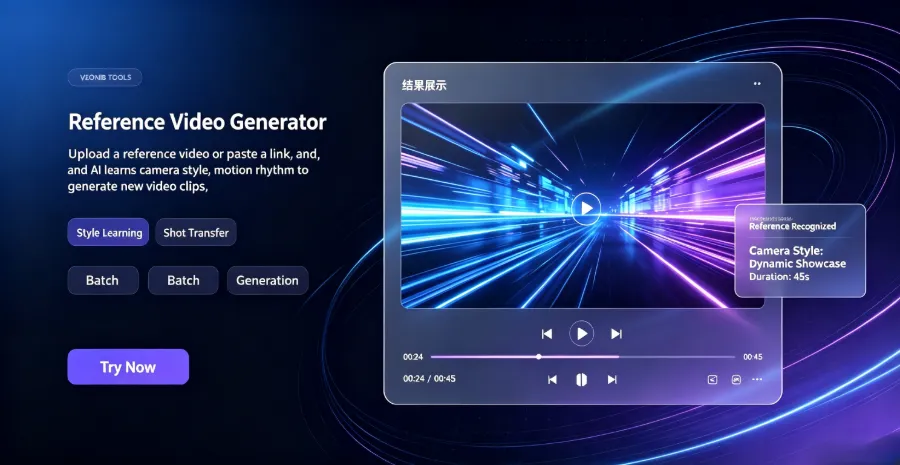
Duration also changes the localization expression. A 15‑second video suits a hook and a single selling point; 20 seconds can add usage action or comparison; 30 seconds provides space to explain problems, demonstrate processes, and include calls to action. The three lengths should not be mere tail cuts, otherwise the 15‑second version may end before the key selling point appears, and the 30‑second version may suffer reduced completion rates due to repetition. The team can first review Creating Short Videos from Product Pages to decide which steps merit automation and which still require manual verification.
Using Testing and Release Checks to Avoid “Looks Localized”
Pre‑release checks should not focus solely on whether subtitles are translated. It is necessary to verify item‑by‑item that the character naturally matches the target audience and product, the voice‑over fits the regional context, line breaks in Arabic and English do not obscure the product, and the selling points remain consistent across language versions. Ad review may also reject assets due to visual insinuations, body displays, exaggerated claims, or sensitive words; regionalization does not automatically reduce moderation risk.
Each round of regional testing should retain at least three control versions: regionalized character version, generic character version, and no‑character version. The team monitors click‑through rate, 3‑second retention, completion rate, add‑to‑cart rate, and conversion rate, rather than immediately scaling budget for a version with high clicks. Short‑form platforms typically treat the first few seconds as a crucial window for continued viewing, but high click rates may stem from curiosity; if users reach the product page without adding to cart, it indicates the hook did not align with the product promise.
Tool maintenance can also create new troubleshooting tasks. After bulk generation, the team must cross‑reference VEONIB export logs, ad platform asset versions, and product page update records one by one; if only the final files are kept, it is often impossible to pinpoint whether the issue lies with the character, script, voice‑over, or product field. Small teams can refer to How Small E‑Commerce Stores Compete with Big Brands Using AI Videos, but with limited resources it is not advisable to generate dozens of versions without clear hypotheses.
Multi‑market testing raises maintenance costs, an unavoidable trade‑off. The team once spent two consecutive days creating Middle Eastern, Southeast Asian, and Western ads for the same product, only changing subtitles and voice‑overs while reusing the original character, scene, and opening hook. After launch, the Middle Eastern version showed markedly lower click rates, and the Southeast Asian version’s completion rate dropped sharply within the first three seconds, leading to a full rework of the asset batch. Rework not only delayed deployment but also rendered previously reusable ad review records meaningless.
A safer pace is to first release a small set of control assets per market, wait for sufficient exposure and add‑to‑cart data, then expand to more platforms and products. The content team must also synchronize asset generation, SEO articles, and publishing tasks; otherwise, after product information updates, old videos may remain embedded on pages. For cross‑team synchronization, see the Content Publishing Coordination Process. The most common point of failure in multi‑market localization is not translation but version synchronization: any update to characters, scripts, product information, or platform specifications can cause outdated versions to be mistakenly published.
FAQ
Is cross‑border e‑commerce content localization simply translating copy into the local language?
No. Full localization also includes character imagery, living scenes, narrative distance, platform pacing, subtitle layout, and moderation risk; the same product should be split into at least three regional versions: Middle East, Southeast Asia, and Western markets.
How should character imagery with different skin tones avoid stereotypes?
Treat skin tone as a visual test variable, not as a cultural judgment or proxy for purchase intent. Each region should prepare at least two character directions and include a no‑character version, using click‑through, retention, and add‑to‑cart data to verify whether the character truly improves product understanding.
Do the Middle East, Southeast Asia, and Western markets require completely different ad videos?
No full rebuild is needed, but you cannot simply swap subtitles and voice‑overs. Product facts and the script skeleton can be reused; characters, scenes, camera distance, opening hook, and tone should be adjusted separately for each of the three markets.
Which data metrics should be tested for regionalized character imagery?
At minimum, test click‑through rate, 3‑second retention, completion rate, add‑to‑cart rate, and conversion rate. The testing period should cover sufficient exposure and retain three control types—regionalized character, generic character, and no‑character—to avoid mistaking high clicks for high purchase intent.
When producing 15‑, 20‑, and 30‑second videos for multiple markets simultaneously, how can version‑management chaos be reduced?
First establish a naming convention that includes market, language, character, duration, script ID, and date, then save product information snapshots, subtitles, voice‑overs, and original videos. Each of the 15‑, 20‑, and 30‑second versions should record its own review status; modifications to one version should not be assumed to apply to all.
Share Article