2026 EU €150 Tax Reform Implementation: How Polish Sellers Can Break Through with Video?
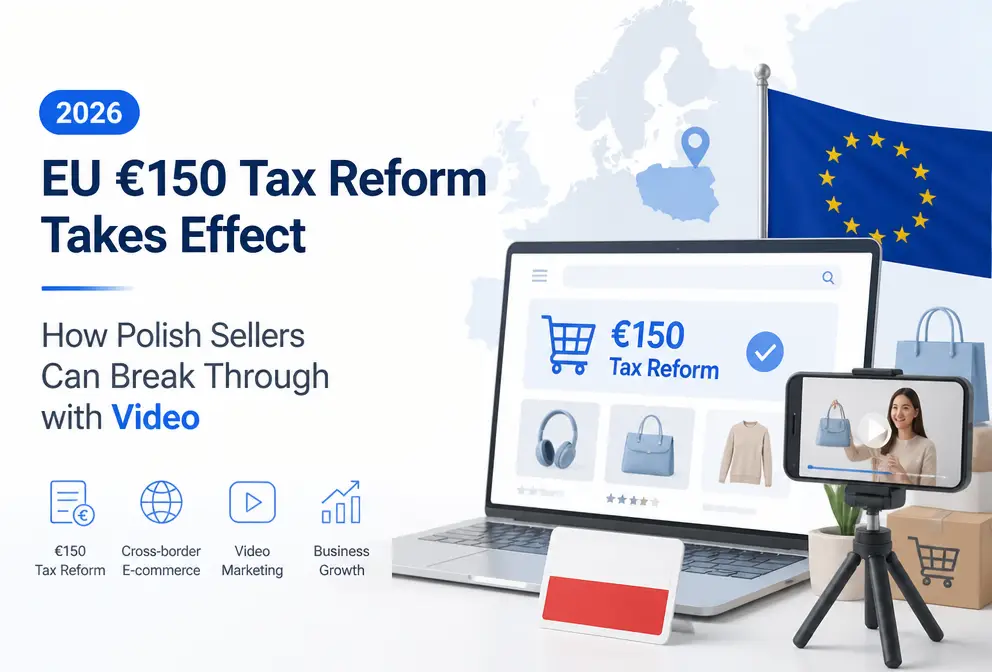
Staring at the July 1 calendar mark, I knew the long‑rumored €150 tax‑free threshold was finally disappearing. After the EU tax reform takes effect in 2026, every cross‑border order will be subject to customs duties and VAT, instantly squeezing the profit margins of Polish cross‑border e‑commerce sellers. When price advantage disappears, the only weapon that can still capture buyers’ attention and quickly convey product value is likely product video—not a polished piece that takes weeks of a team to shoot, but a short video that can be generated from a single link in ten minutes.
Many Polish sellers didn’t prepare video content in 2025. When the reform officially kicked in, orders dropped by 30 % due to higher costs, prompting a frantic search for AI video tools. Because they didn’t understand the actual capabilities of these tools, they wasted two weeks on trial and error. I have run a cross‑border store from Poland for four years and have weathered many policy changes, but this shock is the most direct—because it cuts not only the tax‑free allowance but the entire low‑price, high‑volume business model.
Three Real Pain Points Polish Sellers Face After the Reform
The €150 figure had always been my operational safety line. The categories Polish sellers sell the most—home organization, mother‑and‑baby products, pet accessories—have average order values between €20 and €80, which previously could be sold to EU consumers tax‑free. After July 1 2026, every order must go through a formal customs declaration, and the combined customs duty and VAT can eat €5‑€10 of profit per invoice.
The most awkward part is that price competition is almost completely ineffective. Before, I and other sellers could win orders by being €2‑€3 cheaper than similar products; now the same tactic turns profit into a loss. If you lower the price, the platform commission stays the same, and the tax base follows the price—cheaper means higher tax loss.
The third pain point is more hidden: most Polish sellers lack video‑production capability. I started as a drop‑shipper with a three‑person team, so hiring a studio or outsourcing editing is impossible. Photos can be taken in‑house, but video production has a much higher barrier, especially for German, French, and English markets where you need voice‑overs and subtitles in each language, multiplying costs severalfold.
Why Short Video Is the Best Defensive Weapon During the Profit‑Squeezing Phase
Data shows video ads have a click‑through rate more than 25 % higher than pure image ads, and the gap is widening on social platforms. Algorithms on TikTok Shop, Instagram, and YouTube Shorts clearly favor video content, and the weight of organic distribution differs as well. For Polish sellers, short video value is not just product detail showcase—it also builds trust.
Take a baby temperature‑controlled sleeping bag: an image only shows appearance and color, but a 15‑second video can demonstrate zipper smoothness, fabric texture, and whether the bag stays in place after a baby rolls over. These details directly affect conversion rates in cross‑border shopping.
Moreover, video reach cannot be replaced by images. With a single product link, I can generate a German‑language version for the German market and a French‑language version for France without re‑shooting. In contrast, creating an extra set of images costs far more time and money than generating another video.
Before trying AI video‑generation tools, I read the discussion “Product URL to Video: A Smarter Way to Create E‑commerce Ads” to confirm that many cross‑border sellers have already validated this approach. If you also do AliExpress or Shopify drop‑shipping, check out the guide “How to Automatically Turn AliExpress Products into Video Ads”; the workflow is far simpler than I expected.
How a Single Product Link Becomes a High‑Conversion Video in 60 Seconds
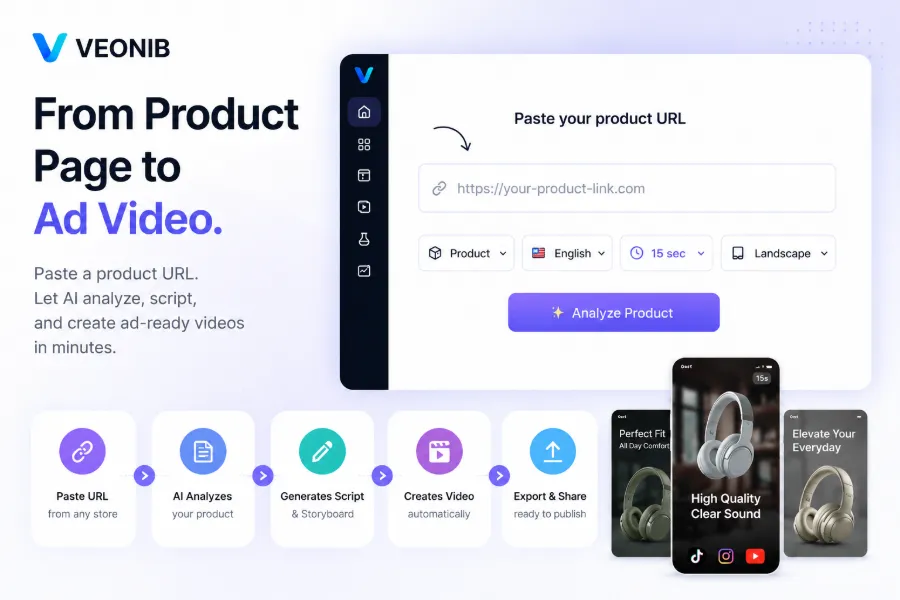
Paste the product link, and the AI automatically analyzes it, generates a script, storyboard, and scenes, then renders a video ready for export—my first try took less than 60 seconds.
The AI does far more than I imagined. It doesn’t just read the product description aloud; it extracts key selling points, usage scenarios, and material details, then assembles different scripts and visuals according to various styles—premium, lifestyle, luxury, or user‑generated‑content casual. For example, the same Polish‑made linen pillow gets a lifestyle‑style script for France and a minimalist script for Germany, with different music and narration.
VEONIB is an end‑to‑end tool designed for e‑commerce sellers. Paste a Shopify or Amazon link, and it automatically parses images, titles, descriptions, and specs, then completes the whole script‑to‑video process in seconds. It supports 9:16, 1:1, 16:9, and other ratios, and the exported MP4 can be uploaded directly to TikTok, Instagram Reels, or YouTube Shorts.
But honestly, the AI video‑generation space is still chaotic. Many products claim “one‑click generation,” yet in practice the scripts read like ad‑copy contests or the footage bears no relation to the product. That’s why an article analyzed “Why Most AI Video Generators Are Still Too Complicated for E‑commerce”; the problem is they don’t truly understand the structure of e‑commerce product URLs.
Beyond Video, What Polish Sellers Must Watch After the Reform
Video is only one part of the defense. Post‑reform compliance is the real bottom line for continued sales. Registering for IOSS (Import One‑Stop Shop) is the unavoidable first step—without it, buyers will be hit with extra customs fees at delivery, and return rates will soar. An EU VAT number must also be obtained in advance; otherwise, customs clearance delays can wipe out the profit of several orders.
Polish warehousing itself is a huge advantage. As a European logistics hub, shipments from a Polish warehouse reach Germany in one to two days and France or Scandinavia in three to four days. Combining the conversion boost from video with fast local delivery means that even with higher prices, the buyer experience remains superior to direct‑from‑China shipping.
However, the risk of operating multiple accounts also rises. Platforms are tightening scrutiny of linked accounts; I have seen once one account is frozen for tax issues, other stores get dragged down. Pricing must be recalculated—not just adding tax on top of the original price, but also factoring in the per‑order cost of video production. In conversations with peers, the common strategy is to raise the average order value and support the premium price with better video content, rather than fighting on price alone.
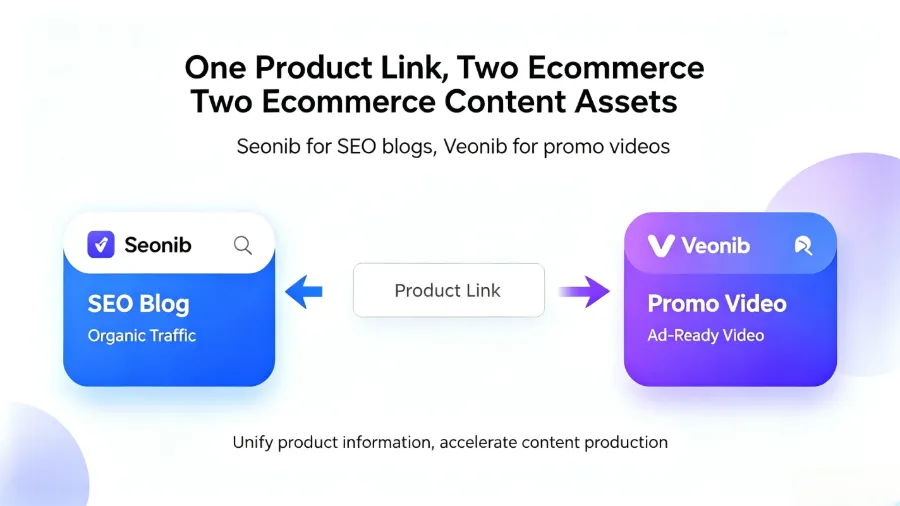
The case “VEONIB’s Smart Video Pipeline Renders a Healthy‑Monitoring Litter Box Ad” left a strong impression on me; it shows how a daily‑use product can achieve far more persuasive power through video than through images alone. If you want to cover multiple markets with the same video, the “One‑Click AI Video Translation with Perfect Lip‑Sync | VEONIB + SEONIB” feature eliminates the need for re‑recording voice‑overs.
I currently maintain stores on four platforms each week; before launching a new product, I generate at least three language versions of the video with VEONIB. This workflow was optional before the reform, but now it’s a survival configuration.
FAQ
When does the €150 tax reform actually start?
It takes effect on July 1 2026. Before that date, goods imported into the EU with a value of €150 or less were exempt from customs duties. After July 1, all commercial imports, regardless of value, must be declared and are subject to customs duties and VAT.
As a Polish seller, do I need to register for IOSS?
Yes. If you sell to EU consumers, IOSS (Import One‑Stop Shop) registration is virtually mandatory. Without an IOSS number, parcels will be held by customs and incur extra clearance fees, hurting buyer experience and increasing return rates.
I have no video‑production experience—how can I start making product videos quickly?
AI video‑generation tools are the lowest‑barrier option today. Paste a product link, and the AI automatically creates the script and visuals—no editing software required. From the first trial to a usable video, you can learn the process in about an hour.
Which e‑commerce platforms does VEONIB support for product links?
It supports mainstream platforms such as Shopify, Amazon, WooCommerce, TikTok Shop, Temu, AliExpress, Etsy, eBay, etc. After pasting the link, the AI parses product images, titles, and description information automatically.
Are there any copyright issues with the generated videos?
The videos belong to the user and have no royalty obligations. The AI‑used visual assets and music are covered by commercial licenses, so the exported videos can be used directly for ad campaigns and social‑media publishing.
Share Article