“Hook” Law: From Douyin Domestic Brands to TikTok Shop, How the Content E‑commerce Paradigm Is Replicated Globally

Mid‑last year I helped a domestic kitchen‑appliance team conduct a cross‑market diagnosis. They had refined a half‑year‑long playbook on Douyin—strong conflict opening in the first 3 seconds, pain‑point amplification, then pitching the selling point—which performed well in Southeast Asia, so they copied it verbatim to North‑American TikTok Shop. In the first week, the completion rate dropped by 40 % and the click‑through rate fell by more than half. The team’s first reaction was that the material quality was the problem; they re‑shot repeatedly, but the data still didn’t improve.
The issue isn’t the content itself. The same batch of videos that delivered good ROI domestically went silent in a different market, showing that the “hook” content‑e‑commerce paradigm has many overlooked prerequisites when copied across markets. Understanding exactly what this Douyin‑originated playbook replicates and rewrites on TikTok Shop is something every domestic brand planning to go abroad must clarify first.
Finding the Audience: How the “Hook” Paradigm Formed for Domestic Brands on Douyin
To grasp paradigm migration, we must return to its starting point. The essence of Douyin e‑commerce is “product finds the audience”—users open the app without a clear purchase intent, and the recommendation algorithm pushes product content to them, sparking interest and then converting. This is the opposite of “audience finds the product” logic in shelf‑based e‑commerce: users on Taobao or JD.com search with purpose, and content merely assists decision‑making. On Douyin, content itself is the traffic entry point and the start of conversion.
Within this logic, the “hook” holds a special place. The first 3 seconds determine whether the algorithm will continue to push the video and whether users will stay to watch it fully. A strong, attention‑grabbing opening—an unconventional question, an exaggerated comparison, a sudden conflict—decides how much traffic the video can capture, which in turn sets the conversion ceiling. Domestic brands have carved out a mature path within this mechanism: UGC builds trust, influencer distribution amplifies reach, and short‑video “shopping carts” directly capture sales. Content is the shelf; a single viral video’s selling power often exceeds that of a meticulously managed product detail page.
The appeal of this paradigm for domestic brands lies in incremental growth. The GMV increment contributed by Douyin’s content ecosystem has long been more than double that of the shelf‑based ecosystem. Although the share of traffic from shelf scenarios is gradually increasing, content remains the primary growth engine. Teams accustomed to “audience finds the product” must readjust: previously they optimized search rankings and detail‑page conversion; now they must optimize the intensity of the first 3 seconds and the completion rate.
TikTok Shop’s Paradigm Adoption: What Was Copied, What Was Rewritten
TikTok Shop’s replication of the Douyin model is explicit: short‑video shopping carts, live‑stream sales, influencer distribution, and affiliate systems are almost a direct transplant. Interface logic, merchant backend, and even some operational terminology are highly similar. This similarity creates the illusion among many domestic teams that “just copy and go,” but the reality is different.
The real differences lie outside the system. Consumer habits, trust foundations, and content preferences in North America and Southeast Asia diverge more than most teams expect. Southeast Asian users are price‑sensitive and responsive to influencer persuasion; North American users are wary of ads and prefer authentic reviews and native‑feeling content. The same “hook” that drives volume through price in Southeast Asia may be dismissed as “too ad‑like” in North America.
I observed a concrete migration case: a domestic beauty brand moved its validated Douyin “skin‑issue comparison” hook to TikTok Shop, retaining the conflict design in the first 3 seconds but translating the copy into English. The metrics dropped sharply. The problem was narrative style—Chinese users are accustomed to exaggerated comparisons and rapid emotional triggers, while North American users become defensive toward such “fear‑mongering” openings. The team eventually re‑designed the hook as “real‑life usage documentation,” and the data gradually recovered.
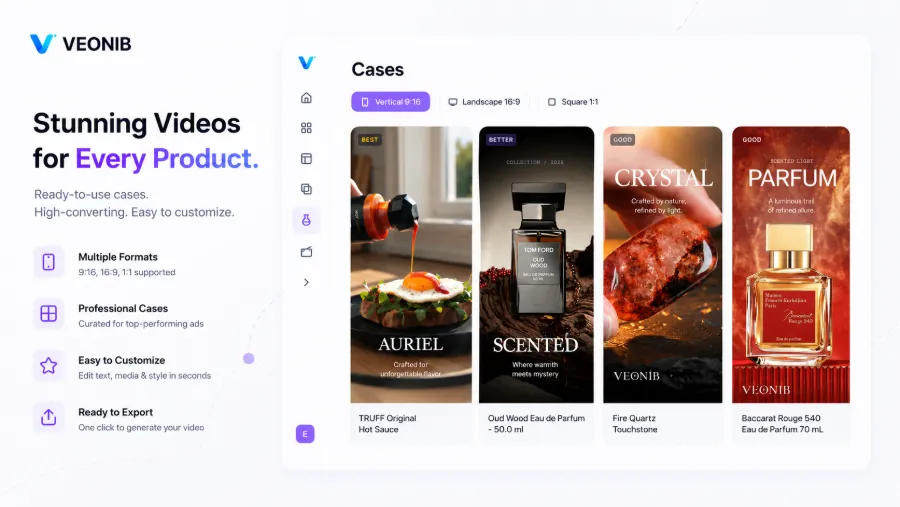
This failure exposed a key point: directly transplanting a single hook content will fail in most cases. Supply‑chain and logistics response speeds also constrain paradigm replication—content can be produced quickly, but fulfillment can’t keep up, so conversion rates remain low. Industry observers note that AI technology is simultaneously reshaping e‑commerce advertising and marketing operations, accelerating cross‑market paradigm migration. The article “AI Is Rewriting the E‑commerce Marketing Chain” contains relevant industry insights. For cross‑border teams, industrialized production of multi‑platform ads has become an unavoidable topic; the concept of “AI‑generated video ads for multiple platforms” is being incorporated into content production plans by more and more teams.
Three Variables in Paradigm Migration: “Hook” Must Be Localized
When moving a “hook” from Douyin to TikTok Shop, three variables must be re‑handled; otherwise, even high‑quality content will be useless.
Language and Narrative Habits – The same hook can fail across cultural contexts for structural reasons that translation alone cannot fix. “Pain‑point amplification” in Chinese may come across as offensive in English markets, and Japanese/Korean audiences naturally reject exaggerated expressions. This is not a wording issue but a misalignment of narrative logic.
Algorithm and Traffic Allocation Differences – Douyin and TikTok have distinct recommendation mechanisms, hot‑tag systems, and traffic‑pool logics. Douyin’s pool relies more on interaction rates, while TikTok places higher weight on completion rates and penalizes duplicate content more aggressively. The same script can receive an order‑of‑magnitude difference in initial traffic allocation between the two platforms.
Trust System Reconstruction – Domestic users trust brand‑owned live streams and official accounts more, whereas North American users rely more on influencer endorsement and authentic user reviews. The trust chain—from brand endorsement to platform endorsement to influencer endorsement—must be rebuilt at every link.
Practically, teams need to dissect a high‑conversion hook content: identify reusable skeletons—such as the problem‑conflict‑solution structure—and replace the flesh—specific cultural symbols, expression styles, trust elements. Breaking down the reference ad format is an effective path to quickly generate market‑specific variants. The method “Clone High‑Conversion Ad Formats” is already common among cross‑border teams. The same hook script deployed in three different markets can exhibit a conversion‑rate variance of over five times, underscoring the necessity of localization.
From “Hook” to Scale: The Efficiency Battle in Content Production
Once paradigm migration works, the next bottleneck appears instantly: exploding content demand. Multilingual, multi‑platform, multi‑SKU, multi‑scenario requirements form a complex composite matrix. Cross‑border sellers need to produce 30–60 short‑video assets daily to maintain multi‑platform pacing. Traditional “shoot‑and‑edit” workflows cannot handle this volume—time cost, labor cost, and script‑generation bottlenecks all slow the pace.
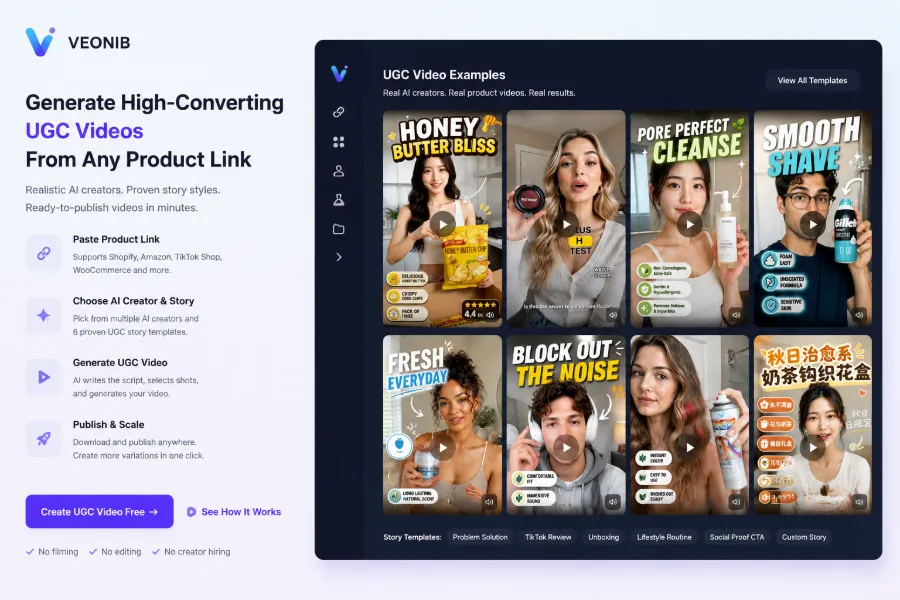
Automation of content production is an unavoidable step on this road. Generating scripts, storyboards, and final videos directly from product links and standardizing hook output is a direction many teams are exploring. In the workflow, the tool handles link parsing, selling‑point extraction, script generation, and final video export—VEONIB is an example of an automation component already integrated into some cross‑border teams’ pipelines. It operates on material creation, not strategic decision‑making. Strategy still requires human input; the tool merely speeds up “production after the idea is clear.”
Automated production has a quality‑inspection blind spot that is easy to overlook. AI‑generated videos need human review for selling‑point accuracy, compliance risk, and brand tone. I’ve seen a team use an automation tool to batch‑produce assets, only to discover a product parameter error in one video after it went live, damaging brand trust. VEONIB‑type tools solve capacity issues but not judgment—human review before publishing cannot be eliminated.
For a one‑person team, the capacity ceiling is actually higher than imagined. With automated workflows, “Create TikTok Shop Ads Without Shooting Any Video” is now feasible, and cases of “single‑person‑driven end‑to‑end content marketing” are increasing. However, the prerequisite is that the team first clarifies each market’s hook strategy before discussing production speed. Execution order cannot be reversed.
FAQ
What is the fundamental difference between content e‑commerce and shelf‑based e‑commerce?
Content e‑commerce is “product finds the audience,” relying on recommendation algorithms to push product content to users without a clear purchase intent, using content to spark interest and then convert. Shelf‑based e‑commerce is “audience finds the product,” where users search with purpose and content serves only as decision‑support. The core metrics for the former are completion rate and interaction rate; for the latter, they are search ranking and detail‑page conversion.
Why can’t Douyin’s playbook be copied directly to TikTok Shop?
Because there are differences in algorithmic distribution, cultural context, and trust systems across three dimensions. Although Douyin and TikTok share similar interfaces, their traffic‑pool logic, completion‑rate weighting, and penalties for duplicate content differ. The conversion‑rate variance for the same hook across markets can exceed fivefold. Direct transplantation usually fails; localization is mandatory.
What factors require a hook’s redesign for different markets?
Three factors: language and narrative habits (e.g., Chinese pain‑point amplification may offend English audiences), algorithm and traffic‑allocation differences (different recommendation mechanisms and tag systems), and trust systems (North American users rely more on influencer endorsement, while domestic users trust brand‑owned streams more). The skeleton can be reused; the flesh must be replaced.
How can small sellers without a video production team meet the content‑e‑commerce production demand?
Leverage automated workflows that generate scripts, storyboards, and final videos directly from product links, standardizing material output. Cross‑border sellers need 30–60 short‑video assets per day; traditional shooting cannot cover this. Automation solves capacity, but selling‑point accuracy and compliance still require human review.
What role can AI‑generated video play in daily operations of content e‑commerce?
AI video generation primarily handles material creation—link parsing, selling‑point extraction, script generation, and final export—speeding up “production after the idea is clear.” It does not partake in strategic decisions; hook design and market selection still require human judgment. AI solves capacity, not judgment.
Share Article