From Product Link to AI Video: Automated Short‑Video Workflow for Cross‑Border E‑Commerce Sellers
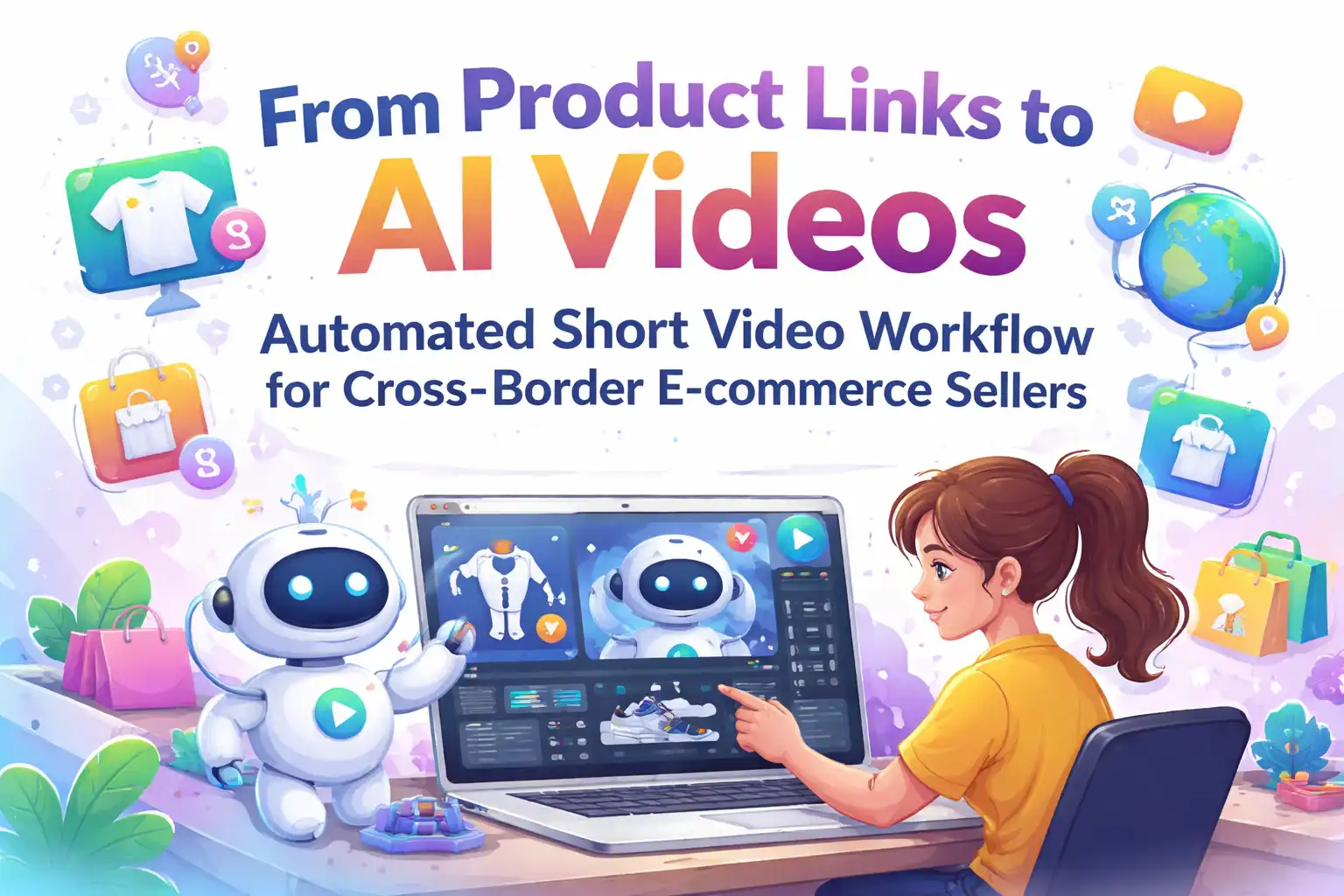
Cross‑border e‑commerce sellers face a daily reality: short‑video ads are essential, but creating a ready‑to‑run short video—from script writing, storyboard design, voice‑over recording to editing and rendering—takes a skilled operator three to six hours. Testing five products at once can consume an entire week just in material production. Time cost is one thing; the more painful issue is the instability of creative quality—today’s hook might be great, tomorrow it feels flat.
For the past two years I’ve been exploring how to boost ad‑material output efficiency without expanding the team. I tried outsourcing, template‑based editing, bulk shooting, but each path hit its own bottleneck. Then I started experimenting with a new workflow: generating a finished video with a single click from a product link. This method isn’t suitable for every scenario, but it has genuinely changed my ad‑testing rhythm.
Why a Product‑Link‑to‑AI‑Video Workflow Solves E‑Commerce Sellers’ Core Pain Points
The importance of short‑video ads on TikTok Shop, Instagram Reels, and YouTube Shorts needs no introduction. The problem lies in the traditional production process, which is essentially a four‑step linear chain: write a script, plan the storyboard, record voice‑over, then edit and render. Any step can get stuck—script revisions, unavailable voice‑over talent, editors whose changes clash with your expectations. I’ve seen a 15‑second ad take two days because of storyboard revisions.
The product link plays a key role here: it serves as a structured data starting point. Through the link, AI can directly extract the product title, core selling points, images, and even high‑frequency keywords from user reviews, turning this information into creative material. Compared with manually copying and pasting details from a product page to write a script, the saved time isn’t a few minutes—it’s the entire startup cost of the workflow.
The core idea of the AI‑video workflow is simple—turn the creative process from “human creation” into “AI‑assisted generation plus human fine‑tuning.” You can treat the AI‑generated output as a first‑draft, then tweak the hook copy, adjust scene descriptions, or replace the voice‑over speed. This is far faster than starting from scratch and more stable than fully manual creation.
Industry data shows traditional manual production of a 15‑second e‑commerce ad averages 3–6 hours, while the AI‑link‑to‑video workflow can compress this to under 60 seconds. The efficiency gap stems from a shift in the entire creative production logic, not just tool substitution.
Latest developments in AI video generation have progressed rapidly over the past year; text‑to‑video and image‑to‑video quality have markedly improved. For e‑commerce, these commercial breakthroughs mean sellers no longer need professional teams to shoot product demo videos; they can test which materials work at a fraction of the cost.
Google’s integration of text‑to‑video technology also signals a trend: the industry is moving toward “input information, automatically generate finished products.” If e‑commerce sellers don’t adopt this workflow now, in six months they may face competitors mass‑producing assets while they’re still manually editing one by one.
Three Steps: From Product Link to Deployable Video – Detailed Procedure
The workflow consists of three core steps, each with important details to note.
Step 1: Copy and paste the product link into the AI tool. Currently, tools that support link parsing cover major platforms such as Shopify, Amazon, TikTok Shop, WooCommerce, Temu, etc. After pasting the link, the tool fetches structured data from the product page—title, price, images, description, selling‑point list. A detail to watch: parsing accuracy varies across platforms. Shopify and Amazon have high success rates, while Temu and AliExpress are less reliable. If you mainly sell on Temu, test a few links first to ensure complete parsing; otherwise, insufficient data will degrade output quality.
Step 2: AI automatically performs the analysis workflow. This is the true core of the workflow. After pasting the link, AI executes a series of actions: extract selling points, generate multiple opening hooks, write a full script, plan the storyboard, match AI voice‑over, and create subtitles. The whole process usually finishes within seconds. The preview is completely free, no credit card required, and you can repeatedly edit hook copy or scene descriptions and generate new previews.
For sellers needing rapid testing of many products, tools like VEONIB dramatically shorten the link‑to‑video path. In the preview stage you can modify any element—swap an opening hook, adjust voice‑over speed, or change a scene’s description—then submit for rendering. This “preview‑first, render‑later” design is crucial; it lets you see the final look before spending time and budget.
Step 3: Choose platform aspect ratio and render with one click. You can switch among 9:16 (TikTok, Reels), 1:1 (Facebook), and 16:9 (YouTube) within a single interface. After clicking export, rendering typically takes 60–90 seconds, depending on video length and complexity, but it’s generally acceptable—you can update inventory or check competitor ads during this time.
Real‑World Cases: How the AI‑Video Workflow Performs Across Different Categories
After signing up for a free preview (https://veonib.com/signup), I tested several product categories and found noticeable differences in output quality.
High‑visual‑impact categories—beauty, home aromatherapy, fashion apparel—show markedly better AI performance. These products already have visually appealing images; AI’s automatic image recognition and scene generation produce previews that closely resemble real shoots. In testing an aromatherapy diffuser, AI generated scenes with lighting ambience and product close‑ups that were almost indistinguishable from professional footage. Sellers in these categories can rely more confidently on AI output, requiring only minor fine‑tuning.
Functional categories—electronics, fitness equipment—are more challenging. AI can extract functional selling points from descriptions and turn them into scripts, but action demonstrations can be inaccurate. Early user feedback from 2023‑2024 showed occasional physically impossible motions in functional product demos. For example, a fitness band stretch demo produced a frame that defied human anatomy. Such issues need extra scrutiny during review.
For format adaptation by length, my current strategy is: 15 seconds for TikTok, 30 seconds for Instagram, 60 seconds for YouTube. The 15‑second version keeps a single core selling point and a strong hook; the 30‑second version adds two points and usage scenes; the 60‑second version tells a full story. AI automatically adjusts script structure and scene allocation for each version, eliminating the need for manual rewrites.
Multilingual voice‑over and subtitles are another undervalued benefit. A single product link can automatically generate localized versions, allowing sellers targeting North America, Europe, and Southeast Asia to avoid hiring separate translators or voice‑over artists. The tool supports AI voice‑over in 30 languages, and with auto‑subtitles, one set of assets can cover multiple markets.
A single product link can generate up to 100 different ad variants for A/B testing—an impossible scale in the manual era.
Evaluating the AI‑Video Workflow: Determining Whether Generated Content Is Worth Running
Fast generation doesn’t guarantee every video is ready for ad spend. I use a personal checklist to assess whether an AI‑generated video merits investment.
Hook quality. Does the opening three seconds capture attention? AI hooks can be spot‑on or overly templated. Data‑driven hooks (e.g., “80% of people who tried…”) tend to outperform, while emotional hooks (e.g., “Have you ever experienced…”) are weaker than human writers. If the AI hook is subpar, I replace it manually rather than settle.
Script logical consistency. AI scripts may contain factual errors or deviate from brand tone—e.g., a $300 premium skincare product described with a street‑market sales pitch. I check the preview carefully, especially the accuracy of selling‑point descriptions and tone alignment.
Visual‑audio matching. Do the AI‑generated scene previews reflect the actual product? Mismatches—wrong colors, inappropriate ambience—require editing the scene description and re‑rendering. According to Google’s current text‑to‑video roadmap, matching precision is improving but still struggles with complex multi‑object scenes.
Post‑launch performance data. The only definitive test is A/B testing in the ad platform. I typically run four variants: (a) fully AI‑generated, (b) manually fine‑tuned hook and script, © adjusted voice‑over speed, (d) swapped scene images. After two or three days, I compare CTR and ROI to see which changes are worthwhile. Shopify’s official ad‑placement guide (https://www.shopify.com/blog) offers useful A/B testing advice, especially for low‑budget phases.
Overall, teams using the AI‑video workflow can test 3.2× more creative variants, dramatically increasing the odds of finding high‑performing assets. However, for complex scenes—real‑person appearances, highly branded content—human review and adjustment remain essential; full automation isn’t yet feasible.
Common Questions and Limitations
Can AI‑generated videos be used directly for paid ads? Most platforms allow it, but check each platform’s policy first; some ad‑review guidelines have specific rules about AI‑generated content originality.
What if product page images are low quality? Output quality drops noticeably. AI’s visual generation relies on image information; blurry or missing images lead to poor scene previews. Ensure at least 3–5 clear images on the product page, or manually supplement high‑quality assets before linking.
Who owns the copyright of the exported video? Can it be used commercially? Most tools grant the user full commercial ownership after export, allowing use in paid ads, organic content, or brand websites. Review the specific service terms to confirm.
FAQ
Q1: Can AI‑generated videos be used directly for TikTok or Facebook ads? Yes. Most AI video tools export MP4 files compatible with major ad platforms. Check for watermarks or brand logos before submission; some free tiers embed tool branding.
Q2: If the product page images are low quality, can AI still produce a usable video? The result will be limited. AI visual generation heavily depends on input image quality and quantity. Blurry, single‑angle, or incomplete images lead to missing details in scene previews. It’s recommended to manually add 3–5 high‑quality product images before generation.
Q3: Who owns the copyright of the exported video? Can it be used commercially? The creator retains full copyright after export, and the video can be used for paid ads, organic content, brand websites, etc. Some tools explicitly state commercial ownership in their terms; verify the specific agreement before large‑scale use.
Share Article