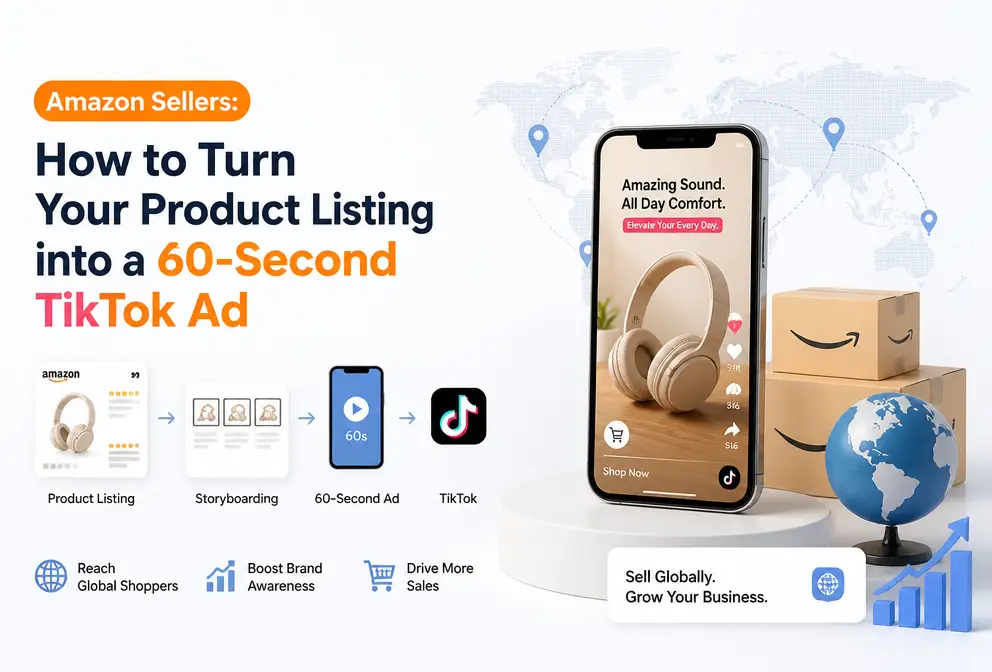
Amazon Sellers: How to Turn a Product Listing into a 60‑Second TikTok Ad
I’ve been on Amazon for five years, and the biggest pitfall I’ve hit is spending a ton of time polishing the copy and images of a listing, never thinking about turning that hard‑optimized product page directly into a video ad.
In 2023 I tried filming the product in the office with my phone. I set up background lights, arranged the goods, and tweaked the lighting for ages. When editing, I discovered the audio was just the hum of the air conditioner, so I re‑recorded the voice‑over. The final cut was 22 seconds long, and after uploading to TikTok it got fewer than 300 views. Two days of work for that result was honestly demoralizing.
Later I crunched the numbers: a 30‑second e‑commerce video outsourced to a freelancer typically costs $500–$2,000, with a turnaround of one to two weeks. For small sellers, that cost practically guarantees they won’t test video ads. But if you can dramatically shrink that time and expense—turn a link into a ready‑to‑run TikTok ad in 60 seconds—the whole logic of ad testing changes.
In fact, I’m not the only seller moving in this direction. Advertising on Amazon’s own platform is getting more expensive per click, while a viral TikTok video can generate millions of free organic views. Many sellers who only have an Amazon link and no video assets are getting stuck in this traffic pool.
Why Amazon Sellers Must Focus on TikTok’s Massive Traffic Pool
My own intuition is that the ROI of Amazon’s internal ads is declining year over year. In 2022, a single SP ad could keep ACOS under 25%; by early 2025, the same product with an ACOS of 45% is considered normal. The internal traffic pool consists mostly of users with clear purchase intent, but competition is also fierce.
TikTok is a completely different beast. By 2025 its monthly active users have surpassed 2 billion, and users aren’t searching “buy this product”; they’re scrolling past a video and thinking “I need this.” Those are two entirely different consumption paths. According to advertising industry data, short‑video ads have click‑through rates 2–3× higher than static images, and a video provides far deeper brand awareness than a single main image.
Many sellers focus only on Amazon’s conversion funnel and overlook TikTok’s huge potential as a “product discovery engine.” My current understanding is that video isn’t just for direct conversion; it’s crucial for building brand awareness—users might see your product in a video, then search for it on Amazon a week later. That video exposure is the start of the chain.
Moreover, TikTok Shop is rapidly penetrating cross‑border markets. If you have no video assets, you don’t even qualify to participate. So since mid‑2024 I’ve spent a lot of time solving one problem: how to make video production no longer a bottleneck.
How Painful It Was to Shoot a Product Video in the Past
Looking back, my first serious product video in 2023 was for a kitchen gadget. I thought the product looked good, so a single DIY shoot would be enough. It took two days to film, a day to edit, and I even recorded the voice‑over myself. After exporting, the quality was poor, so I re‑shot. The weekly output was one video, and its post‑launch CTR was under 1%.
Then I hired an outsourcing team for $800 to produce a 30‑second product showcase video. It took ten days to receive the final cut, and the result was far better than my DIY effort, but it could only be one version. If I wanted five different angles, the price would multiply by five. For ad testing, that cost is simply unaffordable.
The most foolish thing I did at that stage was spend a week learning Premiere Pro, watching dozens of tutorials, and only mastering a single transition effect. For sellers handling dozens of SKUs daily, that learning curve is unrealistic.
Creative thresholds, time costs, and capital tie‑up act like three mountains pressing on sellers. Many products have potential, but because they can’t produce a video, they stay stuck on the listing page gathering dust.
Later I tried some AI tools and discovered I could generate product showcase images with AI, placing the product in a model’s lifestyle scene. What truly transformed my workflow, however, was finding a solution that links the entire chain together. When you need to test multiple products quickly, a method that lets you compare and analyze competitors simultaneously is the only way to achieve real efficiency.
One Link Can Generate a Video? AI Made It Possible
In the second half of 2024 I tried VEONIB.
The operation is extremely simple—paste the Amazon product link, and the AI automatically extracts the title, description, and feature images, then generates a script, storyboard, and scene plan. The whole process from zero to finished video takes less than 60 seconds.
The first time I used it, I was skeptical: could it really understand my listing? The AI‑generated script accurately extracted a usage scenario hidden in my product description—something I had spent a long time crafting, and it read it out correctly.
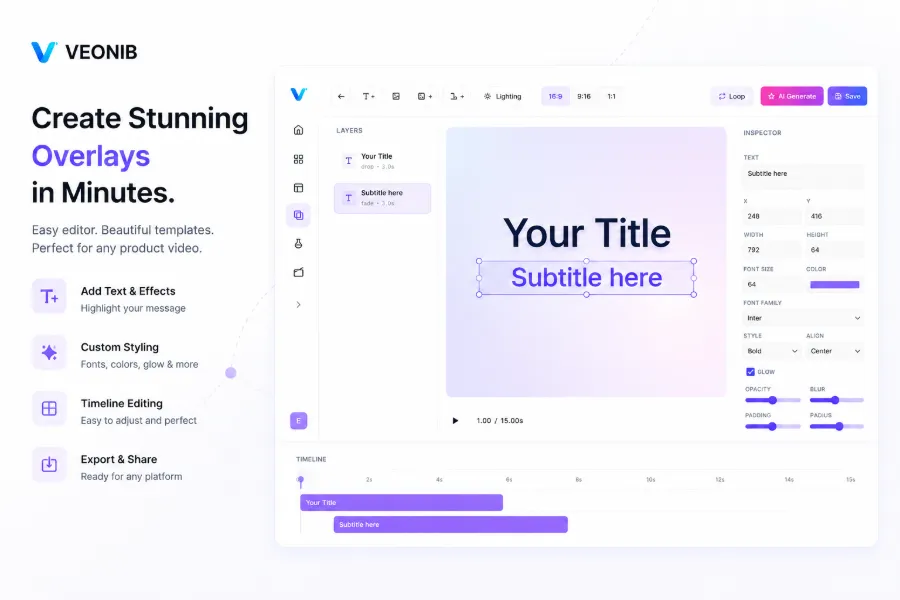
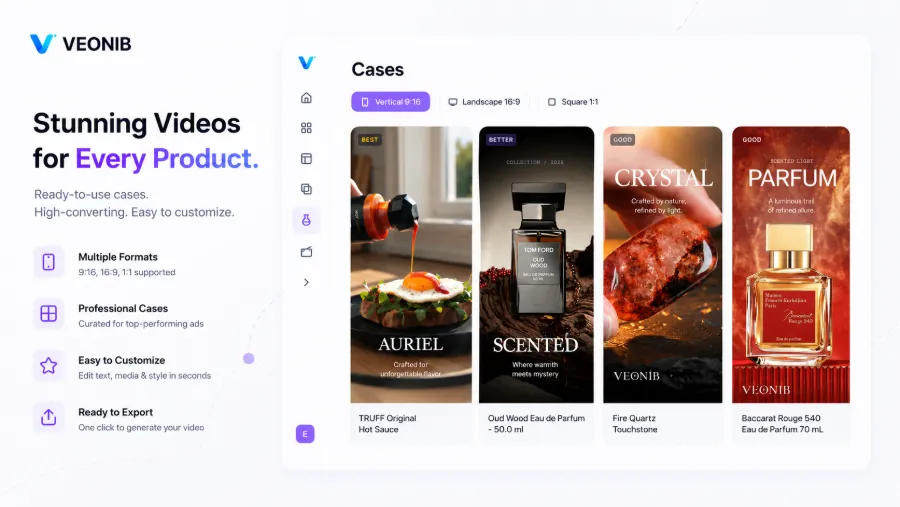
The AI not only analyzes the product but also supports multiple styles: UGC, brand tone, lifestyle, minimal white‑background, etc. I tried the UGC style version, and the resulting video truly looked like someone actually using the product at home—no stiff advertising feel.
I began scaling up VEONIB use a month later. With the same product link, I generated five different style versions, exported them all, and uploaded them to TikTok Ads Manager for A/B testing. Previously this would have taken at least two weeks and several thousand dollars; now a full test round can be completed in a day. The future of AI‑driven e‑commerce video is no longer a concept—automated pipelines starting from a product URL are reshaping the industry’s creative production logic.
If you want a systematic guide on scaling operations with automated ad videos, check out my earlier detailed notes on automated e‑commerce video ad strategies, which cover multi‑platform tactics and pitfalls.
Another surprise: VEONIB also supports cross‑platform use. I tossed an AliExpress link in, and it generated a video just as smoothly. This means sellers operating on multiple platforms can produce one video that covers several channels.
Real‑World Test: Turning My Amazon Listing into a TikTok Viral Video with AI
First, the actual results I observed.
Copy an Amazon product link, paste it into VEONIB, and the AI automatically creates five script variants. I chose one, switched the style to “lifestyle,” and clicked generate. After 60 seconds I received a 9:16 vertical video ready for TikTok ad placement.
I uploaded it to TikTok Ads Manager and ran a low‑budget test campaign. Three days later, the data showed that the AI‑generated video’s click‑through rate was 40% higher than the video I had previously produced, and the cost per conversion dropped by more than half. The entire production cost was only a few dollars (export fee), versus $800 per video before—a cost reduction of about 90%.
I also discovered a very useful feature: VEONIB can generate a “before‑and‑after” high‑conversion comparison image with one click. For functional products, this tool lets buyers understand the product’s value in a second. In my tests, pairing this visual material boosted post‑click conversion rates by roughly 15%.
The real advantage is the testing density enabled by speed. Previously I dared to make only one video per product—if it didn’t blow up, the cost was lost. Now I can produce ten versions, each with different hooks and scenarios, test them, and allocate more budget to the highest‑CTR version. The true value of AI‑generated video isn’t replacing creativity; it’s allowing sellers to test many more variants—data feedback is faster, and the optimization cycle shrinks to two‑day rounds.
Of course, there are hiccups. Once VEONIB misinterpreted a link for an electronic product, treating a phone case’s color feature as the main selling point and generating a script that focused entirely on that color scheme, which deviated from the product’s actual use. This shows that the AI’s understanding is still limited by how structured the listing is. If the listing is too informal, the AI’s signals will be off.
Nevertheless, the flaws don’t outweigh the benefits. My current standard workflow is: before launching a new product, polish the listing to a 90‑point score, feed it into VEONIB to generate 5–8 video versions, upload them all to TikTok for organic traffic testing, and then only push the best‑performing version into paid ads. This process cuts at least 70% of the time cost compared with the previous approach.
If you run stores on multiple platforms, you can follow the same AI‑driven method I used to generate videos from AliExpress products—the principle is identical, only the link‑parsing stage automatically adapts to platform rules.
FAQ
Q1: I only have an Amazon link and no video assets. Can I still use it?
Absolutely. Paste the Amazon product URL into VEONIB, and the AI will automatically pull images, titles, and selling points, then generate a complete video. No filming material is required.
Q2: Can the generated video be used directly for TikTok ads?
Yes. It exports as an MP4 in a 9:16 vertical format, ready to upload to TikTok Ads Manager without any extra editing. In my tests, the whole process from generation to launch takes about five minutes.
Q3: Can the video include multiple languages?
The AI supports voice‑over in 30 languages and automatically generates subtitles. You can specify the language when generating the video for different TikTok markets.
Q4: Can I generate multiple different versions at once?
Yes. One product link can produce several script variants, each of which can be assigned a different visual style. In a single test I ran ten versions simultaneously.
Q5: Who owns the copyright of the generated video?
The exported video belongs entirely to you, with no royalty restrictions. You can freely use it for ads, social media, or storefront displays.
Share Article