The Real Cost Problem Isn’t Tokens — It’s Attribution
Every cross-border operator I know has the same blind spot. You’ll obsess over CAC, ACoS, and blended margins until the cows come home, but when the monthly invoice from your AI tooling stack lands, you stare at a single number and shrug. The bill says $847.62, and you have no idea which product listing, which ad copy variant, which customer service auto-responder, or which abandoned cart flow actually consumed it. That’s not a budgeting problem — that’s a management problem. If you can’t attribute spend to output, you can’t optimize anything beyond turning the whole thing off. And in an environment where your competitors are already running AI agents to write listings, answer reviews, and adjust bids while you sleep, turning it off isn’t an option. The question isn’t whether you’ll burn money on AI. It’s whether you’ll know what that money bought.
The Tool That Reads the Receipts Your AI Tools Won’t Show You
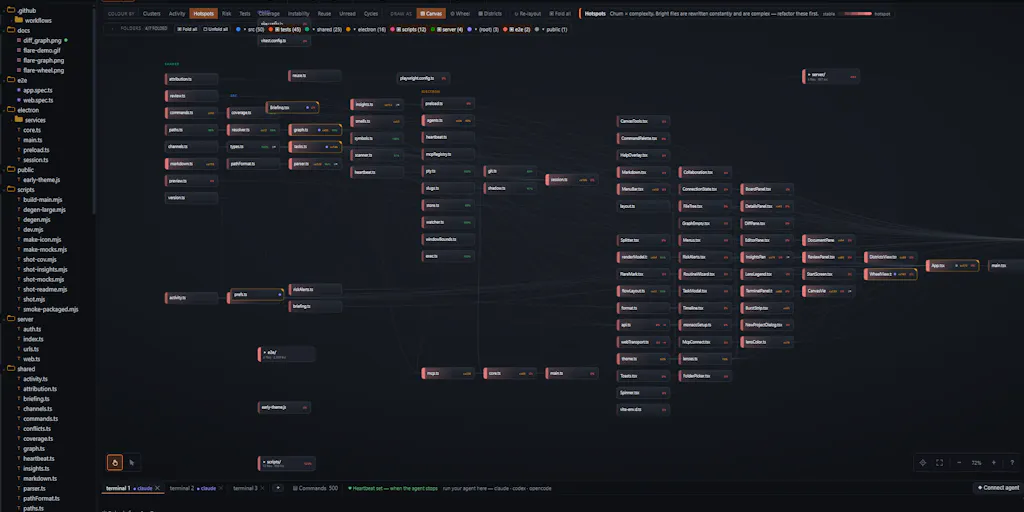
What CodeBurn does is deceptively simple, and that’s exactly why it matters. The founder, Resham Joshi, describes the problem in the launch thread with painful accuracy: AI coding tools don’t tell you where your money goes. The bill shows a total, and that’s it. Which model? Which project? Was it work that shipped, or an agent re-reading the same file over and over? The answer already exists — every AI coding tool from Claude Code to Cursor to Codex writes detailed session logs to your own disk. Nobody was reading them. CodeBurn reads them.
Now, before you click away thinking this is another developer-tool story that has nothing to do with selling widgets on Amazon, stay with me. The underlying insight here transfers directly to how you should be thinking about every AI tool in your commerce stack. The company behind this, CodeBurn, is MIT-licensed, open source, runs entirely locally, and requires no account. All the data stays on your machine. It parses session logs from Claude Code, Cursor, Codex, Copilot, and “36 more” tools, then breaks down every token and dollar by task, model, project, and pull request. It shows you a spend punchcard — which hours and weekdays you burn the most. It gives you a session browser with titles, so you can find work by what it was about. It tracks workflow insights: how often you correct the AI, how long until it makes its first edit, which files it keeps reworking.
For a cross-border seller, the translation is immediate. Your AI tools aren’t just coding agents — they’re your listing generator, your review responder, your ad copy machine, your supplier email drafter, your competitor analysis engine. Every one of those tools burns tokens, and most of them give you the same useless monthly total. CodeBurn’s approach to solving that for developers is a blueprint for how you should be demanding visibility from your own AI stack.
The tool also includes an “Optimize” feature that identifies waste — cache bloat, retry tax, expensive models doing work a cheaper one handles fine — and applies the fix for you, tracking what the fix actually saved. It compares any two models on your own real usage: cost per edit, one-shot rate. It has budgets with warnings, subscription plan and overage tracking, and live quota windows. There’s a CLI, a desktop app for Mac, Windows, and Linux, a macOS menu bar app, a web dashboard served from your own machine, and even a GNOME panel extension. All of them read the same local data, so they always agree. There’s also an MCP server, so your AI agent can check its own spending. Yes, really.
Why This Matters More to Amazon Sellers Than Shopify DTC Brands
Here’s where my contrarian take comes in. The Shopify DTC crowd loves shiny AI tools — they’ll happily pay for an AI email writer, an AI product photo generator, and an AI chat widget, all with separate subscriptions and zero visibility into which one actually drives revenue. Amazon sellers, by contrast, are brutal pragmatists. They have to be. The marketplace punishes inefficiency with fees, suppressed rankings, and stranded inventory. But that same pragmatism means Amazon sellers are also the most likely to be running AI agents on autopilot — automated repricing tools, AI review analysis, automated listing optimization — and the least likely to have any idea what those tools actually cost per useful action.
The thread on CodeBurn’s launch page includes a comment from Gal Dayan that cuts to the heart of the attribution problem: “the attribution thread in here is the most honest writeup of this problem I’ve seen, the ‘unattributed rather than smearing it somewhere plausible’ choice especially.” That’s the key philosophical stance CodeBurn takes — when it can’t attribute a cost to a specific output, it leaves it as “unattributed” rather than guessing. For an Amazon seller, that’s the difference between knowing your AI repricer spent $214 this month and getting 38 successful price adjustments versus seeing a lump sum and assuming it was all “necessary.”
The comparison to incumbents is stark. Helium 10 and Jungle Scout give you product research data. Klaviyo gives you email automation. Shopify gives you a storefront. But none of them tell you what your AI spend actually bought. They’re all consumption dashboards, not attribution engines. CodeBurn’s approach — reading the local session logs that already exist and correlating them to outputs — is a model for what every AI-powered commerce tool should be doing. The tool itself is for coding, but the principle is universal: if your AI tool doesn’t tell you what its spend accomplished, you’re flying blind.
Where the Math Breaks: The Messy Middle
The most honest part of the CodeBurn launch thread is where the makers admit the limits of their own attribution. In response to a question about how the tool handles fan-out — where one task spawns five to ten subagents in parallel, each burning its own tokens — Joshi gives a straight answer. The tool captures parent-child relationships when subagents are spawned through Claude Code’s Task tool, folding their spend back into the PR the parent was working on. But there are two honest limits. First, it keys on native Task-tool spawning — if your fan-out is a custom harness or cross-provider workers, that parent-child link doesn’t exist in any single tool’s logs. Second, it attributes to the PR that was active when the child was spawned — if the workers run before the PR exists and it only appears at the merge step, CodeBurn won’t retroactively credit that PR. It leaves them unattributed rather than pretending the synthesis step “did” work that happened before it.
For cross-border sellers, this is the exact conversation you need to have with your own AI tooling. Your AI listing generator might spawn subagents to research keywords, analyze competitor prices, and draft bullet points. If those subagents run across different tools — say, one in ChatGPT, one in Claude, one in a custom script — you have no way to attribute the cost to the final listing that shipped. The maker’s response is refreshingly honest: “That’s the same principle you noticed. So the clean case folds properly. The messy case is exactly the frontier we are still working on, because that grouping only exists in your orchestrator’s head, not in the logs.” That’s the real state of AI cost attribution in 2025, whether you’re writing code or writing product listings.
What Cross-Border Sellers Can Steal From This Today
You don’t need to install CodeBurn to benefit from its approach. Here’s what I’d borrow from its philosophy and apply to your commerce stack this week.
Demand output-level attribution from every AI tool you pay for. When you evaluate an AI listing tool, an AI ad copy generator, or an AI customer service bot, ask one question: does it tell me what each dollar of spend produced? Not “how many tokens did I use” — but “how many listings did it write, how many reviews did it respond to, how many emails did it send, and what was the revenue impact?” If the answer is no, you’re paying for a black box. The CodeBurn team’s pitch is that provider dashboards are good at telling you what you consumed and much worse at telling you what the consumption actually accomplished. That’s true for every AI provider you use.
Set budgets with warnings and overage tracking. CodeBurn has budgets with warnings, subscription plan tracking, and live quota windows. Most sellers I talk to have no equivalent for their AI spend. They’ll set a monthly cap on ad spend without blinking, but their AI tooling is an uncontrolled variable. Set a budget for each AI tool, and demand that the tool itself enforce it — not just a notification after you’ve blown past it.
Track the retry tax. One of the most interesting comments in the thread comes from Dmitriy Semenkevich, who notes that most of his AI spend isn’t in the final output — it’s in the hour before it, where the agent reads the wrong files, he stops it, rewrites the prompt, and starts over. On a dashboard, that’s retry tax. But a good chunk of it is him working out what he actually wants, and then the PR takes ten minutes. So cost per merged PR would make the messy session look awful and the clean one look great, when the messy one is what paid for it. The metric he’d act on is one where the throwaway sessions get attributed to whatever they eventually produced. For a seller, that means your AI listing tool that takes three iterations to get the tone right isn’t wasteful — it’s the cost of getting the output you actually want. But you need to know that’s what you’re paying for, not just see a monthly total and shrug.
Correlate spend across time windows, not just sessions. CodeBurn’s approach to attribution includes a time-bound window — sessions that never reference the PR but ran in the same checkout during the same working stretch get folded into that PR. The maker notes they bound it to a window of several hours because unbounded folding turned whole repos into black holes. For sellers, this means your AI spend on a given day should be correlated to the work products that day produced, not just the raw session count. If you spend three hours on Tuesday using AI to research a new product niche, and the listing goes live on Thursday, that Tuesday spend should be attributed to that listing — not lost in a weekly total.
Why Amazon Sellers Should Care More Than Shopify Ones
I said earlier that Amazon sellers should care more about this than Shopify DTC brands, and I meant it. Here’s why: Amazon’s marketplace dynamics punish undisciplined spend more brutally than any other channel. Your margin structure is thinner, your competition is more direct, and your ability to differentiate on brand alone is limited. Every dollar of uncontrolled AI spend comes directly out of a margin that’s already being squeezed by FBA fees, advertising costs, and price competition. A Shopify brand can absorb AI waste as a cost of doing business and pass it on to customers through brand premium. An Amazon seller can’t. The tool that shows you exactly which AI spend shipped a product — and which burned money on rework — isn’t a nice-to-have. It’s a survival tool.
The other reason is the nature of the work. Shopify sellers tend to use AI for creative tasks — copywriting, image generation, email flows — where the output quality is subjective and the attribution is fuzzy. Amazon sellers use AI for operational tasks — repricing, inventory forecasting, review analysis, listing optimization — where the output is measurable and the attribution is clearer. If your AI repricer adjusted 400 prices and you can see exactly what that cost, you can calculate the ROI. If your AI listing tool wrote 50 listings and you can see which ones shipped and which ones you discarded, you can make a real decision about whether it’s earning its keep. That’s the CodeBurn philosophy applied to commerce.
Where I’m Skeptical
Let me be clear about the limits of this whole approach, because the CodeBurn team is refreshingly honest about theirs, and I’ll return the favor.
The local-only constraint is a feature for developers and a limitation for teams. CodeBurn runs entirely on your machine, with no account and nothing leaving your device. For a solo developer or a small team, that’s perfect — privacy, control, no subscription. But for a cross-border operation with multiple sellers, VA teams in different time zones, and a centralized finance person who needs to see everything, a local-only tool is a non-starter. The finance person isn’t going to SSH into each team member’s machine to check their AI spend. The tool solves the attribution problem for the individual, not for the organization. That’s a real gap.
The attribution model is honest but incomplete. The maker’s response about fan-out scenarios is genuinely impressive in its candor — “when we cannot attribute, we show it as unattributed rather than smearing it somewhere plausible” — but that also means the tool’s output will always have an unattributed bucket. For a commercial operation, an unattributed bucket of AI spend is the same as a mystery line item on your P&L. You know it’s there, you don’t know what it bought, and you can’t optimize it. The tool’s honesty about this is admirable, but it’s also a reminder that the underlying problem — attributing AI spend to business outcomes — is still unsolved for the messy cases that dominate real-world usage.
The “cost per useful unit of AI work” metric is still ahead of its time. Aditya Vikram Singh, the other maker, frames the longer-term question as “cost per useful unit of AI work, rather than cost per token.” That’s the right question, but nobody has answered it yet — for coding or for commerce. What’s a “useful unit” of AI-generated ad copy? A listing that converts? An email that gets opened? The problem is that defining the unit requires business context that the tool doesn’t have. CodeBurn can tell you a session cost $8.43 and produced one merged PR. It can’t tell you whether that PR was worth $8.43 in revenue impact. The same gap applies to every AI commerce tool on the market.
What I’d Watch / Test Next
If you’re a cross-border operator reading this and feeling the itch to get your AI spend under control, here’s what I’d do this week — no coding required.
Audit your current AI subscriptions. List every AI tool you pay for — ChatGPT, Claude, Jasper, Copy.ai, Midjourney, repricing tools, AI review responders, everything. For each one, ask: what did it produce this month, and what did it cost? If you can’t answer either question, that’s your first problem to solve. The CodeBurn team’s insight — that the data already exists in your local logs — applies here too. Your AI tools are logging your usage. Go read those logs.
Run a two-week spend correlation experiment. Pick your heaviest AI workflow — say, listing generation or ad copywriting. For two weeks, track every AI session: which tool, which prompt, which task, which output. At the end of each week, correlate the sessions to the outputs that actually shipped. You’ll likely find the same pattern Dmitriy described: most of the spend is in the messy middle, and the final output is cheap. That’s not waste — that’s the cost of thinking. But you need to know it.
Demand output-level reporting from your vendors. When your AI tool subscription comes up for renewal, ask the vendor for a usage report that shows what your spend produced — not just token counts. If they can’t provide it, that’s a signal. The CodeBurn approach proves the data exists; the question is whether your vendor is willing to surface it.
Test CodeBurn on a side project. If you do any coding at all — even simple Python scripts for data analysis or inventory forecasting — install CodeBurn and run it for a week. The desktop app is free, MIT-licensed, and runs locally. The experience of seeing your AI spend attributed to actual outputs — with the unattributed bucket honestly labeled — will change how you think about every AI tool you use, including the ones for commerce.
The real lesson from CodeBurn isn’t about coding at all. It’s about the discipline of knowing what your tools actually buy you. Your competitors are going to keep adopting AI tools, and the ones who treat those tools as black boxes will burn money without knowing it. The ones who demand attribution — who know which AI spend shipped a product and which burned on rework — will have a real edge. Start building that discipline now, before the invoices get bigger.