TikTok Shop Short-Video Live Commerce: After GMV Growth, How Shops Turn Videos into Traffic Engines

After a cross‑border shop launches new items, the products are published and the product cards are attached, but natural traffic still doesn’t pick up. The operations team can only keep re‑shooting, changing subtitles, swapping intros, and cutting the same product into several versions for promotion. In the first half of 2026, TikTok Shop’s GMV broke $50 billion, and videos are no longer just ad material; they have become a layer of shop infrastructure that connects product discovery, interest building, and conversion.
Direct answer: TikTok Shop videos cannot be judged solely by view count. Shops should observe the first‑3‑second retention, product click‑through rate, add‑to‑cart rate, product‑detail‑page conversion rate, and GMV on the same funnel before deciding whether to edit the video, adjust the product hand‑off, or pause testing. Increasing the number of videos does not automatically bring natural traffic or sales growth.
The $50 billion figure is a market hook used at the beginning of this article and does not extend into unsupported growth percentages. After the transaction scale expands, shops compete not only for product placement but also for the continuous attention that takes a user from scrolling a video, clicking the product card, to completing a purchase.
Why GMV Growth Pushes TikTok Shop’s Traffic Competition Toward Video
TikTok Shop’s product discovery is already mixed with content consumption. Users may not be searching with a clear intent; they see a usage scenario in a short video, develop interest, and then check price, shipping, and reviews via the product card. For cross‑border sellers, videos simultaneously provide exposure, point‑of‑sale explanations, scenario demonstration, and purchase‑reason reinforcement, while the product card connects interest to the transaction page.
Therefore, view count is only an entry signal. Click‑through rate shows whether users want to learn more, add‑to‑cart rate reflects whether the product and price are temporarily accepted, and conversion rate plus GMV are closer to business results. A video with very high views may have a strong opening but fail to explain who the product is for; another video with modest views may have more stable clicks and add‑to‑carts. Mixing the two leads to mis‑allocated budget and script decisions.
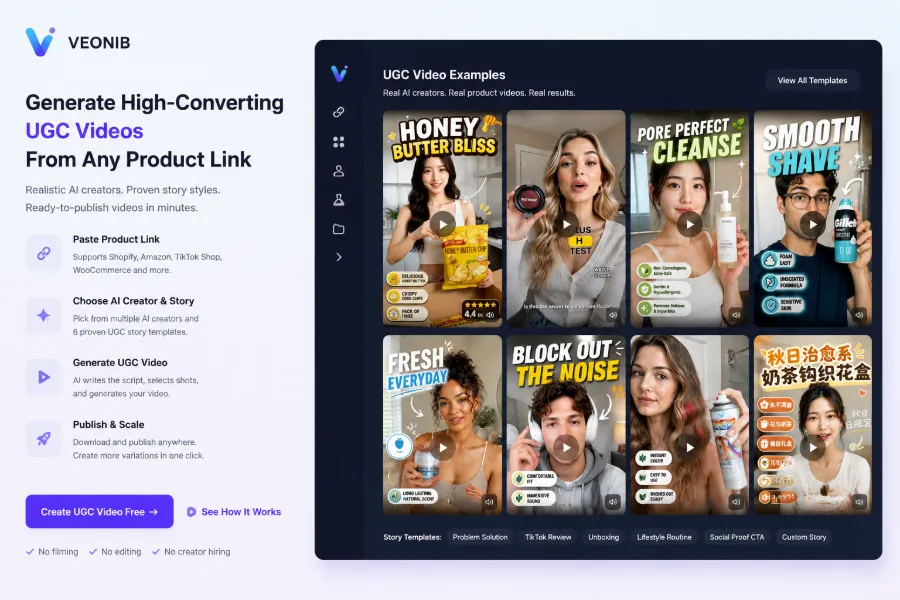
Cross‑border shops also face multiple languages, markets, and SKUs. Producing a high‑cost ad video for each product looks safe but is hard to sustain for continuous testing. Different countries accept character expression, price information, shipping promises, and purchase reasons differently; a single “polished blockbuster” often cannot cover these variables. The related trend discussion driven by product‑link‑generated videos also shows that production is shifting from pure shooting to connecting product data with content workflows.
This does not mean every video will naturally bring GMV. Paid traffic can amplify content quickly, but if the product‑card information is inaccurate or natural‑traffic users can’t find the promised selling points on the detail page, the amplification only leads to bounce. Once video becomes an important traffic entry, shops need to distinguish more carefully between content issues and product‑operation issues.
How a TikTok Shop Video That Can Capture Traffic Should Connect Product and Conversion
A TikTok Shop video can be examined in three stages: the first 3 seconds pose a question or create a clear scenario; the middle shows how the product solves the problem; the end adds evidence and a call‑to‑action. This structure is not a fixed script but a troubleshooting sequence. If the first 3 seconds don’t retain viewers, later selling points never get seen; if the middle only shows product rotation without real usage logic, clicks won’t stick; if the ending lacks price, specs, results, or product‑card cues, users must guess the next step.
When the product URL enters the script and storyboard workflow, the system must first extract title, images, selling points, and price, then decide which information can become the opening hook and which is best shown visually. In practice, product‑link‑generated short video ads are easier to form a unified input than manually copying data from the backend, but operators still need to verify the current page version. If the link pulls an old price, the video may encounter issues after ad review or publishing.
VEONIB acts more like a product‑content parsing and video‑generation node in this workflow: after product data is entered, the script, storyboard, and video file can be processed along the same pipeline. It can generate a video within 60 seconds, which only indicates a fast generation step and cannot replace script judgment, ad review, MP4 quality checks, or product‑detail‑page conversion.
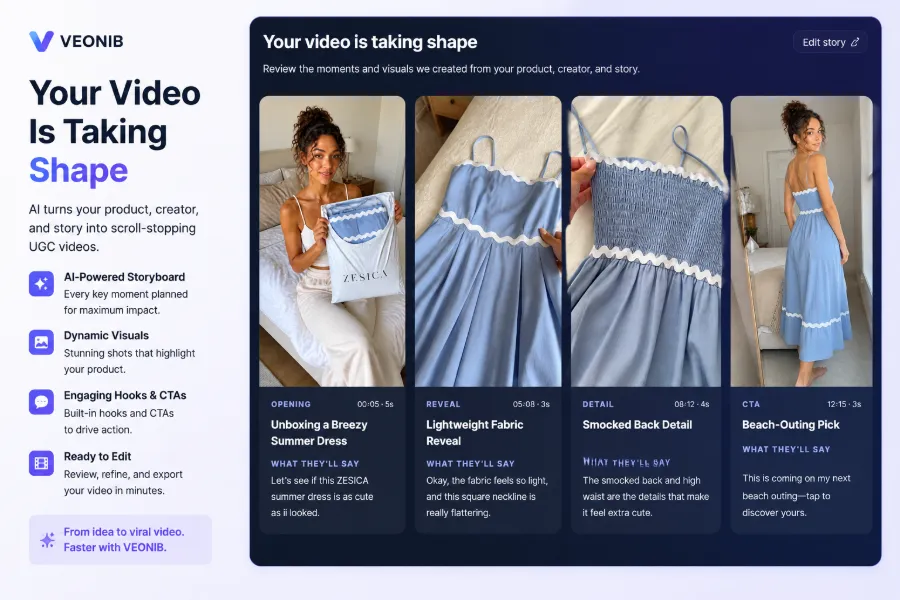
Functional products should first showcase the problem‑solving process, e.g., a waterproof bag appears in a water‑leak or messy‑storage scenario before showing capacity and results. Lifestyle products fit better with atmosphere, character state, and before‑after changes, then finally material, size, or purchase reasons. UGC expression isn’t just rough visuals; the spoken experience must match the on‑screen actions, and subtitles should not merely repeat the voice‑over.
After publishing, completion rate should be viewed together with click‑through, add‑to‑cart, and conversion rates. Shops can test 15‑second, 20‑second, and 30‑second versions, but should not assume one is inherently best. Passing ad review does not guarantee that the product card, shipping promise, and landing page have been properly connected.
From a Single Hit to Sustainable Testing: How Shops Should Build Their Video Production Process
A stable process is not “publish more every day,” but a loop that ties product data organization, script & storyboard, batch generation, publishing, data collection, and iteration together. When a product URL changes in Shopify, WooCommerce, or other shop platforms, title, price, inventory, and main image must have version records. Otherwise, a video exported as MP4 may later reveal mismatched price or product page information.
In the first half of an automated production pipeline, VEONIB can be used as an example for batch generation. Its 60‑second generation data is suitable for measuring production speed, but cannot replace script quality, approval rate, or sales performance metrics. Discussions about low‑cost short‑video operation workflows often converge on the same issue: after saving editing time, does the team really spend that time validating creative variables?
A material library should at least record product, market, video length, creative angle, and placement results. Character settings, language version, CTA, material source, and ad‑review status should also be retained; otherwise, when a version performs oddly, operators must repeatedly screenshot the backend and guess whether the hook, language, or product hand‑off is the problem. The value of batch production is not just fewer cuts but faster differentiation between “effective hook” and “effective product hand‑off,” two variables often mixed together.
| Solution | Required Materials | Production Speed | Testable Variables | Maintenance Risk | Applicable Scenarios |
|---|---|---|---|---|---|
| Manual Production | Complete assets, script, editors | Slow | Many | High version and labor risk | Small number of key products |
| Single‑template batch production | Product images, fixed script | Fast | Few | Content repetition, weak market adaptation | Rapid scaling of similar SKUs |
| Product‑link‑driven automated workflow | Product URL, page data | Fast | Hook, scenario, length | Sync and review debugging risk | Continuous testing of many SKUs |
The higher the automation, the less you can skip version management. Without records of product‑information versions, market language, and material sources, faster publishing can increase review and debugging costs. When supplier material has watermarks, unclear licensing, or mixed visual styles, it is more time‑saving to perform a supplier‑material cleanup before publishing than to handle ad‑review rejections later.
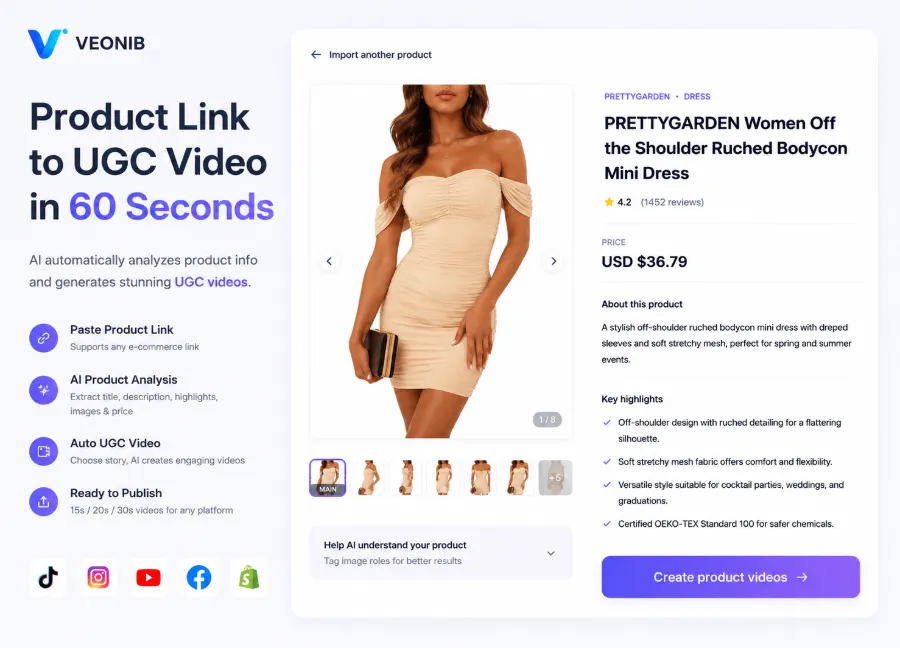
If a team frequently switches between script tools, voice‑over tools, editing software, and export tools, variable tracking can quickly break. The practice of reducing tool switching offers some reference, but shops still need a manual review step, especially for price, language, character statements, and product‑card information.
Four Common Misjudgments After Video Becomes a Traffic Engine
Mistake: High view count equals good product performance. In the first half of 2026, a shop began batch‑producing TikTok Shop videos; views rose sharply within days, and the team mistook production efficiency for operating efficiency. Later audit revealed that some videos’ product cards weren’t synced to the latest links, other SKUs lacked inventory, and the detail page’s shipping promises weren’t updated. Short‑term view spikes didn’t translate into clicks or sales; the shop was simply generating unconnected traffic faster.
Mistake: Batch generation equals batch copying. The same language, characters, and purchase reasons pushed to different markets may still garner views but fail to explain why local users should buy.
Mistake: Optimizing only the video without checking product detail pages, inventory, price, shipping, and product‑card info. The post‑click gap is often not a weak script but a page that fails to deliver the video’s promises.
Mistake: Pursuing “UGC‑look” only. Authenticity is not just handheld camera or spoken subtitles; without using motion, clear selling points, and compliant material sources, the video looks like a template mash‑up and may trigger copyright or claim issues during ad review. Faster output brings review, brand‑consistency, and material‑duplication risks that cannot be erased by automation. Shops can refer to the no‑shooting ad creation workflow but should not skip pre‑publish checks because of it.
During review, check links, product cards, inventory, and price within the first 24 hours, then look at first‑3‑second retention and clicks; observe early add‑to‑cart and sales signals at 72 hours; after 7 days, decide whether a creative shows stable performance. This troubleshooting determines whether to adjust the script, swap assets, or fix product hand‑off, rather than copying the video just because views are up.
First Integrate Video into Product Operations, Then Decide How Much Production Resources to Allocate
The meaning of a video traffic engine is not that shops must endlessly increase video count, but that videos must work together with product information, shop hand‑off, inventory status, and data review. If the content team doesn’t know when product pages update or inventory changes, more videos spread erroneous information faster.
Cross‑border shops can start with a few core SKUs, establishing opening hooks, usage scenarios, character settings, language, and CTA variables, then test 15‑second, 20‑second, and 30‑second lengths. After click‑through and conversion feedback appear, expand production scope. The first round does not need to cover all products; it should identify which variables merit ongoing maintenance.
Investment decisions should revolve around each effective creative’s production cost, testing cycle, and reusability, not merely video count. A version that brings moderate views but stable clicks and product conversion may be more suitable for long‑term use than high‑view, low‑conversion content. TikTok Shop’s cross‑border e‑commerce trend will continue to rely on sustained content operations, but scaling must be constrained by data and product hand‑off.
When video truly becomes part of product operations, the team will spot inventory, price, and page‑information issues earlier. The result may not be glamorous, but it is far easier to handle than discovering after seven days that traffic didn’t convert.
FAQ
Why does TikTok Shop’s GMV growth increase shops’ reliance on short videos?
Because product discovery and content consumption happen on the same platform; videos can simultaneously provide exposure, explanation, and click‑guidance. Shops should check click and product‑card status within 24 hours of publishing, not wait seven days for GMV.
Should TikTok Shop videos prioritize view count or product sales?
First see whether views generate clicks, then look at add‑to‑cart rate, conversion rate, and GMV. A video with high views but low click‑through usually means the hook attracted attention but didn’t help users understand the product or develop a purchase reason.
What tasks should the first 3 seconds of a short‑video live‑commerce clip usually accomplish?
They must let users quickly identify a problem, scenario, or result and decide whether the video is relevant to them. Shops can test 15‑,, 20‑second, and 30‑second versions, but must compare first‑3‑second retention and product clicks, not just completion rate.
How can multi‑SKU cross‑border shops avoid video material and product information desynchronization?
Keep version records for product URLs, price, inventory, language version, and video files, and re‑verify the product card before publishing. In practice, checking links and inventory within 24 hours and clicks and add‑to‑carts at 72 hours helps catch sync errors early.
What should a shop without a professional filming team do to start testing short‑video content?
Select a few core SKUs, create basic versions with different openings, scenarios, and lengths, then decide whether to scale production based on click and sales signals. Even if generation speed reaches 60 seconds, subtitles, selling points, material source, and ad‑review status still need checking.
Share Article