How a Thai Skincare Brand Got 500,000 Views with AI Video
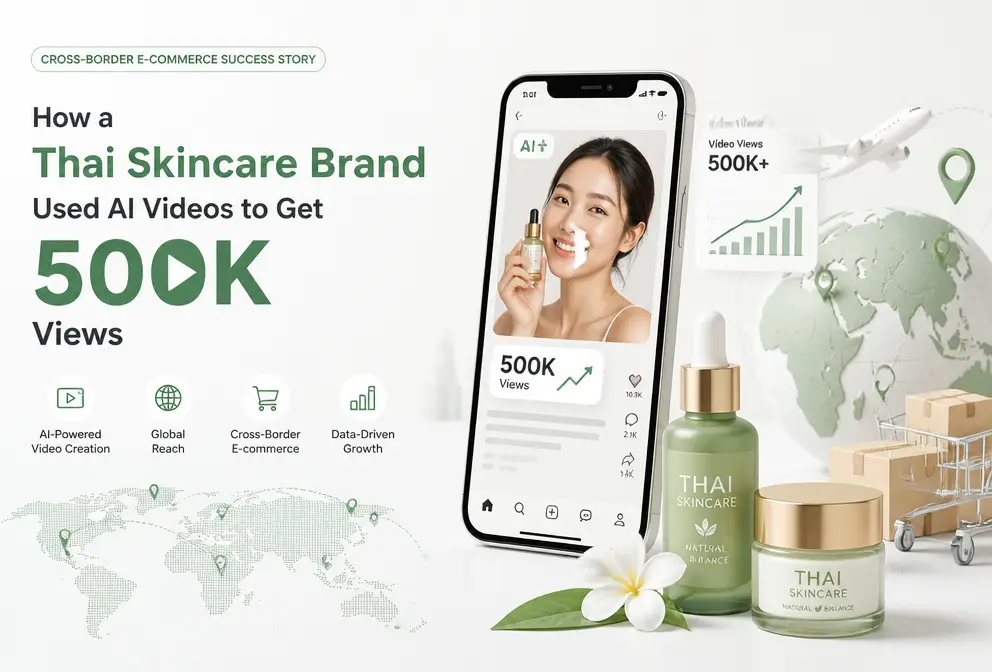
When I open a case study, what I want most isn’t theory but real numbers and the exact steps taken. At the end of last year I helped a local Thai skincare brand run TikTok Shop ads. Their problem was: they had good products, but video production was too expensive—outsourcing a 30‑second ad cost $300, and after repeated revisions the result was still unsatisfactory, causing a two‑week delay in the launch plan. I tried a different approach: using a product link to generate a full ad video in 60 seconds, which eventually earned 500,000 views on TikTok. No complex editing software, no costly filming crew—just a product URL and an AI tool. This article breaks down the whole process.
Pain Points of Traditional Video Production: Time, Cost, and Language Barriers
If you’ve ever run a local Thai skincare brand, you know how cumbersome it is to shoot a usable short video. The Thai market demands high‑quality video content—consumers are used to fast‑paced, emotional ads with local language voice‑overs, but brands often have limited resources.
A 30‑second traditional video takes 3–5 days on average from script writing, casting, shooting, to post‑production. If it involves outdoor locations or models, the timeline stretches further. Cost‑wise, a small local team in Thailand typically charges $200–$500 for a basic ad video—significant for independent sellers. Even more problematic is multi‑platform formatting: TikTok requires a 9:16 vertical format, Instagram Reels needs a similar ratio, while YouTube Shorts and Facebook have different aspect‑ratio requirements. Manually adjusting formats adds extra workload.
The skincare brand I worked with initially hired a Bangkok video production company that quoted $350 per video, including Thai voice‑over. After three rounds of revisions, the first version still couldn’t be launched—its script logic was unclear and the product’s selling points were buried in lengthy scenes. The back‑and‑forth took five days, and by the time the final video was delivered, the optimal TikTok Shop launch window had already passed.
Case Breakdown: What This Thai Skincare Brand Did
Back to the case itself. The brand’s flagship product is a locally sourced herbal skincare line, priced around $15–$20 per unit, targeting Thai consumers primarily on TikTok Shop. When I took over, they had abandoned the outsourced video plan and their budget was nearly exhausted. I decided to try a method I’d seen elsewhere: feed the product link directly into an AI tool and see if it could generate a video.
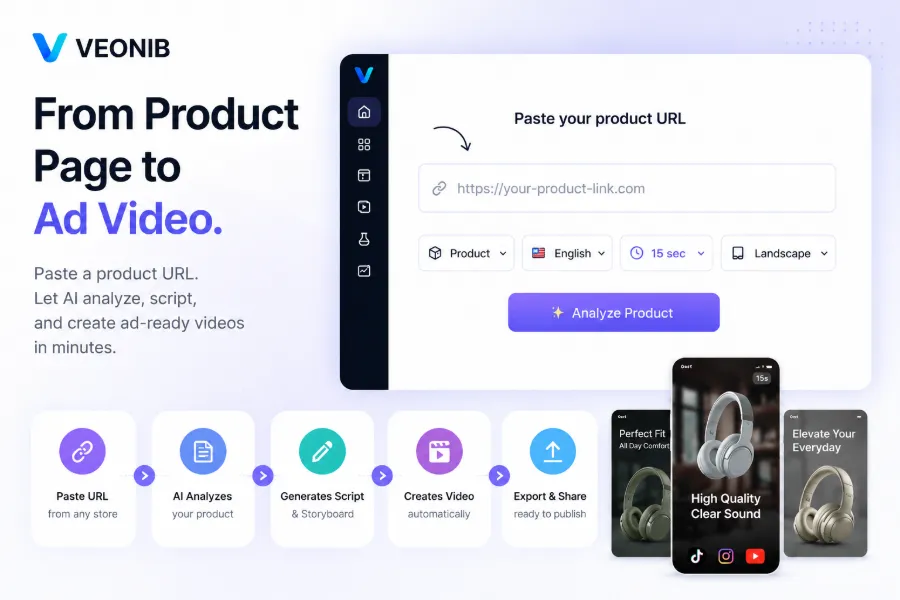
The workflow is straightforward. I copied the Shopify product page URL of the skincare item and pasted it into the input box on VEONIB. The system automatically analyzed the product title, description, images, and key selling points—this took less than ten seconds. I then selected a “UGC style” video template, set the script language to Thai, and clicked generate.
After 60 seconds, a complete ad video was ready. It included an opening hook, product showcase, usage scenarios, and a closing call‑to‑action, all paired with Thai AI voice‑over and Thai subtitles. I posted the video directly to the brand’s TikTok account with a simple ad tag. Three days later, the dashboard showed the view count had surpassed 500,000.
I didn’t do any traditional video editing—no Premiere Pro, no keyframes, no color grading. If you want to try this workflow, check out the detailed guide on How to Make TikTok Shop Ads Without Shooting Any Video, which walks through the entire link‑to‑publish process in more depth.
Key Advantages of AI‑Generated Video: From 0 to 1 in 60 Seconds
Many people are skeptical about AI‑generated video quality, and I was too before I tried it. After testing, several key differences completely changed my view.
First, speed. Traditional production takes 3–5 days from start to finish, whereas AI generation takes only 60 seconds. This isn’t just about being faster—it fundamentally changes the workflow. Instead of making one video and hoping it works, you can generate 5–10 variants at once, testing different hooks, script angles, and voice‑over styles.
Second, cost structure. Traditional video has a nearly fixed marginal cost—each additional video means another production fee. AI video’s marginal cost is virtually negligible; the difference between generating the first video and the hundredth is just a few minutes of waiting.
A third, often‑over point: AI can automatically parse the core selling points from the product page. I compared AI‑generated scripts with the ones I wrote manually and found AI actually captured the keywords and high‑frequency phrases more accurately. For example, the herbal skincare page repeatedly mentions “natural ingredients” and “suitable for sensitive skin.” The AI script retained all of those phrases and arranged them in a narrative style that resonates with Thai consumers—gentle tone plus close‑up shots of product usage.
Another hidden advantage of AI video is flexible output ratios. From a single URL you can output 9:16, 1:1, and 16:9 versions simultaneously, meaning the same asset can be published on TikTok, Instagram Reels, YouTube Shorts, and Facebook without manual cropping. I previously wrote a case analysis that shows how to turn a luxury hand‑cream set into a polished ad video in 60 seconds, Mobile: How to Turn a Luxury Hand‑Cream Set into a Refined Ad Video. The storyboard logic and product handling are similar to those for skincare. The industry is also discussing this trend; a Medium article titled AI How to‑com E‑Commerce Marketing notes similar observations.
There are compromises, though. AI‑generated videos sometimes have unnatural transitions—product rotations can look too mechanical, and background lighting changes may lack softness. Compared to professional shoots, the texture still falls short. However, on short‑form platforms like TikTok, users care far more about “watch‑through rate” than “visual fidelity.” As long as the first three seconds grab attention and the content is informative, view count and conversion rate become the ultimate metrics. The 500,000 views prove this approach works.
Why Thai E‑Commerce Teams Should Try This Workflow Immediately
The Thai e‑commerce market has several unique traits. First, TikTok Shop’s penetration is growing rapidly, and users are accustomed to completing purchases directly within short videos. Second, localization is crucial—Thai voice‑over and subtitles are standard, and Thai consumers prefer emotionally driven storytelling; stiff, literal translations don’t resonate. Third, most brands are small to medium‑sized, often lacking dedicated video staff or a budget for frequent outsourcing.
VEONIB hits all these pain points. It supports AI voice‑overs in 30 languages, and the Thai pronunciation and intonation are much more natural than I expected, without the obvious robotic feel. Multi‑ratio output solves the format mismatch between TikTok, YouTube, and Instagram. The free preview feature lets you see the script and storyboard before final export, and no credit card is required—friendly for budget‑constrained brands.
The tool has already been community‑validated; early user feedback can be seen on its Product Hunt page. If you’re looking for a repeatable video production pipeline, start with a single product link. Generating a video takes only 60 seconds and costs nothing; you’ll know immediately whether it works. For a more systematic approach, the guide VEONIB AI Video Ad Generator – E‑Commerce Brand Handbook outlines the full chain from product selection to ad launch.
Frequently Asked Questions (FAQ)
Q1: I have no video editing experience—can I use VEONIB?
Yes. The entire workflow requires no manual editing. Paste the product link, choose the voice‑over language and video style, and the system generates the final video. The only thing you need to do is confirm whether the result meets your expectations.
Q2: Who owns the copyright of AI‑generated videos?
The user owns the copyright. Exported videos can be used freely for ad campaigns, social media posts, product page displays, with no royalties or platform restrictions.
Q3: Which e‑commerce platforms does VEONIB support?
It supports product links from Shopify, Amazon, TikTok Shop, WooCommerce, Temu, AliExpress, Etsy, eBay, and other major platforms. Most pages with structured product descriptions can be parsed.
Q4: How long does it take to generate a video?
Usually within 60 seconds. From past the link to receiving an exportable MP4 file takes about a minute. Generation speed is independent of video length or style.
Q5: Can I generate videos in different aspect ratios?
Yes. A single product link can output 9:16 (vertical), 1:1 (square), and 16:9 (horizontal) versions simultaneously, covering TikTok, Instagram Reels, YouTube Shorts, Facebook, and other platforms.
Share Article