The unglamorous infrastructure bet that quietly decides whether your storefront integrations survive Black Friday
Every cross-border operator I know spends their tooling budget on the visible layer: the ad account, the landing page builder, the review app, the returns portal. Almost nobody budgets attention for the outbound webhook layer — the thing that tells your 3PL that an order shipped, tells your ERP that a refund cleared, tells Klaviyo that a subscriber hit a lifecycle milestone, or tells a supplier’s portal that inventory dropped below threshold. That layer is invisible right up until it silently drops 4% of events during a peak sale, and then it becomes the most expensive line item on your P&L. So when a builder ships a piece of infrastructure that collapses “queue + worker fleet + Redis + retry scheduler + monitoring” into a single binary, cross-border sellers should pay attention even though it isn’t marketed at them. Sparrow, launched by Sarath SP, is exactly that kind of bet — and the reasoning behind it maps uncomfortably well onto the integration sprawl most DTC brands are carrying into 2025.
What problem this actually solves — and why it’s a cross-border problem whether or not you write code
Strip away the Go and the Postgres and the launch-day vocabulary, and the pitch is simple: webhook delivery is a reliability problem that almost every team solves badly, twice. Sarath’s framing is that at every company he joined, the team either paid a per-message vendor — which meant routing customer data through someone else’s infrastructure — or hand-rolled a queue, a worker fleet, Redis, a retry scheduler, and a monitoring stack. Both paths “cost more than they should.” That’s a developer’s complaint, but it’s an operator’s complaint too.
Here’s the cross-border translation. A mid-size Amazon FBA brand running Shopify DTC on the side typically has somewhere between eight and twenty SaaS systems that need to talk to each other in near-real-time: Shopify to your ERP, your ERP to your 3PL, your 3PL back to Shopify, Amazon Seller Central feeds into inventory sync, Klaviyo flows triggered by fulfillment events, a returns app writing back to accounting, a marketplace integration layer (often a middleware like a channel manager) fanning out to TikTok Shop, Temu, SHEIN, Etsy, and eBay. Each of those connections is, under the hood, a webhook or a polled API. When one of them fails silently — a 500 from a supplier’s endpoint during a restock window, a timeout on a fulfillment callback during a flash sale — you don’t get an error page. You get an order that ships twice, or a refund that never posts, or a customer who gets a “your order shipped” email three days after it was delivered.
Sparrow’s answer is to treat delivery as a first-class product: at-least-once delivery with classified retries across 10 error categories, each with its own retry decision; Standard Webhooks signing with HMAC-SHA256 and Ed25519; AES-256-GCM envelope encryption for secrets at rest; per-endpoint health tracking with auto-disable that holds deliveries rather than dropping them; Go-template payload transforms with 37 built-in functions; shipped recipes for Slack, Discord, PagerDuty, ntfy, ClickHouse, Twilio, SendGrid, and CloudEvents; a self-service consumer portal that’s embeddable and token-scoped; a CLI with local listen, push, recipe management, and an MCP server for AI agents; OpenTelemetry traces, metrics, and logs plus a Prometheus /metrics endpoint. It’s MIT licensed, all features are in the open codebase, and there is no enterprise edition. The semver promise is that the REST API, CLI, env vars, signatures, and template functions are frozen for the 1.x line.
For a seller, the two features that matter most are the ones that sound the least exciting: classified retries and auto-disable that holds rather than drops. Most homegrown webhook stacks retry everything the same way, which means a transient 503 gets the same treatment as a permanent 400, and a dead endpoint gets hammered until someone notices. Classifying errors and deciding per-category whether to retry, back off, or park the delivery is the difference between a supplier integration that self-heals and one that quietly backs up for a week.
Why Amazon sellers should care more than Shopify ones
Shopify’s own webhook infrastructure is reasonably robust and the app ecosystem absorbs a lot of the pain — if a Shopify webhook fails, the app usually retries and you find out via the app’s dashboard. Amazon sellers live in a different world. Amazon SP-API integrations, 3PL EDI bridges, and marketplace channel managers are frequently stitched together by small vendors or in-house scripts, and the failure modes are uglier: a missed ORDER_CHANGE notification can mean shipping an item the customer already cancelled; a missed inventory feed can mean an oversell that tanks your account health. If you’re running FBA plus FBM plus a Walmart or Temu expansion, the number of outbound event streams you depend on roughly triples, and the tolerance for silent loss goes to zero. A single-binary, Postgres-backed delivery layer is attractive precisely because it’s the kind of thing a lean ops team can actually run without a dedicated platform engineer.
How it differs from the incumbents you’d actually compare it to
The obvious comp set is Hookdeck, Svix, and the webhook features baked into Zapier or Make. Each occupies a different slot, and it’s worth being precise about which slot Sparrow is trying to take.
Hookdeck is the closest functional match for the “receive and reliably deliver webhooks” job, and it’s a mature, hosted product with a strong event-gateway story. The trade-off Sarath is explicitly attacking is the hosted model itself: routing customer data through a third party’s infrastructure and paying per message. For a cross-border seller handling EU customer data under GDPR or dealing with suppliers who contractually forbid third-party routing, “your data stays in your Postgres” is not a philosophical preference — it’s a compliance and procurement argument.
Svix is the reference implementation for the “webhooks-as-a-product” pattern, particularly the customer-facing portal and signing story. Sparrow ships an embeddable, token-scoped consumer portal, which is the same idea: let your downstream partners (suppliers, 3PLs, marketplace connectors) self-manage their endpoints without emailing your ops team. The difference is deployment model again — Svix is a hosted service with an open-source core, Sparrow is a single Go binary with Postgres as its only dependency.
Zapier and Make are what most small DTC brands actually use for cross-app glue, and they’re great until they aren’t: task-based pricing scales badly at volume, latency is unpredictable, and debugging a failed run across a five-step Zap is a special kind of misery. Sparrow isn’t trying to replace them for marketing automation — it’s trying to replace them for the high-volume, must-not-drop operational events where a per-task vendor bill becomes absurd.
The genuinely differentiated claim is the Postgres-only architecture. Sarath’s line — “River handles the job queue inside Postgres, so your backup is your backup and your monitoring is your monitoring” — is the whole thesis in one sentence. No Redis, no message broker, no sidecar workers. For a brand already running its stack on a managed Postgres instance (which is most of them, directly or via their agency), that’s a dramatically lower operational surface area than standing up and babysitting a queue cluster.
Where the math breaks
Two things to flag before anyone gets too excited. First, the load ceiling. In the launch thread, a commenter asked about stress-testing limits, and Sarath pointed to a benchmark writeup rather than quoting a number on the page. The follow-up read of that benchmark — per the commenter’s summary — is that the current configuration tops out around 1,000 jobs per second, and the limit comes from the number of workers rather than Postgres itself. That’s fine for most DTC brands and most supplier integrations. It is not fine if you’re a high-volume marketplace operator pushing six-figure daily event counts through the same instance, or if you’re a middleware vendor building on top of it. The honest framing is: this is a “replace your homegrown webhook layer” tool, not yet a “replace Hookdeck at scale” tool.
Second, the operational maturity question. A single binary with one dependency is a beautiful thing until you need horizontal scaling, and the maker is upfront that horizontal scaling documentation is on the roadmap, not shipped. First-party client SDKs are also not shipped — right now you generate from the OpenAPI spec. For a team with strong Go or Python engineers, that’s a weekend. For a brand whose “engineering” is one ops person and an agency retainer, “generate your own SDK from the spec” is a real friction point that Hookdeck or Svix would absorb for you.
What cross-border sellers can borrow from this, even if they never install it
The most useful thing about this launch isn’t the product — it’s the mental model. Three things are worth stealing regardless of your stack.
Treat every integration as a delivery contract, not a connection. The reason webhook failures hurt so much in cross-border ops is that nobody defined what “delivered” means. Sparrow’s at-least-once guarantee plus classified retries is a template: for every critical event stream you depend on — order created, fulfillment confirmed, refund issued, inventory adjusted, return received — write down what happens if it’s delivered twice, what happens if it’s delivered late, and what happens if it’s never delivered. Most brands have never done this exercise, and it’s the single highest-leverage hour of ops work available to them this quarter.
Separate “hold” from “drop” in your own incident playbooks. Auto-disable that holds deliveries rather than dropping them is the correct default, and almost nobody does it. When a supplier’s endpoint goes down, your instinct is to disable the integration and move on; the better move is to park the events, alert, and replay once the endpoint recovers. If you’re using Zapier or Make, this is the argument for turning off “auto-turn-off” behavior and routing failures into a dead-letter queue you actually monitor.
Embed the self-service portal idea into your supplier and 3PL relationships. The token-scoped consumer portal is a small feature with a big operational payoff: instead of your ops team being the human API between you and every downstream partner, each partner manages their own endpoint, sees their own delivery health, and rotates their own secrets. If you run a supplier portal or a 3PL integration today, ask whether your partners can see their own delivery failures. If the answer is no, that’s a support ticket queue you’re paying for with headcount.
The AI-drafting feature is a tell, not a feature
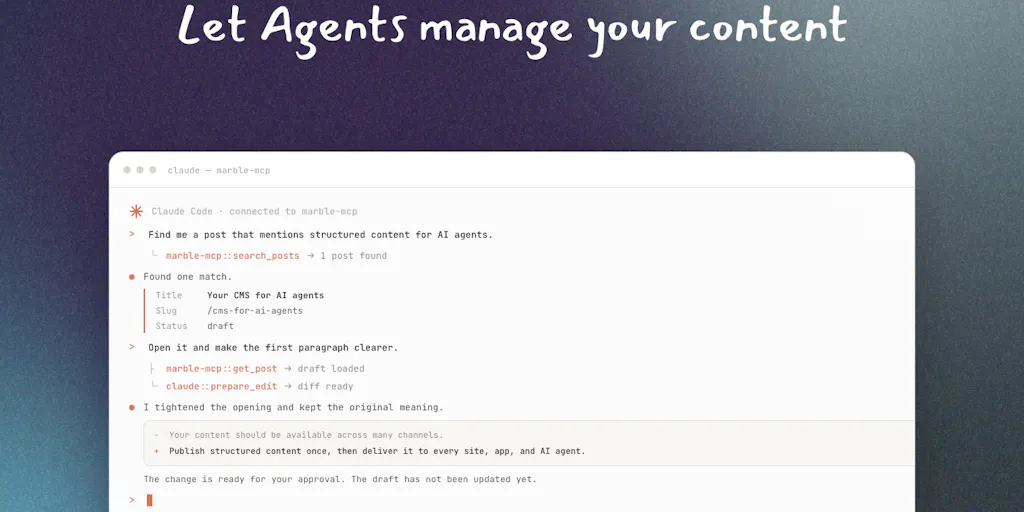
Sparrow ships optional AI drafting for payload transforms, working with Anthropic, OpenAI-compatible endpoints, or a local model, plus an MCP server for AI agents. On a launch page this reads as box-ticking. Read it as a signal instead: the maker expects that within a year, a meaningful share of integration configuration will be written by agents rather than humans, and he wants the delivery layer to be the thing agents call into. That’s a reasonable bet, and it’s the kind of forward-looking choice that tends to age well in infrastructure. For sellers, the practical read is that the “no-code integration” layer is about to get much more capable, which means the bottleneck shifts from building integrations to governing them — which loops right back to delivery contracts and dead-letter queues.
Where my judgment says it falls short
I like the architecture and I like the licensing. I’m less convinced the go-to-market fits the audience that needs it most.
The audience mismatch is real. The people who feel the webhook pain most acutely are ops leads at mid-market cross-border brands — people who manage supplier integrations, 3PL handoffs, and marketplace syncs, and who do not write Go. Sparrow’s launch is aimed squarely at developers, and the “generate your SDK from the OpenAPI spec” answer confirms it. That’s not a flaw in the product; it’s a gap between the product’s natural buyer and the product’s natural beneficiary. The bridge is agencies and integration partners — the Shopify Plus agencies, the channel-management vendors, the fractional CTO shops that serve DTC brands. If Sparrow gets adopted by that layer, it reaches sellers. If it stays a developer tool, it competes with Hookdeck and Svix on their turf, where they have years of head start.
The benchmark ceiling deserves more scrutiny than a launch thread allows. A 1,000 jobs/second ceiling driven by worker count, not Postgres, is a reasonable place to start, but “the limit is the number of workers” invites the obvious follow-up: what does the curve look like as you add workers, and where does Postgres actually become the wall? For a brand pushing peak-season volume through a single instance, that question matters. The maker has been transparent about publishing benchmarks, which is to his credit, but “transparent about a limit” and “solved the limit” are different things.
No enterprise edition is a double-edged sword. MIT licensing with all features in the open codebase is genuinely refreshing and removes a lot of procurement friction. It also means there’s no commercial support tier, no SLA, and no vendor to escalate to at 2 a.m. on Black Friday when the delivery layer is the thing that’s broken. For a brand with in-house engineering, that’s a fine trade. For a brand without it, “free and unsupported” is a hidden cost that shows up exactly when you can least afford it.
The recipes list is impressive but shallow where it counts. Slack, Discord, PagerDuty, ntfy, ClickHouse, Twilio, SendGrid, CloudEvents — that’s a developer-tools roster. The integrations a cross-border seller actually needs (Shopify, Amazon SP-API, a 3PL’s EDI bridge, a channel manager’s event stream) aren’t on it, and won’t be until the community or the maker builds them. The recipes are a starting point, not a solution.
What I’d watch / test next
Three concrete things an operator can do this week, in order of leverage.
First, audit your critical event streams. Pick the five integrations whose silent failure would cost you the most — for most brands that’s order-to-3PL, inventory sync to marketplaces, refund-to-accounting, fulfillment-to-email, and supplier restock alerts. For each one, write down the current retry behavior, the current alerting, and the current dead-letter process. You will almost certainly find at least one stream with no monitoring at all. Fixing that is cheaper than any tool purchase.
Second, if you have engineering capacity, stand up Sparrow in a staging environment against a non-critical stream — a Slack notification or a PagerDuty alert is a safe first target. The point isn’t to migrate; it’s to feel the operational difference between a Postgres-backed queue and whatever you’re running now, and to pressure-test the benchmark ceiling against your own peak volumes. If you’re on a managed Postgres instance already, the lift is genuinely small.
Third, if you’re a brand without engineering, have the conversation with your agency or integration partner. Ask them whether they’ve evaluated a self-hosted delivery layer versus a per-message vendor, and what the cost curve looks like at your volume. The answer will tell you whether they’re optimizing for your reliability or their convenience. And if you’re a middleware vendor serving cross-border sellers, this is the moment to look hard at embedding something like Sparrow rather than building the retry layer for the fifth time — the maker’s original complaint, after all, was that he kept building the same thing at every company. The sellers are building it too. They just don’t know it yet.