The QuietHint Launch Is a Warning Shot for Every Cross-Border Operator Running Sales Calls in a Second Language
Cross-border sellers live and die on calls they can barely keep up with. A sourcing negotiation in Yiwu, a Q4 terms review with a US retail buyer, an Amazon Account Health appeal call where every word gets logged — these are the moments where a missed phrase costs margin, or an account. So when a tool like QuietHint launches with a promise of on-device transcription plus live reply suggestions, I pay attention, even though it was built for a general knowledge-worker audience. The interesting part isn’t the notetaker category itself — it’s the architecture. Local-first, bring-your-own-model, no bot in the room. That combination has direct implications for how cross-border teams should be thinking about AI tooling in 2025, and it also exposes exactly where the current generation of “meeting copilots” still fails operators like us.
What QuietHint actually is, stripped of the launch-day gloss
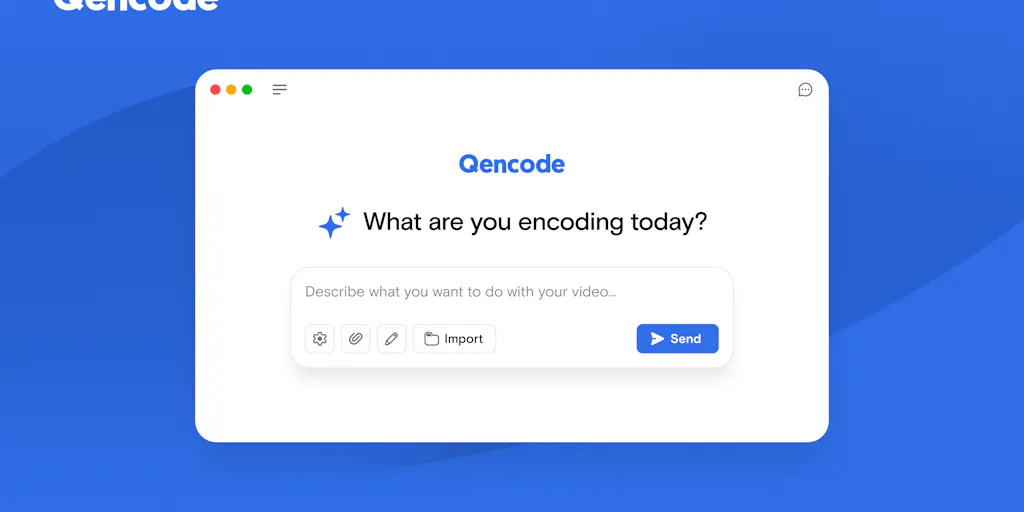
The maker, Pavel Cecoi, is explicit about the design constraint: “Every meeting assistant I tried wanted two things from me: a bot in my calls and my recordings on its servers. I did not want to give it either.” QuietHint runs on macOS, transcribes speech on-device, keeps the user’s words separated from the other party’s, and surfaces a short suggested reply in a small overlay while you’re still talking. It works with whatever call app you already use, and it runs on your own Anthropic API key.
The company behind it is Mangoosy, and the pricing detail that matters most came out in the comments: the app is $9/month, which covers the app itself and unlimited suggestions, while Anthropic usage is billed separately against your own key. Shivam Singh nailed the read — “The $9/month is essentially for the app and unlimited suggestions, while Anthropic usage is separate.” Cecoi confirmed it and added that within roughly 48 hours of launch, a credits model would arrive: top up once, hints run on Mangoosy’s key, no API key to create, first 10 questions free. The $9/month BYO-key tier stays for people who prefer it.
So the product is not a notetaker in the Otter.ai or Fireflies.ai sense. It’s a live coaching overlay with local transcription as the substrate. That distinction is the whole story.
The problem it solves is narrower — and more honest — than the category admits
The notetaker category has a credibility problem, and the Product Hunt thread says it out loud. Lambert de beru’s comment is the most useful piece of market research on the page: “I’m here every week, and every day or two I see a new notetaker launch, so I’m starting to get a bit tired of this category.” Cecoi’s reply is refreshingly non-defensive — “the notetaker graveyard is getting crowded” — before he draws the line: nothing leaves your Mac, no audio uploaded, no transcript on someone’s server, no bot joining the call.
That’s the real differentiator, and it’s worth being precise about why it matters commercially rather than just philosophically. Most meeting AI tools work the way they do because the server is where the product lives — that’s where the transcription model runs, where the summarization happens, where the search index gets built. Moving transcription on-device inverts the cost structure. Mangoosy isn’t paying per minute of audio processed. The user’s Mac is. That’s why the $9/month price can exist at all alongside unlimited suggestions.
For cross-border operators, the privacy angle isn’t abstract. If you’re running supplier negotiations, you’re routinely discussing landed cost, MOQ breaks, exclusivity terms, and sometimes the identity of your factory. If you’re on an Amazon Seller Central call, you may be walking through account-specific performance data. Sending all of that to a third-party server that then trains on it — or simply stores it — is a real liability, not a hypothetical one. A tool that keeps audio local removes an entire class of vendor risk from your stack.
Where the math breaks
Here’s where I get skeptical, and it’s not about QuietHint specifically — it’s about the BYO-key model as a category pattern.
The moment you tell a user “bring your own Anthropic key,” you’ve handed them a variable cost they can’t forecast. Anthropic’s API pricing is per-token, and a live coaching overlay that fires a suggestion every time a question comes up is token-hungry by design. A 30-minute supplier call with 15 triggered hints could easily run more in API spend than the $9/month subscription — or it could run less, depending on how aggressively the overlay fires. The user has no way to know until they’ve burned through a month.
Cecoi seems to have recognized this, which is why the credits model is arriving so fast. “You top up once, hints run on our key, and there is no API key to create at all” is a much better operator experience. But it also means Mangoosy is now absorbing the token cost, which means the $9/month ceiling is gone and the real pricing question — how much does a hint cost, and how many hints does a typical call generate — is still unanswered. That’s not a knock on the launch. It’s a note that the unit economics of live AI coaching are genuinely unsettled, and any operator evaluating this category should ask for a per-call cost estimate before committing a sales team to it.
Why Amazon sellers should care more than Shopify ones
This is the part of the launch that most cross-border commentary will miss, because it’ll get filed under “productivity tool” and forgotten.
Shopify operators, broadly speaking, run async. Support tickets, email threads, Slack, Klaviyo flows, Gorgias macros. The live-call surface area is small. If you’re a DTC brand doing $2M–$20M on Shopify, your highest-stakes conversations are probably with your 3PL, your ad agency, or your fractional CFO — maybe a handful of calls a week.
Amazon sellers are the opposite. If you’re running Amazon FBA at any real scale, your business runs on calls you can’t afford to fumble: Seller Performance appeals, Account Health reviews, Brand Registry escalations, supplier negotiations, freight forwarder disputes, and increasingly, TikTok Shop and Temu partner calls where the rules are still being written in real time. Many of those calls happen in English, with a counterparty who is fluent, fast, and not inclined to slow down for you.
That’s the exact scenario QuietHint’s overlay is built for. Not “summarize my meeting afterward” — but “give me one usable line while the question is still hanging in the air.” The maker frames it that way himself: “What it actually does is drop one line on your screen mid meeting when you get asked something you don’t have an answer to. Only you see it.”
For a Chinese seller negotiating with a US buyer, or a US seller on a call with a Shenzhen factory rep, that’s not a novelty. That’s leverage.
What cross-border operators should actually borrow from this
Three things, and none of them require buying QuietHint.
First: the local-first architecture is a procurement criterion, not a feature. When you evaluate any AI tool that touches your business conversations — meeting AI, customer support AI, translation AI — the first question should be “where does the data live and does it leave my control?” The second should be “can I run this on my own model key or my own infrastructure?” If the answer to either is no, you’re accepting vendor risk you may not need to. QuietHint’s entire pitch is that this constraint is a product, not a limitation. That framing is worth stealing for your own vendor evaluations.
Second: live assistance beats post-hoc summarization for high-stakes calls. The notetaker category spent two years selling “you’ll never take notes again.” That’s a convenience pitch. The overlay pitch — “you’ll never freeze on a hard question again” — is a performance pitch. For cross-border sellers, performance on live calls is where the money is. Post-call summaries are nice. Mid-call rescue is better.
Third: the bring-your-own-key model is a transitional state, not a destination. Cecoi’s own 48-hour pivot to credits tells you everything. Operators should expect this category to consolidate around usage-based pricing with clear per-call cost visibility. Don’t build a workflow around a BYO-key tool unless you’re prepared to migrate when the vendor inevitably changes the pricing model.
Where my judgment says it falls short
I haven’t used QuietHint — it’s macOS-only, and I’d want to test it against a real supplier call before recommending it to anyone running a seven-figure Amazon book. But even from the launch thread, three gaps are visible.
It’s a coach, not a closer. Lambert de beru asked the right follow-up: will it send follow-up emails or proactively capture tasks like “send the deck to Marc by Friday” without being asked? Cecoi’s answer was honest — “Notes are coming, the kind that tell you what you actually have to do after. Still cooking that one.” So today, QuietHint helps you survive the call. It doesn’t help you execute after it. For a seller running 20 supplier calls a week, the post-call action capture is arguably the higher-value half, and it’s not shipped.
The nervous-user problem is unsolved. Shawn Frank raised the sharpest critique in the thread: “when we get difficult questions which makes the user nervous and the AI itself might need time to think — it might be useful to have some time buying prompts during the loading / buffering.” That’s a real UX gap. If the overlay takes four seconds to generate a hint while a buyer stares at you, the tool has made the situation worse, not better. Frank suggested prompts like “take a sip of water” or “ask for a moment to think.” Cecoi didn’t respond to that thread. It’s the kind of detail that separates a demo from a daily driver.
Model lock-in is a live risk. Shawn Frank also asked whether users could select the AI model in the future, given Apple Intelligence on modern Macs. That’s a fair question with no answer in the thread. Right now, hints run on Anthropic. If you’re already standardized on OpenAI or Google for your other AI workflows, you’re adding a second vendor relationship for one feature. Not fatal, but worth noting.
The cross-border angle nobody in the thread mentioned
Here’s the thing I keep coming back to. Every commenter on that Product Hunt page is evaluating QuietHint as a personal productivity tool for English-speaking knowledge workers. That’s the wrong frame for our industry.
The killer use case for a local-first live coaching overlay isn’t a US product manager who wants help in standup. It’s a cross-border operator running a negotiation in their second language, where the cost of a fumbled sentence is measured in containers, not vibes. It’s a sourcing agent in Guangzhou on a call with a Walmart buyer. It’s a DTC founder in Berlin pitching a US retailer. It’s an Amazon brand owner on an Account Health call where one wrong admission can cost them a quarter of revenue.
None of those users need a notetaker. They need a wingman that runs on their own hardware, doesn’t leak their negotiation position to a server, and fires one usable line at the exact moment they need it. QuietHint is pointed at that use case whether or not its maker knows it yet. The cross-border market will find it before the general productivity market does.
What I’d watch / test next
Concretely, this week:
If you run supplier or buyer calls in a second language, sign up for the QuietHint waitlist or grab the free 10-question credits when they ship. Run it on one low-stakes call first — an internal sync, not a negotiation. Measure two things: latency between question and hint, and whether the hint is actually usable or just plausible-sounding.
Audit your current meeting AI stack for data residency. If you’re on Otter, Fireflies, or Fathom, pull up their data processing terms and find out where your call audio goes and whether it’s used for training. This is a 20-minute exercise that could save you a very bad conversation with a supplier or a marketplace.
Pressure-test the BYO-key economics before you commit a team. If you’re considering rolling any BYO-key AI tool across a sales team, model the per-call token cost at your actual call volume. Ask the vendor for a credits-based alternative and a per-call cost estimate. If they can’t give you one, that’s your answer.
Watch the credits release. Cecoi said it lands within about 48 hours of launch. When it does, the pricing page will tell you more about the product’s real economics than the entire launch thread did. That’s the number to track.
The notetaker graveyard is crowded. But the live-coaching overlay category — local-first, privacy-preserving, built for people whose calls actually matter — is nearly empty. Cross-border sellers should be paying attention to who fills it first.