The Thesis
Cross-border e-commerce is a waiting game played across sixteen time zones. Your best operator is on a factory floor in Shenzhen, a trade-show booth in Berlin, or asleep while your most expensive AI agents sit idle at a permission prompt. That silent stall is the human-in-the-loop tax, and it is the most under-reported cost in the current AI operations stack. That tax is why I read Port22’s launch with the same attention I’d give a new tool for overseas returns: it doesn’t sell flashy new AI, it sells the ability to keep a machine moving while you’re somewhere else. For any seller running agents for listings, ad copy, repricing, or supplier follow-up, the lesson is bigger than the product.
What Port22 Actually Fixes
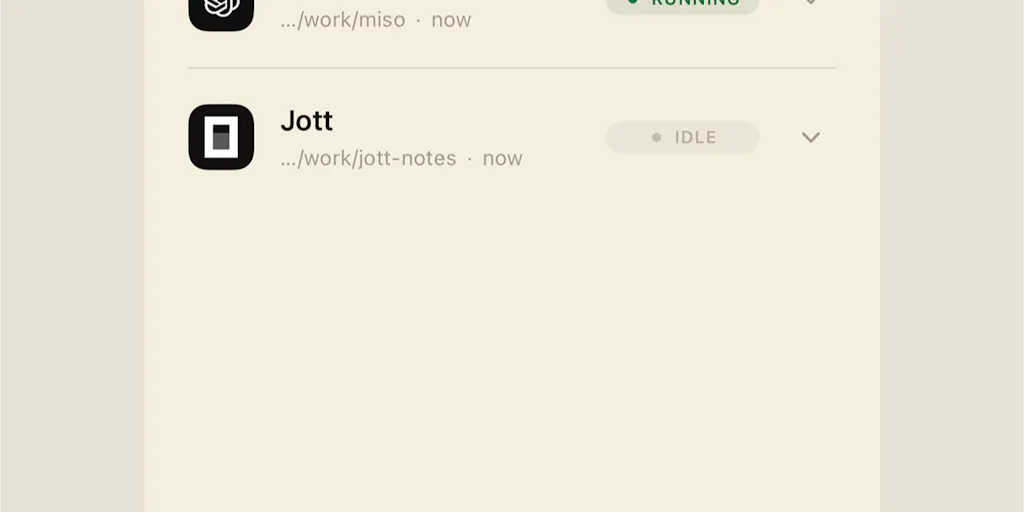
The problem Port22 targets is one that any cross-border operator who has tried to run an AI agent after 11 p.m. will recognize: you start a long task, walk away, and come back to discover the agent spent twenty minutes waiting for a single approval. The maker, Harsha Chaganti, says he built Port22 after exactly that frustration. It attaches to the coding agents you already run on a Mac — Claude Code, Codex, and more — and mirrors their state to your phone. You see which agents are working and which are stuck. When one needs permission, your phone buzzes and you tap the actual option it offered, not a guessed yes/no.
The “and more” is important. This isn’t tied to one AI vendor. It’s a remote control for the whole category of terminal-based agents. Port22 is filed under AI Coding Agents on Product Hunt, and the website frames it as “Claude Code, Codex & more on your phone.” The name is deliberately the SSH port — the one you’ve typed a thousand times to reach a machine somewhere else. That’s the mental model: your Mac is the machine, your phone is the control surface, and the link between them is encrypted.
The most important design decision is that Port22 attaches to what you already run. No wrapper, no config, no new terminal. You don’t change your workflow. You start Claude Code the way you always do, and it shows up on your phone. That sounds simple, but it’s rare. Most AI tools want to become your new terminal, your new agent runtime, your new ~/.zshrc entry. Port22 explicitly refuses that ambition. It’s a control layer, not a replacement layer. For e-commerce operators, this is exactly how tooling should feel: no migration, no “set up a new pipeline,” no pulling your operations team away from the current crisis to learn a new dashboard.
The launch page also makes a generous accessibility bet: free for one Mac and two sessions, every feature on, and explicitly not a trial. At the time I’m writing this, the launch had drawn 214 followers and 200 points, sitting at #3 on the daily leaderboard. The response from the Product Hunt crowd suggests the pain is widely felt.
But the deeper product insight is about attention management. Port22 is not really telling you what your agents are doing. It’s telling you what your agents are waiting for. That is a different signal. Most agent dashboards show logs and activity. Port22 surfaces the one moment where the entire run depends on a human. In cross-border operations, that’s the same as an exception report that only pings you when a shipment is held, a listing is suppressed, or a price drop needs approval before it goes live. The best ops tools don’t show you everything; they show you the one thing that needs you.
The Competitive Set: Parallelism vs. Remote Control
Port22 is entering a crowded “remote control for AI coders” niche, and the alternatives list is instructive. The first two names there — Conductor and Superset — solve a different problem entirely. Conductor says “run a bunch of Claude Codes in parallel.” Superset says “run 100s of coding agents in parallel.” Those are tools for scale: launch many agents, fan them out, and collect results. They don’t care much about the lonely moment when one agent is stuck and the human walked away.
The closer incumbents are the mobile control apps. CodeMote calls itself “Claude Code, Codex, any CLI agent. Driven from your iPhone.” Remodex is “control Codex on your iPhone.” MobileCLI is “remote AI terminal control.” So Port22 is not the first. What separates it, in my read, is the fidelity of the approval interaction.
Most “AI approval” UX reduces a nuanced decision to a binary. The agent asks a question, and a push notification offers “Approve” or “Deny.” That is dangerous because the question is rarely binary. Port22 claims to read the live session and show the exact question the agent asked, with every real option as a button. The maker specifically says a six-option prompt shows six buttons, not a guessed approve/deny. He calls a guessed keystroke “the worst possible bug in a tool like this.” For anyone who has approved an AI action from a phone while distracted, that fear is real.
This is a meaningful competitive distinction because it changes the mental model from remote yes/no to remote decision. The difference matters more outside coding than inside it. When an AI repricing agent asks whether to match a competitor, the real options are not “yes” and “no.” They are “match price,” “undercut by two percent,” “hold price and add a coupon,” or “do nothing.” A tool that guesses one of those options is not giving you control; it’s giving you a coin flip. A tool that shows the real options, with conversation context above them, is giving you a decision.
Where the Math Breaks
The free tier is one Mac and two sessions. Every feature is on, and it’s not a trial. That is excellent for a solo builder or a one-person brand. But the math breaks the moment you have a team. A cross-border brand with a VA in Manila, a logistics coordinator in Shenzhen, and a founder in Los Angeles does not need one Mac and two sessions. It needs multiple machines, shared workspaces, role-based controls, and an audit trail. None of that is on the page. The no-account, no-signup architecture actively works against it: you can’t have meaningful team permissions without accounts, and you can’t have an audit log without identity.
There is also a behavioral risk the maker openly admits. In a comment on the launch, he says he catches himself approving things on the phone that he would have read twice at his desk. That is the hidden cost of mobile approval: it makes you faster, and sometimes faster is worse. Port22 shows the exact question and the conversation above it, but it does not yet render a proper diff on the approval card, and it does not let you jump into the live terminal from the approval screen. The maker says both are on the list. Until they exist, I would be careful about using Port22 for the most dangerous operations — a code change that touches payment logic, an Amazon listing change that could suppress a best seller, or an ad budget action that could burn through a day’s profit in an hour.
The relay architecture is also worth watching. Port22 says everything is end-to-end encrypted between your Mac and your phone, and the relay cannot read your code. That is a sound trust story for a solo user. But relays add latency, and latency is the enemy of “my agent has been waiting twenty minutes.” Off your network, every notification and every approval tap has to travel through that relay. If you are in a factory basement in Shenzhen or a trade-show hall with bad Wi-Fi, the product is only as good as your connection.
What Cross-Border Sellers Can Borrow From Port22
The coding-agent framing will make Port22 seem irrelevant to an Amazon FBA operator who doesn’t write code. I think that’s a mistake. The pattern Port22 exposes is the same pattern running through every AI-assisted e-commerce workflow: an agent does expensive, irreversible work, and it stops because it needs a human decision.
If you’re using AI to draft listing copy, you decide between tone A and tone B. If you’re using AI to reprice inventory, you decide whether to match a competitor or hold your margin. If you’re using AI to answer supplier messages, you decide whether to accept a discount or insist on a replacement. Each of those decisions has options, and each option carries consequence. Port22’s design principle — show the real options, show the conversation, let the human decide from anywhere — is a blueprint for all of those workflows.
The practical takeaway for an operations stack is simple: build approval layers, not binary automations. A generic “AI agent writes product descriptions and auto-publishes” setup is dangerous not because AI is dangerous, but because publishing is irreversible. The better setup is an agent that drafts descriptions, attaches a decision card to a mobile notification, and waits for a human to choose between “publish,” “edit for better keywords,” or “reject.” That is the Port22 model, applied outside coding. It keeps the momentum of automation while keeping the final responsibility with a person.
Why Amazon sellers should care more than Shopify ones
Amazon sellers have the most to gain from this pattern because Amazon Seller Central is a high-stakes environment with slow, brittle reversibility. A repricing error can cost you the Buy Box. A bad removal order can strand inventory. A listing edit that accidentally buries a keyword can kill a product just before Q4. Those actions are not “undoable” the way a Shopify theme change is. On Shopify, you can restore an old version of a page in minutes. On Amazon, you can’t always.
That is why Amazon operators need guarded automation. An AI agent that can change pricing, fulfillment settings, or ad bids should never have a blank check. It should produce an approval request with the exact options and enough context to decide. Port22 happens to do this for code. The same UX is waiting to be built for listing tools, repricers, and ad managers. The sellers who demand this pattern from their SaaS tools will bleed less money than the ones who accept “auto-optimize everything” as a feature.
There is also a privacy lesson. Port22’s relay cannot read your code, and the product asks for no account and no signup. That’s a minimal-trust model. In e-commerce, where supplier contracts, customer PII, and advertising strategies are sensitive, every AI vendor should be held to a similar standard. If a tool is going to watch your agents, it should not be collecting more than it needs to do the job. Port22’s stance on this is not just a security detail; it’s a positioning statement. It says: the business belongs to you, not to the tool.
The final thing cross-border sellers can borrow is the willingness to design for interruption. Most e-commerce automation tools assume the human is in front of a dashboard. But the human is usually the one who is most needed in the factory, the freight forwarder’s office, or the customs inspection area. Port22 is built for the person who needs the machine to keep going while their attention is elsewhere. That is the exact profile of a cross-border operator. The product itself may only control coding agents today, but the mindset is transferable to every AI-assisted decision in an e-commerce operation.
What I’d Watch / Test Next
This week, I would do three things. First, install Port22 on one Mac and run a deliberately long Claude Code session — refactoring a small script, generating a batch of files — then leave the room. Measure how many approval requests you catch, and how long the agent spends waiting. The free tier for one Mac and two sessions makes this a no-cost experiment. Second, compare it against CodeMote and Remodex from the perspective of “real options” approval, not feature lists. If you can’t tell what the agent is about to do from the notification, the tool isn’t doing its job. Third, and more broadly, audit your e-commerce automation for single-point yes/no decisions. Find the place where an AI agent can make an irreversible change and force it to ask a human for permission with the exact options. If a tool like Port22 can’t do that for your listing or pricing stack, build the same pattern with the workflow automation you already have.
The goal is not more automation. The goal is more decisions, made while the machine is still worth waiting for.