The agent-workspace question every cross-border operator is about to face
If you run a cross-border storefront — a Shopify DTC brand, an Amazon FBA catalog, a TikTok Shop operation, a Temu or SHEIN-adjacent supply chain, an Etsy or eBay book of business — you have spent the last two years watching AI move from “novelty copy generator” to “thing that actually touches your P&L.” The next shift is subtler and more consequential: the interface layer where you run those agents. Most sellers still paste prompts into a browser tab, copy output into a spreadsheet, and babysit it. Palomino is a bet that the workspace itself — terminals, editor, browser, and agents in one window — becomes the operating system of a modern e-commerce back office. That’s worth an hour of your attention even if you never install it, because the framing tells you where tooling is heading.
What Palomino actually is, and the problem it’s circling
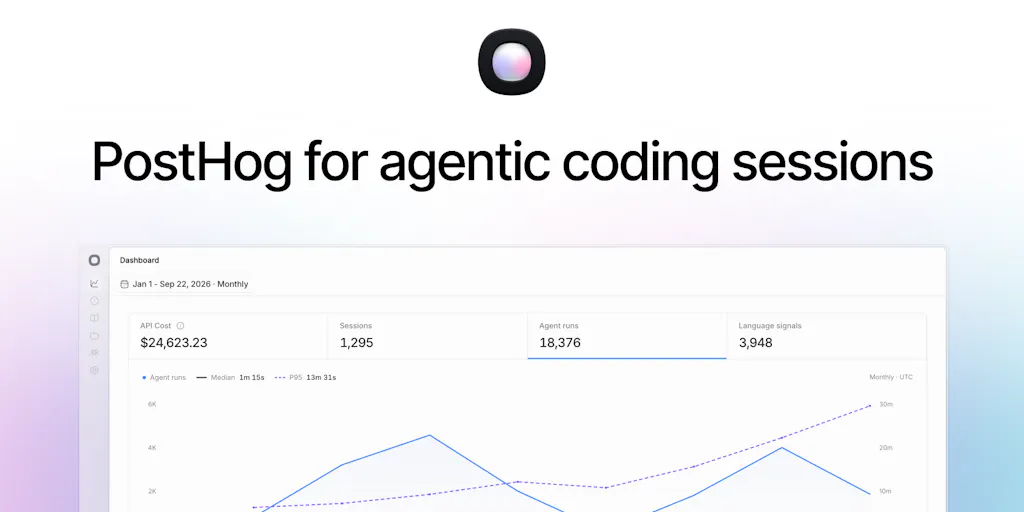
The maker, Graham, frames the launch simply: a fully customizable workspace where you run your agents — locally or in the cloud — alongside your terminals, editor, and browser, all in one window. It’s built with Rust + GPUI, which he pitches as lightweight, fast, and efficient, and the team is explicit that it’s early-stage and feedback-hungry. That’s the entire factual surface area of the launch. No pricing, no seat model, no enterprise tier, no integration list — not disclosed.
So let’s be honest about what problem that solves for someone whose job is moving SKUs, not writing code. The cross-border operator’s day is a sequence of context switches that each cost real money in attention: check Amazon Seller Central for a suppression alert, jump to Shopify admin to confirm inventory sync, open Helium 10 to re-pull a keyword rank, paste a supplier email into a translator, reconcile a Stripe payout against a PayPal settlement, then chase a 3PL about a customs hold. Every one of those is a tab, a login, and a mental reload.
An agent workspace doesn’t magically fix that. But the architecture Palomino proposes — agents that can read your terminal output, inspect a browser session, and act inside an editor, all co-located — is precisely the shape of tooling you’d want if you were going to automate the boring middle of that day. The problem it’s circling isn’t “I need a better chatbot.” It’s “my agents are blind and homeless, and I am their transport layer.”
Why Amazon sellers should care more than Shopify ones
Shopify operators live in a comparatively civilized world: one admin, a clean Admin API, webhooks that fire when you expect, and an app ecosystem where Klaviyo and Gorgias will happily talk to each other. Amazon sellers live in the opposite: a marketplace UI that changes without notice, rate-limited APIs, report downloads that arrive as zipped CSVs at unpredictable times, and account health signals buried three clicks deep. The value of an agent that can see a browser and a terminal at once is dramatically higher on the Amazon side, because so much of the work is scraping your own business out of a hostile interface. If Palomino-style workspaces mature, the first killer use case in cross-border won’t be content generation — it’ll be “watch my Seller Central dashboard and tell me the moment a listing gets suppressed.”
How it stacks up against what you’re probably using now
The honest comparison set isn’t other “AI workspaces” — it’s the three things cross-border operators actually reach for today.
First, the chat-plus-tab stack: ChatGPT or Claude in one window, your store admin in another, manual copy-paste between them. Cheap, flexible, and the default for 90% of sellers. Its weakness is exactly what Palomino targets: no persistent context, no ability to act, and a human as the integration bus.
Second, the vertical SaaS stack: tools like Helium 10 for Amazon research, Triple Whale for DTC attribution, ShipBob or Flexport for fulfillment, Zapier or Make as the glue. These are deep where they’re deep and blind everywhere else. Zapier gets you automation without intelligence; an agent workspace gets you intelligence without depth. Neither is sufficient alone, and I’d argue the near-term winner is whichever one learns to call the other.
Third, the developer-grade agent runners: Cursor for code, Warp for terminal, various open-source agent frameworks. Palomino sits closest to this category — Rust + GPUI, local-or-cloud agents, one window — which is why its natural first audience is technical. That’s also its biggest commercial risk, and we’ll get to that.
What Palomino gets conceptually right, and where I think it’s genuinely differentiated, is the “local or cloud” agent choice. For a cross-border seller, that’s not a nerdy detail — it’s a compliance and latency decision. Supplier POs, margin data, and customer PII are things many operators will not want leaving a controlled environment; ad-hoc competitive scraping and bulk translation are things you’d happily farm out to a cloud agent. A workspace that lets you draw that line per-task is more useful than one that forces a single posture.
What cross-border sellers can borrow from this, regardless of whether you adopt it
Here’s the part I actually want you to take away. You don’t need Palomino to steal its operating model. You need to stop treating AI as a chat window and start treating it as a colocated worker with access to your systems.
Borrow the single-window discipline. Audit your own workflow this week and count the tabs involved in your three most repetitive tasks — repricing, review response, supplier follow-up. If any of them requires more than two tabs and a copy-paste, that’s an automation candidate. The lesson from Palomino isn’t “buy this app,” it’s “context switching is the tax, and the fix is colocation.”
Borrow the local-vs-cloud split. Segment your agent tasks by data sensitivity before you buy any tool. Customer service drafts and listing copy? Cloud is fine. Anything touching supplier contracts, landed cost, or PII? Keep it in a controlled environment and be suspicious of tools that don’t let you choose. This is the single most under-discussed procurement question in cross-border AI right now.
Borrow the “agent alongside terminal” pattern. If you’re on the technical side — and plenty of seven-figure sellers have someone who can run a script — the highest-leverage automation in your business is probably not a fancy agent. It’s a small script that pulls your Amazon SP-API reports nightly, diffs them against yesterday, and pings you only when something moved. Palomino’s framing of agents next to your scripts, not instead of them, is the right mental model. Automation without intelligence is dumb; intelligence without automation is a chatbot. You want both in the same room.
Where the math breaks
I’d be a bad blogger if I didn’t flag the commercial reality. Palomino’s launch is a maker post with no pricing, no integrations list, and an explicit “early stages” disclaimer. For a cross-border operator, that means: no SOC 2 story you can hand to a marketplace compliance team, no guarantee of Shopify app store or Seller Central integration, and a real risk that the workspace you build your workflow around pivots or dies in eighteen months. Developer tools have a brutal mortality rate, and “lightweight, fast, efficient” is a builder’s value proposition, not a buyer’s. Buyers care about “does it connect to my 3PL and will it still exist next Black Friday.”
There’s also a subtler mismatch. Palomino’s natural user is a developer who already lives in a terminal. The cross-border operator who most needs this — the $2M–$20M brand owner drowning in marketplace admin — is the least likely to feel at home in a Rust-built, GPUI-rendered, agent-and-terminal workspace. That gap between “who this is built for” and “who has the pain” is the classic early-stage tooling trap, and it’s the thing I’d watch closest.
Where my judgment says it falls short
Three concerns, in order of how much they’d affect a real operator.
It’s a workspace, not a workflow. A window that contains your agents, terminal, editor, and browser is infrastructure. It doesn’t know what a listing suppression is, doesn’t know your repricing rules, doesn’t know your return rate thresholds. The value only materializes once someone — you, or a template ecosystem that doesn’t exist yet — builds the e-commerce-specific agents on top. Until then, you’re paying attention-tax for a nicer container.
Customizability is a double-edged promise. “Fully customizable” is catnip for developers and a tax for operators. Every hour you spend configuring a workspace is an hour not spent on merchandising. The tools that win in cross-border — Shopify, Helium 10, Klaviyo — win by being opinionated, not infinitely malleable. If Palomino stays a blank canvas, it stays a developer toy.
The “local or cloud” story needs a trust layer it hasn’t shown. Letting agents run locally is great for privacy, but it also means the security posture is yours, not the vendor’s. For a seller handling customer data across GDPR jurisdictions and marketplace compliance regimes, “you configure it” is a liability as often as a feature. I’d want to see audit logs, permission scoping, and a clear data-residency story before I’d let an agent touch anything customer-facing.
What I’d watch / test next
Concrete moves for this week, in order of effort-to-payoff:
- Run the tab audit. List your three most repetitive tasks and count the tabs and logins each requires. That number is your automation budget, and it’s the benchmark against which any agent workspace — Palomino or otherwise — should be judged.
- Segment your agent tasks by data sensitivity. Write two columns: “cloud-OK” (copy, translation, competitive research) and “keep-local” (supplier terms, landed cost, PII). Any tool you evaluate must respect that line, or it’s a non-starter for half your use cases.
- Prototype one narrow agent, not a workspace. Before you adopt any container, prove the value of a single automated loop — nightly SP-API report diff, or a review-response drafter wired to your helpdesk — using whatever stack you already have. If the loop saves hours, then you have a reason to care about the window it lives in.
- Watch Palomino’s next two releases for three signals: an integrations list (Shopify, Seller Central, a 3PL), a pricing page, and any e-commerce-specific agent templates. Those three tell you whether it’s becoming an operator tool or staying a developer toy.
My read: Palomino is a well-built answer to a question most cross-border sellers haven’t learned to ask yet — “where do my agents actually live?” The architecture is directionally right, the timing is early, and the commercial proof is entirely ahead of it. Watch it, borrow its mental model, and don’t rebuild your back office around it until it shows you a workflow, not just a window.