The Agentic Coding Analytics Gap Is Coming for Your Ops Stack
Cross-border sellers have spent the last three years wiring analytics into every customer-facing surface: Shopify funnels, Amazon Search Query Performance, TikTok Shop GMV dashboards, Klaviyo flows, ad spend attribution. Meanwhile the most expensive labor line item in the modern e-commerce org — the internal tooling, scripts, feed mappers, listing generators, and repricing logic that increasingly gets written by AI coding agents — runs almost entirely unmeasured. That asymmetry is the real story behind Opaline, the team-wide session analytics layer that Rudel grew into. If you run a DTC brand with even two technical people, this is the category you’ll be shopping in within twelve months, whether you like it or not.
What Opaline Actually Solves (And Why It’s Not a Dev-Only Problem)
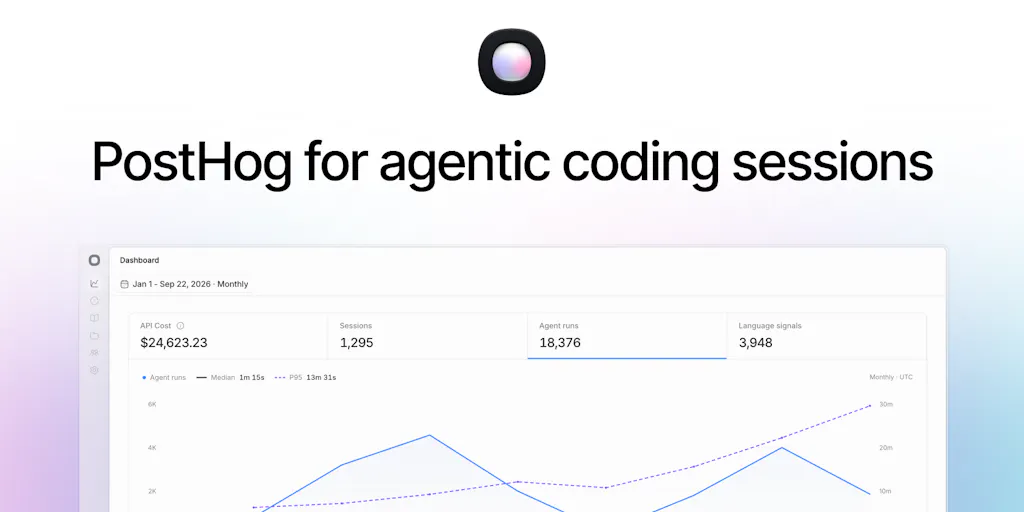
The maker, evren, frames the pitch bluntly: the tools people reach for today, like ccusage or the built-in /insights inside Claude Code, are “single-user, single-model, and pretty shallow.” They tell you how many tokens you burned and what it cost. That’s fine if you’re a solo dev. It falls apart the moment you have a team.
For a cross-border operator, “team” rarely means a clean engineering org. It means a fractional CTO, two offshore devs in different time zones, a Shopify app contractor, an Amazon SP-API integration freelancer, and whoever on the growth side taught themselves enough Python to scrape competitor reviews. Each of those people has their own Claude Code or Codex history sitting on their own machine. When someone figures out a prompt pattern that reliably generates a working SP-API pagination loop, that knowledge dies with their laptop. When someone else burns 40 hours fighting the same rate limit, nobody sees the waste.
Opaline’s bet is that this is the same problem web analytics solved twenty years ago. The maker’s own analogy: “you’d never run a website without analytics. it’s obvious that you need them for your agentic coding sessions too.” It’s a fair comparison, and it’s the reason I think this category matters more to commerce operators than to pure software shops — because commerce operators have already internalized the analytics reflex. They just haven’t pointed it at their own build process.
Why Amazon sellers should care more than Shopify ones
Shopify merchants live in a comparatively well-lit world. Shopify Analytics, Klaviyo, Triple Whale, and a dozen attribution tools give you a decent picture of what’s happening on the storefront. The unmeasured surface is the glue code.
Amazon sellers have a much bigger unmeasured surface. Between Amazon Seller Central reports, Helium 10 and Jungle Scout for research, SP-API integrations for inventory sync, and whatever custom repricing or listing-localization scripts you’ve accumulated, you’re running a small software company whether you admit it or not. That’s exactly the environment where session-level agent analytics pays for itself fastest — because the same script gets rewritten by three different contractors who never talk to each other.
How It Differs From What You’re Probably Using
Three honest comparisons.
Versus ccusage and /insights. Both are single-user, single-model. They answer “how much did I spend.” Opaline answers “how does the team work.” That’s a different product category, not a better version of the same one.
Versus Langfuse, Helicone, and Braintrust. These are excellent LLM observability tools, but they’re built for production inference — tracing API calls your application makes. Opaline is tracking the developer sessions that build the application. Different layer of the stack. If you’re running a customer-facing AI feature (a review-summarizer, a listing generator), you want Langfuse. If you’re trying to understand how your team uses Claude Code to build that feature, you want something like Opaline.
Versus doing nothing. This is the real competitor in 90% of cross-border orgs, and it’s the one I’d bet on for the next two years.
The differentiator the maker keeps returning to is message-level, team-wide, historical. A reviewer, Vafa Sanders, calls it “the missing stats layer for how I actually use AI to write code,” and specifically praises that it’s “free, open source, and self-hostable.” That last point is doing a lot of work — see below.
Where the math breaks
The value proposition collapses if your team is one person. If you’re a solo Amazon operator with a Claude Code subscription, ccusage is genuinely enough. Opaline’s team-wide framing is the whole pitch; without a team, there’s nothing to compare against.
The second place it breaks: if your “team” is really five contractors who don’t share a codebase, the “team-wide” view becomes a compliance problem before it becomes an insight. You’d need to think carefully about what you’re asking contractors to upload.
What Cross-Border Sellers Can Borrow From This
Even if you never install Opaline, there are four transferable patterns here that I think every operator running agentic workflows should steal.
1. Treat your internal AI usage as a P&L line, not a curiosity
The maker notes teams “rack up thousands of sessions across dozens of repos and models.” If you’re paying for Claude Code, Codex, and a handful of API keys across a distributed team, that’s a real monthly number. Most operators I talk to can’t tell you what it is. Instrument it. Even a spreadsheet with weekly token spend per person is better than nothing.
2. Version your metrics by model, not just by month
A sharp question from Quentin Wendegass — “how do you handle model updates?” — gets at a real trap. The maker’s answer: Opaline reflects “the pricing you have had at the exact time” and lets you split by model version. The lesson for operators is broader. If you’re comparing this month’s agent productivity to last month’s, and Claude shipped a new model in between, you’re measuring the model, not your team. Any internal dashboard you build needs a model-version dimension.
3. Measure outcomes, not just activity
Jose Escobar asks the question that actually matters: “how many of our sessions are actually producing something good, something actually valuable?” The maker’s honest answer is that tracking failure is easier than tracking success, and that they’re exploring proxies like “positive replies by the user” and “correlating green merged PRs.” For a cross-border seller, the equivalent proxies are obvious: did the script ship, did the listing go live, did the feed stop erroring. That’s the metric that matters.
4. Assume secrets will leak, then design around it
Sebastian raises the concern every operator should have: “coding sessions can have a lot of things you probably don’t want sitting in a team dashboard.” The maker’s response is the right template — filter known secrets by default, offer on-prem or self-hosted deployments for high-security teams, and let users choose what to upload. If you’re building anything that aggregates agent sessions, copy this posture. If you’re buying, demand it.
Where My Judgment Says It Falls Short
Three honest reservations.
The self-hosted story is the whole story for serious operators. The reviewer’s praise for open-source and self-hostable is not a nice-to-have. For any cross-border seller handling PII, payment tokens, or supplier contracts inside their codebase, shipping session data to a third-party SaaS is a non-starter. The fact that Opaline offers on-prem is the single most important line in the entire launch. If that capability is immature or expensive, the product’s addressable market shrinks dramatically.
“Positive replies by the user” is a weak success signal. The maker admits they’re still exploring. That’s fine for a launch-stage product, but it means the outcome layer — the part that would actually justify a paid seat — isn’t there yet. Until you can correlate sessions to merged PRs, shipped features, or resolved incidents, you’re measuring activity, not value. That’s the same trap that made early web analytics useless.
The model-churn problem is structural, not solvable. Sukumar notes the space changes “every 4 weeks,” and the maker confirms a change “yesterday with opus 5.5 vs sol 6.” No analytics layer fixes this. It just means any longitudinal comparison you build has a short half-life. Operators should expect to re-baseline quarterly.
The pricing is not disclosed. I won’t speculate. But for a tool whose entire value depends on team-wide adoption, the pricing model matters enormously. Per-seat pricing on a team of contractors is a hard sell; per-org pricing is easier. Watch this.
What I’d Watch / Test Next
If you run a cross-border brand with any technical headcount, here’s what I’d do this week.
First, audit your agent spend. Pull last month’s Claude Code, Codex, and API bills. Add them up. If the number surprises you, you’ve found your first reason to care about this category. Second, ask your team one question: “what’s the most useful prompt pattern you’ve figured out in the last 90 days, and where does it live?” If the answer is “in my notes app,” you have a knowledge-loss problem that no analytics tool will fix — but that Opaline-style tooling would at least surface.
Third, if you’re evaluating Opaline specifically, ask the maker directly about self-hosted deployment cost, what “filtering known secrets” actually covers, and whether the outcome-correlation features (merged PRs, positive replies) are shipping on a roadmap or still exploratory. Those three answers determine whether it’s a tool or a demo.
Finally, watch the category, not just the product. The makers of Langfuse, Helicone, and every LLM observability vendor are one product decision away from moving into this space. The session-analytics layer for agentic coding is too obviously valuable to stay a single-product category for long. The operators who instrument early will be the ones who can actually tell whether their AI investment is compounding or just burning tokens.