The Launcher Is Eating the Ops Stack
Cross-border sellers don’t lose hours to the big problems anymore. Amazon FBA reimbursements, Shopify checkout tuning, TikTok Shop affiliate payouts — those get attention because they’re visible. The real bleed is the forty small context switches between them: SKU lookup here, tracking number there, a supplier spec sheet buried in a folder, an AI prompt you rewrite for the tenth time. Every one of those is a two-minute tax that compounds into a lost afternoon. So when a tool like Raycast ships a major version, I pay attention — not because I want a prettier Spotlight, but because the command-bar pattern is quietly becoming the control plane for lean e-commerce teams. Here’s what version 2.0 actually changes, and where I think it overreaches.
What Raycast 2.0 Actually Solves
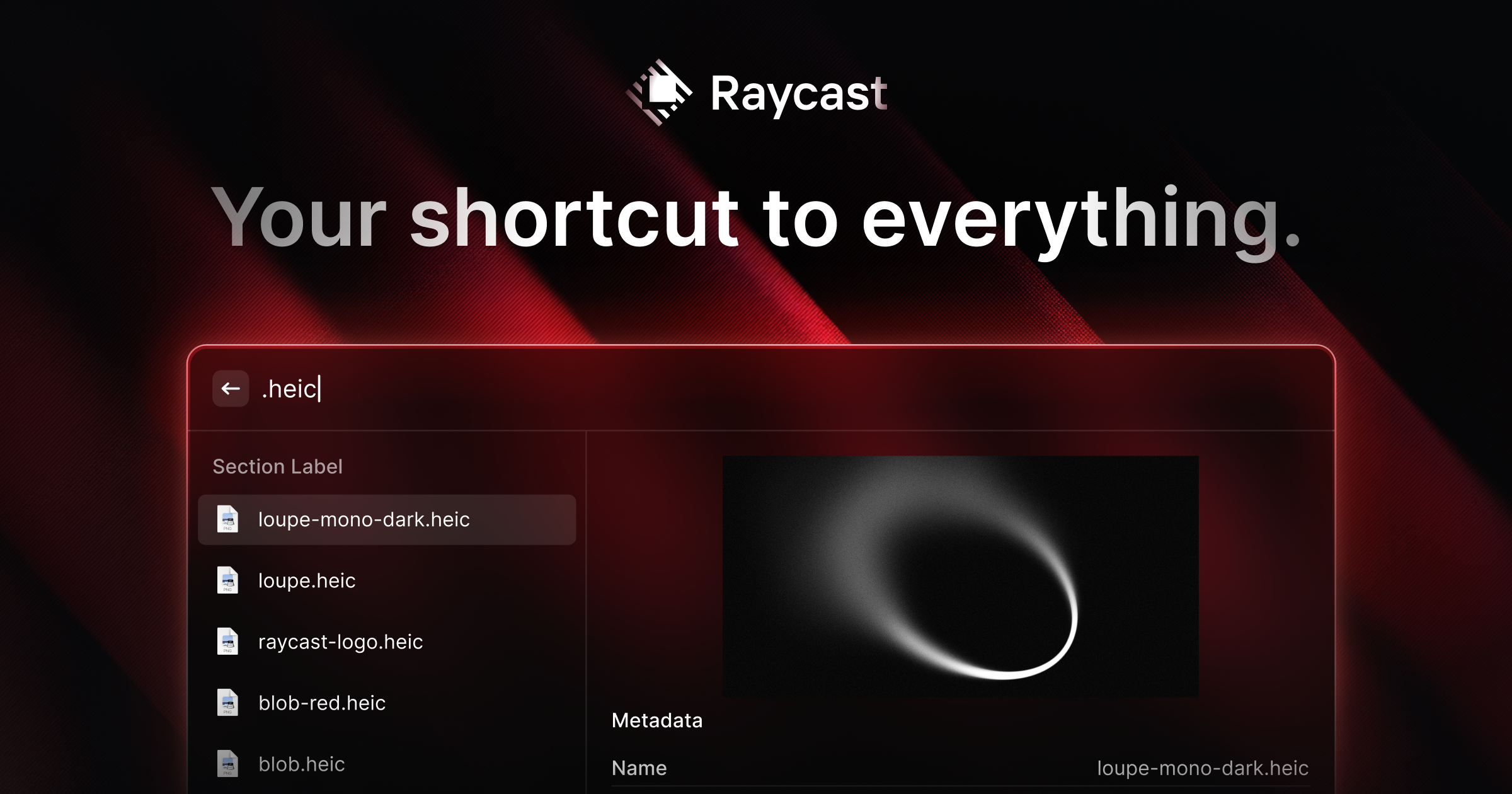
Raycast has always been a keyboard-first launcher for macOS — hit a hotkey, type, and you’re launching apps, searching files, managing clipboard history, running extensions, or asking AI without touching a mouse. Version 2.0, per the maker’s launch post, came out of beta at the end of August and landed on Product Hunt with a rebuilt foundation and a redesign “from the inside out.” The headline additions: a fresh “Liquid Glass” design with a compact mode, faster file search powered by a new indexing engine, more flexible shortcuts (including using fn on its own and assigning left/right modifier keys separately), a redesigned AI experience with Screen Awareness, AI Extensions that load automatically, Profile and Memory that carry context between conversations, Agents and Skills for repeatable tasks, built-in dictation, and Projects and Automations for grouping recurring work.
The most commercially interesting line in that list is “Bring your own subscription” — you can connect an existing ChatGPT or Claude account, and in the comments the maker confirmed that a Codex subscription works too.
For a cross-border operator, that single feature reframes the whole tool. You are not buying another AI subscription. You are buying a shell that points at the AI subscription your team already pays for, and then wiring your actual workflows into it.
Why Amazon sellers should care more than Shopify ones
Shopify operators live inside one browser tab most of the day. Amazon sellers live across Seller Central, a repricer, a PPC tool like Helium 10, a freight forwarder portal, a supplier WeChat thread, and a spreadsheet that reconciles all of it. That’s the profile where a command bar pays for itself — not because it’s faster than clicking, but because it collapses six windows into one input field. If your day is 80% inside a single admin panel, the ROI is real but modest. If your day is 80% tab-hopping, it’s a different category of upgrade.
How It Stacks Up Against the Incumbents
The honest comparison set is small. Alfred is the veteran — powerful, workflow-driven, and the tool most reviewers name as the alternative they evaluated. Monarch shows up in the same breath. And macOS’s built-in Spotlight is the default everyone starts on.
What the review data says is instructive. Across 160 reviews at a 4.9 average, the recurring pro tags are “productivity boost” (39 mentions), “Spotlight replacement” (21), “community plugins” (20), “fast performance” (19), and “AI integration” (14). One reviewer described starting with it purely as an app launcher and now relying on it for “clipboard history, snippets, quick calculations, AI commands, and extensions that save me from constantly switching between apps.” Another said it “completely ruins regular macOS Spotlight for you” and functions as “a true central command center.”
The pattern I’d flag for sellers: the value compounds in the boring middle, not the flashy AI stuff. Clipboard history alone — being able to pull the last twelve tracking numbers or ASINs you copied — is a genuine operational win for anyone doing manual order work.
The extension ecosystem is the moat — and the liability
Here’s where I’d push back on the enthusiasm. The most consistent criticism in the reviews is discoverability. The same reviewer who praised the workflow depth noted that “the extension ecosystem is one of Raycast’s biggest strengths, but it’s also becoming harder to discover new extensions that are actually relevant.” Another echoed it: “The extension store has gotten so massive that discoverability can occasionally be a bit tricky.”
For a seller, translate that to: the tool is only as good as the extensions you find, and nobody is curating them for e-commerce. There is no “Amazon FBA ops pack.” You will build your own or go without.
What Cross-Border Sellers Can Borrow From This
Strip away the macOS specifics and Raycast 2.0 is really a thesis about how to structure operational work. Three things are worth stealing regardless of what OS you run.
One input surface for everything. The core insight is that a single command bar beats a dozen apps. Your version might be a Slack slash command, a Notion dashboard, or a shared spreadsheet with a search tab — but the principle holds. If your team has to remember where a piece of information lives before they can find it, you’ve already lost time.
Bring-your-own-subscription as a procurement stance. The BYO ChatGPT or Claude account model is the right pattern for a lean brand. Don’t let every SaaS in your stack bundle its own mediocre AI and charge you for it. Pay for one frontier model, point everything at it, and audit what you’re double-paying for.
Agents and Skills as SOPs. The “Agents and Skills” feature — tailoring AI to tasks you repeat — is just documented standard operating procedure with a model attached. A supplier outreach template, a listing-optimization checklist, a returns-triage prompt: those are your Skills. The maker’s answer to a user asking whether automations can run chained commands in sequence was simply “you can just ask AI to run those in order.” That’s the whole pitch — and the whole risk.
Where the math breaks
Two hard limits. First, Raycast v2 requires Tahoe and Apple silicon — if your ops team is on older Macs, or on Windows, you’re out. Second, “limited to macOS” is the only con tag that surfaces in the review data, and it’s a real constraint for any team with mixed hardware. A cross-border operation almost always has someone on Windows.
Where My Judgment Says It Falls Short
I’m skeptical of the AI-forward framing for this audience. Screen Awareness, Memory, Profile — these are genuinely useful for a developer or designer living in one machine all day. For a seller whose work spans a browser, a warehouse scanner, and a phone, the context Raycast accumulates is only as good as what’s on that one screen.
The reviews surface the cracks too. One user reported trouble setting up remote MCPs and noted the iOS app “doesn’t let me use my Claude API code.” Another reviewer flagged rough edges. And one sharply negative report about file finding and uninstall issues is called out in the AI summary. The maker’s own framing — that “there’s a lot to discover in this release” — is honest, but it also means the surface area is large and the polish is uneven.
My honest read: Raycast 2.0 is a superb tool for the individual power operator. It is not yet a team product, and it has almost nothing built specifically for commerce workflows. Buy it for yourself, not for your warehouse team.
What I’d Watch / Test Next
This week, before you install anything: audit your own context switches. Spend one day noting every time you leave a tab to grab a number, a file, or a prompt. If that count is under twenty, skip this category entirely. If it’s over fifty, install Raycast, connect your existing Claude or ChatGPT account, and build exactly three things: a clipboard-history habit, one snippet for your most-repeated supplier message, and one Skill for your listing or PPC review. Then measure whether your afternoon actually got shorter.
Watch the Windows roadmap — Raycast for Windows launched in November 2025, and if it reaches parity, the team case changes. And watch whether anyone builds a real e-commerce extension pack. Until then, treat this as a personal productivity upgrade with team-level ambition, not the ops layer your brand is missing.


