The Real AI Cost Center for Cross-Border Sellers Isn’t the Model — It’s the Long Tail of Ops
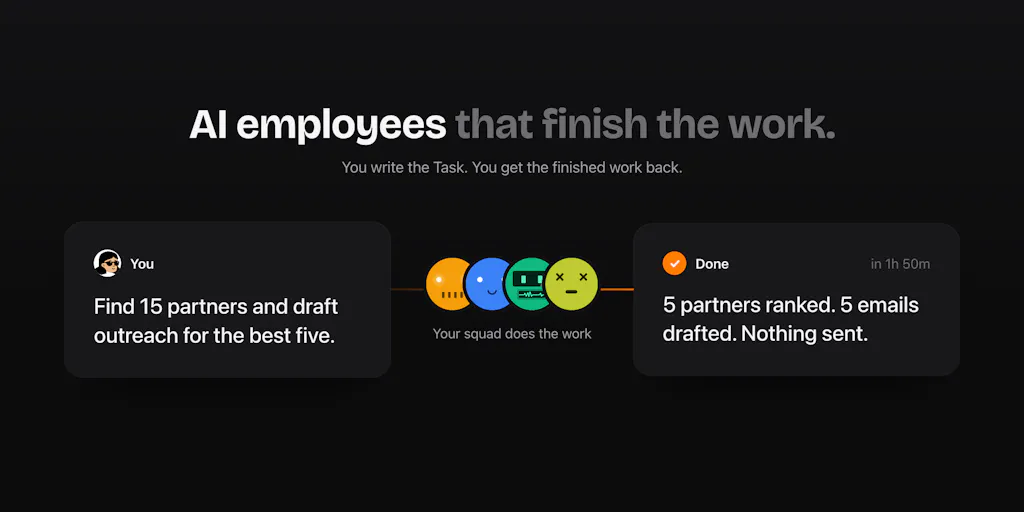
Every cross-border operator I talk to is chasing the same fantasy: an AI agent that just… runs the store. Pull the PPC report, rebalance FBA inventory, draft the listing variation, file the reimbursement claim, chase the supplier on the delayed PO. The models are smart enough. What kills the dream isn’t intelligence — it’s economics and endurance. A five-minute task window and per-token pricing that punishes anything long-running means the agent quits right when the work gets boring, which is exactly when you need it most. So when Notion ships a rebuilt agent harness with 24-hour-plus runtimes, a cost-cutting router, and a unified credit system, I don’t read it as a productivity-app update. I read it as a pricing and endurance signal for the whole ops-automation stack that e-commerce teams are quietly building on top of docs, sheets, and databases.
What the Rebuild Actually Changes
The headline, from the launch write-up on Product Hunt, is that agents now get their own computer and browser, can write scripts for repeatable steps, and hold long conversations without falling apart. Tasks can run 24 hours or more, up from five minutes, and Notion claims agents run up to 50% faster on web and mobile.
Three details matter more than the runtime number, though.
Review for me mode. A separate model checks an action before the agent takes it. For anyone who has watched an automation tool mass-edit a live catalog, this is the feature that decides whether you trust an agent with anything touching money or listings.
Auto, the model router. Simple requests go to fast models, harder work to capable ones, and it switches when a model gets stuck. Notion says that across 20+ common tasks it produced results similar to Opus 5.5 and Astra at roughly 90% lower average cost — so credits go about 10x further. That’s the vendor’s own benchmark, so discount it accordingly, but the architecture is the right one.
One credit system. Business and Enterprise seats include 1,500 Standard credits and 500 Select credits a month. No more guessing which AI feature bills against which meter.
There’s also a “bring your own AI” path: you can connect a ChatGPT Plus, Pro, or Go plan to your personal agent, while Bring Your Own Key sits in an Enterprise-only alpha. And the overhauled Notion MCP lets tools like ChatGPT and Claude use Notion as shared context, with memory sync live now.
Why Amazon sellers should care more than Shopify ones
Shopify operators live in a relatively tidy world: one storefront, one catalog, a handful of apps that mostly behave. Amazon FBA brand owners live in a swamp — Seller Central exports, reimbursement claims, inventory ledger reconciliation, variation parentage, suppression appeals, A-to-z disputes, and a support ecosystem that responds in tickets, not API calls. That work is long-running, repetitive, and script-friendly — precisely the profile the new harness targets. An agent that can write a script for a repeatable step and then babysit it for hours is worth far more to an FBA seller reconciling a 90-day inventory ledger than to a DTC founder tweaking a landing page.
The catch: much of that swamp sits behind logins and anti-bot walls. An agent with its own browser helps, but Seller Central is not a friendly automation target, and I’d treat any “agent logs into your seller account” workflow as a compliance question before a productivity one.
How It Stacks Up Against the Incumbents
The honest comparison set isn’t other note apps. It’s the automation layer cross-border teams already pay for.
Against Zapier, Notion’s advantage is context. Zapier is brilliant at “when X happens, do Y” across thousands of apps, but it has no memory of why you’re doing it. An agent sitting inside the workspace where your SOPs, supplier notes, and ad reports live can reason over the mess, not just route it. Zapier’s agents push in the same direction, and honestly, for pure app-to-app plumbing I’d still default to Zapier.
Against Make, which wins on visual complexity and cost control for multi-step scenarios, Notion is betting that natural language plus a router beats flowchart-building for the 80% of ops tasks that are fuzzy. I think that’s right for documentation-heavy teams and wrong for teams whose workflows are already crisp and deterministic.
Against n8n, the self-hosted crowd will shrug — they want data residency and no per-credit anxiety, and Notion’s credit system is the opposite of that ethos.
And against the horizontal agent platforms everyone’s watching, the differentiator is the same as it’s always been for Notion: the workspace is the context layer. Your product research doc, your supplier scorecard, your returns playbook — the agent reads the same pages your team does.
Where the math breaks
Credits are a cleaner mental model than tokens, but they’re still a meter. 1,500 Standard and 500 Select credits per seat per month sounds generous until you’re running multi-hour reconciliation jobs daily across a team of five. The 90%-lower-cost claim is measured on “common tasks” — the moment your agent is grinding through a 40,000-row inventory export, you’re not on a common task. Budget for overage, and instrument which workflows eat credits before you scale any of them.
What Cross-Border Sellers Should Borrow From This
Forget adopting Notion wholesale. Steal the design patterns.
1. Long-running beats smart. The most valuable ops automation isn’t the cleverest prompt — it’s the job that survives hour six without losing the thread. When you evaluate any agent tool this quarter, ask what the maximum runtime is before you ask about model quality. A five-minute ceiling disqualifies a tool from most fulfillment and reconciliation work.
2. Route by difficulty, not by habit. Most teams burn their best (read: most expensive) model on tasks a cheap one handles fine. Copy Notion’s router logic manually: classify your automations into “lookup/format” versus “judgment,” and send the former to the cheapest capable model. On a high-volume Helium 10-driven listing workflow or a bulk Klaviyo segmentation job, that discipline alone can move your AI line item by an order of magnitude.
3. Human-in-the-loop is a feature, not a compromise. “Review for me” is the pattern every seller should demand before letting an agent touch pricing, listings, or refunds. A second model checking the first is cheap insurance against the $10,000 catalog mistake.
4. Make your workspace the context. The reason Notion’s agents can be useful is that the SOPs live where the agent works. If your playbooks are scattered across Slack threads, Google Docs, and a Notion page nobody updates, no agent will save you. Consolidating operational knowledge is the unglamorous prerequisite.
5. MCP as the connective tissue. The overhauled Notion MCP — letting ChatGPT and Claude treat Notion as shared context, with memory sync live — points at where this goes: your workspace becomes the memory layer for whatever model you prefer. For multi-tool stacks (Shopify admin, Amazon reports, a 3PL portal, a returns app), that’s the architecture to watch.
A concrete mapping for a lean FBA/DTC team
- Product research: agent summarizes review mining and competitor listings into a scored doc; you make the call.
- Listing ops: scripted variation updates and suppression checks, with review-before-action on anything that publishes.
- Inventory: nightly reconciliation of FBA ledger vs. your 3PL, flagging discrepancies for a human claim.
- Customer service: draft responses to TikTok Shop and Etsy messages, routed to fast models, escalated on sentiment.
- Ads: pull Amazon Ads and Meta exports into one doc, agent writes the weekly narrative, you approve budget moves.
None of that requires 24-hour runtimes today. All of it benefits from not dying at minute five.
Where My Judgment Says It Falls Short
The vendor benchmarks are vendor benchmarks. “Similar to Opus 5.5 and Astra at 90% lower cost” is a claim from Notion’s own blog post, measured on their chosen task set. I’ve been burned enough times by routing benchmarks that don’t survive contact with messy real-world inputs — multilingual product data, scanned supplier PDFs, half-broken CSV exports — to treat that number as a planning assumption rather than a fact.
The enterprise gating is awkward. Bring Your Own Key locked in an Enterprise-only alpha means the teams most likely to want model flexibility — lean operators already paying for a ChatGPT or Claude plan — get the least of it. Connecting a ChatGPT Plus/Pro/Go plan to a personal agent softens this, but it’s not the same as full key control.
Credit opacity is a real risk. One unified system is simpler, but “Standard” versus “Select” credits adds a vocabulary layer without telling me the exchange rate against a heavy workflow. Until you’ve run a month of real jobs, you can’t forecast spend.
The platform-fit problem. Notion agents are excellent inside Notion. Cross-border ops is not inside Notion — it’s inside Shopify admin, Amazon Seller Central, Temu seller portals, SHEIN supplier dashboards, and eBay Seller Hub. The browser-equipped agent narrows that gap, but portal logins, 2FA, and terms-of-service constraints are the real ceiling. Anyone promising fully autonomous marketplace ops is selling you a demo, not a workflow.
And the strategic question: do you want your operational memory living in a tool whose AI pricing you don’t control? That’s the same lock-in conversation teams had about Klaviyo or their 3PL. Notion’s answer — MCP, bring-your-own-model — is the right direction. Whether it’s enough depends on how much of your institutional knowledge you’re willing to concentrate in one workspace.
What I’d Watch / Test Next
This week, before you buy anything: pick your single most time-consuming recurring ops task — I’d bet on FBA reimbursement reconciliation or ad-report synthesis — and time how long a human actually spends on it end to end. Then test one agent tool against it with a hard rule: it must run unattended for at least two hours and produce an auditable output. If it can’t, the tool isn’t ready for your back office regardless of the model inside.
Second, build a crude cost router yourself. Split your automations into “cheap model is fine” and “needs judgment,” and measure the delta for one month. You’ll likely find 70% of your AI spend is going to tasks a fast model handles.
Third, watch Notion’s release notes for two things: whether Bring Your Own Key exits the Enterprise alpha, and whether anyone publishes independent routing benchmarks against the 90% cost claim. The first tells you if the platform is serious about flexibility; the second tells you if the economics are real.
Finally, start consolidating your SOPs into one workspace now — whichever vendor you pick. The sellers who win the agent era won’t be the ones with the best model. They’ll be the ones whose operational knowledge was legible enough for any model to use.