The Quiet Tax Every Cross-Border Operator Pays: Context-Switching
The most expensive line item in a cross-border operation never shows up in a P&L. It’s the cognitive tax of running six marketplaces, three ad platforms, a supplier WeChat group, a freight forwarder’s email thread, and a customer service inbox that resets at midnight UTC. Amazon sellers juggle Seller Central cases, Shopify merchants babysit Shopify Admin plus whatever app stack they’ve bolted on, and TikTok Shop operators live in a dashboard that changes weekly. Every one of those surfaces wants to be the system of record. None of them are. When a solo founder or a five-person DTC team tells me their real bottleneck isn’t traffic or margin but “I keep forgetting things,” I believe them. That’s the lens through which I looked at Grimo, a capture-and-file tool from maker Dawid W that launched on Product Hunt this week.
What Grimo Actually Does (And Why It’s Not Another To-Do App)
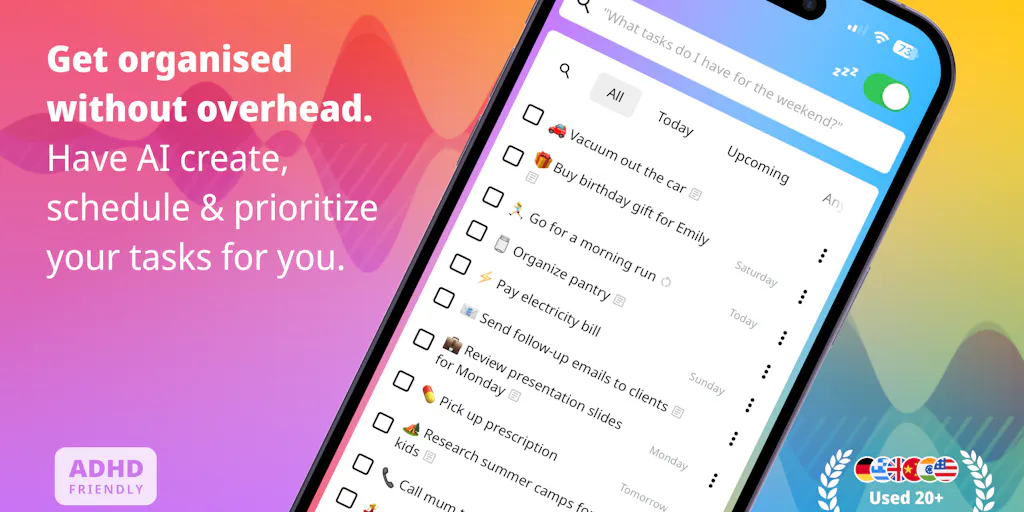
The pitch is deliberately unglamorous: you say or type something like “call Anna Thursday after 3pm and remind me about the invoice,” and Grimo parses it into a scheduled calendar event plus a task, filed where it belongs. Voice mode is hands-free. The free tier covers unlimited tasks, calendar, and notes; a $4.99/mo Premium tier unlocks a much higher conversation allowance. That’s the whole product on paper, and the maker’s own framing is refreshingly honest — he built it because his week was scattered across a calendar app, a notes app, a to-do app, and sticky notes he’d never revisit.
For a cross-border seller, the interesting part isn’t the feature list. It’s the input model. Most productivity tools assume you’ll sit down, open an app, and type into the right field. That assumption collapses the moment you’re on a warehouse floor in Shenzhen with a phone in one hand, or driving between a 3PL and a returns processing center. Natural-language capture with automatic routing is the correct interface for people whose work happens away from a keyboard.
Why Amazon sellers should care more than Shopify ones
Shopify operators tend to work from a laptop and can afford a heavier project-management stack — Notion, ClickUp, whatever. Amazon FBA brand owners live in a weirder reality: replenishment windows, IPI thresholds, case deadlines, and supplier follow-ups that are all time-anchored. A tool that turns “remind me to check the restock alert Friday” into an actual calendar block is more valuable to that operator than to a merchant who already has a Monday ops meeting. The closer your workflow is to a stream of time-bound obligations, the more this class of tool earns its keep.
How It Stacks Up Against the Incumbents
Let’s be specific, because “AI task app” is a crowded shelf. Todoist has natural-language input and has had it for years, but it’s task-first — calendar is a bolt-on. Motion and Reclaim.ai go the other direction: calendar-first, auto-scheduling your tasks into open slots, and they’re priced for teams, not solo operators. Notion is infinitely flexible and therefore infinitely fiddly. Superhuman owns the inbox-as-command-center thesis. And then there’s the entire Apple Reminders / Google Tasks floor, which is free and good enough for a lot of people.
Grimo’s differentiation is narrow but real: it fuses capture, calendar, and notes into one object model, and it treats voice as a first-class input rather than an accessibility afterthought. The $4.99/mo price point sits well below Motion’s team-tier pricing and roughly in line with Todoist Pro. For a seller who’s already paying for Helium 10, Klaviyo, and a Shopify subscription, four-ninety-nine is a rounding error — which is exactly why it’s easy to add and easy to forget you’re paying for.
Where the math breaks
Here’s my honest read: the value of a capture tool is a function of how many distinct systems it replaces. If Grimo replaces your notes app and your to-do app but not your calendar, you’re still context-switching. If it replaces all three, you’ve cut a real tax. The free tier — unlimited tasks, calendar, and notes — is generous enough that most operators can test the replacement thesis before paying anything. That’s the right way to evaluate it. Don’t evaluate it as “is this better than Todoist.” Evaluate it as “can I delete two other apps from my phone.”
What Cross-Border Sellers Can Steal From This Launch
Even if you never install Grimo, there are three transferable lessons here for anyone running marketplace or DTC operations.
One: your ops stack should have exactly one capture point. The reason sellers drop balls isn’t laziness — it’s that obligations arrive through six channels (Amazon case updates, supplier WhatsApp, freight forwarder email, ad platform alerts, customer DMs, internal Slack) and land in six different inboxes. Pick one capture surface and route everything into it, even if routing is manual. The tool matters less than the discipline.
Two: time-anchored beats category-anchored. “Check FBA restock alert” filed under Inventory is a task you’ll ignore. The same item pinned to Friday 9am is a task you’ll do. Cross-border operations are dominated by deadlines that shift with time zones and carrier schedules — treat every obligation as a calendar event first.
Three: voice input is underrated for warehouse and travel work. The maker’s note that voice mode “matters more than I expected once I actually needed it — hands full, kid in your arms, walking to the car” is the whole insight. Sellers doing factory visits, trade shows, or 3PL walkthroughs are exactly that person. Any tooling you adopt for 2025 should have a hands-free path.
Where My Judgment Says It Falls Short
A few things give me pause, and I’d rather flag them than pretend a launch-day product is finished.
Localization is already showing cracks. One commenter, Ozan Kurtulus, flagged that the calendar’s bottom bar displayed Polish text (“Nowe wydarzenie”) despite an English interface. The maker acknowledged it and said a fix was coming. For a cross-border audience, this isn’t a cosmetic bug — it’s a signal about i18n maturity. Sellers operate across English, Chinese, Spanish, German, and Japanese interfaces daily. A tool that leaks the wrong language in its own UI will struggle to earn trust for anything more complex.
No disclosed integrations. The launch page doesn’t mention Slack, Gmail, Google Calendar, Outlook, or any marketplace API. For an operator, a capture tool that doesn’t write into the calendar you already live in is a silo, not a hub. Until that’s answered, treat Grimo as a personal productivity layer, not an ops system.
The conversation allowance is opaque. “Much higher conversation allowance” on Premium is not a number. For a seller doing 40 voice captures a day, the free tier’s ceiling matters enormously. Not disclosed — and that’s a gap I’d want closed before committing a team to it.
No team features mentioned. Cross-border ops are rarely solo. If two people can’t share a capture inbox, this stays a founder’s personal tool.
A note on the launch itself
The comment thread was thin — a couple of supportive notes from Germán Merlo and the localization bug report. That’s normal for a small launch, but it means there’s very little independent signal yet. Don’t let a quiet launch page substitute for a two-week personal trial.
What I’d Watch / Test Next
This week, do three things. First, install Grimo on the free tier and force yourself to route every obligation through it for seven days — supplier follow-ups, restock checks, ad review reminders. Track how many times you fall back to your old notes app; that number tells you whether the replacement thesis holds. Second, audit your current capture stack and count the apps. If it’s more than two, you have a routing problem no tool will fix until you pick a single front door. Third, watch the Product Hunt page over the next two weeks for the localization fix and any integration announcements — those are the two signals that separate a weekend project from something an operator can build on. If neither lands by month-end, file it under “nice personal tool, not yet ops infrastructure.”