Why a Browser That Shops for Itself Should Terrify and Inspire Cross-Border Sellers
Every cross-border operator I know spends at least a third of their week fighting the same asymmetry: the buyer has all the power to compare, return, and demand, but the seller owns almost none of the data about that buyer’s actual behavior across the web. We chase customers through Facebook pixel breadcrumbs, Klaviyo flows, and Amazon attribution windows that feel deliberately opaque. Meanwhile, the consumer is drowning in tabs, logins, and spreadsheets trying to remember which store they saw a 15% off code on. Now imagine a browser that decides to solve the consumer’s side of that equation by giving every webpage a social layer and an AI agent that tracks prices, watches restocks, and eventually buys things autonomously. That is exactly what Basement Browser launched on Product Hunt in March 2026, and I think it is one of the most consequential products for e-commerce in years — not because millions will use it tomorrow, but because it crystallizes a new distribution paradigm that sellers can either ignore or learn to exploit.
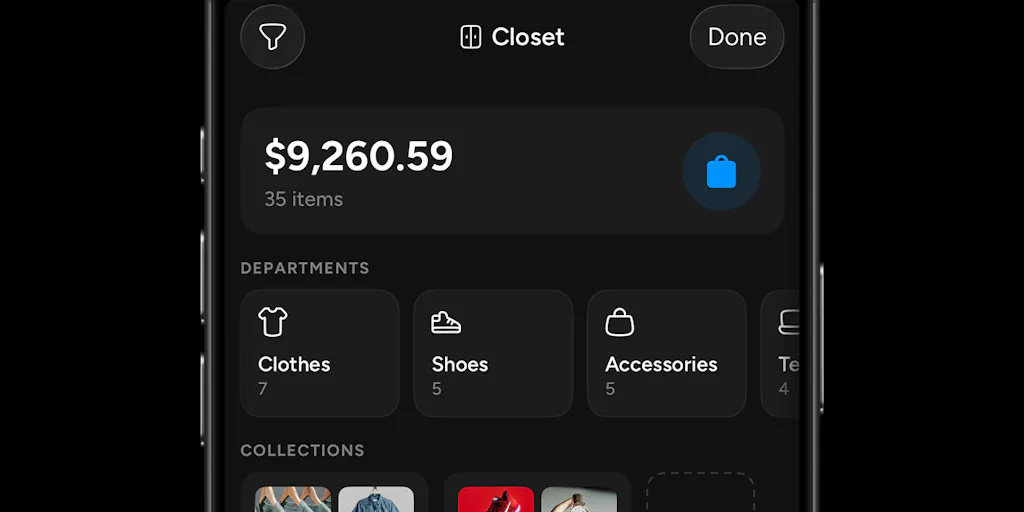
The core thesis is simple: browsers have been passive for two decades, designed to serve advertisers, not users. Basement flips that by turning every webpage into a “live room” where you can see and talk to other people browsing the same page, and by giving you a personal AI agent (called a “Baseling”) that can track prices, check out for you, and maintain a digital “Closet” of everything you own. For a cross-border seller who lives and dies by conversion rate optimization and repeat purchase, this is not just a neat consumer app — it is a potential rewiring of how shoppers discover, compare, and transact.
The Real Problem It Solves (and Why Your Current Tool Stack Can’t)
We have all used Helium 10 or Keepa to track Amazon price history, and we have all seen Honey auto-apply coupon codes. Those tools are great for the seller side of the house — they help us decide when to raise or lower a price. But they are fundamentally passive. They do not change the shopping behavior on the demand side; they just give us analytics. Basement solves a different problem: the consumer’s pain of fragmented shopping. A typical online buyer today might have accounts at a dozen Shopify stores, Amazon, Walmart, Temu, SHEIN, and a few niche DTC brands. Their purchase history is scattered, their saved payment methods are insecure, and they have no easy way to monitor price drops or restocks across all those silos.
Basement’s approach is elegantly radical: instead of building yet another aggregator or plugin, they rebuilt the browser itself. Every webpage gets a persistent social layer — you can see who else is on that page and chat with them in real time. The AI agent, which the founder Luis Perrone calls “always-on,” monitors prices, watches restocks, and surfaces deals without the user lifting a finger. The checkout layer is particularly clever: each purchase uses a single-use card minted within a budget that the user signs with a passkey, powered by Crossmint. The user’s real card never touches Basement, and no purchase can exceed the cap. That kills the “what if it overspends?” fear, which is the number one psychological barrier to autonomous purchasing.
For cross-border sellers, the immediate takeaway is that this browser creates a new kind of shopping session — one that is social, AI-driven, and potentially autonomous. A Baseling can compare your product against competitors on the same page, check if a size is in stock across multiple stores, and even complete a purchase without the human clicking “buy now.” That changes the conversion funnel from a linear path to a distributed intelligence network. If you are not optimizing your product data for an AI agent’s parsing logic, you are going to lose sales — not to a human who gets distracted, but to a bot that systematically picks the listing with the cleanest structured data, the most precise size chart, and the fastest shipping promise.
How It Differs from Every Existing Option (and Why Incumbents Should Worry)
Let’s stack it against the obvious alternatives. Honey is a browser extension that finds coupon codes and occasionally offers cash back. It has no social layer, no autonomous checkout, and no “Closet” of owned items. Privacy.com gives you single-use virtual cards, but they are not scoped to a browser agent — you still have to manually paste them in. CamelCamelCamel does price tracking on Amazon only, and it cannot act on its findings. Basement combines all three functions — price monitoring, social proof, and checkout — into a single interface that lives everywhere the user browses. And because it is a browser, not a plugin, it can see everything: every tab, every storefront, every login page.
The closest analogue on the consumer side might be the “buy for me” services offered by some virtual assistants or the old dream of a shopping concierge. But those required explicit delegation — you had to ask someone to buy something. Basement’s agent is always running in the background, which means it can catch a flash sale or a restock notification at 3 AM and act before the user wakes up. That is a massive shift in time-to-purchase for limited-inventory products, which is precisely the kind of product cross-border sellers often deal with — think sneaker drops, limited-run apparel, seasonal hard-to-find items.
For a seller, the difference is huge. With Honey, the buyer still has to be at the keyboard. With Basement, the browser can buy for them while they sleep. That means your flash sale might sell out to a bot population that you never intended to serve. Conversely, if you are running a restock notification campaign, you need to ensure your site’s data is machine-readable so the Baseling can detect the update and trigger a purchase. Sellers who treat their PDPs as human-only experiences will find themselves invisible to this new class of agent-driven shoppers.
What Cross-Border Sellers Can Borrow from Basement Right Now
Even if you never install the Basement browser, the product reveals three structural shifts that you can start acting on today.
1. Make your product data agent-friendly. The Baseling reads the page to determine price, availability, size, color, and seller credibility. If your Shopify or Magento store uses JavaScript-heavy rendering that hides product details behind lazy-loading or popups, an AI agent might miss critical fields. Start auditing your SKU pages for plaintext price and availability tags. Use structured data (schema.org/Product) so that any bot — whether it’s Basement or Google Shopping or a TikTok Shop scraper — can parse your inventory without ambiguity. The clearer your data, the more likely an agent will choose your listing over a competitor’s.
2. Embrace the social layer as a new support channel. Basement’s live chat between people browsing the same page is still nascent, but it points toward a future where “social commerce” is not just about influencers — it’s about real-time peer validation. Imagine a buyer on your product page who sees two other people browsing that same hoodie. One of them chimes in: “I bought this last month, true to size, shipping took 8 days to Germany.” That conversation can convert a hesitant visitor faster than any email sequence. You cannot control those chats directly, but you can seed your store with FAQ bots or even human customer support agents who hang out on your own pages during peak hours. The browser makes that possible, and you should experiment with it.
3. Rethink your return policy for agent-initiated purchases. The biggest fear expressed in the Product Hunt comments is exactly what keeps cross-border sellers up at night: “what if it buys the wrong thing?” Wrong size, wrong color, wrong seller. The founder confirmed that currently the user must confirm before purchase, but the goal is full autonomy. That means a certain percentage of orders placed through Basement will be incorrect — and those orders will generate returns. If you sell internationally, returns are already a nightmare. You need to anticipate a spike in “wrong item” returns from agent-enabled buyers and prepare your reverse logistics accordingly. Maybe you offer a one-click replacement via a similar product page, or you build a dedicated agent-return flow that integrates with Basement’s API if they expose one.
Why Amazon Sellers Should Care More Than Shopify Ones
Amazon’s walled garden makes it harder for a third-party browser to see everything. Amazon does not allow third-party browser extensions to scrape full product pages reliably, and the checkout flow is tightly controlled. Basement’s agent will struggle to auto-buy on Amazon unless Amazon explicitly supports it. Shopify stores, by contrast, are wide open — each store has its own checkout domain, and most use standard HTML/CSS product pages. A Baseling can navigate a Shopify site almost as easily as a human can. That means DTC brands with Shopify backends will feel the impact first. If you run an Amazon FBA business, you might think you are insulated, but note that many Amazon sellers also have standalone Shopify stores for their brand. The agent could discover your brand site, compare prices, and even find a better deal there (or on a third-party marketplace) than on Amazon. So your Amazon listing optimization now has to account for off-platform comparison agents. This is the beginning of true channel-agnostic price intelligence, and Amazon loses its “search first” advantage.
Where the Math Breaks
Let’s be honest: Basement is not going to replace e-commerce overnight. The browser is currently iOS and Chrome only, with no Android or desktop native client mentioned. The user base as of launch is tiny — 114 upvotes and a handful of comments. The product is clearly in a “proof of concept” phase. More importantly, the autonomous checkout function still requires a manual confirmation. That is not trivial: if the user has to tap “yes” every time, the agent is just a glorified price alert with a one-click buy button. The real value comes when the agent can buy without human intervention, but that requires trust in both the agent’s decision and the merchant’s fulfillment accuracy. For cross-border sellers, the agent’s ability to detect “wrong size” or “sketchy third-party seller” is almost nonexistent. The commenter Gal Dayan nailed it: “wrong size, wrong color, a near-identical listing from a sketchy third-party seller instead of the actual brand, out of stock item substituted with something else entirely.” Until Basement builds robust guardrails for those edge cases, the product will remain a niche toy for power shoppers — not a mass-market threat or opportunity.
Another blind spot: what happens when the AI agent tracks a price drop, but the seller has since changed the listing to a different variant? Or when the price is in USD but the buyer is in the EU and expects VAT included? Cross-border sellers deal with currency, tax, and shipping complexity that a single-use card cannot solve alone. Basement would need to integrate with a logistics API or at least display total landed cost before the agent acts. Currently, nothing in the launch suggests that level of sophistication.
What I’d Watch / Test Next
I am not about to advise every cross-border operator to drop their Amazon repricer and install Basement tomorrow. But I do think you should take three concrete steps this week:
Test your own store on Basement. If you have an iOS device or Chrome, install the browser and browse your own product pages. See how the social layer renders. Check if your price, stock, and size options are parsed correctly. If the agent cannot read your data cleanly, you are already losing visibility to competitors whose sites are better structured.
Run a controlled experiment with price drops. Pick a SKU that you frequently discount. Note the price, then lower it by 10% for 24 hours. Have a colleague monitor whether Basement’s agent surfaces that drop. If it does, you have a new low-cost acquisition channel — set up a dedicated discount code that only appears in machine-readable format to see if you can drive agent-initiated purchases.
Talk to your payment processor about single-use cards. The checkout layer powered by Crossmint is a novel trust mechanism. Even if you never support Basement directly, the idea of budget-capped, passkey-signed, per-order cards is a feature you could implement on your DTC site via a partner like Stripe Issuing or Privacy.com. Offering that as a checkout option may reduce cart abandonment for security-conscious buyers.
The browser is not the story. The story is that the consumer now has an ally — an intelligent, persistent agent that lives everywhere they browse. Cross-border sellers who understand that shift and adapt their data, their return policies, and their pricing strategies will be the ones who turn this from a threat into a competitive advantage. Ignore it, and your next 2 AM flash sale might sell out to nobody you can see.