The Real Product Hunt Lesson for Cross-Border Sellers Isn’t the Product — It’s the Distribution Trick
Most Product Hunt launches I read are irrelevant to anyone running an Amazon FBA brand or a Shopify DTC store, and I usually skim them. But Tomo caught my attention for a reason that has nothing to do with learning games: a solo maker shipped a consumer product inside ChatGPT’s plugin ecosystem and got distribution from a platform he doesn’t own. That is the exact problem every cross-border operator faces in 2025 — discovery is consolidating onto platforms you don’t control, and the sellers who win are the ones who figure out how to ride someone else’s rails. So let me use this launch as a lens on a bigger question: what can a seller shipping from Shenzhen to a US customer actually learn from a hobbyist building a quiz game for black holes and sourdough?
What Tomo Actually Solves — and Why the “Just Ask ChatGPT” Objection Misses the Point
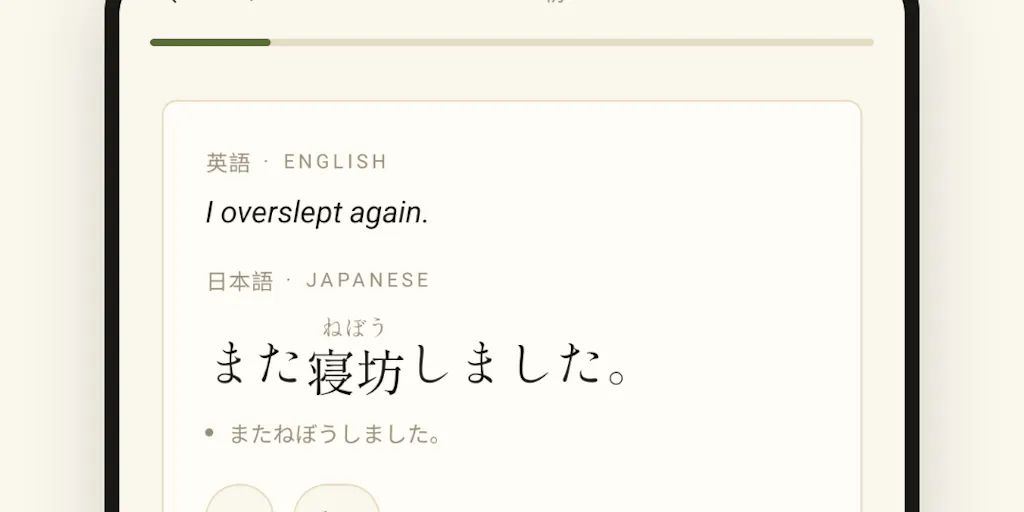
The maker, Mohannad Ali, frames the problem tightly: you ask ChatGPT something, get a great answer, nod along, and close the tab. Curiosity evaporates. Tomo gives that curiosity somewhere to go by generating a structured mini-course with graded answers, a score, and a streak. You can also convert an existing chat into a course, and you pick a persona — The Bestie, The Professor, Explain Like I’m 5, The Storyteller, or The Pirate — to deliver the same facts differently.
The obvious objection, which the maker pre-empts himself, is “can’t I just ask ChatGPT to quiz me?” His answer is the interesting part: Tomo builds a real course with every answer graded and a streak that brings you back, and critically, ChatGPT never sees the answers, so it can’t spoil them. That last detail is a genuine product-design insight, not marketing fluff. It’s the difference between a feature and a system.
Why this matters more to Amazon sellers than Shopify ones
Here’s my read. A Shopify DTC operator already owns their storefront, their email list, and their Klaviyo flows; their discovery problem is paid acquisition and retention, and a ChatGPT plugin does nothing for them today. An Amazon FBA seller, by contrast, lives entirely inside someone else’s search box and pays for every impression through Sponsored Products. The lesson of Tomo — build a lightweight, self-contained experience that lives inside a platform where your buyers already are — maps directly onto how Amazon sellers should be thinking about Rufus, Amazon’s own AI shopping assistant, and about listing optimization for AI-mediated discovery. If Amazon’s assistant becomes the front door, the sellers who structure their catalog and A+ content for machine comprehension, not just keyword stuffing, will win the click. Tomo is a tiny proof that “build where the attention already is” beats “build a destination and beg people to visit.”
How It Differs From the Incumbents — Duolingo, Quizlet, and the ChatGPT Status Quo
A commenter, Shrutika Patel, asked the sharpest question on the page: how is this better than Duolingo? Another, Nika, said it feels better than Quizlet. Both comparisons are fair and both reveal where Tomo’s real differentiation sits — and where it doesn’t.
Duolingo owns language learning with a massive content library, a mature streak economy, and a brand. Quizlet owns flashcards and study sets with a huge user-generated corpus. Tomo owns neither a content library nor a corpus. What it owns is zero-friction topic arbitrariness: any topic, generated on demand, delivered inside the chat where the curiosity started. That’s a different job. It’s not “learn Spanish over six months”; it’s “I just read about the fall of Rome, give me five minutes of structured play on it.” The incumbent it actually displaces is the status quo — the closed tab.
For a cross-border seller, the analogy is precise. You are not going to out-Amazon Amazon or out-Shopify Shopify. You win by owning a specific, low-friction job that the incumbent handles clumsily. Tomo’s persona picker is also a quiet lesson in segmentation without SKUs: same underlying content, five delivery modes, zero extra production cost. That is exactly the logic behind good listing variants and localized creative — one product, many framings, tuned to who’s reading.
What Cross-Border Operators Should Borrow From This Launch
Three things, and I’d argue all three are more valuable than the product itself.
1. The “platform-inside-a-platform” distribution play
Tomo shipped first as an iPhone and Android app, then extended into ChatGPT via Plugins. That’s a deliberate bet on borrowing distribution from a larger surface rather than fighting for app-store discovery. Sellers do a version of this every day — listing on Amazon Seller Central, TikTok Shop, Temu, SHEIN, Etsy, and eBay instead of only their own store. The Tomo lesson is to treat each surface as a native experience, not a copy-paste. A TikTok Shop listing that reads like an Amazon listing underperforms; a ChatGPT plugin that just dumps a wall of text underperforms. Match the surface’s grammar.
2. Gamification as a retention mechanic, not a gimmick
Hearts on the line, a score, a streak. This is Duolingo’s playbook applied to arbitrary topics. For DTC operators, the translation is loyalty and repeat-purchase design: streaks, progress, and small wins in your post-purchase email flows (the kind you’d build in Klaviyo) do more for LTV than another discount code. If you’re running subscription or consumables, borrow the streak mechanic shamelessly.
3. Free-to-play, no-sign-up as a top-of-funnel wedge
Tomo is “free to play, no sign-up to start.” That’s a deliberate reduction of friction at the exact moment curiosity peaks. Cross-border sellers obsess over conversion rate but rarely audit sign-up and checkout friction with the same rigor. Every field you remove from a landing page or a quiz funnel is a Tomo-style “no sign-up” decision.
Where the math breaks
I’ll be blunt about the limits. Tomo’s model works because the marginal cost of generating a course is near zero and the product is free. A physical-goods seller has COGS, freight, and returns — you cannot “free-to-play” your way to margin. Borrow the mechanics, not the economics. Gamified retention only pays off if your repeat-purchase rate and contribution margin can absorb the tooling and creative cost. Run the numbers before you build a points program.
Where My Judgment Says This Falls Short
A few honest caveats, both about Tomo and about the broader “build inside ChatGPT” thesis.
First, plugin distribution is fragile. Tomo’s ChatGPT presence depends on a platform that changes its plugin and app policies frequently; a solo maker has no leverage if the rules shift. Any seller building a channel on a marketplace knows this risk intimately — it’s the same reason smart Amazon brands diversify onto Shopify and TikTok Shop rather than betting the company on one account. Tomo’s own hedge (the native iOS and Android app) is the right instinct.
Second, the moat is thin. A persona picker and a streak are copyable in a weekend. The maker’s real asset is the ChatGPT-inside integration and the “answers hidden from the model” design, not the game loop. In e-commerce terms, this is a features business, not a brand business — and features get cloned.
Third, the retention claim is unproven. The page shows enthusiasm in comments but no disclosed retention or engagement numbers — not disclosed, and I won’t pretend otherwise. Streaks are powerful, but they’re also easy to abandon. I’d want to see week-four retention before believing the “brings you back” line.
Fourth, and this is the cross-border-specific one: the whole thing is US/English-centric. Personas, tone, and cultural framing don’t localize for free. A seller eyeing EU or Southeast Asia should treat Tomo as inspiration, not a template — the “Pirate” persona does not translate to a German marketplace.
What I’d Watch / Test Next
Concretely, here’s what I’d do this week if I ran a cross-border brand.
- Audit your platform-native experiences. Pick your two highest-traffic surfaces and ask whether each listing or storefront actually speaks that surface’s language, or whether it’s a copy-paste. Fix one this week.
- Prototype one friction-removal test. Remove a sign-up field or a checkout step and measure conversion delta. Treat it like a Tomo “no sign-up” bet.
- Design one retention mechanic — a streak, a progress bar, a small win — into your post-purchase flow, and A/B it against your current flow in Klaviyo or your ESP.
- Watch the AI-assistant front door. Follow how ChatGPT and Amazon’s Rufus reshape discovery, and start structuring product content for machine comprehension now, before it’s table stakes.
- Stress-test channel concentration. If more than 60% of revenue comes from one marketplace, Tomo’s platform-dependency risk is your risk. Start the diversification plan.
Tomo itself is a charming five-minute product. The reason I’m writing about it is that its strategy — native to the surface, low-friction entry, gamified retention, hedged distribution — is a cleaner template for cross-border operators than most of the “growth hacking” content floating around. Watch the mechanics, not the pirate voice.