Why a Kids’ AI App Matters to Cross-Border Sellers (More Than You Think)
Every week I see another brand launch a chatbot for their Shopify store or a TikTok Shop auto-reply bot, and every week I cringe at how little thought goes into the user’s age, emotional state, or trust floor. They slap GPT on a live‑chat widget and call it a day. Then a customer’s 10‑year‑old asks the chatbot a question about a product, the bot says something creepy or factually wrong, and the brand loses a household permanently. Yoggi, a child‑focused AI companion launching on Product Hunt, is not an e‑commerce tool at all — but its design decisions around age adaptation, parental controls, and safety alerts are a masterclass in how to build AI that earns trust rather than assuming it. And trust, especially in cross‑border e‑commerce where buyers are already skeptical of unfamiliar brands, is the conversion lever most operators neglect. Let me unpack what Yoggi gets right, what it still gets wrong, and what you should steal for your own customer‑facing AI stack.
The Problem Yoggi Actually Solves
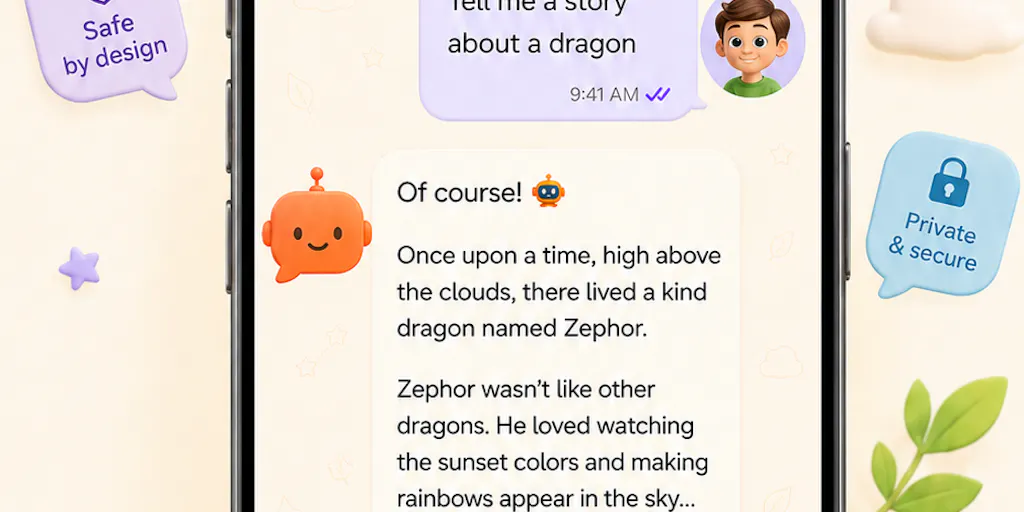
Most AI products aimed at children treat them as miniature adults: same chatbot, simpler words. Yoggi takes the opposite approach — it profiles the user’s age (3–15) and adjusts response length, vocabulary, and tone on every message, as maker Lucas explains in a comment. For a 3‑year‑old, sentences are short and playful; for a 13‑year‑old, the tone shifts toward a young‑adult register. That is not a cosmetic tweak. In e‑commerce, we have the same blind spot. A product description written for a 45‑year‑old direct‑to‑consumer buyer gets thrown at a 22‑year‑old TikTok shopper, and the brand wonders why the bounce rate is 80%. The platform doesn’t care about age — the platform shows the same copy.
Yoggi’s second core problem is safety. It runs a background safety layer that flags concerning messages and can notify a parent. It also deliberately avoids long‑term memory of the child to prevent the illusion of a real relationship — a trade‑off the maker calls “technical and philosophical at once.” Most e‑commerce AI tools, from Klaviyo flows to Shopify Inbox, remember everything a customer has said and use it to sell more. That works until it doesn’t. A returning customer mentions a recent personal loss, and your bot offers a 10% discount on shoes. Yoggi’s rule: validate first, never dismiss, and know when the right answer is to point toward a real human. That is a principle every brand’s chatbot policy should be built around.
How It Differs from Existing Options
The obvious comparison is ChatGPT, which has a ChatGPT‑Kids mode that filters explicit content but lacks any parental dashboard, usage limits, or age‑based tone switching. Yoggi gives parents a PIN‑protected area where they can set retention settings, view activity insights, and receive alerts — a degree of control that no general‑purpose AI offers. In the e‑commerce world, the equivalent is the gap between basic chatbot services (like Tidio) and a full customer‑data platform that respects user consent. Most sellers still use the former because it’s cheap, but the latter is what builds long‑term brand equity.
Another difference: Yoggi is opinionated about what it won’t do. It won’t pretend to have feelings. It won’t remember your child’s dog’s name across days because that would blur the line between program and person. That level of intentional constraint is rare in software. For sellers, the parallel is deciding which customer data you refuse to collect. Most of us hoard every click, scroll, and pause. Yoggi shows that leaving some things unremembered can actually strengthen the relationship — a counterintuitive lesson for anyone running Facebook retargeting or Amazon Seller Central campaigns.
What Cross‑Border Sellers Can Borrow from Yoggi’s Design
Age‑Based Personalization Without Creepiness
Yoggi doesn’t ask the child’s age and then guess based on browsing history. It stores the age in a profile and uses it explicitly. Cross‑border sellers can do the same with a simple pre‑purchase survey or a mandatory birthday entry on checkout — not to spam, but to adjust pricing, language, and compliance warnings. A 16‑year‑old buying skincare on your TikTok Shop sees “this product contains retinol; consult a parent” while a 35‑year‑old sees “best applied at night.” That’s not hypothetical — it’s already required by EU cosmetics regulations. Most brands just don’t implement it because it’s friction. Yoggi proves friction can feel like care.
The “Report This Message” Feedback Loop
One of the comments on the launch asks how Yoggi handles situations where a response misses the mark. Lucas mentions he is exploring a “report this message” feature so families can flag inappropriate replies without the app intruding on their privacy. That is exactly what every seller’s chatbot needs. Your AI will hallucinate pricing, say something culturally insensitive in a new market (Japan vs. Brazil), or misquote your return policy. Instead of hoping customers email you, give them a one‑click “This was wrong” button. Then use that signal to fine‑tune your prompts. Most vendor tools like Zendesk or Gorgias offer sentiment analysis, but they don’t let the end user correct the AI. That’s a neglected feedback channel.
Parental Controls as a Metaphor for Buyer Controls
Yoggi lets parents set “usage limits” and view “activity insights.” In e‑commerce, the analogous buyer is the procurement manager for a B2B order or the parent buying for a family — they want to cap spend, see what items were purchased, and get alerts when an order exceeds a threshold. You already have this in Shopify via custom permissions, but do you surface it in your customer experience? Brands selling school supplies or kids’ clothing could offer a “parent mode” that bundles receipts, hides certain product categories, or sends SMS alerts when a child’s account makes a purchase. Yoggi shows that control is a feature, not a liability.
Why Amazon Sellers Should Care More Than Shopify Ones
Shopify store owners can customize their checkout and add any module they want. Amazon FBA sellers are locked into a single listing format with no control over the buyer’s identity. But Amazon now offers “Brand Story” and “A+ Content” slots where you can embed age‑specific messaging — and Amazon’s voice assistant, Alexa, is increasingly used for kids’ shopping. If your product targets households with children, the safety layer Yoggi builds is directly relevant. You need to prep your listings for voice search (e.g., “Alexa, order more diapers”) and ensure your product descriptions don’t trigger a confused AI response. The math: Amazon’s Alexa shopping is growing, and mistakes there lose you the whole household. Yoggi’s careful tone‑shifting is a model for how to write voice‑friendly copy that doesn’t freak out when a 7‑year‑old asks “is this toy safe?”
Where My Judgment Says It Falls Short
The Safety Alert Is a One‑Way Street
Clemente Lopez’s comment on the launch page raises a sharp point: routing a concerning message to the parent is right for most families, but for the ones where the parent is the problem, that alert does active harm. Lucas admits he “hasn’t found a perfect solution yet” and is exploring directing older children to external resources. This is non‑trivial. In e‑commerce, the same problem appears when your AI flags a “sensitive” cart — e.g., a customer buying pregnancy tests or mental health supplements — and your CRM automatically notifies a manager who then sends a targeted email. That’s an invasion of privacy that destroys trust. The lesson: one‑way escalation is dangerous. If you build a “safety” feature, you must design for the edge case where the human in the loop is the threat, not the solution.
The Memory Ban Hurts Personalization for Repeat Buyers
Yoggi deliberately forgets everything after midnight to avoid emotional dependency. That is a defensible choice for a kids’ app, but for e‑commerce, identical amnesia would kill personalization. If a customer tells your chatbot they have a nut allergy and you forget it the next day, they’re going to be frustrated. The middle ground that Yoggi itself is exploring — keeping a “story” or learning topic coherent without profiling the child — maps to an e‑commerce solution: keep session‑level memory for the current visit, reset it at checkout, and never store sensitive health data permanently unless the user opts in. The “no false memory” principle is smart; the all‑or‑nothing implementation is too blunt for commerce.
Where the Math Breaks
Lucas says response length, vocabulary, and tone are “re‑evaluated on every message, so the experience actually shifts as the child grows.” That sounds elegant, but it also means every API call carries the child’s age, adds latency, and multiplies cost. For a small indie kids’ app, that’s manageable. For a cross‑border seller running 10,000 chatbot sessions a day across three markets, the token‑cost math gets ugly fast. The alternative is to pre‑compile age‑specific prompt templates and cache them, but then you lose the dynamic adaptation. Yoggi’s approach is aspirational — and expensive. Before you copy it, calculate whether your average order value (AOV) covers the AI inference cost. If you sell $5 accessories on Temu, it doesn’t. If you sell $200 home goods on Etsy, it might.
What I’d Watch / Test Next
This week, take three concrete actions:
Add a one‑click “This response was wrong” button to your live chat or chatbot. Don’t wait for a vendor update — use a custom webhook to log feedback to a spreadsheet. Analyze it for patterns: is your AI failing on pricing, shipping times, or return policy? That’s your training data.
Run a a/b test on age‑based messaging. If your store allows a birthday field at checkout (or uses a pop‑up like “What year were you born?”), serve two versions of your product page copy: generic vs. age‑tailored. Measure conversion rate and returns rate. Yoggi’s model suggests the tailored version will outperform, but you need your own numbers.
Audit your “safety” alerts. Do you have any automated notifications that go to a manager when a customer says something sensitive? If so, add an “opt‑out” mechanism or, better, route the alert to an external support resource (hotline, helpline) instead of a internal email. The Yoggi thread shows that one‑directional alerts can backfire.
Yoggi is not a tool you can buy — it’s a case study in how to build AI that respects boundaries. Steal its principles, not its code. Your customers, especially the ones buying for kids, will notice the difference.


