Why Cross-Border Sellers Should Care About Influence Measurement (Beyond Follower Count)
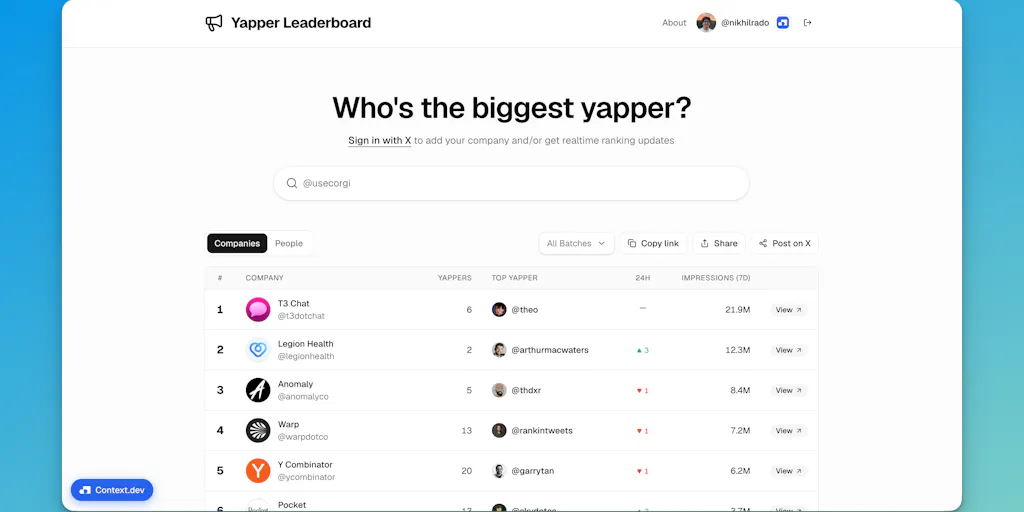
Every DTC operator I know has wasted ad spend on an influencer who looked big on paper but generated zero sales. The problem isn’t the influencer – it’s the metric. Follower counts are vanity; real influence lives in engagement velocity and the ability to drive action within a specific niche. For cross-border sellers, especially those launching on Amazon or building a brand on Shopify, the difference between a $10,000 wasted campaign and a 5x ROAS often comes down to how you identify the right voices. That’s why I spent an hour picking apart a new tool called Yapper Leaderboard (the actual product is billed as a way to rank X accounts by impressions rather than followers). It’s not built for e-commerce, but the thinking behind it – ranking by real signal, not audience size – is exactly what sellers need to borrow if they want to stop burning cash on dead-air influencer partnerships.
The Problem Yapper Leaderboard Actually Solves
For years, the default way to vet a potential brand partner on X (formerly Twitter) was to check their follower count, maybe skim their recent posts, and pray. Tools like HypeAuditor and Klear try to surface authenticity, but they’re expensive, oriented toward Instagram/TikTok, and still rely heavily on audience size as a primary filter. Yapper flips the script: instead of “who has the most followers,” it asks “whose posts are actually being seen right now.” The leaderboard ranks accounts by impressions – a raw measure of how many eyeballs hit a post – and offers views like “weekly growers” to surface accounts gaining momentum before they become obvious.
The comments on the Product Hunt launch confirm this: one user noted that “watching T3 Chat sit at number 1 makes the ranking feel instantly believable” – because that account is genuinely active and visible in the X ecosystem, not just a dormant legacy account with a million followers. Another user highlighted the YC batch filter, which lets you see who’s “loud” within a specific accelerator cohort. For cross-border sellers, this is the closest thing to a “viral velocity meter” for niche communities.
Why the “Impressions Over Followers” Framework Matters for Brand Discovery
If you’re selling organic bamboo bedding on Amazon and you want to find micro-influencers in the sustainable home space, a follower-count approach would push you toward accounts with 50K+ followers who likely bought followers or went viral once years ago. An impressions-based approach surfaces the account that consistently gets 20,000 views per post even though they only have 3,000 followers – that’s the person whose audience actually pays attention. Yapper’s “weekly growers” tab is the e-commerce equivalent of catching a rising tide before the dock gets crowded.
How It Differs from Existing Options (And Where It Falls Short for Sellers)
Let’s compare Yapper to the tools most cross-border sellers currently use for influencer research.
| Tool | Primary Metric | Cost | Platform Focus | Category Filtering |
|---|---|---|---|---|
| Helium 10 Black Box | Keyword volume, revenue | $79+/mo | Amazon product research | Amazon categories |
| Klaviyo | Email engagement rates | $20+/mo | Email/SMS | N/A – owned audience |
| HypeAuditor | Audience quality score, fake followers | $299+/mo | Instagram, TikTok, YouTube | Broad verticals |
| Yapper Leaderboard | Impressions, weekly growth | Not disclosed (likely free/paid) | X (Twitter) only | None – global or YC batch |
The biggest gap is category filtering. As one commenter noted, “I wish there was a way to filter by category, like AI, developer tools, or SaaS” – and for us, the list would need to include “home goods,” “pet supplies,” “beauty,” “luxury accessories,” etc. Without that, a seller trying to find influencers in the cross-border fashion niche gets a board of VC-backed startup accounts and tech founders. Yapper is essentially a radar for the tech/X ecosystem, not for e-commerce niches.
Another shortfall: the data source. The tool relies on X’s per-tweet view counter, which is rate-limited and potentially stale. The founder (or commenter Dipankar Sarkar) asked directly: “X only hands real impression counts to the account owner through their own analytics, so a public leaderboard either scrapes the per-tweet view counter (doable but rate-limited into the ground) or estimates it from likes and replies, which drifts from what people see in their own dashboard.” For a seller hoping to time a campaign based on an influencer’s momentum, a stale number is worse than no number.
Where the Math Breaks: Post Volume vs. True Influence
One of the smartest criticisms in the Product Hunt comments came from Omri Ben-Shoham: “Ranking by impressions feels like it’ll reward whoever posts the most rather than whoever says something worth reading. Is there any normalization for post volume, or does a company that tweets 20 times a day just automatically outrank one that tweets twice?” This is the quantity-over-quality trap. For e-commerce, you don’t want an influencer who spams 15 posts a day – you want someone whose one or two weekly posts land because their audience is curated. Yapper’s current algorithm likely overweights volume, which means it’s better for identifying “noise makers” than “trusted recommenders.”
What Cross-Border Sellers Can Borrow From Yapper’s Approach
Even if you never open the Yapper leaderboard again, the philosophy behind it is worth stealing for your own brand-building playbook.
1. Build Your Own “Impressions Heatmap” for Your Niche
You don’t need a third-party tool. If you sell on Amazon and you’re trying to identify the top five X accounts that drive traffic to your category, you can manually track impressions for the top 50 accounts in your niche for two weeks. Use X’s API (or a simple spreadsheet) to log post views per account per day. Then divide by number of posts to get average impressions per post. The ones with the highest ratio are your real influencers. Yapper automates this for the tech crowd; you can do it manually for your niche.
2. Use “Weekly Growers” as an Early-Warning System for Trends
The weekly growers tab is essentially a momentum detector. In cross-border e-commerce, cultural trends often start on X before they hit Amazon search volume. For example, if you sell bamboo kitchen utensils, and you see a sudden surge of impressions for a sustainability-focused account that normally posts about zero-waste living, that’s a signal to check whether “bamboo spatula” is rising on Google Trends for your target markets (US, UK, Germany). You can then reach out to that account before your competitor does.
3. Apply the YC Batch Filter Mentality to Your Own Community
The YC batch filter lets you scope the board to a specific cohort. Sellers can do the same by creating a list of X accounts that are already part of, say, the Shopify Partner community or the Amazon Seller Forums. Then build your own mini leaderboard from that list using CsvImport or a simple Python script. The key insight: within a trusted ecosystem, impressions correlate more tightly with purchase intent than in the general X population, because the audience already has a commerce mindset.
Where My Judgment Says It Falls Short (For Now)
Yapper is a fun tool for the startup-tech echo chamber, but applying it to cross-border e-commerce requires heavy lifting that the product doesn’t yet support. Here’s my critique:
- No geo-filtering. A seller targeting EU markets needs to see which X accounts have high impressions in Germany or France. Yapper shows global impressions – meaningless for localized e-commerce.
- No conversion tracking. Impressions don’t mean click-throughs or purchases. Without a way to correlate an account’s posts with actual sales via a tracking link (e.g., Bitly or UTM parameters), the tool remains a surface-level vanity metric replacement for follower counts – just a different kind of vanity.
- Data staleness. The 24-hour column was all dashes at launch, which suggests the pipeline isn’t real-time enough to make daily decisions. For time-sensitive campaigns (e.g., a Prime Day push), you need hourly data.
- Search functionality is broken for discovery. As commenter Abdullah Javaid pointed out, the search box “only matches accounts already on the board, and it seems to match website domains too.” If I search “home decor,” I won’t find the nascent influencer who just started posting about sustainable furniture unless they’re already in the board. That defeats the purpose of discovery.
Why Amazon Sellers Should Care More Than Shopify Ones
If you run a Shopify store, you can build a direct relationship with influencers through email and affiliate links, and you can measure attribution through Shopify’s analytics. But if you sell on Amazon, you’re in a black box – Amazon doesn’t share who drove the sale. For Amazon sellers, identifying the right X account to push an Amazon product link is critical because you can’t retarget or run custom audiences on Amazon’s ad platform. An impressions-based tool like Yapper can at least tell you which accounts have captive audiences that might click through. That’s a start, but it’s not enough.
What I’d Watch / Test Next
Here’s my concrete action plan for any cross-border seller reading this:
This week: Spend 30 minutes on Yapper’s board. Identify the top 10 accounts in the “weekly growers” tab that post about your niche (or adjacent topics like “supply chain,” “e-commerce,” “direct-to-consumer”). Manually check their last 10 posts for engagement quality – comments that ask questions, not just “great post!” If you find an account with 500–5,000 followers and consistently 1,000+ impressions per post, DM them with a genuine compliment, then propose a test collaboration (free product + a discount code). Track their click-through rate using a unique Amazon affiliate link or a Shopify discount code.
Next month: Build your own private X leaderboard. Export your niche’s top 200 accounts (using Twitter Lists and TweetDeck) and scrape their impressions daily using a free tool like Apify’s Twitter scraper or Octoparse. Filter for accounts with >1% impression-to-follower ratio per post. Those are your real influencers.
Long term: Keep an eye on whether Yapper adds category filtering or a custom list scoping option (as requested in the comments). If they do, it could become a viable complement to HypeAuditor for X-specific influencer research. Until then, treat it as a proof-of-concept for what every seller should be doing manually: stop counting followers, start counting impressions.
The cross-border e-commerce winners in 2025 won’t be the ones with the biggest influencer budgets. They’ll be the ones who can spot the 2,000-follower account that consistently gets seen by the right 500 buyers. Yapper shows you the doorway – now you have to walk through it with your own data.