Why a $0 iOS Toy Should Make You Rethink Your Entire Tech Stack
Here’s the uncomfortable truth about cross-border e-commerce in 2025: we are drowning in complexity while starving for utility. We pay for seventeen SaaS subscriptions, each one promising to automate the last one, and yet the most common complaint I hear from sellers isn’t about ad costs or tariff headaches—it’s that the tools feel like they were designed by people who have never packed a box or argued with a customs broker. Then I scroll past a launch like Wavepocket, a free iOS app that turns your phone into a 4-track tape recorder for sampling movie and TV audio, and I think: this is the energy we’ve lost. The maker, Matt Sandy, built it because he wanted to make music on a train without a fancy synth. No enterprise sales team. No “synergies with your logistics provider.” Just a person solving their own problem, shipping it, and asking for feedback. For anyone running a DTC brand or an Amazon catalog, that’s not a distraction—that’s a masterclass in product development, constraint-driven design, and the kind of lean iteration that actually moves units.
The 4-Track Philosophy: Constraints Are Your Competitive Advantage
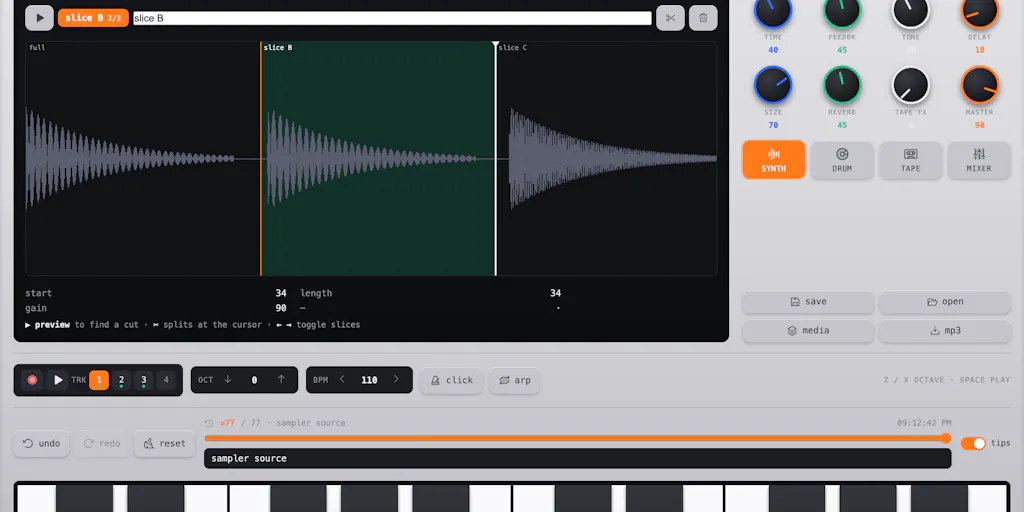
Let’s talk about what Wavepocket actually is, because the simplicity is the point. It’s a 4-track tape studio emulator for iOS. You can sample audio clips—the maker specifically mentions being inspired by people making songs from Simpsons dialogue and funny movie lines—and layer them into tracks. It’s free. It runs on your phone. It’s deliberately lo-fi. When a commenter asks about export options, the maker’s response is refreshingly honest: “You can export as mp3, but I should add a wav export.” That’s it. No roadmap manifesto. No “we’re building an ecosystem.”
Now, I’m not suggesting you ditch your Helium 10 subscription to go make beat tapes. But the philosophy here is directly transferable to how you should be building your brand. The most successful cross-border operators I know aren’t the ones with the most SKUs or the most sophisticated automation. They’re the ones who have defined a brutal constraint—”we only sell one thing, we only ship to three countries, we only use two ad platforms”—and then optimized the hell out of that tiny box. Wavepocket is a 4-track tape recorder in a world of 128-track DAWs. And guess what? The 4-track constraint forces decisions. It forces you to commit. You can’t hide a bad idea behind a hundred layers of effects.
For a seller, that means looking at your product line and asking: what’s our 4-track equivalent? What’s the one product, the one market, the one channel we’re going to commit to and actually master? Most of you have a catalog that’s a mess of “maybe” products—the ones you listed because a supplier gave you a deal, the ones that seemed like a good idea after a webinar. That’s not a strategy; that’s a hoard. Wavepocket’s maker didn’t try to build a full music production suite. He built the one thing he needed to make the tracks he was inspired by. Your product line should be the same: the one thing (or four) that your target customer actually needs to solve their specific problem.
What Cross-Border Sellers Can Steal From a Train-Ride App
This is where I get contrarian. Everyone wants to talk about the new AI-powered repricing tool or the latest TikTok Shop integration. But the real lesson from Wavepocket is about the feedback loop and the speed of iteration. Look at the Product Hunt comments. Within hours of launch, a user named Lisa asks about WAV export. The maker responds, acknowledges the gap, and says he should add it. That’s it. That’s the entire product development cycle, compressed into a day.
How many of you have a customer feedback channel that works that fast? If you’re an Amazon seller, your feedback loop is brutal and slow—you’re waiting for reviews, which are gated behind a purchase, which is gated behind traffic, which is gated behind PPC spend. By the time you learn something, you’ve spent a month and a thousand dollars. Wavepocket’s maker learned something in 16 hours, for free, from a stranger on the internet.
Here’s what I’d tell you to borrow:
Ship the MP3, plan the WAV. Don’t wait for the perfect product. The maker launched with MP3 export only. That’s sufficient for sharing and testing. For a seller, that means don’t hold your launch hostage to perfect packaging or a fully optimized listing. Get the product in front of people, get the feedback, then iterate. Your “MP3” is a basic listing with decent photography. Your “WAV” is the A+ content and the video ads. Ship the MP3 first.
Use your constraints to define your audience. Wavepocket isn’t for professional musicians. It’s for people on trains who want to make silly songs from movie quotes. That’s a niche. And it’s a niche that’s easier to market to because it’s clearly defined. For cross-border sellers, the most common mistake is trying to sell to everyone. A product that’s “for anyone who needs a kitchen gadget” is a product that’s for no one. Who is your product not for? If you can’t answer that, you haven’t defined your market.
The maker is the product. Matt Sandy’s responses are personal, slightly self-deprecating (“This is far from perfect”), and engaged. He’s not a faceless brand. He’s a person who built something. In the world of Amazon, where everyone is fighting a race to the bottom on price, your story is the one thing you can’t be undersold on. A brand that shares its process, its failures, and its roadmap builds a tribe. A brand that just lists products builds a customer base that will abandon them for a cheaper clone in a click.
Why Amazon Sellers Should Care More Than Shopify Ones
Let me be specific about who needs to pay attention to this. Shopify store owners are already living in the Wavepocket world. They have a direct line to their customers, they can run tests, they can build a brand narrative. They’re used to rapid iteration because their platform is designed for it. But Amazon FBA sellers? You’re living in a different universe. You’re on a platform that actively discourages customer relationships, where your product is a commodity in a sea of lookalikes, and where the only feedback loop is the buy box price.
For you, the Wavepocket lesson is more painful and more necessary. You need to find a way to create a feedback loop outside of Amazon. That means inserts that push people to a landing page you control. It means building an email list from day one, even if it’s just with Klaviyo flows that fire after delivery. It means using your product’s packaging to tell a story, not just to protect the item. The maker of Wavepocket is building a relationship with his users on Product Hunt. You need to build a relationship with your customers off of Amazon, or you’ll always be at the mercy of the algorithm.
Where the Math Breaks
Now, let’s be clear-eyed about the limits of this comparison. Wavepocket is a free app. The maker isn’t trying to build a business with a P&L that needs to cover a warehouse in Kentucky and a freight forwarder in Shenzhen. The economics of a solo developer with a free app are completely different from a cross-border operation with real overhead. I’m not suggesting you abandon your margins to chase “fun.” The “constraints” I’m talking about are a filter for your strategy, not a license to be unprofitable.
But here’s where the math does break for you if you ignore this: the cost of complexity is hidden. Every extra SKU you carry is a tax on your attention. Every extra marketplace you sell on is a tax on your compliance. Every extra tool you subscribe to is a tax on your cash flow. Wavepocket is a reminder that the cheapest, most valuable thing you can do is simplify. The math of cross-border e-commerce is brutal—fees, tariffs, shipping, returns—and every layer of complexity you add just chips away at a margin that’s already thin. The most profitable sellers I know are the ones who have ruthlessly cut their catalog, their channels, and their tool stack down to the essentials. They’re running a 4-track studio, not a 128-track DAW.
The Judgment Call: Where This App (and Your Strategy) Falls Short
I’m not going to pretend Wavepocket is a revolutionary piece of software. It’s a fun toy. It’s a hobby project. The maker himself says it’s “far from perfect.” And that’s where my judgment call comes in for you as an operator: don’t mistake a fun toy for a scalable business model. The app’s limitations—no WAV export, no stems, likely no collaboration features, no clear monetization path—are fine for a hobby, but they’re a death sentence for a product with real overhead.
The trap for cross-border sellers is the opposite. You have the overhead, so you over-engineer the product. You add features no one asked for because you think it justifies a higher price. You build a brand identity that’s generic because you’re afraid to alienate anyone. You’re so busy adding tracks to the DAW that you never finish a song. Wavepocket is a reminder that the first version of anything should be almost embarrassingly small. But it’s also a reminder that at some point, you have to add the WAV export. You have to figure out how to make money.
Here’s the synthesis: be a minimalist in strategy, but a maximalist in execution. Keep your product line and your market focus tight, like Wavepocket’s 4-track constraint. But within that tight box, execute with absolute excellence. Don’t just ship the MP3 and stop. Ship the MP3, get feedback, then ship the WAV, then ship the stems, then build the community. The failure mode for most sellers isn’t doing too little—it’s doing too much, too broadly, too soon. The Wavepocket model is the antidote: do one thing, do it well, and let the users tell you what’s next.
What I’d Watch / Test Next
So, what should you actually do this week, armed with this very niche observation about a free iOS music app? Here are my concrete steps:
Audit your “track count.” Open your spreadsheet of SKUs. If you have more than 10 active products, I want you to cut that number in half on a separate sheet. That’s your “4-track” list. For the next 90 days, put 100% of your marketing budget, your content creation, and your optimization effort into those 5 products. Watch what happens to your conversion rates when you’re not spreading yourself thin.
Create a 16-hour feedback loop. Pick one channel where you can get customer feedback in under a day. It could be a TikTok Shop live where you answer questions in real time. It could be a Discord server for your most loyal customers. It could be a simple Google Form sent to your Etsy buyers. The goal is to get one piece of actionable feedback every day. When you get it, respond to it publicly, like Matt Sandy did. Tell your customers what you’re going to change based on their input.
Ship your next version this month. What’s the one improvement you’ve been sitting on? The one you keep saying “we’ll get to it next quarter”? That’s your WAV export. Stop waiting for the perfect time. Make the change, push it live, and tell your audience you did it. The brand that is visibly iterating is the brand that builds trust. A static brand is a dying brand.
The cross-border game is brutal, and it’s getting more brutal. The winners aren’t the ones with the most resources; they’re the ones who can move the fastest and listen the hardest. They’re the ones who understand that a constraint is not a limitation—it’s a direction. Go build your 4-track studio. Stop trying to produce the symphony.