Why a $59 Lo-Fi Microphone Matters More to Your P&L Than Another AI Ad Tool
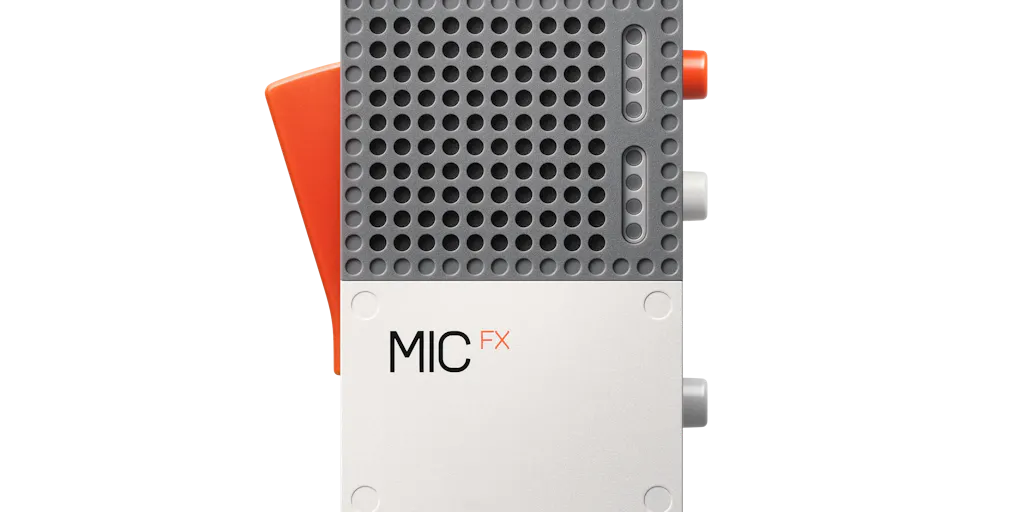
Every week, a new SaaS product promises to automate your Amazon PPC or rewrite your Shopify product descriptions with generative AI. You can set your watch by it. But the most important product to cross my radar this week isn’t a dashboard or a plugin. It’s a $59 handheld microphone from a Swedish hardware company that has spent the last decade treating consumer electronics like a fashion label. The EP-2350 FX-MIC, launched by Teenage Engineering, is a squeeze-to-modulate vocal effects toy that plugs into a sampler. On the surface, it has nothing to do with cross-border e-commerce. But beneath the retro plastic and the lo-fi audio gimmick is a masterclass in product positioning, SKU rationalization, and community-led merchandising — the exact playbook that separates a commodity reseller from a brand that can command a premium on Amazon and Shopify alike.
The FX-MIC isn’t just a gadget. It’s a case study in how to take an existing product, recolor it, repackage it, and launch it as a new SKU without spending a dime on R&D. For sellers drowning in inventory and fighting a race to the bottom on price, that’s a lesson worth more than any ad spend optimization.
The Product Is the Strategy: Solving the “Post-Purchase Stagnation” Problem
Let’s get the hardware out of the way. The EP-2350 FX-MIC is a tiny radio-style microphone. You squeeze a lever to shape vocal effects, shake it to modulate, and fire off four samples from side buttons. It costs $59, is lo-fi on purpose, and plugs into a K.O. II sampler or any line-in setup. You can even swap samples and rebuild effect chains in a JSON file. As Zac Zuo notes on Product Hunt, makers have already started poking at the RP2350 hardware underneath, and it’s essentially the earlier EP-2350 Ting in a new colorway.
Now, why should a cross-border seller care? Because this product solves a problem that most hardware and consumer goods brands completely ignore: the post-purchase stagnation problem. You sell a customer a Bluetooth speaker or a smart lamp. They buy it, they use it for a week, and then it sits on a shelf. The relationship is over. You have to spend money on ads to acquire them again for your next product.
Teenage Engineering doesn’t play that game. The FX-MIC is not a standalone product; it’s an accessory that extends the life and utility of an existing ecosystem (the K.O. II). It gives existing owners a reason to re-engage with their hardware, to create new content, and to feel like they’re part of an ongoing narrative. For a DTC operator, this is the difference between a transactional sale and a recurring revenue loop. You aren’t just selling a microphone; you’re selling a reason to keep using the sampler you already own.
This is the “ecosystem accessory” strategy that Apple perfected and that most third-party sellers fail to replicate. The FX-MIC is a low-cost, high-perceived-value add-on that makes the core product stickier. If you sell on Amazon, think about your own catalog. Do you have a product that can be extended with a cheap accessory that solves a specific friction point? A $59 add-on that makes your $300 main unit feel new again is not a cost; it’s a retention tool.
How It Differs from the Incumbents: The Anti-Temu Playbook
To understand why the FX-MIC works, you have to look at the competitive landscape. On one end, you have Temu and the drop-shipping crowd selling cheap, unbranded lapel mics for $9.99. They are pure price plays, disposable, and they flood the market with noise. On the other end, you have pro-audio incumbents like Shure and Rode that sell $200+ condenser mics aimed at podcasters and musicians. These are serious tools, but they are also intimidating and utilitarian.
Teenage Engineering sits in the sweet spot: the “toy that is actually a tool.” It’s $59, which is impulse-buy territory for their core demographic, but it’s not so cheap that it feels like junk. The lo-fi aesthetic is intentional — it’s a feature, not a bug. The company is selling a vibe, a creative constraint, and a community membership. They aren’t competing with Shure on audio fidelity; they are competing with the idea of a fun, tactile experience.
This is a direct challenge to the Amazon FBA playbook of “find a gap in the search results, source a generic version, and win the Buy Box on price.” The FX-MIC proves that differentiation doesn’t have to come from features or specs. It can come from personality. For cross-border sellers, this is a wake-up call. If you are selling a generic power bank or a plain white t-shirt, you are fighting a war you will eventually lose. The only sustainable moat is brand personality and a product that feels designed, not just manufactured.
Why Amazon Sellers Should Care More Than Shopify Ones
Shopify store owners are usually obsessed with branding, but Amazon sellers are often obsessed with rankings and conversion rates. The FX-MIC is more relevant to the Amazon crowd because it demonstrates how to win on listing content and product differentiation without relying on review velocity alone. On Amazon, you can’t easily tell a story with a video landing page, but you can use the product itself to generate user-generated content.
Think about the “shake to modulate” feature. That’s a built-in hook for TikTok and Instagram Reels. Every owner becomes a content creator, demonstrating the weird sounds they can make. This is organic social proof that feeds straight back into your Amazon listing via external traffic. A product like this, with a built-in “wow” factor, gives you a reason to run TikTok ads that don’t look like ads. If you are an Amazon seller, you should be looking at your catalog and asking: which of my SKUs has a feature I can turn into a 15-second demo video? If the answer is “none,” you have a commodity problem.
What Cross-Border Sellers Can Borrow: The “Recolor and Relaunch” Inventory Strategy
The most immediately actionable takeaway from the FX-MIC launch isn’t the hardware; it’s the business logic. Zuo explicitly points out that this is “essentially the earlier EP-2350 Ting in the K.O. II colorway. Same little machine, just pulled out of the reggae set and given a more general place in the EP family.”
This is a brilliant inventory management strategy. Teenage Engineering didn’t develop a new chip or a new form factor. They took an existing SKU, changed the plastic color, and repositioned it for a broader audience. They are effectively clearing out potential overstock of the “Ting” by rebranding it as a standalone mic with a broader appeal.
For a cross-border operator, this is the “variant expansion” strategy applied to hardware. Instead of writing off a slow-moving SKU, they gave it a new life. This works on Amazon too. If you have a product that sold well in Q4 but is stagnating in Q2, don’t just discount it. Reposition it. Change the main image to target a different use case. Create a new variation that bundles it with a popular accessory. The FX-MIC launch proves that the perception of newness is often more powerful than actual newness.
Where the Math Breaks: The Logistics of Niche Hardware
However, let’s not romanticize this. For every Teenage Engineering that pulls off a $59 niche accessory, there are a thousand sellers who would fail. The math only works because of their brand equity. The FX-MIC is not a mass-market product. It’s aimed at a specific community of music makers who already trust the brand. If you don’t have that community, a $59 microphone with a weird lever is just a dust collector.
The other break in the math is logistics. Teenage Engineering products are famously expensive to ship due to their packaging and weight relative to price. The FX-MIC is small, but if you are an FBA seller, you have to calculate whether the referral fee, storage fees, and inbound shipping leave you any margin at $59. For most sellers, a product at this price point requires either a very low landed cost or a high volume. Teenage Engineering can afford to sell low-margin hardware because they are building a platform for software and future ecosystem sales. You probably can’t.
The Community Flywheel: Turning a JSON File into a Marketing Asset
The most underrated aspect of the FX-MIC launch is the JSON file hackability. The fact that you can swap samples and rebuild effect chains in a JSON file is a massive feature for a $59 toy. It signals to the maker community that this is a device they can tinker with. It invites third-party developers and hobbyists to create content for the product.
This is the “platform play” that most cross-border sellers ignore. You aren’t just selling a product; you are selling a platform for creativity. When you allow users to modify your product (even in a limited way), you generate a community of advocates who will market it for you for free. The Adafruit community is already hacking the hardware, which creates a halo of legitimacy and tech-credibility that money can’t buy.
For your own brand, think about how you can make your product “open.” It doesn’t have to be code. It could be a customizable feature in your app, a modular design that allows for different attachments, or simply a contest that asks users to submit their own use cases. The goal is to shift from a one-way broadcast (brand to consumer) to a two-way conversation (consumer to consumer).
Where My Judgment Says It Falls Short
I have to be honest here. While I love the strategy, the product itself has limitations that a pragmatic operator should note. First, the lo-fi “on purpose” sound is a niche aesthetic. The average consumer, and even the average Amazon shopper, will not understand why they should pay $59 for a microphone that sounds worse than their phone. This is a product for the initiated, not the masses.
Second, the price point is tricky for cross-border logistics. Unless you have a consolidated shipping channel, the fulfillment cost on a $59 item can eat your margin. You are paying for the brand, not the hardware. If you try to copy this playbook with a no-name brand, you will fail.
Third, the reliance on the “hacker” community is a double-edged sword. While it creates buzz, it also creates a support burden. If you invite people to modify your hardware, you have to be prepared to handle a wave of technical support tickets from users who break their devices. Most small sellers don’t have the bandwidth for that.
What I’d Watch / Test Next
If I were running a cross-border operation, I wouldn’t buy the FX-MIC to resell it. I would buy it to study it. Here is what I would do this week:
Audit your SKU for a “Ting” moment. Look at your slow-moving inventory. Identify one product that has a unique feature you haven’t marketed. Create a new listing variation with a new title that targets a different use case than the original. Don’t change the product; change the story. Launch it as a “new” product to your email list using Klaviyo to segment buyers who bought your main unit in the last 90 days.
Test a TikTok demo video. Take your most boring product and film a 15-second video that shows a hidden feature or a weird use case. Use a tool like CapCut to edit it. If you can’t find a weird use case, that tells you something about your product’s differentiation.
Check your P&L for “ecosystem” potential. Ask yourself if you have a hero product that could support a cheaper accessory. If you sell a desk lamp, can you sell a $15 clip-on diffuser? If you sell a backpack, can you sell a $9 organizer? The goal is to create an accessory that solves a friction point and increases the stickiness of the main product.
Study the Adafruit hack. Even if you don’t do hardware, read the Hacking the Teenage Engineering EP-2350 Ting guide. It’s a masterclass in how a community can add value to a product you already sold. Think about how you can open up your product’s API or settings to your most engaged users.
The FX-MIC is a reminder that in a world of AI-generated content and race-to-the-bottom pricing, the brands that win are the ones that treat their products as the starting point for a relationship, not the end of a transaction.


