Why a Belgian Budgeting App Matters More to Your E-Commerce P&L Than You Think
Let’s be honest: most of us in cross-border e-commerce are running a financial circus, not a business. We’ve got Amazon payout cycles that lag by two weeks, Shopify payouts that land in a different currency, TikTok Shop settlement reports that look like they were designed by a committee of accountants on a bender, and ad spend across Meta and Google that needs constant reconciliation. The tools we use to track this mess are either bloated ERP systems that require a full-time implementation consultant, or a spreadsheet that we update with the same enthusiasm we have for filing VAT returns. So when I see a Product Hunt launch for a personal finance app, my first instinct is to scroll past. But Talvo caught my eye for a specific reason: it’s built on the premise of zero friction and smart analytics for financial data, which is precisely the promise that most e-commerce finance tooling fails to deliver on.
This isn’t a review for your personal checking account. This is a diagnostic on how we, as operators, think about cash flow, data aggregation, and the pain of reconciliation. The launch page for Talvo offers a case study in how to approach a messy data problem with a clean, user-first interface—and where that approach hits a wall when it meets the real world of banking regulations and fragmented financial ecosystems. For a cross-border seller, the lessons here are transferable, even if the product itself is aimed at a Belgian consumer. We can borrow the philosophy, critique the execution, and apply the “what’s missing” to our own tooling stacks.
The Problem: We’re All Drowning in Manual Reconciliation
Philippe Maes, the founder, states his origin story clearly: he wanted a clear overview of his personal finances without spending hours tweaking manual spreadsheets or fighting outdated banking apps. He identifies that most existing tools either didn’t support European banks, lacked a web app, or were too basic. This is the exact same frustration we face with our seller accounts. We use tools like Helium 10 for keyword research and Klaviyo for email flows, but when it comes to the actual money—the P&L, the cash flow forecast, the inventory valuation—we are still exporting CSV files from Amazon Seller Central and manually categorizing them.
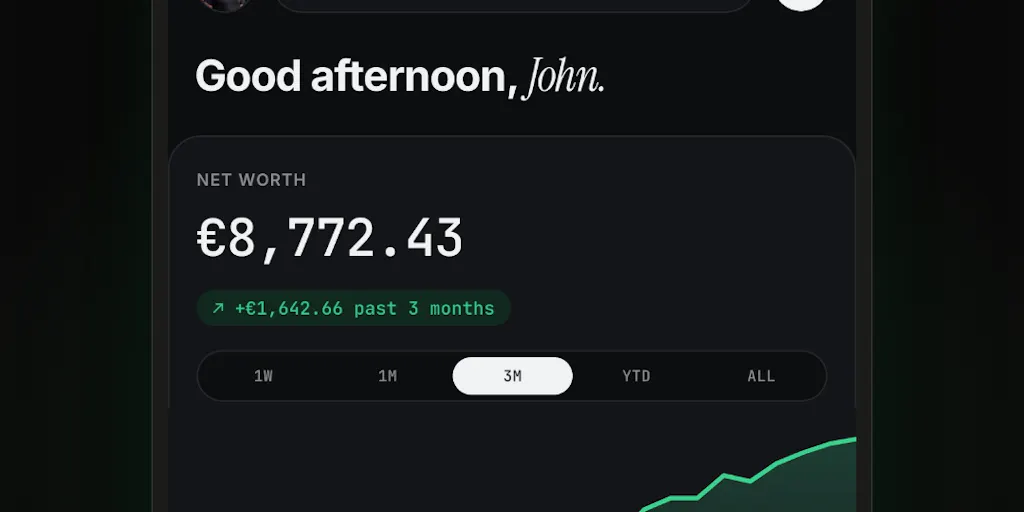
Talvo’s core value proposition is to connect directly via Open Banking (PSD2) to automatically sync and categorize transactions in real-time. The “Zero Friction” pillar is the killer feature here. In our world, “zero friction” would mean a tool that automatically pulls your Shopify payouts, your Amazon settlement reports, and your ad platform invoices into a single, coherent ledger without you having to map fields every single time. The problem Talvo solves is the drudgery of financial hygiene. For a solo DTC operator or a small FBA brand owner, this drudgery is the tax we pay for not being able to afford a full-time CFO. We spend hours on the weekend categorizing transactions instead of optimizing our ad spend or tweaking our product listings. Talvo’s approach—prioritizing the automatic sync and categorization—is the right instinct. It validates that the market is tired of “manual accounts” and wants a system that does the heavy lifting of data ingestion.
How Talvo Differs from the Heavyweights (and Why That Matters to Us)
When you look at financial tooling, you typically look at incumbents like QuickBooks or Xero. These are powerful, but they are also heavy. They require significant setup, they have a learning curve, and they often feel like they were designed for a traditional brick-and-mortar business, not a digital-first operation selling across borders. Talvo’s pitch is that it’s the opposite—it’s lightweight, fast, and designed for the modern user who expects things to “just work.” This is a direct challenge to the “bloatware” approach of legacy accounting software.
The key differentiator here is the focus on privacy and speed. The founder emphasizes a “Privacy First & Lightning Fast” design. For us, this translates into a tool that doesn’t try to be everything to everyone. It’s not trying to do payroll or manage inventory SKUs. It’s singularly focused on giving you a clear, real-time view of your cash position. This is a valuable lesson for e-commerce operators: we don’t need more features; we need better visibility. We need a “glass pane” into our bank accounts and payment processor balances. Talvo strips away the complexity of a full ERP and focuses on the core need—knowing where your money is and where it went.
Why Amazon Sellers Should Care More Than Shopify Ones
If you’re a Shopify seller, your financial data is relatively clean. You get a payout, you see the fees, and your sales data is easily exportable. But Amazon FBA is a different beast. The settlement reports are notoriously complex, with a dizzying array of fees, deductions, and reimbursements. You have to reconcile the “Total” on the settlement report with your actual bank deposit, and any discrepancy is a nightmare to track down. Talvo’s philosophy of “smart analytics” is desperately needed here. A tool that could automatically categorize the “FBA Fulfillment Fees” and “Referral Fees” from a settlement report into a clear expense category would save sellers hours of work. While Talvo doesn’t integrate with Amazon directly, its approach to handling messy financial data via aggregation is the blueprint for what we need. The manual account feature, where you can add a starting balance and transactions, is a nod to the reality that not everything lives in a clean API.
What Cross-Border Sellers Can Borrow: The “Manual Account” and “Backfill” Logic
The most interesting part of the launch page isn’t the slick UI or the GDPR compliance talk. It’s the response to a commenter who asks about accounts that live outside the PSD2 world—specifically savings and broker accounts. The founder admits that non-PSD2 accounts are cumbersome to track and offers a “manual account” option with a starting balance and the ability to add transactions. He also mentions working on CSV import functionality. This is a pragmatic acknowledgment that no aggregator is perfect.
This is the exact reality we face with multi-currency banking and payment gateways. Your PayPal balance might not sync perfectly with your accounting software. Your Payoneer account might be a walled garden. The lesson here is the “backfill” logic. The founder notes that if you miss the re-authentication window, you can authenticate later and the transactions will backfill. This is a critical feature for us. We need tools that allow for retroactive data correction without breaking the integrity of the ledger. We need systems that say, “Hey, we missed a few days of data, but here’s the complete history once we reconnect.” Too often, e-commerce tools fail on this front—they either duplicate data or create gaps that you have to manually fix. Talvo’s approach—keep the transactions, backfill the missing period—is the correct mental model for any financial tool.
Where the Math Breaks: The 90-Day Consent Cycle and the GDPR Question
Now, let’s get to the judgment calls. The founder’s response to the 90-day PSD2 consent expiration is honest but revealing. He states that a background refresh is impossible due to regulation and that Talvo will show a popup warning you to re-authenticate 7 days before expiration. This is a massive friction point. The “Zero Friction” promise is immediately undermined by the regulatory reality of the EU. For a cross-border seller, this is a cautionary tale. If you are building or buying tools that rely on third-party data aggregation, you are at the mercy of those third-party APIs and regulations. The promise of “real-time” is often a lie when the underlying infrastructure requires manual re-consent every quarter.
This is where the math breaks for scaling. If you have 10 different bank accounts and payment processors across the US, EU, and Asia, you are now dealing with 10 different re-authentication cycles. The “popup warning” is just another notification you’ll ignore until your data stops syncing. The founder’s suggestion of CSV import as a fallback is a workaround, not a solution. It signals that the “seamless” experience is only as good as the bank’s willingness to play ball with open banking standards.
Where the Math Breaks: The GDPR Compliance Rabbit Hole
The comment section also highlights a critical issue for any SaaS founder and any e-commerce operator using these tools: trust. One commenter, Metin, immediately questions GDPR compliance without company data and a real person behind the legals. The founder’s response is thorough—mentioning European servers, DPAs, and a DPIA—but it’s reactive. For us, this is a reminder that when we choose our tooling stack, we are not just buying a feature set; we are buying the vendor’s compliance posture. If a tool handles our financial data, we need to know they are proactive about GDPR, not just responding to a Product Hunt comment. The fact that the founder admits, “I’ll update the legals with my company details,” is a slight red flag. It suggests that the legal foundation wasn’t fully baked before the launch. As operators, we should demand that our critical financial tools have their legal house in order before we trust them with our data.
What I’d Watch / Test Next
So, what’s the takeaway for you this week? First, don’t ignore the “boring” tools. Talvo’s focus on speed and privacy is a reminder that you should audit your own financial dashboard. Is it fast? Is it private? Or is it a clunky, slow, cloud-based spreadsheet that you dread opening?
Here are three concrete steps to test this week:
Audit Your Data Sources: List every single financial data source you have: Amazon, Shopify, TikTok Shop, PayPal, Payoneer, your corporate credit card, and your bank accounts. Identify which ones have true API integrations with your accounting software and which ones require manual CSV uploads. The ones requiring manual uploads are your “non-PSD2 accounts”—treat them as friction points and look for tools that can automate them.
Test the “Backfill” Logic on Your Current Stack: If you use a tool like A2X or LinkMyBooks to sync your Shopify payouts to QuickBooks, deliberately disconnect it for a day and reconnect it. Does it backfill the missing day without creating duplicates? If it doesn’t, that’s a problem you need to solve now, before a real outage happens.
Check the Legals on Your Tools: Go to the footer of your favorite SaaS tools and look for their privacy policy and terms of service. Is there a named company behind it? Is there a clear data processing agreement? If you can’t easily find who is responsible for the data, that’s a risk you are carrying. The Talvo launch thread shows that even a well-intentioned tool can stumble on this. Don’t let that be you with your core financial infrastructure.
The core lesson isn’t to run out and buy a Belgian budgeting app. It’s to recognize that the pain points Talvo addresses—manual categorization, lack of real-time sync, and poor user experience—are the exact pain points that are eating your margins. If we can borrow their obsession with “zero friction” and apply it to our own financial workflows, we’ll spend less time wrestling with spreadsheets and more time scaling our brands.