Why a Radiation-Survey Robot Belongs in Your E-Commerce Playbook
Every cross-border seller I know is chasing the same three numbers: conversion rate, return rate, and gross margin. We obsess over landing page speed, A/B test our product images, and renegotiate freight rates until our logistics partners stop answering emails. But here’s the uncomfortable truth: the biggest cost line on most of our P&Ls isn’t advertising or shipping — it’s labor. Not warehouse labor, though that’s painful. I mean the labor embedded in every manual, repetitive, error-prone process that scales linearly with revenue. The customer service rep re-typing the same refund request. The VA re-uploading inventory files. The operations manager walking the warehouse with a clipboard counting units. When I see a robotics company pitch its product around eliminating exactly that kind of work — even in nuclear facilities — I don’t see a niche industrial tool. I see a mirror held up to every DTC brand and Amazon FBA operation that’s still running on manual processes. The specific product is Framer AI Agents, and the company is Salem Robotics. But the lesson is bigger than any single launch.
The Real Problem: Manual Work Is a Silent Tax on Scale
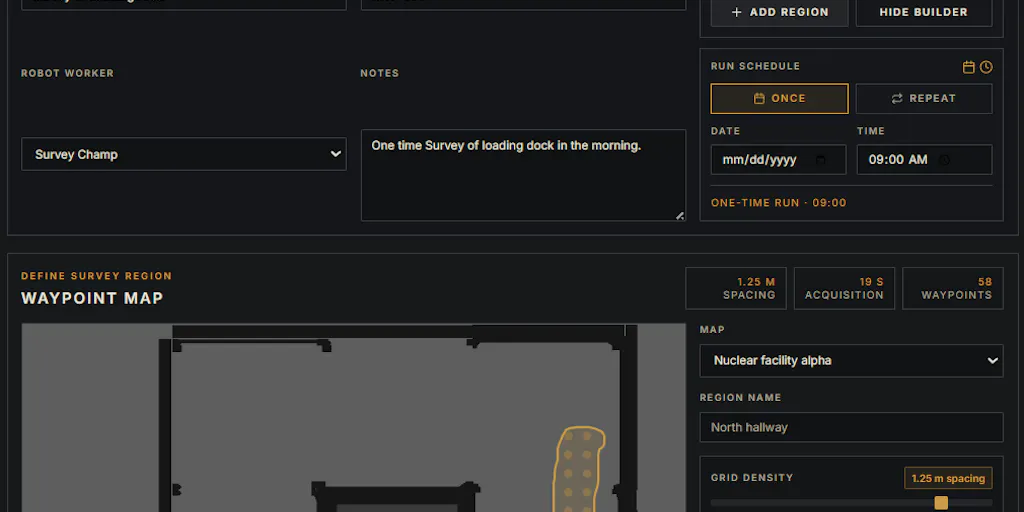
Let me start with what the launch page actually says, because the founder’s story is genuinely compelling. Janak Panthi, the co-founder of Salem Robotics, came out of Los Alamos National Laboratory, where he was deploying robots in nuclear facilities. His team noticed something absurd: radiation surveys are still performed the way they were decades ago. Technicians walk predetermined routes with handheld detectors and clipboards, then manually transcribe their readings into digital systems later. This process is slow, expensive, error-prone, and — most critically — it exposes human beings to unnecessary risk. When they started talking to customers in commercial nuclear, oil & gas, chemical manufacturing, and other industrial sectors, they found the same story everywhere: critical inspections and surveys remain stubbornly manual.
That’s the pitch, and it’s a good one. But strip away the nuclear context and what you have is a universal business problem: the cost of manual data collection and transcription scales with your headcount, not your output. Every time you add a new warehouse, a new sales channel, or a new product line, you don’t just add revenue — you add the same manual processes, repeated by new people, making the same errors. For a cross-border seller, this shows up in a thousand small ways. Your 3PL sends you a spreadsheet with inventory counts that don’t match your Amazon Seller Central dashboard. Your customer service team manually copies tracking numbers from ShipStation into a shared Google Doc. Your bookkeeper re-enters Stripe payouts into QuickBooks at the end of every month. None of this is “wrong” — it’s just how business has always been done. But it’s a tax that gets heavier as you scale, and it’s the reason so many seven-figure brands hit a wall at eight figures.
What Salem Robotics is proposing for industrial inspections — send a robot to do the repetitive, dangerous work, and free skilled humans for high-value decisions — is exactly the mental model e-commerce operators need to adopt for their own operations. The question isn’t whether you should buy a robot. The question is: where in your operation are you still walking a survey route with a clipboard?
How Framer AI Agents Actually Works (and Why It’s Not Just Another Page Builder)
Now, about the product itself. Framer AI Agents is, at face value, an AI-powered site builder. The tagline is simple: design and publish professional sites with AI. That puts it in direct competition with a crowded field that includes Wix, Squarespace, and of course Shopify’s own theme system, not to mention the newer wave of AI site builders from Webflow and others. But the way Salem Robotics frames its product — and the underlying philosophy — is what caught my attention.
The Product Hunt listing positions Framer AI Agents as a natural extension of Framer’s existing design tool. Framer has always been the “designer’s website builder” — the tool that lets you create pixel-perfect, custom sites without writing code. The AI Agents feature takes that a step further: instead of designing a site yourself, you describe what you want, and the AI generates a professional layout, complete with copy, imagery, and structure. For a cross-border seller, this has obvious appeal for landing pages, product launch pages, and even full storefronts that need to look premium without a six-figure design budget.
But here’s where I want to push back on the obvious comparison. Framer AI Agents is not trying to be Shopify. It’s not a commerce platform with cart, checkout, and payment processing built in. What it’s actually competing with is the front-end design layer — the part of your business that determines whether a visitor trusts you enough to click “Add to Cart” in the first place. For sellers who are already on Amazon Seller Central or Etsy, the storefront is largely predetermined by the marketplace. But for anyone running a DTC brand on Shopify, or even a brand-building page that links out to Amazon listings, the landing page is your first impression. And first impressions are expensive to get wrong.
The deeper point is that Framer AI Agents represents a shift in how we think about website production. Instead of hiring a designer, waiting two weeks for mockups, then going through three rounds of revisions, you can generate a site in minutes. The quality won’t match a top-tier agency, but it will be dramatically better than a generic template — and it will be fast. For a cross-border seller launching in a new market, speed matters more than perfection. You can test a landing page for a German audience or a Japanese audience in an afternoon, see if it converts, and iterate. That’s a capability that simply didn’t exist even eighteen months ago.
Why Amazon Sellers Should Care More Than Shopify Ones
Here’s a counterintuitive take: I think Framer AI Agents is actually more relevant to Amazon FBA sellers than to Shopify store owners. That sounds backwards — Shopify sellers are the ones who directly control their storefronts, after all. But consider the typical Amazon seller’s workflow. Your product listings are locked into Amazon’s template. Your brand store is constrained by Amazon’s design system. The one place you have complete creative freedom is off-Amazon — the brand site, the landing pages, the lookbook, the “About Us” page that links out to your listings. For years, Amazon sellers have neglected this asset because building a custom site felt like a distraction from the core business. Framer AI Agents lowers the barrier enough that you can spin up a professional brand presence in an afternoon, point your Amazon traffic to it, and build a relationship with customers that Amazon’s marketplace walls don’t allow. That’s not a nice-to-have; it’s a competitive advantage in a marketplace where Helium 10 data shows the vast majority of buyers never scroll past the first page of results.
What Cross-Border Sellers Can Borrow From the Salem Robotics Playbook
Now let me get to the part that’s actually actionable for your business this week. The Salem Robotics launch isn’t just about their product — it’s about their approach to identifying problems. They didn’t start with a robot and look for a use case. They started with a manual process they’d observed in the field, quantified the cost and risk, and then built a solution. That’s the exact opposite of how most e-commerce operators approach tooling. We buy a new SaaS product because a competitor mentioned it in a YouTube video, or because it shows up in our ads, and then we try to find a use for it. The Salem Robotics method is: find the pain first, then shop for the solution.
So here’s the exercise I want you to run this week. Take a piece of paper and write down every task in your business that you, or your team, do more than three times a week. Not the strategic stuff — the repetitive stuff. The inventory reconciliation. The customer service macros. The social media scheduling. The review monitoring across Amazon, eBay, and TikTok Shop. For each one, ask two questions: How much time does it take? And how much does a single error cost you? The second question is the one most sellers skip. A typo in a tracking number costs you a customer service ticket. A mis-entered inventory count costs you a stockout or oversell. A delayed response to a negative review costs you the sale. When you actually put dollar figures on these errors, the case for automation becomes obvious — not because you’re lazy, but because you’re leaving money on the table.
The second lesson from Salem Robotics is about freeing skilled workers for high-value decisions. In their case, that means letting robots handle radiation surveys so human technicians can focus on analysis and judgment. In your case, it means automating the tedious parts of your operation so your best people can focus on product development, supplier negotiation, and creative strategy. I’ve seen too many seven-figure brands where the founder is still personally answering every customer email and packing every order. That’s not dedication — that’s a failure to delegate. And the tools to fix it are already in your stack. Klaviyo can automate your email flows. Zapier can connect your CRM to your fulfillment system. And now, Framer AI Agents can automate the design and publishing of your landing pages. The question is whether you’ll adopt the mindset.
Where the Math Breaks
Let me be honest about the limits here, because every tool has them. Framer AI Agents is not going to replace a professional designer for complex, brand-defining work. If you’re launching a premium skincare line that needs to convey clinical credibility, a generated site isn’t going to cut it — you need a human who understands typography, whitespace, and the subtle semiotics of trust. Similarly, Salem Robotics isn’t going to replace human inspectors for judgment calls that require nuanced interpretation. The AI and the robots are good at the routine parts. The edge cases still need humans. The same is true for e-commerce automation. Your email flows can handle 90% of customer inquiries, but the 10% that are genuinely complex — a damaged shipment, a customs delay, a product that failed in a way you’ve never seen — still need a human with empathy and authority. The mistake is to assume that automation is all-or-nothing. It’s not. It’s a spectrum, and the smart operator deploys it where the ROI is highest and the risk of failure is lowest.
Where I Think Framer AI Agents Falls Short (and What to Watch)
Now for my judgment call. Framer AI Agents is a promising product, but it’s not a complete solution for cross-border sellers, and I’d be doing you a disservice if I pretended otherwise. Here are the gaps I see:
Localization is still an afterthought. Generating a landing page in English is one thing. Generating a page that feels native in German, Japanese, or Portuguese — with culturally appropriate imagery, tone, and even color psychology — is another. Framer AI Agents will get you a translation, but translation is not localization. For cross-border sellers, this is a critical distinction. A landing page that reads like it was machine-translated will kill your conversion rate faster than a slow load time. Until the AI understands cultural nuance, you’ll still need a human reviewer in the loop for every non-English market.
E-commerce integration is thin. The launch page doesn’t mention native integration with Shopify, WooCommerce, or any other commerce backend. That means you’ll likely need to export your design and stitch it together with your existing storefront or use a third-party tool to embed your product catalog. For a quick landing page, that’s fine. For a full storefront, it’s a dealbreaker. I’d want to see deeper integration before I’d recommend it as a primary site builder for a serious DTC operation.
The “professional” bar is ambiguous. What does “professional” mean to the AI? It probably means clean, modern, and conversion-focused in a generic sense. It does not mean on-brand, unique, or differentiated. In a market where every competitor is using the same AI tools, there’s a real risk of homogenization — every skincare brand, every supplement brand, every gadget brand looking like they were designed by the same algorithm. That’s a race to the bottom, and it’s the opposite of what DTC brands need. Differentiation is the whole point of going direct.
No mention of pricing or scalability. The Product Hunt page doesn’t disclose pricing tiers or usage limits. For a serious seller, that’s a red flag. If the tool is cheap, it’s probably not going to handle high traffic or complex needs. If it’s expensive, you need to know whether the ROI math works. I’d want to see transparent pricing and a clear sense of what you get at each tier before committing.
That said, the trajectory is right. The fact that a robotics company is launching an AI site builder tells me that the founders understand something important: the same logic that applies to physical automation applies to digital automation. If you can automate the dangerous, repetitive, and expensive parts of your business, you win. Whether that’s a robot walking a radiation survey or an AI generating your next landing page, the principle is identical. I’m watching Framer AI Agents not because I think it’s the final answer, but because it’s a signal of where the industry is heading — and cross-border sellers who ignore that signal do so at their own peril.
What I’d Watch / Test Next
If you’re a cross-border operator reading this, here’s what I’d actually do this week, not next quarter.
First, run a pilot with Framer AI Agents on a low-stakes page. Don’t redesign your entire storefront. Pick one product launch page or one market-specific landing page — say, a German version of your best-selling product’s page — and generate it with the AI. Put it live for two weeks, drive a small amount of traffic to it, and compare the conversion rate against your existing page. The data will tell you more than any review I could write.
Second, audit your manual processes using the Salem Robotics framework. Write down the top five repetitive tasks in your operation, estimate the time and error cost of each, and identify one that you can automate this month. It doesn’t have to be fancy — a Zapier workflow that moves new orders from PayPal into your fulfillment system counts. The goal is to build the muscle of asking “what’s the most expensive manual task here?” before you buy any new tool.
Third, watch how Framer AI Agents evolves over the next two quarters. If they add e-commerce integrations and localization features, this becomes a much more serious tool for cross-border sellers. If they stay as a landing-page generator, it’s still useful, but it’s not a strategic investment. Either way, you’ll have learned something about how the market is moving.
And finally, keep an eye on the broader trend of robotics companies moving into software. Salem Robotics is a hardware company that built an AI agent. That’s a strange pivot on the surface, but it’s actually a sign of maturity — they’re realizing that the value isn’t in the robot itself, but in the automation of the entire workflow. The same is true for e-commerce. Your value isn’t in your product or your ads; it’s in the end-to-end system you’ve built to get that product into the hands of customers around the world. The sooner you treat every manual step as a candidate for automation, the sooner you’ll build a business that scales without scaling your headcount. That’s the real lesson from a radiation-survey robot launched on Product Hunt. Take it to your warehouse, your P&L, and your next landing page.