The Real Story Behind This Launch Isn’t the Agent — It’s the Approval Card
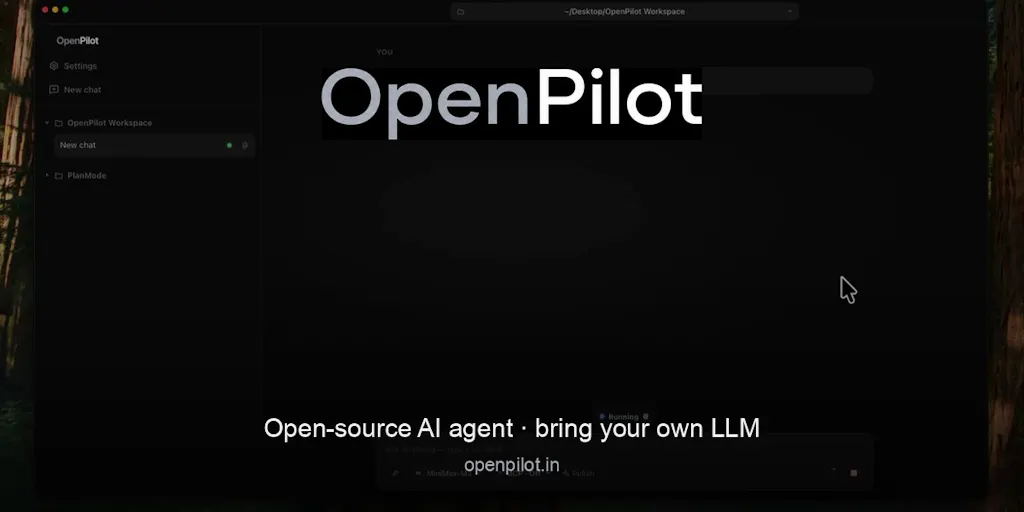
Every few months a Product Hunt launch lands in my feed that has nothing to do with cross-border e-commerce on the surface, and yet I end up sending it to a dozen operators anyway. OpenPilot is one of those. On paper, it’s a solo developer’s open-source take on the Cursor-style coding agent — paste a base URL, a key, and a model name, pick a folder, describe a task, and watch it read files and run commands. Nothing about that screams “Amazon FBA.” But the architecture underneath it — bring-your-own-model, every tool call rendered as an inspectable card, sensitive actions gated behind human approval — is exactly the shape of tooling that marketplace operators are going to need over the next 18 months. The interesting part isn’t that it codes. It’s how it handles the moment an autonomous system wants to touch something you care about.
What OpenPilot Actually Is, and Why the Model-Agnostic Part Matters
The maker, Ibrahim, is explicit that this is not related to comma.ai’s openpilot despite the name collision — a branding decision I’d have pushed back on, but we’ll get to that. What he built is an agent that operates on a folder you choose, not an editor or an IDE. You configure it by pasting a base URL, an API key, and a model name, and it works with OpenAI, OpenRouter, or a local Ollama or LM Studio server.
That last clause is the one cross-border sellers should underline. The default posture of most agentic tooling in 2024 and 2025 has been “trust our cloud, send us your data, pay per seat.” OpenPilot inverts it: you can run the whole thing against a model on your own hardware, which means your supplier contracts, your margin spreadsheets, your Amazon Seller Central export files, and your Shopify order dumps never leave your machine. For a DTC brand doing $2M–$20M a year, that’s not a philosophical preference. It’s a compliance posture.
The feature set as described is deliberately narrow: tool calls rendered as cards, approval gates on sensitive actions, “skills,” MCP server support, and per-model token usage tracking. No editor. No IDE. No opinion about your stack. That restraint is the product.
Why Amazon sellers should care more than Shopify ones
Here’s my read: Shopify operators already live in a world of clean APIs, webhooks, and a mature app ecosystem. If you want an agent to reconcile inventory across your storefront and your 3PL, you have Klaviyo flows, Shopify Flow, and a dozen middleware layers to glue it together. The pain is real but the surface area is friendly.
Amazon is the opposite. Seller Central is a hostile interface by design. Bulk operations live behind flat-file uploads. Helium 10 and Jungle Scout give you dashboards, not programmatic control. TikTok Shop seller tooling is younger still, and Temu and SHEIN give third-party sellers almost nothing in the way of automation hooks. A folder-scoped agent that can read a CSV you exported, cross-reference it against a supplier list, and propose edits — with every step visible — is worth more to an Amazon operator than to a Shopify one, because the Amazon operator has fewer legitimate alternatives.
The Approval Card Is the Feature, Not the Wrapper
Let me be blunt about why I’m writing about this at all. The genuinely interesting design decision in OpenPilot is not the model-agnosticism, and it’s not the open-source license. It’s that every tool call shows up as a card, and sensitive actions wait for approval.
If you’ve spent any time with autonomous agents — whether that’s Cursor, Devin, or the various “AI employee” startups pitching DTC brands — you know the failure mode. The agent does something reasonable for 40 steps and then does something catastrophic on step 41, and you find out three days later when your ad spend is gone or your listing is de-indexed. The industry’s answer so far has been “trust us, we have guardrails.” OpenPilot’s answer is “here’s the trail, approve the dangerous bits.”
That’s a UX pattern, but it’s also a governance pattern, and cross-border operators are going to need it. Think about the workflows you’d actually want an agent to touch:
- Reconciling a TikTok Shop payout report against your internal ledger
- Drafting Etsy listing copy from a product spec sheet
- Pulling eBay sold-item data into a repricing model
- Cross-checking FBA inbound shipments against supplier packing lists
- Auditing your Klaviyo segments for overlap before a Black Friday send
Every one of those involves reading files you’d rather not upload to a third party, and every one of them has a step where a bad write is expensive. The card-and-approval model is exactly right for that shape of work. I’d argue it’s the single most transferable idea in this launch, more than the agent itself.
Where the math breaks
Now the honest part. The maker says it himself in the thread: small local models handle simple tasks but struggle with long multi-step work. When pressed on whether there’s a signal that tells you the model has crossed that line, the answer is no — you spot it by watching the tool-call cards for repeats, re-reads, and drift.
That’s a real gap, and it’s the gap that will kill adoption among operators who don’t have time to babysit a diff review. The commenter Gal Dayan put it well: a built-in “this model is probably too small for this task” warning would be genuinely useful. Ibrahim agreed and said it’s on the list. Until it ships, the practical advice is: run OpenPilot against a frontier model for anything multi-step, and treat local models as a fallback for single-shot tasks like “extract these 200 SKUs into a clean CSV.”
What Cross-Border Sellers Can Borrow From This Launch
I want to separate two things: using OpenPilot, and learning from how it’s built. The second is more valuable.
Bring-your-own-model is going to become table stakes. Every SaaS tool in the e-commerce stack — from Gorgias to Loop Returns to whatever repricing tool you’re using — is currently racing to embed AI. Most of them are doing it by routing your data through their own inference endpoints with opaque pricing. The operators I talk to are already pushing back. The ones with any volume are asking: can I point this at my own Azure OpenAI deployment? Can I run it against a model on my own infra? OpenPilot is a reminder that “paste a base URL and a key” is a completely reasonable configuration surface, and any vendor that won’t offer it is going to lose deals to one that will.
Per-model token usage tracking is a sleeper feature. If you’ve ever tried to attribute AI costs across a marketing team, a support team, and an ops team, you know the pain. OpenPilot exposes per-model token usage, which sounds boring until you’re trying to figure out whether your TikTok Shop listing generator or your Amazon review-summarizer is eating your budget. Build this into your internal tooling. Track it. You’ll thank yourself in Q4.
Local-first is a moat for the paranoid. The EU’s data rules, various state privacy laws, and the simple reality that your supplier contracts are commercially sensitive all point the same direction. If you can run a useful agent without your data leaving the building, you should. Not every workflow needs it. The ones that do — pricing, supplier terms, customer PII — really do.
The honest limitations
I’d be a bad industry observer if I didn’t flag the obvious.
First, the platform support is thin. Windows works well, macOS is an unsigned beta, and there’s no Linux build at all. That last one matters more than it sounds, because a lot of serious e-commerce ops teams run their internal tooling on Linux boxes or in containers. If you’re one of those teams, you’re waiting.
Second, and this is the one that would actually stop me from deploying it, anonymous usage stats are on by default. The maker is clear that no chats, files, or keys are collected, and that it can be turned off in Settings. That’s a defensible default for a hobby project. It is not a defensible default for a tool that a brand owner is going to point at their supplier contracts. I’d want to see that flipped to opt-in before I’d recommend it to anyone with real commercial exposure. To be fair to Ibrahim, he’s transparent about it, which is more than most launches manage.
Third, the name. There’s already a well-known openpilot from comma.ai. Ibrahim acknowledges this explicitly in the launch. It’s still a discoverability problem, and for a tool that’s trying to build trust with cautious operators, a name that requires a disclaimer in the first sentence of the pitch is working against itself.
Fourth, distribution. The Windows installer is a direct download from GitHub with no account required, which is great for adoption but means there’s no telemetry loop to tell the maker what’s breaking. He’s explicitly asking for feedback on which models to test and what breaks on install. If you try it, tell him. That’s how solo-dev tools get better.
Why this matters for the tooling stack conversation
I’ve been writing for a while that the cross-border tooling stack is bifurcating. On one side: fully managed, opinionated, expensive platforms — the Shopify Plus + Klaviyo + NetSuite stack, or the Amazon + Helium 10 + Jungle Scout stack. On the other: a growing layer of bring-your-own-model, folder-scoped, inspectable agents that do one job and don’t ask for your soul.
OpenPilot sits squarely in the second camp. It’s early, it’s Windows-first, it’s one developer. But the design vocabulary it’s using — approval cards, per-model token accounting, local model support, skills and MCP servers as extension points — is the vocabulary the next generation of e-commerce ops tooling is going to be built on. If you’re a brand owner planning your 2026 stack, you should be fluent in it. If you’re a SaaS founder building for this audience, you should be stealing from it.
What I’d Watch / Test Next
Three concrete things I’d do this week.
One: install it and point it at a low-stakes folder. Take an export from Amazon Seller Central — a search-term report, a settlement file, whatever you’ve got — drop it in a folder, and ask OpenPilot to summarize it. Configure it against OpenAI first, not a local model, so you see what the tool can do before you see what your hardware can’t. Watch the tool-call cards. Decide for yourself whether the approval flow feels like friction or like control.
Two: audit your current AI vendors for data egress. For every tool in your stack that touches customer data, supplier data, or pricing, ask one question: where does the inference happen, and can I point it at my own endpoint? If the answer is “our cloud, no,” put it on a list. That list is your 2026 migration roadmap.
Three: steal the approval-card pattern for your internal workflows. Even if you never install OpenPilot, the pattern is worth copying. Any automation that writes to a live system — repricing, listing edits, ad budget changes — should surface a reviewable trail and gate the destructive actions. Build that into your internal tooling before your next peak season, not after.
The agent itself is early and imperfect. The pattern is not. That’s the part worth your attention.