The GEO land grab is the next channel shift — and most DTC brands are still asleep at the wheel
Every few years the ground shifts under cross-border e-commerce and most sellers only notice after the traffic curve has already bent. Google Shopping decimated price-comparison sites. iOS 14.5 gutted Facebook attribution overnight. TikTok Shop turned short-form video into a checkout funnel. Now the quiet one is happening inside ChatGPT, Claude, Gemini, Perplexity, and Grok: buyers are asking an AI which product to buy, and the AI is naming two or three brands and moving on. If your Shopify store or Amazon ASIN isn’t in that short list, you don’t lose the click — you lose the customer before a click ever existed. That’s the problem Notra is chasing with its new GEO product, and it’s worth an operator’s attention even if the tool itself is built for a different customer than you.
What Notra actually solves, and why the framing matters
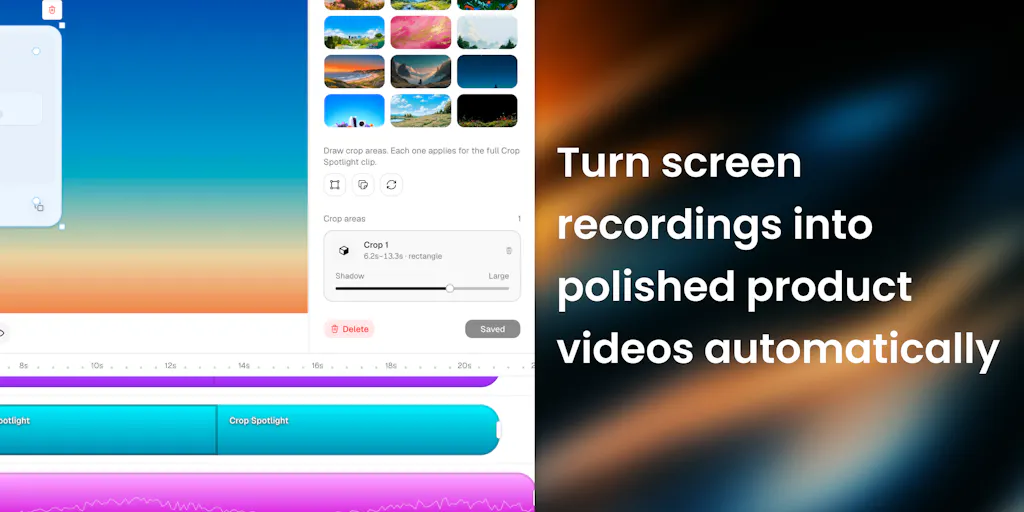
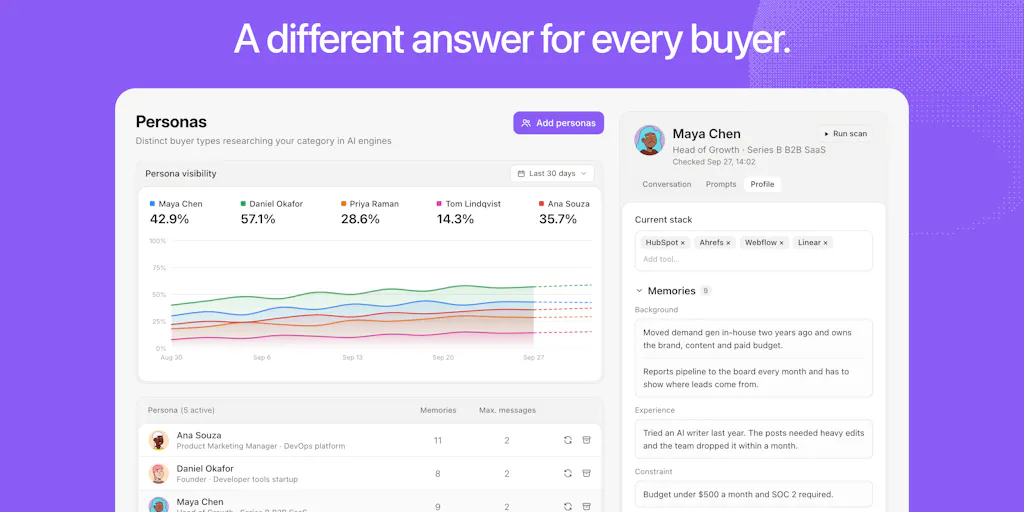
Let me be precise about what this is. Notra is a content tool from maker Dominik Koch and team that previously built its reputation on turning merged pull requests into publish-ready marketing content — changelogs, posts, visuals. The new launch, Notra GEO, extends that into generative engine optimization: it asks the major AI engines the questions your customers would ask, shows you which competitors get named instead of you, follows the conversation through follow-up questions the way a real buyer would, surfaces the questions and cited sites where you’re missing, and then drafts articles to close those gaps in your brand voice.
The “follow-up questions” detail is the sharpest part of the design, and a commenter named Oleksii Sekundant nailed why: “Getting mentioned once doesn’t tell you whether you’re still in the conversation two questions later.” That’s exactly right, and it’s a distinction most SEO-era thinking misses. A buyer doesn’t ask “best wireless earbuds under $100” and stop. They ask, then ask “which of those has the best battery life,” then “which ships to Germany,” then “is the warranty any good.” Each of those turns is a separate chance to fall out of the recommendation set. Notra models the whole arc rather than a single snapshot, which is closer to how purchase decisions actually get made.
There’s also a free tier worth noting: AI Crawl Analytics, which shows which pages AI bots actually read on your site, is free for up to 1 million events a month. For a mid-size DTC site, that’s a genuinely useful piece of instrumentation at zero cost, and it’s the kind of thing I’d tell any operator to switch on this week regardless of whether you ever pay for the rest.
Why Amazon sellers should care more than Shopify ones
Here’s my contrarian take: the sellers who should be most worried about GEO are not the DTC Shopify crowd — they’re the Amazon FBA brand owners. Amazon has spent two decades training buyers to start product research with a query, not a brand. Those buyers are now increasingly starting that query in ChatGPT instead of Amazon search. When they do, the AI doesn’t show them a search results page with twenty options and sponsored placements; it names two or three products. If your ASIN isn’t one of them, you’ve lost the sale to a competitor who may not even be a better product — just better represented in the training data and cited sources the model leans on.
Shopify operators have more surface area to defend: their own domain, their blog, their reviews, their press. Amazon sellers have almost none of that — their product pages are Amazon’s property, and Amazon is not going to optimize your listing for ChatGPT’s citation preferences. That asymmetry is the whole ballgame. If you sell on Amazon Seller Central and nowhere else, you are structurally exposed to this shift in a way a DTC brand with a real content moat is not.
How it differs from the incumbent GEO tools
The obvious question in the comment thread came from Nitin Vinay, who asked how Notra differs from Profound and Scribble. The maker’s answer was to point at a published comparison page rather than argue in the thread, which is a reasonable move but doesn’t tell you much as a buyer. So let me draw the lines I’d draw.
Profound and Scribble are both in the AI-visibility monitoring space — they track brand mentions across AI engines, surface citation gaps, and give you dashboards. Notra’s differentiator, as pitched, is that it doesn’t stop at diagnosis: it writes the articles to close the gaps. That’s a meaningfully different product posture. Monitoring tools tell you you’re invisible; Notra tries to make you visible. Whether the writing is good enough to actually move AI answers is the open question, and the maker is honest that you should review before publishing — “You have to and should review content first, we do have auto publish features though!” — which is the right answer but also an admission that the output isn’t fire-and-forget.
The comparison I’d add that nobody in the thread raised: this is functionally a content marketing tool with an AI-visibility measurement layer bolted on. The closest analog in the e-commerce stack isn’t Profound — it’s the combination of a content brief tool like Frase plus a rank tracker, except the “SERP” being tracked is a language model’s answer rather than Google’s ten blue links. That framing matters because it tells you what to expect: the measurement will be directional, not precise, and the content output will need editing.
Where the math breaks
The maker’s own answer to a question about whether you can know what people actually prompt is refreshingly honest: “You can never know for sure if what you are checking is actually what people are prompting for, you try, check and repeat to make educated guesses.” That’s the crack in the foundation, and it’s a big one for cross-border sellers.
Google gives you Keyword Planner with real search volumes. Amazon gives you search term reports with actual query data. AI engines give you nothing — no query logs, no volume estimates, no impression counts. Every GEO tool on the market, Notra included, is guessing at the prompt distribution. For a US-only DTC brand selling a well-understood category, educated guesses might be fine. For a cross-border seller dealing with multilingual queries, regional phrasing differences, and category-specific jargon across five markets, the guesswork compounds fast. A German buyer asking about “Kopfhörer mit Noise Cancelling” and a French buyer asking about “écouteurs réduction de bruit” are different prompts with different competitive sets, and no tool I’ve seen handles that localization layer well. Notra’s page doesn’t claim to, and I’d treat multilingual GEO as an unsolved problem for now.
What cross-border sellers can borrow from this, tool or no tool
Even if you never sign up for Notra, the mental model is worth stealing. Here’s how I’d translate it into operator practice this quarter.
Run the buyer-conversation test yourself. Open ChatGPT, Claude, Gemini, Perplexity, and Grok side by side. Ask each one the questions your customers actually ask — not your category keywords, but the messy, multi-turn, comparison-shopping questions. “I’m looking for a [product] for [use case] under [budget], what should I get?” Then follow up three or four times the way a real buyer would. Screenshot everything. You’ll learn more in an hour about your AI visibility than any dashboard will tell you, and you’ll do it for free. The maker’s own pitch is essentially this exercise productized.
Audit what the AI is citing. When the model names a competitor, ask it why. It will often tell you which sources it’s drawing on — review sites, Reddit threads, comparison articles, YouTube transcripts. Those cited sources are your actual GEO targets, and they’re frequently not your own domain. For cross-border sellers, this often means getting onto regional review sites and local-language comparison content that you’ve never thought about. That’s a content and PR play, not a paid media play.
Instrument your AI crawl traffic now. Turn on whatever bot-analytics you have — Notra’s free tier is one option, but Cloudflare bot analytics or your server logs will do — and start watching which pages GPTBot, ClaudeBot, and PerplexityBot actually fetch. If they’re crawling your product pages but not your buying guides, that tells you where to invest. If they’re not crawling you at all, that’s a robots.txt or site-architecture problem worth fixing before you spend a dollar on content.
Treat this as a content discipline, not a channel. The sellers who win GEO will be the ones who already have a real content operation — buying guides, comparison pages, honest reviews, localized FAQ content. If your entire web presence is product pages and Facebook ads, you have nothing for the AI to cite. The good news is that the content you’d write for GEO is largely the content you should have been writing for SEO and email anyway. It’s not a new channel so much as a new reason to do the old work properly.
The Shopify side of the stack
For DTC operators on Shopify, the practical integration question is where GEO content lives. Notra’s earlier launches included a Framer plugin that syncs content automatically, and the changelog automation runs on a schedule — one reviewer, Jan Burzinski, described setting a weekly run that auto-updates his site. That’s the right pattern for a Shopify store too: a scheduled content sync into your blog or a dedicated “guides” collection, reviewed by a human before publish, with the AI-crawl analytics feeding back into what to write next. You don’t need Notra specifically to build that loop, but the loop is the thing to build.
Where my judgment says this falls short
I’ll be blunt about the limits, because the launch page is a launch page and operators deserve the skeptical read.
First, the customer Notra is actually built for is startups and developer tool teams — that’s the maker’s own framing — not cross-border e-commerce. The whole origin story is about turning pull requests into marketing content. That DNA shows. A DTC brand doesn’t have PRs; it has product launches, restocks, seasonal promotions, and influencer drops. The content engine will need heavy reconfiguration to be useful for a seller, and the brand-voice training will need to ingest your product copy, not your codebase.
Second, GEO measurement is inherently unstable. AI models update, retrain, and change their citation behavior on schedules you can’t see. A dashboard that shows you’re visible today may show you invisible next month for reasons that have nothing to do with your content. Any GEO tool is selling you a snapshot of a moving target, and you should price that uncertainty into what you’re willing to pay. Notra’s pricing isn’t disclosed on the page, which makes the value calculation harder — I’d want to see a trial before committing.
Third, the auto-publish feature is a liability for anyone selling regulated categories — supplements, cosmetics, children’s products, anything with compliance language. The maker correctly says review first, but the existence of auto-publish means someone on your team will eventually use it, and AI-generated product claims are a compliance minefield in cross-border selling. My advice: disable auto-publish entirely if you sell anything with regulatory exposure.
Fourth, and this is the structural one — GEO tools optimize for being mentioned, not for being chosen. Getting named in an AI answer is necessary but not sufficient. The AI might mention you as “a budget option” while recommending a competitor as “the best overall.” That’s visibility without conversion. The tooling will get better at tracking sentiment and positioning within answers, but right now the measurement is mostly binary: mentioned or not. Operators need to push these tools toward qualitative tracking, and until they do, treat GEO dashboards as a leading indicator, not a revenue forecast.
What I’d watch / test next
Three concrete things to do this week, in order of effort-to-insight ratio.
First, spend one hour running the five-engine buyer-conversation test on your top three SKUs, in your top two markets, in the local language. Document which competitors get named and which sources get cited. This costs nothing and will tell you more than any tool demo.
Second, turn on AI bot analytics — Notra’s free crawl tier, Cloudflare, or raw server logs — and get a baseline of which pages AI engines actually read on your site. If the answer is “almost none,” your GEO problem is upstream of any content tool.
Third, if you sell on Amazon and nowhere else, start building a brand-owned content surface this quarter — even a simple guides section on a Shopify storefront or a Substack — because Amazon will never optimize your listings for AI citation, and you need a domain the models can actually learn from. Watch Notra’s comparison page and pricing as they mature; the category is real even if this specific tool is still finding its e-commerce footing. The channel shift is happening whether or not you buy a tool for it, and the sellers who start measuring now will have a twelve-month head start on the ones who wait for the dashboard to tell them it’s time.