The Quiet Rebellion Against the Break App: What a Wilting Cactus Teaches Us About Seller Psychology
Every cross-border seller I know has the same relationship with their tools: they start as saviors and end as noise. We onboard the analytics suite, the repricing tool, the inventory forecasting app, and within three weeks we’re ignoring their alerts, muting their notifications, and eventually canceling the subscription with a vague sense of guilt. The problem is rarely the data. The problem is that these tools are built on a flawed psychological model — they assume we want to be corrected, when what we actually want is to be understood. That’s why Mossy caught my attention. It’s a macOS break reminder that doesn’t block your screen, doesn’t nag you, and treats the act of refusing a break as a perfectly normal use case rather than a failure. For anyone running a seven-figure Amazon operation or a DTC brand with a distributed team, this isn’t a wellness app review — it’s a masterclass in product philosophy that the entire seller-tooling industry should be forced to study.
The Tyranny of the Full-Screen Interruption
Let me paint a picture that every operator will recognize. You’re deep in a PPC audit at 11 PM, cross-referencing Helium 10 Cerebro data against your latest Amazon Seller Central report. Your CAC is creeping up, your best-selling ASIN just lost the Buy Box, and you’re finally seeing the pattern. Then — boom — a full-screen notification slams across your monitor. “Time to stretch!” it declares, with a cheerful illustration of a person doing a yoga pose. You click “Remind me later” with the same reflex you use to dismiss a pop-up ad, and the moment is gone. The thread of analysis is severed. The tool that was supposed to help you has become the enemy of your focus.
This is the exact problem Mossy was built to solve, and the maker’s description of the failure mode is more precise than any UX case study I’ve read: “the full screen break lands mid-sentence, you skip it, and a week later it’s gone.” That’s not a bug in a specific app — that’s a systemic flaw in how we design productivity software. The break app industry has been operating on a punishment model for a decade. Time Out, BreakTimer, and a dozen others all assume that if they just make the interruption aggressive enough, you’ll comply. The result is that we’ve all developed what I call “notification blindness” — the ability to dismiss anything that doesn’t directly serve the task at hand.
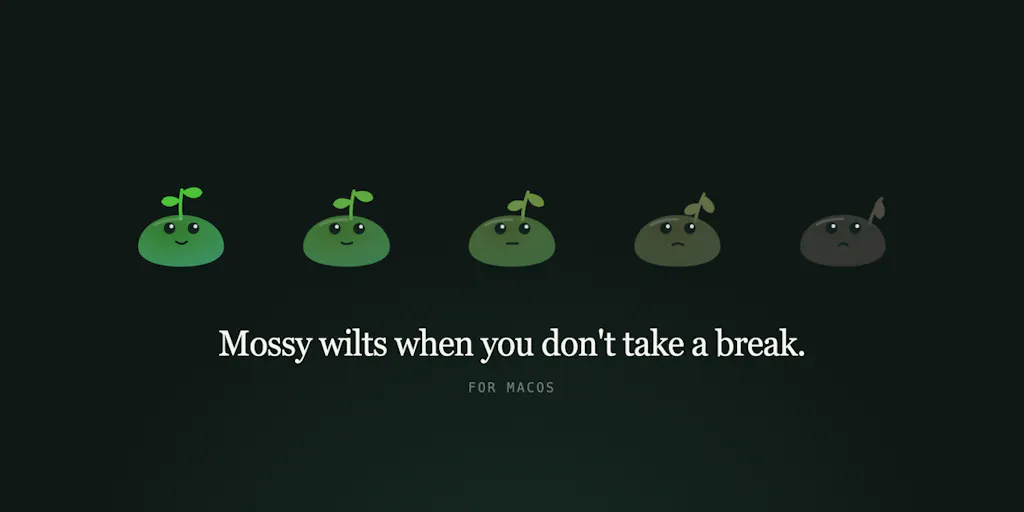
What Mossy does differently is almost insulting in its simplicity. It sits in the corner of your screen as a small cactus. It wilts while you sit. It waits. There’s no modal dialog, no sound, no guilt trip beyond a visual cue. You can refuse the break and keep working, and the app doesn’t treat that as a failure — the maker explicitly says “refusing a break is a normal way to use it.” This is a profound shift from the “correction” model to the “awareness” model. Instead of trying to control your behavior, it simply makes your behavior visible. That’s a distinction that has massive implications for how we should think about every tool in our stack.
Why Amazon sellers should care more than Shopify ones
If you’re running a Shopify store with a small team and a lean product catalog, you can sometimes afford to work in bursts — deep work sessions followed by genuine rest. But Amazon FBA sellers live under a different clock. The Amazon algorithm rewards consistency: consistent listing quality, consistent shipping times, consistent customer service metrics. You can’t pause the marketplace while you take a break. Your inventory is sitting in a fulfillment center somewhere, and if your supplier in Shenzhen misses a shipment window, you’re not just losing a day of sales — you’re losing your ranking momentum. The pressure is relentless, and the temptation to skip breaks, push through pain, and work through physical discomfort is enormous. I’ve seen sellers develop chronic back issues, eye strain, and burnout because they treated their own bodies like they treat their inventory — as resources to be optimized until they’re depleted. A tool that makes you aware of your sitting without forcing you to stop is actually more effective for this audience than any hard-blocking app, because it respects the reality that sometimes you genuinely cannot stop.
The AI Break Generator That Actually Respects You
Here’s where Mossy gets genuinely interesting from a product design perspective. The maker’s backstory is painfully relatable — a developer who sits ten hours a day, has a history of lower back issues, tore his ACL, and has a one-year-old child. His wife is an architect with the same sitting habits. Their bodies need different things. His hips and psoas need work; hers don’t. A fixed stretch list was never going to work for both of them. So they built something I haven’t seen in any competing product: an AI break generator that takes a single sentence of instruction and creates each break from it.
Write “20 push-ups” or “teach me a Spanish word,” and that’s what you get. The privacy architecture here is worth noting — the key for that AI lives on a small relay, not in the app. The only things that leave your Mac are that one call and an anonymous daily ping you can switch off. No account, no tracking. For a tool that’s literally reading your personal instructions about your body and your habits, this is the right call.
Why does this matter for cross-border operators? Because it points to a fundamental truth about personalization that most SaaS tools still miss. Your Klaviyo flows, your Jungle Scout alerts, your inventory forecasting models — they all generate recommendations based on aggregate data. But the best operators know that their business is idiosyncratic. What works for a seller in Austin with a $50K monthly ad budget won’t work for a seller in Manchester with a $5K budget. The tools that win are the ones that let you inject your own context, your own words, your own rules, and then adapt around them. Mossy’s approach — “your words decide what you do, and nothing in the app inspects what you asked for” — is a template for how all productivity software should handle customization. It’s not asking you to fill out a 20-question onboarding form. It’s asking you to write one sentence.
The “Guilt Without Punishment” Design Pattern
There’s a comment on the Product Hunt page that captures the emotional core of this product perfectly: “The flower starts wilting, and suddenly you feel guilty. Much better than just a timer!” That’s a design insight worth unpacking. The wilting cactus creates a sense of ambient accountability — you’re not being told you’re failing, but you’re being shown the consequence of your inaction. It’s the same psychological mechanism that makes a Fitbit step count more motivating than a doctor’s warning. It’s not about fear; it’s about gentle, persistent awareness.
This is a pattern that cross-border sellers could borrow immediately in their own operations. Think about your supplier communication. Instead of waiting for a missed deadline and then sending an angry email, what if you had a visual dashboard that showed your supplier relationships “wilting” when you haven’t checked in on quality metrics for a week? Instead of your TikTok Shop analytics being a passive report you check occasionally, what if your ad account had a visual indicator that slowly degraded as your creative freshness declined? The pattern is universal: make the invisible visible, and let people self-correct rather than forcing them.
The maker’s response to a comment about the Pomodoro technique is also telling. They mention you can set breaks for every 30 minutes, 1 hour, or 2 hours — but they don’t push the feature. They don’t overload the product with presets and configurations. This restraint is rare in a market where every app tries to be a platform. Notion tries to replace your entire workflow, Slack tries to replace email, and Asana tries to replace your brain. Mossy just wants to remind you to stand up occasionally. That focus is a competitive advantage.
Where the math breaks
Let’s be honest about the limitations. Mossy is a free app, which means there’s no sustainable business model here unless the makers pivot to a premium tier. The source doesn’t disclose any pricing plans, future roadmap, or team size beyond “we” — presumably the developer and his architect wife. That’s fine for a passion project, but it raises questions about long-term maintenance. Will the AI relay stay free forever? What happens when the API costs start adding up? For a cross-border seller evaluating tools, this is the same due diligence you’d apply to any SaaS vendor — you need to know whether the product will exist in 18 months. The source doesn’t provide that assurance, and that’s a legitimate concern.
The app is also macOS 12+ only, which means it’s useless for the Windows-based operators who make up a significant chunk of the Amazon seller community. The mobile adaptation suggestion in the comments — using it to warn drowsy drivers — is interesting but speculative, and the maker hasn’t committed to it. The app is 1.4 MB and native Swift, which is technically impressive but also means it’s a lightweight utility, not a comprehensive health platform. If you’re looking for something that integrates with your Apple Watch, tracks your heart rate variability, and gives you a weekly wellness report, this isn’t it.
What Cross-Border Sellers Can Actually Borrow
Forget the app itself for a moment. The deeper lesson here is about product philosophy, and it applies directly to how you build and sell your own products. The maker’s story is a classic “build for yourself” narrative — they built Mossy because every existing break app failed them. They didn’t start with market research; they started with their own pain. That’s a lesson that translates directly to product research for cross-border sellers. The best products you can source and sell are the ones that solve a problem you’ve personally experienced, not the ones that show up in a Google Trends spike.
But there’s a more practical takeaway. The maker’s description of why existing break apps failed — “the full screen break lands mid-sentence, you skip it, and a week later it’s gone” — is a diagnosis of churn that applies to every subscription product. If you’re selling a physical product on Amazon, your equivalent of “the full screen break” is a product that requires too much assembly, too much maintenance, or too much learning curve. Your customers will skip the instructions, ignore the maintenance schedule, and eventually stop buying. The products that win are the ones that work quietly in the background, like Mossy’s cactus — always present, never demanding, but gently reminding you of value.
The privacy architecture is also a model worth copying. The maker’s decision to keep the AI key on a relay, not in the app, and to make the daily ping optional, is a level of privacy-by-design that most enterprise tools don’t match. For DTC brands selling to privacy-conscious consumers, this is a competitive advantage you can build into your own product narrative. If you’re selling a smart home device, a wellness product, or anything with a connected app, you should be asking yourself: what data is leaving the device, and can I prove to my customers that it’s the minimum necessary?
What I’d Watch / Test Next
If I were running a cross-border operation, here’s what I’d do this week:
Download Mossy on your work Mac and run it for three days without changing your behavior. Just observe. The point isn’t to take more breaks; it’s to see whether the ambient awareness changes your decisions. That’s a low-cost experiment in behavioral design that you can apply to your own team management.
Steal the “wilting” pattern for your own business. Look at your Google Analytics dashboard and ask: is there a metric that could be visualized as a living thing that degrades when neglected? Maybe it’s your review velocity on Amazon, your email list growth rate, or your TikTok engagement trend. Build a simple spreadsheet visual that “wilts” when you skip your weekly content audit.
Re-evaluate your tool stack with the “skip test.” For every SaaS tool you’re paying for, ask: does it treat my skipping its notifications as a failure to correct, or as a normal use case? If it’s the former, it’s probably not long for your stack. The tools that survive are the ones that respect your autonomy while keeping you aware.
Talk to your supplier about their sitting habits. This sounds silly, but the maker’s story about his wife the architect is a reminder that physical health affects cognitive performance across every profession. If your overseas partners are working 12-hour days without breaks, their quality control will slip. A five-minute conversation about break habits could be more valuable than another inspection round.
Watch the Product Hunt page for updates. The maker is responsive in the comments, which is a good sign. If they add Windows support or a mobile version, the product becomes relevant for a much wider operator audience. If they add a paid tier, the privacy architecture will tell you whether it’s worth the money.
The takeaway isn’t that a wilting cactus app will fix your back pain or your Amazon rankings. The takeaway is that the most effective tools are the ones that respect your judgment, make your behavior visible without punishing it, and adapt to your specific context. That’s a standard worth holding every tool in your stack to — and a standard worth building into the products you sell.