Why Your E-commerce AI Stack Is Already Rotting in Someone’s Dotfiles
If you’re running a cross-border e-commerce operation today—whether on Amazon FBA, Shopify DTC, or the TikTok Shop chaos—you’ve probably handed a dozen marketing, customer service, and listing optimization tasks over to AI assistants. You’ve got ChatGPT writing product descriptions, Claude analyzing return reasons, a custom GPT agent scraping competitor pricing, and maybe a few AI-driven ad optimization scripts. Each of these tools operates on rules: a system prompt, a set of constraints, a list of forbidden phrases, a tone-of-voice guide. And every single one of those rules lives in a silo—someone’s private chat history, a forgotten Google Doc, or at best a shared Notion page that nobody updates. That’s the dotfiles problem, and it costs you real money every time a new hire runs the wrong prompt, or a seasonality change never gets pushed to the agent that’s still writing “summer sale” copy in December.
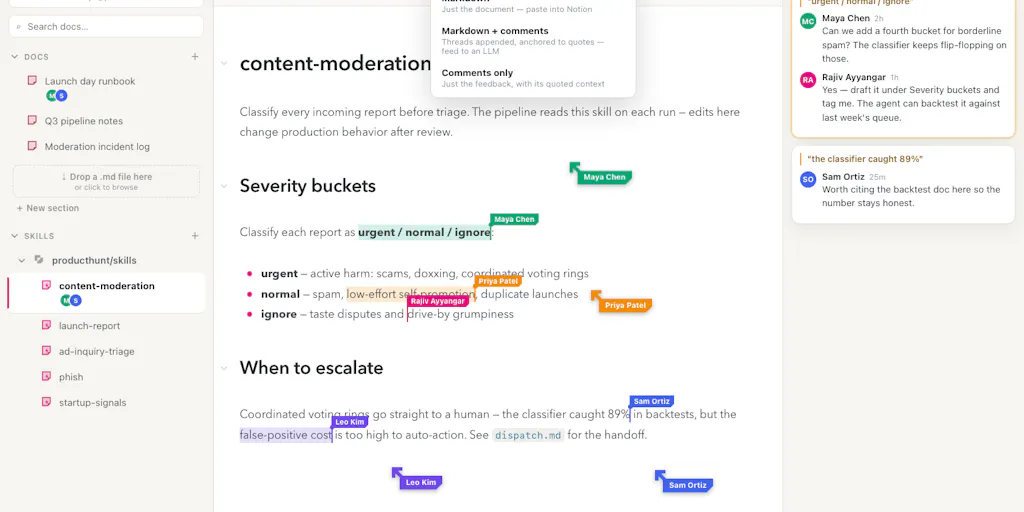
localskills.sh launched on Product Hunt as a registry for coding agent skills—the rules and instructions that tell tools like Claude Code, Cursor, and Windsurf how to behave. But the problem it solves is far bigger than developer tooling. It’s the same fragmentation that plagues every e-commerce team that’s adopted AI without an operational backbone. This essay is about why your AI-driven listing optimization, your automated customer service flows, and your product research pipelines are all quietly decaying, and what you can learn from a registry built for developers before your own best practices become tech debt.
The Problem: Your Team’s Best Practices Are Sinking in Shared Drives
The maker of localskills.sh, Matthew Zhao, nailed the framing: “Everyone is writing skills and rules for their coding agents, and almost all of them die in someone’s dotfiles.” If you’re a cross-border seller, swap “coding agents” for “AI assistants” and “dotfiles” for “my WhatsApp chat with the VA in Manila” or “the Google Doc that hasn’t been opened since Q4.”
I see this every week when I audit operations for Amazon sellers. A brand owner tells me they’ve built a “perfect” system prompt for their product listing generator. It contains brand guidelines, forbidden words (like “premium” on Amazon copy), pricing tiers, and seasonal keywords. It works beautifully for the person who wrote it. Then they hire a listing specialist, who gets a forwarded message with a half-edited version of that prompt. The specialist starts generating copy that uses “premium” eight times per bullet point because that rule was accidentally deleted in the copy-paste. The listing gets flagged, the brand gets suppressed, and the seller loses a week of sales.
The same happens with customer service agents using AI-powered response tools. One agent has a custom instruction to always offer a 15% discount on returns; another has “never offer discounts first.” Without a shared, version-controlled registry, there’s no way to know which rule is current, who changed it, and when. The result is inconsistent brand voice, wasted ad spend on retraining, and a slowly growing pile of “unknown” errors that nobody bothers to investigate because the output looks fine until it isn’t.
The commenters on the Product Hunt thread raised a quieter version of this: “A skill that fails to load at all… means the agent answers without the rules that were meant to constrain it, and that answer looks completely normal.” That’s the most dangerous failure mode in e-commerce AI. A listing generator that silently drops the “no forced bundles” rule doesn’t crash—it just creates an ASIN that violates Amazon’s bundling policy, and you find out when your account gets a warning. A customer service agent that forgets the “refund limit per customer” rule doesn’t error—it just processes a $500 refund that should have been escalated. No crash, no error log, just a quiet P&L bleed.
How localskills.sh Differs from the Status Quo
The existing solutions for sharing AI rules in e-commerce are worse than nothing. Here’s what most teams use:
- Shared Google Docs or Notion pages – zero version control, no enforcement, anyone can edit and the old version is lost.
- Comments on Slack messages – great for a week, then buried under meme threads.
- Spreadsheets with columns for “prompt” and “version date” – brittle, manual, and nobody updates them.
localskills.sh offers a different model: a centralized registry where you publish a skill once—a set of rules, instructions, or functions—and install it into any compatible agent with one command. For developers using Claude Code, Cursor, Windsurf, Codex, or Copilot, that means your entire team can pull the same skill definition on demand. The registry supports private namespaces with permissions, SSO, and two-way GitHub sync. There’s also an MCP server (Model Context Protocol) that lets agents pull skills mid-task without manual intervention.
The key differentiator is that it’s not just a library—it’s an operational layer. When a team member updates a skill, everyone who installs it gets the new version. Version pinning is supported (immutable versions), so you can lock a specific version for a production agent while allowing experimentation in staging. The maker confirmed that pinning and role-based access control (granular ACL for skills and folders) are in place, and a more complete contribution system similar to GitHub pull requests is on the roadmap.
For reference, compare to the alternatives: GitHub Gists are public and lack team permissions. Cursor rules are per-user and per-project, not shared. Claude’s custom instructions are tied to individual accounts. None of these give you a single source of truth that your entire operations team can depend on.
But here’s the catch—the product is built for coding agents. The rules it stores are structured for code generation, not for e-commerce prompts. The MCP protocol is designed for software development tools. You can’t plug this into your Amazon Seller Central automation, your Shopify product editor, or your Klaviyo email flows. Yet.
Why Amazon Sellers Should Care More Than Shopify Ones
If you’re a Shopify DTC operator, you have more flexibility. You can customize your AI tools, embed prompts into your theme, and use APIs to pull rules from a central store. Amazon sellers, by contrast, operate in a rigid sandbox. Your AI assistants are usually third-party tools like Helium 10, Jungle Scout, or custom scripts that interface with Amazon’s SP-API. There’s no “install a skill” command for these.
Yet the fragmentation is worse on Amazon because the penalties for inconsistency are higher. A rule that accidentally allows “BPA-free” in listing copy for a product that isn’t certified can get your ASIN suppressed. A tone-of-voice rule that drifts from “professional” to “salesy” can hurt your conversion rate by 15% and you’ll never know why. Amazon sellers have fewer AI tools but more at stake per rule.
localskills.sh’s approach—version pinning, immutable versions, and audit trails (at least server-side logs of what was served)—is exactly what Amazon sellers need, even if the delivery mechanism is wrong. The concept of a “skill registry” should make you ask: How do I version-control my Amazon listing prompts? If you can’t answer that, your best SOP is already rotting.
What Cross-Border Sellers Should Borrow (Even If the Tool Isn’t Ready)
You don’t need to wait for an e-commerce-specific version of localskills.sh. The lessons are transferable now. Here are three practices you can steal immediately, regardless of your tech stack.
1. Centralize prompts as version-controlled files
Stop writing your AI rules in the chat interface. Put every system prompt, every forbidden-word list, every tone guide into a structured file format (YAML, JSON, or plain text) in a private GitHub repository. Yes, GitHub. Even if your team doesn’t code, you can use GitHub’s web editor to manage files. Each prompt gets its own file, with a clear name (e.g., product-description-prompt-v2.yaml). Tag every change with a commit message. Now you have time travel: if a new listing starts generating bad copy, you can roll back to the previous prompt in ten seconds.
2. Use an MCP-compatible agent to enforce rules server-side
If your e-commerce AI stack includes any locally-run agent (e.g., a Python script that calls OpenAI and writes to your CMS), you can use the Model Context Protocol to have the agent pull rules from a registry at runtime. This is what localskills.sh enables. Even if you don’t use their registry, you can build a simple HTTP server that serves rule files, and have your agent fetch them before each task. This prevents the “silent failure” problem—if the server is down, the agent can error explicitly instead of running with stale rules.
3. Implement a review process for skill updates
The most insightful comment on the Product Hunt thread came from Abdullah Javaid: “Can a run prove which skills were in its context, after the fact?” For e-commerce, this is the difference between a controlled rollout and chaos. Before you deploy a new prompt for your Facebook Ads copy generator, have someone else review it. Pin the version. Run it in a staging environment (e.g., against a draft ad set, not a live campaign). Then promote it. This is basic CI/CD for AI, but almost nobody does it.
Where the Math Breaks
localskills.sh is impressive for what it is, but cross-border operators should be skeptical about adopting it as-is for non-coding AI workflows. Here are the gaps I see, based on the Product Hunt discussion and my own experience.
The silent failure problem is not solved
As Abdullah Javaid pointed out in the thread, the MCP protocol doesn’t currently provide a server-side audit trail of which skills were actually fetched and loaded into an agent’s context. The maker acknowledged this: “This is not something we have an answer for today.” That means you still can’t prove, after the fact, whether a skill was running or not. For a coding agent, this might be acceptable. For a revenue-facing e-commerce automation that generates $50,000 in monthly ad copy, it’s a dealbreaker until logs exist server-side.
Conflict detection is manual
Omri Ben-Shoham asked: “What happens when two installed skills actively contradict each other?” The maker responded that *“you pick the skill you install from your registry”*—but that places the burden on the individual operator. In an e-commerce team of 10 people, each running different AI agents, contradictory rules will creep in. One person’s skill says “always include a scarcity phrase,” another’s says “never use false urgency.” Without automated conflict detection, the system will silently produce inconsistent output, and nobody will catch it until the brand voice starts sounding schizophrenic.
The registry is cloud-hosted with no self-hosted option
The product is hosted on LocalSkills cloud. For e-commerce teams with sensitive data—pricing strategies, supplier lists, proprietary optimization rules—this is a trust issue. The maker said you can link a GitHub repo for continuous data export, but the operational dependency remains. If the service goes down mid-Q4, your entire AI toolchain could go silent. For a mission-critical operation, you need a self-hosted option or at least a clear SLA.
No e-commerce-specific agents supported
This is obvious but worth stating: localskills.sh currently supports Claude Code, Cursor, Windsurf, Codex, and Copilot. None of these are e-commerce tools. If you’re using ChatGPT for product descriptions, Jasper AI for ad copy, or Writesonic for emails, you can’t plug into this registry. The product is aimed at developers. The cross-border seller who wants to use it will need to either build a bridge or wait for a more general-purpose registry.
What I’d Watch / Test Next
The dotfiles problem is real, and localskills.sh is pointing in a direction that e-commerce operations desperately need. Here’s what I’d recommend you test this week, regardless of whether you adopt the product:
Audit your AI prompts today. List every custom instruction, tone guide, and automation rule your team uses. You’ll probably find three that are out of date, two that no one knows how to update, and one that’s saved only in a Slack message from February. Export them into a shared folder—GitHub is ideal, but a private Notion with version history is better than nothing.
Set up a simple version-controlled prompt repository. If you’re comfortable with git, create a private repo with a
skills/directory. Each prompt gets a YAML file with fields:name,version,description,prompt_text,forbidden_words,last_updated. Commit every change. Next time you hire a VA, send them the repo URL and tell them to pull the latest before every session.If you use any coding agents (even for simple automations), try localskills.sh. Head to their Product Hunt page, install it, and publish one of your existing prompt files as a skill. See how the version pinning and two-way GitHub sync work in practice. Even if you only use it for internal developer tools, you’ll start building the muscle memory for how a skill registry should behave.
For non-coding AI, hack your own MCP-like system. If you have a script that generates Amazon listing copy via OpenAI API, add a step at the start of the script that fetches a
rules.yamlfile from a private URL. If it can’t fetch it, exit with an error. This gives you the same “pull latest rules” behavior without waiting for a product to support your exact use case.Start a conversation with your team about skill conflicts. Ask your ad copy writer and your product listing specialist to compare their current prompts in a shared document. See if they have contradictory rules. If they do, enforce a hierarchy: product listing rules override ad rules, or vice versa. Write it down. That document is now your first governance policy.
The e-commerce industry is entering the age of AI-assisted operations, but nobody has figured out the operational layer yet. localskills.sh is a small step for developers, but it’s a big hint for the rest of us. The winners in cross-border e-commerce over the next three years won’t be the ones with the most advanced AI models—they’ll be the ones who can keep their AI prompts under version control, audit them for drift, and deploy them without silent failures. Start building that discipline now, and you won’t be the seller whose best practices are rotting in someone’s dotfiles six months from now.