Why a No-Code Backend Is Suddenly the Most Interesting Logistics Tool on Product Hunt
Every cross-border operator I know has the same dirty secret: the front-end of their operation looks like a polished DTC brand, and the back-end runs on a spreadsheet that’s been duct-taped together since 2019. You’ve got Amazon FBA inventory numbers in one tab, TikTok Shop payouts in another, and your returns process is a shared Google Form that your VA checks twice a week. That’s not a business infrastructure; that’s a house of cards. So when I see a tool like Knack — a platform that’s been quietly building no-code databases and web apps since 2014 — pivot hard into the AI agent space with an MCP server, my first thought isn’t about healthcare compliance. My first thought is: this is exactly the kind of plumbing that could finally let a three-person Amazon FBA team run their entire reconciliation workflow without hiring a developer. The pitch from Knack’s team is aimed at vibe-coders who built a prototype in Lovable and then hit a wall when a real buyer asked about security. But the underlying promise — a hosted relational database with role-based access controls and change logs that any AI coding tool can plug into — is a cross-border seller’s answer to the chaos of multi-channel operations. This isn’t about building a consumer app. It’s about building the operational backbone that lets you scale past the spreadsheet ceiling.
The Problem: Your Prototype Is Done, Your Backend Is a Nightmare
The launch post from Elliott Sprecher, the Product Hunt hunter for this launch, nails the exact pain point that every seller who has tried to automate their operations eventually hits. He describes builders using tools like Lovable, Claude Code, and Base44 who “built something genuinely useful, then hit a wall when they tried to take it somewhere serious.” Swap out “healthcare organization” for “Amazon Seller Central account manager” and you have the exact same story. You spend a weekend vibecoding a dashboard that pulls your PPC spend, your inventory levels, and your ad-hoc shipping costs into one view. It looks incredible. It works on your laptop. Then you try to give your ops person access, and you realize there’s no way to control what they can see. There’s no audit trail. There’s no way to prove to your accountant that the numbers are accurate. And God forbid you need to share it with a logistics partner who requires a signed data processing agreement.
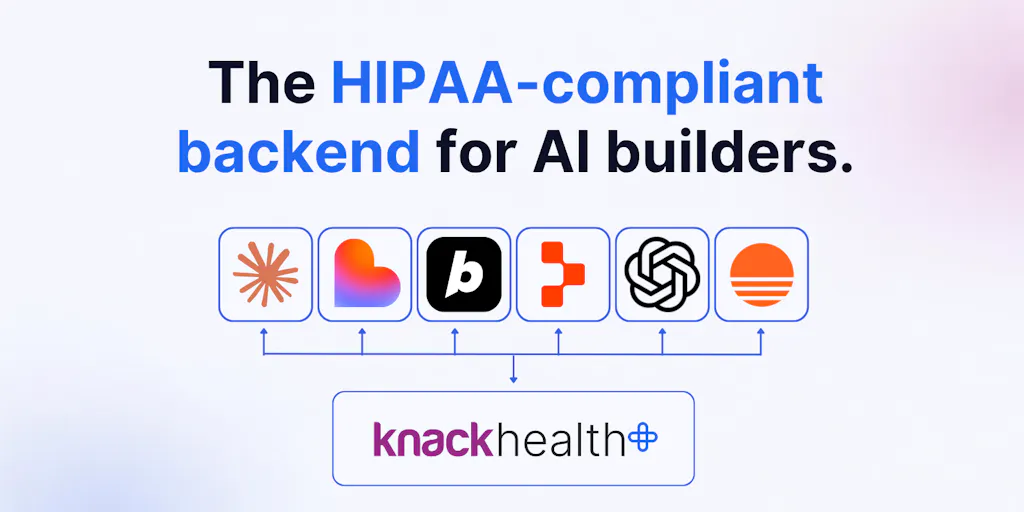
The Knack MCP Server is their answer to that wall. The idea is simple: instead of letting your AI-generated frontend talk directly to a shaky, unsecured backend, you route it through Knack’s hosted relational database. You get role-based access controls, record change logs, and 700+ integrations as part of the package. For healthcare teams, they add HIPAA-compliant infrastructure and a signed BAA. For a cross-border seller, the equivalent would be a SOC 2-compliant backend that can handle customer PII from your Shopify store without you having to think about it. The MCP (Model Context Protocol) server is the bridge that lets any MCP-compatible AI coding tool — they mention Lovable, Claude Code, Base44, and Replit — connect directly to that secure backend. In plain English: you keep building your frontend with AI, but the data lives somewhere that won’t get you sued.
Why Amazon Sellers Should Care More Than Shopify Ones
Shopify store owners have it relatively easy. The platform handles a lot of the backend complexity for you — you get a decent admin panel, basic role permissions, and a reasonably secure checkout. But if you’re an Amazon FBA seller, you’re living in a world where the platform gives you a raw API and a pile of CSV exports, and you’re expected to build your own reconciliation layer. Your inventory data lives in Seller Central, your advertising data lives in a separate dashboard, and your P&L is a Frankenstein of exports from Helium 10 and your own spreadsheet. The idea of having a secure, relational database that your AI tools can write to and read from — with change logs so you can see exactly what got modified and when — is not a luxury. It’s a survival mechanism when you’re dealing with hundreds of SKUs across multiple marketplaces. The Knack pitch about “proving it is safe enough for real data” hits differently when the real data is your monthly inventory reconciliation that your lender is waiting on.
What Knack Actually Does Differently (Compared to the Incumbents)
The no-code database space isn’t empty. Airtable has been the default for sellers who want to build a custom operations dashboard without code. Airtable has a beautiful UI, a solid API, and a huge ecosystem of extensions. But it has a fundamental problem for serious operations: it’s a spreadsheet with a fancy dress on. The relational model is there, but it’s not the core. When you try to build a real multi-tenant system — where your warehouse manager sees one view, your VA sees another, and your accountant sees a third — Airtable gets creaky. You end up paying for a third-party permission tool or building workarounds in automations that break the moment someone edits a linked record.
Knack’s positioning is closer to Bubble or Glide, but with a key difference: it’s database-first, not frontend-first. The company’s own history shows this. Their 2016 launch was literally “Build the database that builds your business.” The new MCP server is a natural evolution of that philosophy. Instead of asking you to design your UI inside their platform, they’re saying: build the UI anywhere you want, with any AI tool you want, and just plug your data into our secure backend. That’s a fundamentally different bet than Bubble, which wants you to stay in their ecosystem for the frontend too. It’s also a smarter bet for the AI era, because the frontend is becoming commoditized. Every week there’s a new AI tool that can spin up a decent-looking interface from a prompt. The backend — security, permissions, audit logs, integrations — is where the moat is.
Where the Math Breaks
Let me be clear about where this gets less rosy. The launch post mentions “700+ integrations,” which is a number I’ve learned to be skeptical of. In my experience, that count usually means 650 of them are “webhooks” or “Zapier” or “API access” that require you to build the actual connection yourself. For a cross-border seller who isn’t a developer, that’s not an integration; that’s a project. The other thing that gives me pause is the pricing model. The review from John Karas, a Knack user, praises the “pricing model that is not user-based.” That’s great for a portal use case where you have hundreds of external users. But for a small operation, not-user-based pricing often means you’re paying a premium for features you’ll never touch. I don’t know the exact current pricing tiers — the source doesn’t disclose them — but I’d bet the mid-tier plan that unlocks the MCP server and the change logs is priced for agencies and consultancies, not for a solo FBA seller doing $50k a month in revenue. That’s not a dealbreaker, but it’s a filter.
What Cross-Border Sellers Can Actually Borrow From This Launch
You don’t have to buy Knack to learn from what they’re doing. The bigger lesson here is architectural, and it’s one that every seller who is serious about scaling should internalize: separate your frontend from your data. The reason your operations feel fragile isn’t that you don’t have the right tools. It’s that your data is trapped in the tools. Your inventory is in Seller Central. Your orders are in Shopify. Your customer emails are in Klaviyo. Your ad spend is in TikTok Ads Manager. Every time you want a single view of your business, you’re exporting and joining data manually. That’s the real bottleneck, and it’s why the AI tools you’ve tried for “business intelligence” have failed — they can’t see your data because your data isn’t in a place where they can access it.
The MCP server concept is the antidote to that. It’s a standard protocol that lets AI tools talk to a database directly, without you having to build a custom API integration for each tool. For a seller, that means you could theoretically build a dashboard in Lovable that pulls your Amazon sales data, your Shopify orders, and your TikTok payouts into one view — and have it be secure, with proper permissions and an audit trail. That’s not science fiction. The infrastructure now exists. The question is whether you’re willing to spend the time to set it up, or whether you’ll keep waiting for some SaaS tool to do it for you. Spoiler: no SaaS tool is going to do it for you, because your operation is unique. The tools that win are the ones that let you build your own.
The Compliance Angle Is More Relevant Than You Think
The healthcare framing in the launch is a Trojan horse for a bigger point. Elliott Sprecher says the problem they kept hearing was about taking a prototype “somewhere serious” — a healthcare organization, an enterprise client, a regulated business. Cross-border sellers have the same problem, just with different regulators. If you sell in the EU, you have GDPR. If you sell in California, you have CCPA. If you process payments, you have PCI DSS. If you sell on Amazon, you have their Acceptable Use Policy which is increasingly strict about how you handle customer data. The days of storing customer PII in a Google Sheet are numbered. Not because anyone is going to catch you tomorrow, but because one data breach or one compliance audit will end your business. Knack’s pitch — hosted relational database, role-based access, change logs, signed BAA for healthcare — is exactly the kind of infrastructure that a serious seller needs, even if they don’t need the HIPAA part.
Where My Judgment Says It Falls Short
I’m not going to pretend this is the perfect tool. The first issue is the same one that plagues every no-code platform: lock-in. Once you’ve built your operations backend on Knack, migrating to something else is a nightmare. The relational schema, the automations, the permission sets — none of it exports cleanly. You’re making a bet that Knack will be around in five years and that their pricing won’t skyrocket. For a small operation, that’s a risky bet. The second issue is the AI integration story. The launch mentions setup guides for Lovable, Claude Code, Base44, and Replit. That’s a very specific slice of the AI tooling world. If you’re using something else — and given how fast this space moves, you probably are — you’re on your own to figure out the MCP configuration. The protocol is open, but the documentation isn’t universal yet. The third issue is the operational reality. Knack is a database and an app builder. It is not an ERP. It is not a WMS. It is not going to reconcile your Amazon payouts for you. You still have to build the logic, the automations, and the reports. The tool gives you the foundation; it doesn’t build the house.
The “Vibecoding” Reality Check
There’s a phrase in the launch comments that I want to pull out: “vibecoders.” Harkirat Singh calls this “a HUGE for vibe coders” — taking something from prototype to enterprise-ready. That’s a real phenomenon, and it’s worth taking seriously. The barrier to building software has collapsed. Anyone can prompt an AI to create a functional app. But the gap between “functional” and “production-ready” is still enormous, and it’s not about code quality. It’s about security, compliance, data integrity, and operational reliability. Knack is betting that gap is the opportunity. I think they’re right. But I also think the sellers who benefit most won’t be the ones who are vibecoding. They’ll be the ones who have a clear picture of their data model — what entities they track, what relationships matter, what permissions are needed — before they start building. The tool is the easy part. The thinking is hard.
What I’d Watch / Test Next
If you’re a cross-border operator who’s been fighting the spreadsheet ceiling, here’s what I’d do this week, in concrete terms.
First, don’t buy anything yet. Spend 30 minutes mapping your core operational entities: products, orders, customers, suppliers, shipments, returns. Write down the relationships. That’s your data model. If you can’t draw it on a napkin, you’re not ready for a database.
Second, test the MCP concept with a throwaway project. Pick one pain point — maybe it’s tracking your FBA inbound shipments across multiple warehouses — and try building a simple app in a tool like Lovable or Claude Code. Point it at Knack’s MCP server using their setup guides. See if the workflow actually works. The goal isn’t to build a production system; it’s to test whether the bridge between AI frontend and secure backend is as smooth as they claim.
Third, check out Knack Health even if you’re not in healthcare. The HIPAA-compliant infrastructure and the signed BAA are a template for what any serious SaaS backend should offer. If they can do that for healthcare, they can probably do it for your GDPR obligations too. Ask their team about the roadmap.
Fourth, and most importantly, look at your own stack with fresh eyes. The lesson from this launch isn’t “buy Knack.” It’s “stop treating your spreadsheets as your source of truth.” Every platform you use — Shopify, Amazon, TikTok Shop, Temu — is a data silo. The winners in cross-border e-commerce over the next five years will be the ones who build their own data layer, whether that’s with Knack, Airtable, a custom Postgres database, or something else. The AI tools are getting better every week. The differentiator is what you do with your data. Start there.


