Why a Dictation App Is Actually a Cross-Border Ops Playbook
Let’s be honest: when a new dictation tool hits Product Hunt, most cross-border sellers scroll past it. We’re trained to look for the next Helium 10, the next AI repricer, the next logistics dashboard. But that reflex is exactly why we’re leaving money on the table. The modern Amazon or Shopify operator isn’t just competing on product-market fit anymore; we’re competing on throughput — how many listing variations we can test, how many supplier emails we can send, how many ad copy angles we can draft before the algorithm shifts. Every hour spent typing a case dispute or a product description is an hour stolen from strategy. So when I see a tool like Wispr Flow: Dictation That Works Everywhere claiming to let you “stop typing and start speaking 4x faster,” I don’t see a productivity gimmick for bloggers. I see a potential unlock for the most undervalued asset in e-commerce: the operator’s own cognitive bandwidth.
The pitch is simple, but the implications for a seller managing a multi-channel operation are not. If you’re juggling TikTok Shop comments, Amazon buyer messages, and Etsy renewals, your bottleneck isn’t your ad budget — it’s your inability to translate thought into text quickly. This essay isn’t a review of a Mac utility; it’s an autopsy of how we work, and a proposal for what we should borrow from the “voice-first” workflow.
The Real Problem: The Keyboard Is Your Inventory Bottleneck
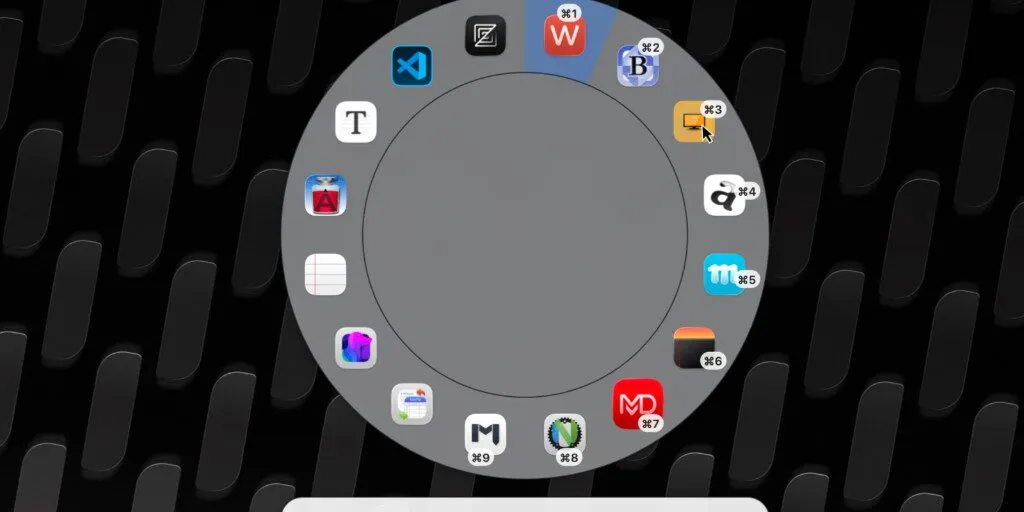
The product, as launched by maker Brett Terpstra, is ostensibly about file management. It was built because Terpstra wanted control over which files open where — Markdown files in nvUltra, documentation in VS Code, and images in a menu of Preview, Affinity, or Acorn. But the underlying friction he solved is universal: context switching is the silent tax on every cross-border operation.
Think about your last hour of work. You were in Amazon Seller Central, then you tabbed to your supplier’s WeChat (or email), then you checked a Shopify order notification, then you jumped into a spreadsheet to calculate landed costs. Every time you double-click a file or open a new app, your brain takes a micro-second to re-orient. Multiply that by the hundreds of micro-interactions in a day, and you’ve lost an hour of actual thinking time.
Wispr Flow addresses the input side of that problem. Instead of typing a response to a customer service ticket, you speak it. Instead of drafting a product launch email in Klaviyo, you dictate it. The “4x faster” claim is aggressive, but the direction is correct. For a seller, this isn’t about convenience; it’s about velocity of iteration. The faster you can produce a variation of a title or a bullet point, the more A/B tests you can run. The more tests you run, the faster you learn the market.
Why Amazon sellers should care more than Shopify ones
Here is where my bias shows. Shopify sellers often work in a visual drag-and-drop world where the barrier to entry is low, but the barrier to differentiation is high. Amazon sellers, however, live in a text-based hellscape. Your ranking is determined by keywords, your conversion by bullet points, and your survival by your ability to parse the Policy & Compliance emails that arrive at 2 AM.
For the Amazon FBA operator, dictation isn’t a luxury—it’s a compliance tool. When you’re on the phone with a supplier in Shenzhen and they tell you the packaging dimensions changed, you need to update the listing immediately before the inbound shipment gets flagged. Pulling up the app and speaking “Change the product dimensions to 12 by 9 by 6 inches” is exponentially faster than typing it out on a mobile device. Wispr Flow’s promise to work “everywhere” is the key selling point here. If it works in Seller Central’s notoriously clunky text fields, it effectively removes the last barrier to rapid listing maintenance.
How It Differs From the Incumbent Toolkit
To understand why this matters, you have to look at the current state of “voice” tools. We have Siri, which is great for setting timers but useless for drafting a nuanced email to a customs broker. We have Google Voice Typing, which is decent but requires you to be in a Google Doc and often mangles industry jargon like “FBA” or “SKU.” And we have specialized transcription services like Otter.ai, which are built for meetings, not for real-time system control.
Wispr Flow is different because it sits in the operating system layer. It’s not a web app you have to open; it’s a system-level utility that follows you. This is the same architectural philosophy that made Raycast or Alfred indispensable to power users—they replace the “hunt and click” with a “command and execute” paradigm.
The specific pain point Terpstra mentions—controlling which files open where—is a classic “power user” problem. Most people just let the OS decide. But for an operator who runs a DTC brand, file management is chaos. You have supplier spec sheets, influencer contracts, and ad creative assets. If you have to search for the right program to open a CSV file from your 3PL, you’re losing time. A tool that gives you a menu of options (Preview, Affinity, Acorn) on double-click is essentially a workflow router. It ensures that the right tool handles the right data, which is exactly how you should be managing your logistics data streams.
Where the math breaks
Let’s talk about the “4x faster” claim. It’s true for drafting. But the math breaks down when you factor in editing. Speaking a sentence is fast, but correcting a misheard number or a misspelled product name is often slower than typing it. If I dictate “Send 500 units to the ONS8 warehouse” and the software hears “Send 15 units to the ONS8 warehouse,” I now have to move my hands to the mouse, click the text, and fix it. In that specific scenario, typing would have been faster.
Furthermore, there is a significant cognitive load in switching from thinking to speaking while working in a quiet office or a co-working space. Dictation is excellent for private work, but it is intrusive in shared environments. For a solo seller working from a café in Vietnam, speaking to your computer all day might be socially awkward and practically noisy. The tool doesn’t solve the environmental problem; it just makes the typing faster when you have the privacy to use it.
What Cross-Border Sellers Can Borrow From This (Even If You Don’t Buy It)
You might not be a Mac user, or you might not want to adopt another subscription. That’s fine. The broader lesson here is about input optimization. The tool is a reminder that your hardware and software stack should be working to reduce friction, not add to it.
Here are three specific habits you can steal from the Wispr Flow philosophy:
- Batch your communication via voice memos. Instead of typing a long email to your freight forwarder, record a voice memo and use a transcription service (like Otter.ai or even the built-in WhatsApp voice-to-text) to convert it to text. You get the speed of speaking with the formality of writing.
- Standardize your file routing. Even if you don’t use a custom file opener, create a folder structure on your Google Drive or local machine that automatically sorts by function (e.g.,
01_Suppliers,02_Amazon_Listings,03_Ad_Creative). The goal is to reduce the time you spend looking for things. - Audit your “double-click” moments. Every time you open an app to do a task, ask yourself: “Is this the fastest way to do this?” If you’re opening Amazon Seller Central to check a single number, consider using an API dashboard or a mobile widget instead. The tool’s core value prop—reducing the time between intention and action—is the real takeaway.
The “Maker” Mindset for Marketplace Management
There is another angle here that resonates deeply with me. Wispr Flow was built by a “Maker” on Product Hunt. This is a solo developer scratching his own itch. For e-commerce operators, this is a reminder that the best tools are often born from operational pain, not from boardroom strategy sessions.
When you look at the Product Hunt page, you see a community of early adopters giving feedback. This is the same iterative loop you should be running on your products. You launch a product, you listen to the reviews (the comments), and you iterate on the “file management” of your business—your listing, your pricing, your shipping profiles. The tool is a microcosm of the lean startup methodology applied to software.
Where My Judgment Says It Falls Short
I have to be honest about the limitations. First, the “works everywhere” claim is heavily dependent on the macOS ecosystem. Cross-border sellers are increasingly using Windows machines or Chromebooks because they are cheaper and easier to repair in markets like Southeast Asia or Latin America. If Wispr Flow is Mac-only, it immediately alienates a huge chunk of the seller base that operates on a tight hardware budget.
Second, the focus on file management is a bit too “developer-centric” for the mainstream seller. Most Amazon sellers don’t care about opening Markdown files in nvUltra; they care about opening a PDF invoice in Adobe Reader. The specific pain point Terpstra solved is real, but it’s niche. The broader “dictation” aspect is the killer feature, but it’s buried under the file-routing mechanic.
Finally, there is the issue of accuracy with industry jargon. Cross-border e-commerce is riddled with acronyms: FBA, DDP, ONS, SKU, ASIN, PPC, ROAS. Most generic dictation software struggles with these terms. If Wispr Flow doesn’t have a custom dictionary feature that allows you to teach it these words, it will fail in the most critical use case. You’ll spend more time correcting “FBA” to “F.B.A.” than you save by speaking.
The Workflow Integration Test
The ultimate test for a tool like this is whether it integrates with the tools we actually use. We live in Shopify, Amazon Seller Central, and Klaviyo. If Wispr Flow is just a system-wide dictation tool, it will work in these apps, but it won’t understand them. For example, I want to be able to say “Create a new product draft titled ‘Waterproof Bluetooth Speaker’ with a price of 29.99” and have it populate the specific fields in Shopify.
The source material doesn’t indicate that level of deep integration. It appears to be a system utility, not a vertical SaaS tool. This means it will save you time on the input, but it won’t save you time on the workflow. You still have to tab through the fields, click the drop-downs, and select the categories. The dictation is just replacing the keyboard, not the mouse. For a cross-border seller, the mouse is often the bigger time-waster.
What I’d Watch / Test Next
If you’re intrigued by the concept but not ready to commit, here is my concrete advice for testing this philosophy in your operation this week.
First, download a trial of Wispr Flow (if you’re on a Mac) and specifically test it in your most text-heavy environment: Amazon Seller Central. Try dictating a product description with technical specs. Notice where it fails—is it the punctuation, the numbers, or the jargon? That failure point tells you exactly where your manual typing is still necessary.
Second, run a “Voice vs. Type” time trial on your standard customer service responses. Draft a response to a return request using your keyboard, and draft the same response using dictation. Track the time for both, including the editing time. If the dictation version is only 10% faster, it’s not worth the cognitive overhead. If it’s 50% faster, it’s a game-changer.
Third, look at your own “file opening” habits. Even if you don’t buy the tool, audit how you access your data. If you’re spending more than 5 minutes a day searching for files or opening the wrong apps, you need a better system. Whether that’s a tool like Alfred or just a cleaner folder structure, the goal is to make your digital workspace as organized as your warehouse.
Finally, watch the Product Hunt comments. The community feedback on the launch page will tell you more about the tool’s stability than any marketing page. If the maker is actively responding to bug reports about specific apps, that’s a good sign. If the comments are full of “me too” requests for Windows support, you know the roadmap is still long.
At the end of the day, tools like Wispr Flow aren’t about typing faster. They are about thinking faster. In cross-border e-commerce, the speed of your execution is the only sustainable moat you have. If you can get your ideas from your brain to the screen faster than your competitor, you win the listing, you win the buy box, and you win the customer. Don’t dismiss the next productivity tool that hits the front page—analyze it for the operational muscle it can build, not just the feature it promises.