The real margin story hiding in an LLM launch
For a cross-border operator, the difference between winning and losing is rarely one heroic idea. It is the cost of executing a thousand small tasks: repricing a SKU, triaging a supplier email, rewriting a listing for a German marketplace, classifying return reasons, reconciling a freight invoice. The first AI wave in e-commerce was about generating copy. This generation is about making agentic behavior cheap enough to run those tasks on demand. DeepSeek releasing DeepSeek-V4-Flash-0731 as its fourteenth launch matters less because of a benchmark score and more because of what it signals: frontier AI reasoning is quietly becoming a commodity input. The operators who test this now will build workflow advantages before the price curves reprice everyone else.
What DeepSeek actually solves for an e-commerce operation
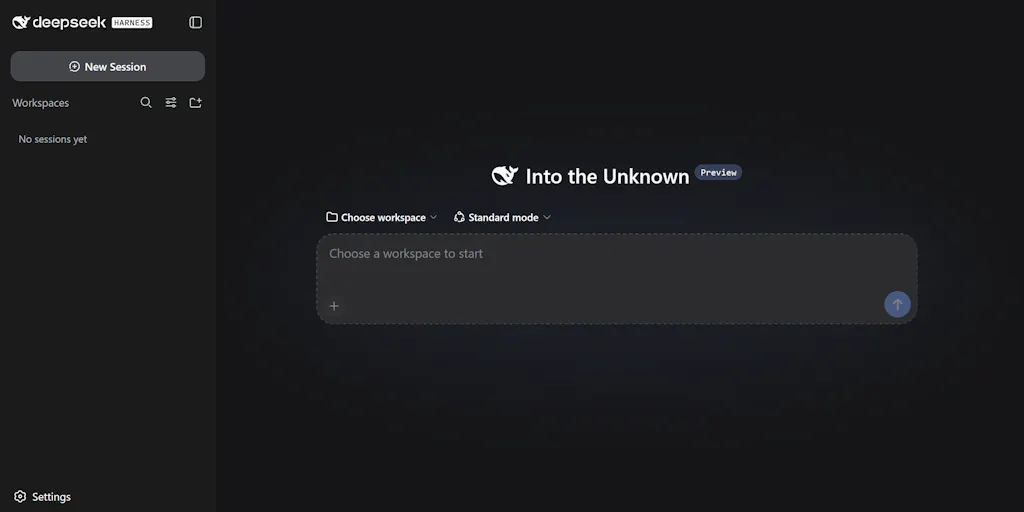
The launch page describes DeepSeek as an “open-source LLM optimized for advanced reasoning and code,” with an assistant that handles coding, content creation, and file reading, and supports document uploads and extended conversations. That sounds generic until you map it onto a typical cross-border day: a seller in Shenzhen, an Amazon catalog in Oregon, a supplier in Vietnam, and a customer in Germany all operating across time zones and languages. The real bottleneck is not access to intelligence. It is the cost of applying intelligence to messy, multi-step, context-heavy tasks.
This is where DeepSeek-V4-Flash-0731 is positioned. The launch copy calls it the official release of V4-Flash, with a “massive leap in agentic capabilities,” claiming it outperforms V4-Pro (Preview) on key benchmarks, natively supports the Responses API, and is fully adapted for Codex CLI. If you strip away the model jargon, that means one thing for your operations team: a cheaper, faster tier can now do what the premium tier was doing six months ago. The practical effect is that you can afford to automate tasks you previously wrote off as too variable or too expensive to run through a frontier model.
The prior DeepSeek-V4 launch was framed as “the open-source era of 1M context intelligence.” For cross-border sellers, long context is not a toy feature. It is the ability to load an entire supplier contract, months of email threads, a price list, and a set of quality inspection notes into one session and ask for a coherent risk assessment. Reviewers on the Product Hunt page highlight long-context handling and usefulness for searching large datasets, which is precisely the class of work that eats up hours in a marketplace-heavy business. Instead of paying a supply chain analyst to read forty emails chronologically, you can ask the model to find every signal pointing to a late delivery and rank them by severity.
The DeepSeek reviews also emphasize a clear explanation of technical topics, strong coding support, and deep thinking ability. That matters more than you might think. E-commerce teams are not full of prompt engineers. If a model can explain why a stockout happened, classify the evidence, and suggest a mitigation plan in readable language, it becomes a usable operations copilot rather than a text generator.
Why Amazon sellers should care more than Shopify ones
I keep coming back to a distinction: Amazon is a structured data business wearing a product business costume. Shopify is a brand and content business wearing a technology costume. That difference dictates which AI model you should build around.
Amazon sellers need to handle backend search terms, bullet point constraints, flat file uploads, aged inventory reports, return reason codes, and PPC bid adjustments. These are all structured, repetitive, rule-heavy tasks. The Amazon ecosystem rewards specificity and compliance, not lyrical prose. An agentic model that can parse a spreadsheet, identify underperforming search terms, and suggest replacements in a standardized format is more valuable than a model that writes beautiful product descriptions.
Shopify DTC brands, by contrast, still live and die by voice. The source reviews on DeepSeek’s Product Hunt page note that some users find it “too wordy or less capable than ChatGPT on higher-quality writing.” That is a damning gap for a brand selling candles or skincare through a polished Shopify storefront. For Amazon sellers, wordiness is a bug but not a fatal one. The margin opportunity is in the agentic layer: automating the repetitive catalog and operations work so a human can focus on the parts of the business that need taste.
How this release differs from the incumbents you are already paying for
The product page sidebar puts DeepSeek next to Claude by Anthropic, OpenAI, Gemini, and Mistral AI. In practice, if you run an e-commerce operation in 2026, you are probably already paying for one or two of these. Your stack might look like ChatGPT for copy, Claude for long documents, and a scrappy internal script for review analysis. The problem is that each of these is a separate cost center, and none of them are optimized for the grimy operational tasks that populate a cross-border seller’s week.
DeepSeek’s positioning is different on several axes. First, it is open-source. That is not an ideological point for me; it is a procurement hedge. If a model is open-source, you are not locked into one vendor’s pricing or deprecation policy. You can fine-tune it, host it, or move off it without re-architecting your entire workflow. Second, the launch is tagged Free, API, and Open Source. That combination is unusual. Most frontier labs give you a free chat tier and then charge heavily for API access. DeepSeek’s launch page does not disclose production API pricing, so temper your enthusiasm until you see the invoice, but the free positioning is a real signal that the cost curve has changed.
The launch comment from Zac Zuo adds a telling data point: Terminal-Bench 2.1 moved from 61.8 to 82.7, and the comment begins to cite a DeepSWE jump that starts at 7.3. Benchmarks are rehearsed and cherry-picked, so I do not treat them as gospel. But the direction is consistent with what the launch itself claims: agentic capability jumped in the Flash tier, not the Pro tier. That inverts the normal pricing psychology of AI. The industry has trained us to assume that faster, cheaper models are weaker. DeepSeek is betting that the market will accept the opposite: Flash-grade latency with Pro-grade agentic behavior.
The earlier DeepSeek-V3.2 launch was already titled “Reasoning-first models built for agents.” There is a clear product thesis across these launches: reasoning and agentic ability are the core selling point, not creative writing. That thesis aligns with what e-commerce operations actually need. I would rather have a model that correctly extracts the net payment from a supplier reconciliation table than one that writes a charming abandoned-cart email. The charming email is a solved problem. The reconciliation table is not.
What a cross-border seller can actually borrow from this launch
You do not need to be an AI lab to benefit from this shift. The more useful move is to borrow the workflow philosophy: run experiments on a free tier, build small automations around structured tasks, and let the agentic layer absorb the chores that currently live in spreadsheets and inboxes.
Start with supplier communication. Almost every cross-border seller I know has a chaotic inbox: price increase requests, delivery delay excuses, quality complaints, compliance documents, and a monthly avalanche of “per our conversation” emails. That is a perfect use case for a long-context, file-reading model. Upload the thread, ask for a summary of action items, risk level, and recommended response. You are not asking the model to negotiate on your behalf yet. You are asking it to do the reading and triage that a junior operations hire would do at a fraction of the cost.
Then look at listing localization. A model that is strong at reasoning and code is not obviously the best translation tool, but the chat interface on chat.deepseek.com/coder can handle structured prompts that force it to respect units of measurement, sizing conventions, and marketplace compliance terms. Instead of asking for “a German translation,” you can give it a table of your current Amazon listing fields and ask it to output a flat file with German values that respect EU labeling norms. That is not magic. It is just applied structure, which is exactly what this model class claims to do well.
The deeper lesson is about your tooling stack. If you are using Helium 10 for keyword mining and listing optimization, you already know that the operational bottleneck is not data. It is the time between data and action. An agentic LLM can shorten that loop by generating the backend search terms, flagging low-relevance keywords, and drafting the revised bullet points that you then paste into Amazon Seller Central. Again, not magic. But if you can compress a forty-five-minute listing task into a seven-minute review-and-edit task, the compounding effect across thousands of SKUs is real.
The open-source hedge against vendor lock-in
There is another reason open-source matters for cross-border sellers specifically: data residency and privacy. If you are running an Amazon FBA business with proprietary supplier relationships and private label pricing structures, you may not want to feed all of that into a closed API that you do not control. Open-source models give you the option to run inference on infrastructure you control, or at least to switch providers without rewriting your entire prompt library.
This is the same argument that has pushed several serious operators toward Mistral AI and away from the dominant closed labs. The objection to closed frontier models is rarely capability. It is dependency. If your entire returns-classification workflow is built on a prompt that only works in one proprietary model, you have built a liability. DeepSeek’s open-source flag, combined with its 4.9 rating from 49 reviews, at least gives you a credible alternative to test. You can run the same prompt through the open model, compare the output against your current vendor, and decide whether the cost savings are worth the migration effort.
Where my judgment says it falls short
Let me be direct about the weaknesses, because a Product Hunt launch page is not an independent audit. The review summary on DeepSeek’s page repeatedly mentions slow responses, busy servers, delays, and weaker polish in long workflows. If you are building a real-time customer service bot for a storefront, a model that gives thoughtful answers but takes twenty seconds to respond will hurt conversion. Speed is a feature. For batch operations, latency is tolerable. For real-time interactions, it is a dealbreaker.
The review summary also flags the writing quality gap: some users find DeepSeek “too wordy or less capable than ChatGPT on higher-quality writing.” For marketers and DTC brand managers, that is a fatal flaw in their core use case. If you are running a Klaviyo lifecycle program and your AI-generated emails read like they were written by an overeager intern, you will not use it. The model may be excellent at reasoning and code, but e-commerce is still a human experience. Brand voice is not a trivial afterthought.
There is also the trust problem with benchmark claims. Saying a Flash model outperforms a Pro preview model on key benchmarks is impressive, but benchmarks are selected by the maker. The Product Hunt launch copy is marketing. The comment from the launch team is marketing. Even the reviews, while useful, are filtered through Product Hunt’s community dynamics. I would not re-architect my operations stack based on a launch page. I would test the model against my own messy data.
Where the math breaks
The hidden cost of AI is not the token price. It is the cost of verification. When you ask a model to classify return reasons, you still need a human to spot-check the results. When you ask it to summarize a supplier negotiation, you still need a human to verify the numbers. The source reviews praise DeepSeek for handling complex tasks and searching large datasets, but they also point to performance issues. If the model is slow or busy when you need it, your automation run fails, and then you are back to doing the work manually. That is the real math: cheap tokens plus occasional failure can be more expensive than expensive tokens plus predictable success.
The other missing piece is pricing disclosure. The launch page says Free, but that refers to the launch tier and the chat experience. The production API pricing is not disclosed on this page. A free chat tier is useful for testing, but it is not a procurement decision. I want to see token pricing, rate limits, and latency guarantees before I wire this into a production workflow that touches supplier communication or customer data.
What I’d watch / test next
If I were running a cross-border operation this week, I would not wait for a formal AI strategy. I would run a side-by-side test on the ugliest, most repetitive task I own. Take the last hundred return comments from Amazon Seller Central, strip the customer names, and run them through the chat.deepseek.com/coder interface and through whatever paid model you already use. Ask both to classify each return into three buckets: product defect, logistics issue, or buyer mistake. Time the output, check the accuracy, and compare the cost. That single test will tell you more than the benchmark charts.
I would also build a supplier triage prompt. Take one complex email thread from October of last year, append a price list, and ask the model to generate a table of open action items, responsible parties, and deadline risks. If the model can handle that without hallucinating dates, you have a workflow worth scaling.
Watch what DeepSeek does next with pricing and latency. The agentic capability is interesting, but the bottlenecks are speed and production reliability. If the next release solves those, the conversation changes for every marketplace operator currently paying a premium for reasoning. If not, this remains a promising test-case model rather than a core dependency. Either way, the direction is clear: the cost of doing competent AI work is falling, and the sellers who experiment first are the ones who build the compounding efficiency no competitor can copy.