Why a Blockchain Investigation Agent Belongs in Every Cross-Border Seller’s Tool Stack
If you’ve been in cross-border e-commerce long enough, you’ve seen the pattern: a customer pays with crypto for a Shopify order, the transaction hash looks clean on Etherscan, but the funds never settle in your wallet. Or a supplier in Southeast Asia sends you a wallet address for a “verified” payment, then disappears after you ship inventory. Or your Amazon account gets flagged for suspicious refunds, and the only evidence you have is a handful of transaction IDs. Most sellers treat blockchain as a niche payment add-on, something to enable for low-risk markets. That’s a mistake. The same public ledger that makes crypto payments irreversible also makes them traceable — if you have the right tool. BlockscopeChat (the product we’re looking at here) is an AI agent that turns wallet addresses and transaction hashes into plain-English investigations. For a seller managing cross-border risk, that ability to “profile a wallet” or “trace cross-chain transfers” isn’t a crypto gimmick. It’s a fraud-detection and dispute-resolution superpower — if you know how to use it without getting burned.
What Problem This Actually Solves for a Seller
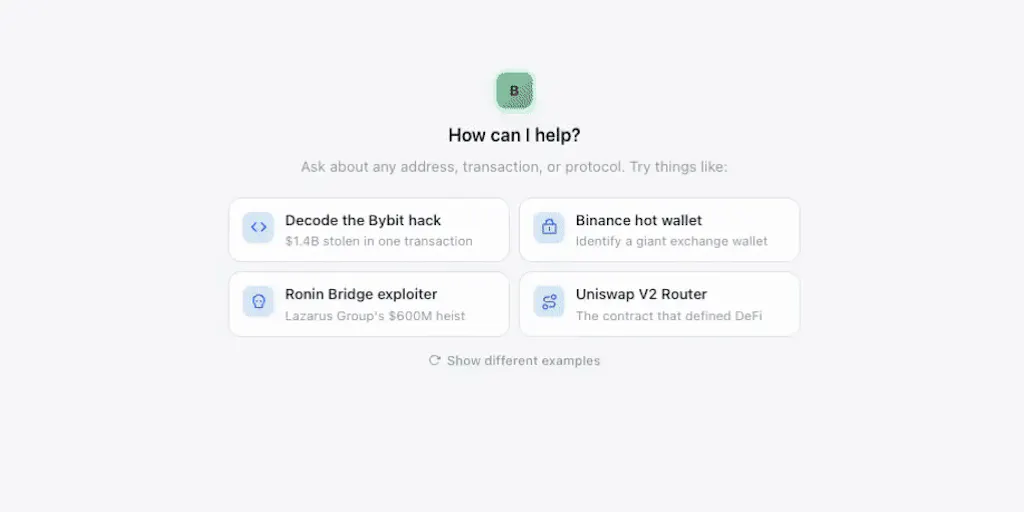
The Product Hunt launch positions BlockscopeChat as a tool for three kinds of investigations: profile your wallet (summarize activity and identify linked wallets), understand any transaction (break down swaps, contracts, and token movements in plain English), and trace cross-chain transfers (follow funds across bridges from source chain to final destination).
Let me map those directly to seller pain points.
Profile your wallet — Say you’re vetting a new supplier who demands payment in USDT on BSC. You ask them for a wallet address they’ve used to pay other buyers. You paste that address into BlockscopeChat and ask the agent to “summarize activity and identify wallets linked to you.” The agent returns a graph of transactions, shows inbound payments from other known Amazon sellers, and flags that this address also received funds from a wallet that was reported in a phishing scam. Without the agent, you’d either trust the supplier blindly or hire a forensics firm. With it, you have a 15-minute pre-check.
Understand any transaction — A customer claims they sent you 0.5 ETH for a high-ticket item, but your wallet never received it. You ask for the transaction hash. You paste it into BlockscopeChat and the agent breaks down exactly what happened: the transaction was a smart contract interaction that routed funds through an intermediary address, which is now empty. The agent can also verify its own methodology — as the maker, Adit Patel, explains in the comments, you can ask the agent to “explain the heuristic it used” and give a confidence score with reasoning. That kind of iterative cross-examination is exactly what you need when a customer dispute lands in your support queue and you have to decide whether to refund or push back.
Trace cross-chain transfers — More advanced, but increasingly relevant as sellers accept payments on multiple blockchains (Ethereum, Polygon, Solana). A buyer pays on Optimism, but your treasury wallet is on Ethereum. You need to confirm the bridge transaction completed. BlockscopeChat’s agent follows the funds across chains, showing the bridge contract, the destination address, and the final balance. That’s a workflow that currently requires a human to check three different block explorers and hand-stitch the trail.
For the average Amazon FBA seller, these scenarios might feel exotic — most of your payments are still fiat via credit card or bank transfer. But if you run a Shopify store with a crypto payment gateway like Coinbase Commerce or BitPay, or if you sell on a decentralized marketplace (think OpenSea or Rarible for digital goods, or third-party shops accepting crypto), these investigations become daily ops. Even if you’re pure fiat, the same logic applies to tracing refunds through Stripe or PayPal — but those systems are closed silos. Blockchain is public. This is the first time a small seller has access to the same forensics that banks use.
How It Differs from Existing Options
The incumbent tools in blockchain forensics are enterprise-grade platforms like Chainalysis, Elliptic, and TRM Labs. They cost tens of thousands of dollars a year, require dedicated analysts to interpret the results, and are designed for compliance officers at crypto exchanges and law enforcement. They are not built for a two-person DTC brand trying to decide if a $500 order was legitimately paid.
BlockscopeChat differentiates on three dimensions: conversational interface, price point, and transparency of reasoning.
Conversational interface — Instead of a dashboard with complex graphs and API calls, you chat with the agent in natural language. You can ask follow-ups: “Are any of these linked wallets known for scams?” “What evidence gave you 85% confidence on that attribution?” The maker demonstrates this in the comments when a user asks about false positives: “just ask the agent to explain the heuristic it used. You can even ask it to verify using other methodologies and give you a confidence score along with reasoning per evidence or claim it makes.” That’s a radically different UX from a static report.
Price point — Not disclosed in the source, but the launch implies a freemium or low-cost model (no enterprise sales team). For a seller running on thin margins, that’s the difference between having a blockchain investigator and not having one.
Transparency of reasoning — The agent attributes every claim to on-chain data, articles, or government sources. It also explicitly exposes confidence scores. This matters enormously when you’re using the output to make a business decision — like whether to refund a customer or reject a supplier. The alternative (a black-box AI that says “this wallet is suspicious” with no explanation) is worse than useless because it creates liability.
That said, the product is still early. The most common user requests in the comments are for shareable investigation links and export of findings as reports. The maker confirms these are either already available (via login-required shareable links) or coming soon. For a seller, the absence of a clean PDF export means you can’t easily attach the investigation to a dispute case. That’s a gap, but a tractable one.
What Cross-Border Sellers Can Borrow from This Approach
Even if you never touch crypto, the philosophy behind BlockscopeChat is worth studying because it models how AI should work in e-commerce operations.
1. Demand that your AI tools show their work.
The highest-value feature is not the trace itself — it’s the ability to ask the agent to explain its heuristic and produce a confidence score. This is the exact opposite of the “one-click answer” mentality that dominates most seller tools (think Helium 10’s keyword suggestions or Jungle Scout’s sales estimates — they give you a number but no confidence interval). If you’re evaluating any AI tool for your stack, ask the vendor: “Can I probe your reasoning?” If the answer is no, the tool is a black box and you shouldn’t trust it for decisions that involve money.
2. Build your own “investigation thread” workflow.
BlockscopeChat lets you create shareable chat links and is working on team collaboration. That mirrors the way any good operations team should handle disputes: one person (or an agent) starts the investigation, links evidence, and shares the thread with the team for review. Most sellers still handle disputes via email threads and screenshots. Implementing a similar log of structured questions and evidence (even in a simple Slack channel or Notion doc) reduces the chance of missing a critical detail.
3. Use the same “trace to dead-end” logic for returns and chargebacks.
In the comments, Peter Digitalis points out “a lot of traces dead-end at an exchange that won’t act” — the maker confirms that the agent will proactively suggest contacting authorities. The same logic applies to chargebacks: you can trace the refund to the customer’s bank, but if the bank won’t cooperate, you need to know when to stop pouring energy into recovery. BlockscopeChat’s agent doesn’t give false hope; it tells you when the trail ends. That’s a lesson for sellers: automate the upfront investigation, but build a workflow that flags “dead-end cases” so you don’t waste hours chasing unrecoverable funds.
Where the Math Breaks
I’m bullish on the concept, but I have three hard reservations that every seller needs to weigh before relying on this tool for real money.
False accusation risk is real and asymmetric.
Gal Dayan raises the exact concern: someone traces their own wallet, the agent confidently names a linked address as an attacker, and the seller posts the screenshot publicly as proof. Wrong attribution doesn’t just mean a bad answer — it’s reputational damage to an innocent person. The maker’s response (labels tied to on-chain transactions, evidence attribution, and the ability to ask the agent to find gaps) is thoughtful, but it puts the burden on the user to be skeptical. Most sellers are not crypto forensics experts. They will take the agent’s output as ground truth. Until the product ships a default setting that forces the agent to flag low-confidence attributions and warns against public accusation, I would not use it to publicly name a suspected fraudster. Use it for internal triage only.
“Trace is not recovery.”
The same comment thread notes that a trace creates a report, but the report itself is exactly what recovery scammers ask victims to hand over. A seller excitedly tracing a lost payment might share the report with a third party promising “fund recovery,” not realizing they’re feeding the scam. BlockscopeChat could add a one-time warning in the chat flow: “This investigation does not recover funds. Do not share this report with anyone who asks for payment to unlock or return funds.” Without that, the product inadvertently aids the very scam it tries to combat.
Limited scope: public blockchains only.
Cross-border e-commerce runs primarily on fiat rails — credit cards, wire transfers, Buy Now Pay Later (BNPL) networks. BlockscopeChat cannot trace a PayPal chargeback or a Stripe payout reversal. For most sellers, the product will be a niche tool used for a small fraction of transactions (those involving crypto payments). That’s fine for early adopters, but the broader cross-border audience won’t get utility until the agent can also ingest and analyze fiat payment data. I’d love to see them add integrations with payment gateways to accept a Stripe payment intent ID and trace the refund lifecycle. But that’s a different product.
Why Amazon Sellers Should Care More Than Shopify Ones (Contrary to Intuition)
You’d think Shopify sellers, who have more direct control over payment gateways, would be the prime audience for a crypto tracing tool. That’s partially true. But Amazon sellers face a more acute problem: return fraud. A buyer purchases a high-value item on Amazon, claims they never received it, and Amazon refunds from your account. The buyer might have paid with a crypto-backed debit card (Coinbase Card, for example). That card’s funding source is still traceable on-chain. If you have the transaction ID from the payment processor, you can use BlockscopeChat to see if that wallet has a history of submitting refund claims. Amazon won’t accept that as dispute evidence today, but as more sellers organize into coalitions and share fraud wallets, this kind of tracing could become a due diligence step before you escalate a case to Seller Support.
What I’d Watch / Test Next
If you’re a cross-border operator, here are three concrete moves you can make this week.
Run a test trace on a known transaction. If you have any crypto payment in your history (even a small test order from a friend), paste the transaction hash into BlockscopeChat and ask the agent to profile the sender wallet. Then ask it to explain its heuristic and give a confidence score. See if the output matches what you expected. This is your calibration test — if the agent misses obvious links or hallucinates, you’ll know before you trust it on a live dispute.
Set up a shareable investigation thread for your operations team. Log in (the maker confirms shareable links are available after login). Create a dummy investigation, share the link with your finance lead, and ask them to comment on whether they’d feel comfortable attaching that report to a chargeback representation. The lack of export is a real friction, so test the workaround now.
Search your own dispute history for any reference to blockchain. Go through your last 30 chargeback or refund disputes. If you find even one that involved a crypto payment, run that transaction through the agent and see what you learn. I suspect you’ll find a surprising number of linked wallets across different customers — a network of serial refund abusers that Amazon’s internal systems miss.
BlockscopeChat isn’t a must-have for every seller today. But it’s a bellwether for where AI-powered forensics is heading. The same approach — conversational investigation, transparent reasoning, and confidence scoring — will eventually be applied to fiat payment rails, supply chain traceability, and even inventory reconciliation. The sellers who learn to demand that kind of transparency from their tools now will have a nine-month head start on the competition.