The Real Lesson From a Fundraising Agent Network: Sellers Are Already Living the A2A Future
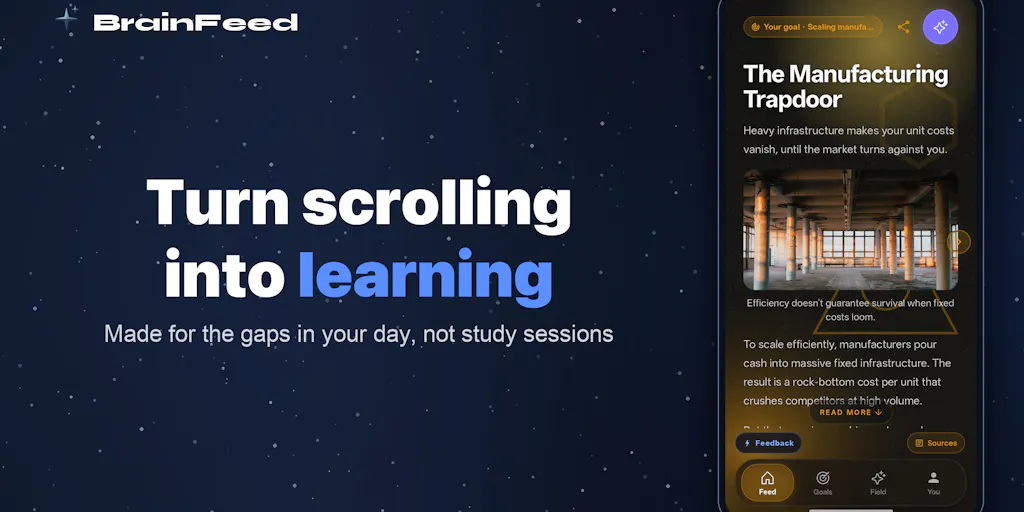
Every cross-border operator I know is quietly running the same experiment: replacing human coordination with agent-to-agent negotiation. Sourcing agents talk to factory agents, freight forwarders ping customs brokers, and review-request bots file tickets with supplier bots. So when a founder launches an agent-to-agent network for venture fundraising — Bleetz Network from Davit Svanidze and the team behind FlowMarket — I don’t read it as a fundraising story. I read it as a preview of the matching infrastructure that’s about to hit supplier discovery, wholesale sourcing, and brand acquisition. The mechanics matter more than the vertical.
What Bleetz Actually Does (And Why the Framing Is Sneaky-Good)
The pitch is blunt: “the world’s first (and, if I’m not mistaken, only) A2A (agent-to-agent) network, where businesses can find suppliers and customers within seconds.” That’s the founder’s own description of FlowMarket, but Bleetz is the fundraising wedge of the same idea. The team scraped and enriched roughly 2,000 VC funds worldwide, turned each into a simulated agent, and built a pipeline where your startup agent pitches their fund agent and receives one of three answers: YES, NO, or MAYBE. A YES unlocks the fund’s contact details and investment team. A MAYBE opens a follow-up thread. The platform is free — the founder frames it as FlowMarket’s gift to founders, “unless we start bleeding tokens too hard.”
Strip away the VC context and what you have is a deterministic filter plus a conversational agent layer. The deterministic filter handles sector, geography, thesis, and stage. The agent layer handles the pitch itself. That two-stage architecture is exactly what the best sourcing tools are converging on, and it’s worth studying before you buy another seat of anything.
Why the “MAYBE” Button Is the Most Underrated Design Choice
Most automation in e-commerce is binary: accept or reject, match or no-match. Bleetz introduces a third state that maps to “the agent has more questions.” Harsh Yadav called this out in the comments, noting the maybe option “is the right call rather than pure yes/no.” The founder agreed, clarifying that maybe is “just a case for the fund agent has more questions, otherwise yes or no are relatively accurate.”
For sellers, this is a template. Your supplier qualification flow shouldn’t be pass/fail. It should have a “needs more context” bucket that triggers a structured follow-up — MOQ clarification, lead time confirmation, certification upload — before you burn a human sourcing manager’s afternoon.
How It Differs From the Cold-Email Industrial Complex
The obvious comparison is the pile of AI outreach tools that have flooded Product Hunt over the last 18 months. Priya K nailed the distinction in the thread: “Really clever way to use AI, much better than just another generic cold email writer.” The founder’s reply is the money quote: “there are enough tools which spray and pray, basically turning a pitch into a spam email.”
That’s the real differentiation. If you’ve used Apollo, Instantly, or any of the Clay-adjacent enrichment stacks, you know the failure mode: hyper-personalized first lines bolted onto a mass send. Bleetz inverts it — the agent conversation happens before a human ever sees the pitch, and the human only enters on a YES or a MAYBE follow-up. That’s closer to how TikTok Shop affiliate matching works than how outbound email works.
Where the Math Breaks
Free is a great acquisition strategy and a terrible signal about unit economics. The founder admits the free tier holds “as long as token burn allows it.” Translation: the moment inference costs outrun FlowMarket’s revenue, either Bleetz gets gated, throttled, or quietly deprecated. If you’re building a workflow on top of it, don’t.
What Cross-Border Sellers Should Actually Steal From This
Three patterns, in order of usefulness.
1. The simulated counterparty. Bleetz doesn’t wait for VCs to sign up. It scrapes them, enriches them, and simulates them until they claim their agent. The founder confirmed: “The VCs are scrapped and enriched, they are simulated, but funds can claim the agents.” Now map that to your world. You don’t need your factory to onboard to a new sourcing platform. You need a simulated version of your factory agent — loaded with their MOQs, lead times, and payment terms — that can answer your procurement agent’s questions at 2 a.m. Shenzhen time. When the real factory claims the agent, the simulation gets replaced with live data. That’s a cold-start solution most B2B marketplaces still haven’t cracked.
2. Deck-in-context, not summary-in-context. A commenter asked whether the startup agent pulls from a deck or a short description. The answer: “pulls whole deck and puts it into the context + startup user has possibility to adjust profile, prompts and pretty much add as much info as needed.” For sellers, the equivalent is feeding your sourcing agent the full spec sheet, the full compliance certificate PDF, and the full prior order history — not a three-line summary. Context quality is the whole game.
3. The honesty about hallucination. This is the part most founders would have buried. Asked how hallucination is prevented, the founder said: “It’s not 100% hallucination free, but it fell drastically. Mostly its VCs, who are inventing wrong reasons for ‘no’ (less so for yes).” He also admitted the agents are “a bit too ‘kind’ right now, the ‘YES’ share is too large. But we want our users to have fun.”
Read that twice. The false-positive rate is high by design because a discouraging demo kills retention. Every AI sourcing tool you evaluate has the same bias. Your supplier-matching agent will over-recommend. Your listing-optimization agent will over-promise. Build your human review layer around the assumption that the agent is optimistic, not calibrated.
Why Amazon Sellers Should Care More Than Shopify Ones
A Shopify DTC brand’s supplier relationships are relatively stable — you find a manufacturer, you scale, you maybe add a second source. An Amazon FBA seller lives in constant re-sourcing: MOQ negotiations, backup suppliers for every SKU, seasonal factories, and the constant threat of a supplier going direct. The A2A pattern Bleetz is testing — match, simulate, iterate, only escalate to human on a qualified yes — is worth far more to a seller running 40 SKUs across three categories than to a brand running one hero product. If you’re on Amazon Seller Central juggling supplier diversification, this is your blueprint, even if Bleetz itself never touches your vertical.
Where My Judgment Says It Falls Short
First, the “world’s first A2A network” claim is doing a lot of work. Agent-to-agent protocols are being built inside OpenAI’s ecosystem, Anthropic’s tool-use stack, and every serious B2B SaaS company’s roadmap. Being first to brand it doesn’t mean being first to build it defensibly.
Second, the founder is candid that VC feedback is thin: “We haven’t spoken with many VCs so far, the platform went live yesterday.” That’s honest, but it means the matching quality is unvalidated by the counterparty that matters. A simulated VC agent that says YES too often isn’t a matching engine — it’s a confidence-boosting toy.
Third, the “funds can claim the agents” model has a nasty cold-start problem. Until enough real funds claim their agents, every pitch is being evaluated by a hallucination-prone simulation. The founder acknowledges hallucination was “mostly about several recurring topics” and has been “mostly removed” — but “mostly” is not a number.
Fourth, and most importantly for my readers: there’s no disclosed pricing, no disclosed data retention policy, and no disclosed answer on what happens to your pitch deck once it’s inside the simulated VC agent’s context. If you’re a seller considering feeding supplier contracts or margin data into any A2A tool, that last point is disqualifying until answered.
What I’d Watch / Test Next
This week, do three things. First, audit one manual matching workflow you run — supplier quotes, affiliate applications, wholesale inquiries — and write down the three questions a human always asks before saying yes. That’s your agent’s deterministic filter. Second, pick one AI tool you already pay for (Klaviyo’s AI features, Helium 10’s Listing Analyzer, whatever’s in your stack) and check whether it has a MAYBE state or just yes/no. If it’s binary, you’re losing qualified leads to false negatives. Third, watch whether Bleetz publishes real fund-side engagement numbers in the next 60 days. If claimed agents convert to active fund participation, the A2A thesis has legs. If the “YES share is too large” problem persists past launch week, it’s a demo, not infrastructure — and you should treat every “agent-to-agent” pitch in your inbox the same way until proven otherwise.