The $14 one-time app that should make every SaaS founder nervous
Cross-border sellers live inside subscription fatigue. Between Shopify plans, Klaviyo tiers, Helium 10 seats, and a dozen niche tools, the average DTC operator I talk to is bleeding four figures a month before a single ad runs. So when a maker launches a polished desktop product at $14 once, no subscription, 7-day free trial, I pay attention — not because art wallpapers matter to e-commerce, but because the pricing model is a direct shot at the SaaS stack we’ve all been trained to accept. Art4, built by indie maker unvalley, is a small app with a large strategic lesson for anyone selling software, digital goods, or “premium experience” products across borders.
What Art4 actually is, and the problem it names
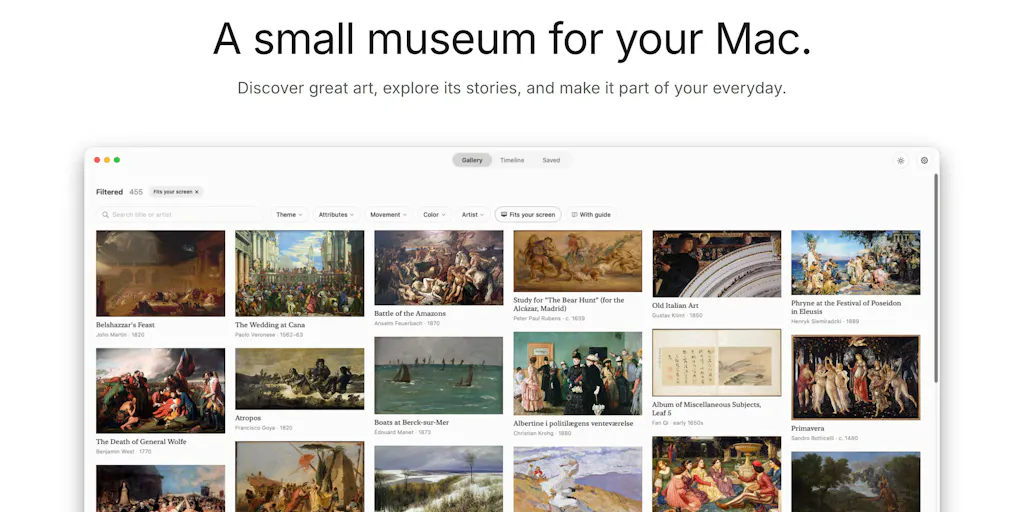
The origin story is refreshingly unglamorous. The maker says a Renoir at the Musée d’Orsay made him want great paintings in front of him every day, and that saving images from museum sites by hand got old — so he built Art4. The pitch: enjoy art as your wallpaper while interactively exploring its background, the painters’ timeline, and relationships between works. Pricing is a one-time $14, with a 7-day free trial, and the launch post is live on Product Hunt.
Strip away the art-world framing and you have three product decisions worth studying:
- A narrow, emotional job-to-be-done. Not “productivity,” not “creativity suite” — a specific feeling (living with great paintings) attached to a specific friction (manual downloading from museum sites).
- Interactive depth as the differentiator. Wallpaper apps are a commodity. Layering background context, painter timelines, and relationship graphs turns a static asset into something closer to a learning tool.
- Ownership pricing. One payment, no recurring bill.
For a cross-border seller, none of these are about art. They’re about how you package a product when the category is crowded and the buyer is tired.
Why the “no subscription” line lands harder outside the US
If you sell digital products into the EU, UK, or Australia, you already know that subscription churn is compounded by local payment norms, VAT handling on recurring billing, and a growing consumer backlash against “everything as a service.” A one-time price removes an entire operational layer: no dunning emails, no involuntary churn from expired cards, no proration logic. That’s not just a marketing angle — it’s a fulfillment simplification. Sellers running Stripe or Paddle for cross-border digital goods should note how much compliance surface area a one-time SKU eliminates.
How it differs from the incumbents — and where the comparison gets uncomfortable
Let’s be honest about the competitive set. Art4 isn’t fighting museum apps. It’s implicitly competing with:
- Free wallpaper aggregators (Unsplash, Wallpaper Abyss, and the endless Pinterest boards).
- Museum digital archives — the Met, Rijksmuseum, and others offer open-access images you can download manually.
- Paid wallpaper/desktop customization tools that bundle art into a broader personalization suite.
Against free, Art4’s bet is that curation plus interactivity plus zero-effort setup is worth $14. That’s a defensible bet — it’s the same logic behind paid Notion templates, paid Figma plugins, and paid presets for Lightroom. The buyer isn’t paying for pixels; they’re paying for the removal of friction and the addition of context.
Where the math breaks
Here’s my skepticism. A $14 one-time price with a 7-day free trial means the trial-to-paid conversion has to be exceptional, because there’s no expansion revenue. If Art4 acquires 1,000 paying users, that’s $14,000 — gross, before payment fees, before any ongoing cost of serving content, licensing, or support. A subscription at even $2/month would beat that within seven months per retained user. The maker is trading lifetime value for conversion rate and goodwill. That works for a solo indie project; it does not scale to a team with salaries.
For cross-border sellers eyeing this model for their own digital products, the lesson isn’t “go one-time.” It’s “know which side of the LTV math you’re on.” Physical goods with replenishment potential (consumables, refills, accessories) should almost never go one-time. Pure-utility software with low ongoing cost can.
Why Amazon sellers should care more than Shopify ones
This is the sidebar I keep coming back to. Amazon FBA brand owners are structurally allergic to subscriptions — Amazon Seller Central doesn’t natively support recurring digital billing, and most FBA sellers monetize through repeat physical purchases, not SaaS. So a one-time-purchase digital product is actually a natural fit for the Amazon ecosystem: it can be sold as a digital add-on, a downloadable guide, or a companion asset attached to a physical SKU.
Shopify merchants, by contrast, already have Recharge, Bold Subscriptions, and Shopify’s native subscription APIs at their fingertips. A one-time digital product is a worse fit for them — they’re leaving money on the table if the product has any recurring value. So the Art4 pricing model is a signal for Amazon-native and marketplace-native sellers, not DTC subscription operators.
What cross-border sellers can borrow from Art4
Three transferable plays, in order of how quickly you can test them.
1. Sell the narrative, not the asset
The Renoir-at-the-Musée-d’Orsay detail is doing enormous work. It’s specific, sensory, and personal. Compare that to the average Amazon listing bullet: “High-quality materials, durable construction, easy to use.” That’s not a story; it’s a spec sheet. Art4’s launch copy succeeds because it makes you feel the problem before it names the solution.
For a cross-border brand, this translates to origin stories and use-case vignettes in your Amazon A+ Content, your TikTok Shop video hooks, and your Etsy listing descriptions. Etsy sellers already know this — the platform rewards narrative. Amazon sellers are slower to adopt it, which is exactly why it’s an edge.
2. Bundle depth into a commodity
Wallpapers are free everywhere. Art4 adds timelines and relationship graphs. What’s the equivalent for your product? A physical product can ship with a QR code linking to a digital companion — a care guide, a styling guide, a community. A digital product can ship with a “how to get the most out of this” interactive layer. This is the same playbook Duolingo used to turn flashcards into a habit loop, and it’s the same reason Canva beat basic design tools.
3. Price for trust, not for extraction
$14 once signals “I’m not trying to trap you.” In cross-border markets where trust is the scarcest currency — think first-time buyers on Temu, SHEIN, or eBay from unfamiliar sellers — a transparent, non-recurring price can be a conversion lever. Not always, but more often than Western SaaS orthodoxy admits.
Where my judgment says Art4 falls short
I’m not going to pretend this is a category-defining product. Three real concerns:
Licensing is a live wire. In the maker’s own reply to a commenter requesting Siqueiros, he admits the artist’s work doesn’t have a license to add. That’s a candid moment, and it exposes the core risk of any art-curation product: rights clearance. For a cross-border seller, the lesson is blunt — never build a product on assets you don’t have clean rights to, especially when selling into jurisdictions with aggressive IP enforcement like the EU and US. Museums vary wildly in what they permit; “open access” is not a blanket license.
The moat is thin. Interactive timelines and relationship graphs are a feature, not a platform. A competitor with better design or a museum partnership could replicate the core in weeks. The only durable moat here is brand and community — which is precisely why the maker is on Product Hunt telling the Renoir story.
The audience is small. Art lovers who pay for wallpapers are a niche of a niche. That’s fine for a solo maker; it’s a warning for anyone thinking “I’ll just do this at scale.”
The uncomfortable question for sellers
If a $14 one-time art app can generate launch-day buzz on Product Hunt, why do so many cross-border sellers struggle to get attention for objectively more useful products? The answer is almost always positioning and story, not product quality. Art4 didn’t win because it’s technically superior. It won because it made a specific person feel something. That’s a discipline, not a budget line.
What I’d watch / test next
This week, three concrete moves:
- Audit your pricing model against your LTV math. If you’re running a subscription with high involuntary churn, test a one-time “lifetime” tier as an alternative SKU. Watch conversion and refund rates for 30 days before committing.
- Rewrite one product listing as a story, not a spec sheet. Pick your worst-converting Amazon or Etsy listing and rewrite the first three bullets around a specific customer moment. A/B it against the original.
- Check your IP clearance. If you sell anything with licensed imagery, characters, or artist references, verify your rights documentation before your next restock. The Siqueiros moment in Art4’s comments is a reminder that even well-intentioned makers hit this wall.
I’d also watch whether Art4 holds its one-time pricing or quietly introduces a Pro tier. That pivot — from “buy once” to “subscribe for more” — is the single most common trajectory for indie apps that find traction, and it tells you whether the $14 model was conviction or just launch strategy. If it holds, it’s a real data point for the anti-subscription movement. If it flips, it’s confirmation that the math eventually wins. Either way, cross-border sellers should be taking notes — because the pricing war isn’t happening in art apps. It’s happening in your category next.