The Alpha Vantage MCP Moment: What a Financial-Markets Chatbot Tells Cross-Border Sellers About the Next Wave of AI Tooling
The most useful signal in this week’s Product Hunt feed has nothing to do with e-commerce, and that’s exactly why you should read it. Alpha Vantage MCP, launched November 5th, 2025, is a natural-language conversation layer over financial-markets data — and it is the clearest working example of a pattern that will reshape how cross-border operators touch their own numbers. Most sellers I talk to still think of AI as a copywriting shortcut or a customer-service deflection bot. The interesting shift is different: the model stops being a content generator and becomes a query surface over messy, regulated, fragmented data. That is precisely the problem every Amazon, Shopify, and TikTok Shop operator has — too many dashboards, too many exports, no way to ask a plain question and get a defensible answer. Alpha Vantage is solving that for stock data. The architecture lesson is portable, and the failure modes are instructive.
What the product actually does — and the problem it really solves
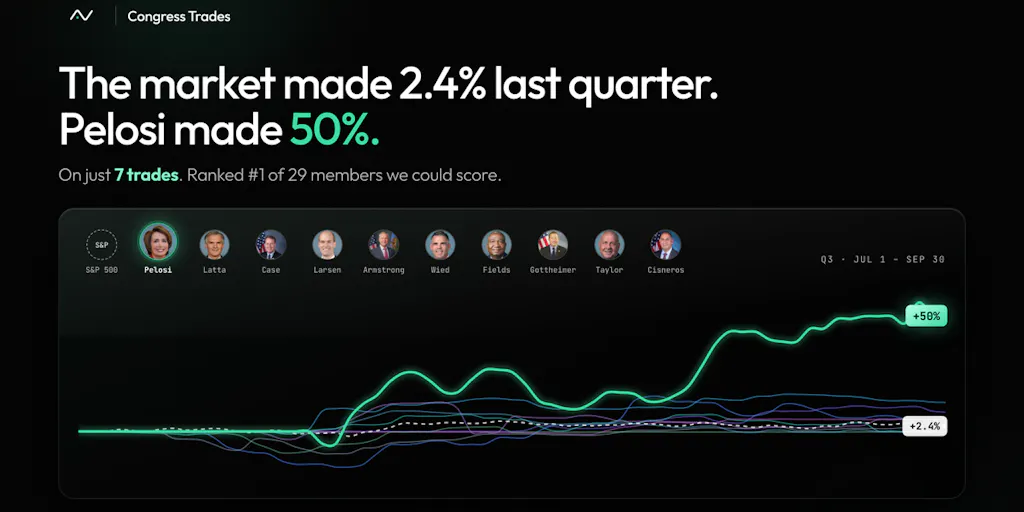
Let me be precise about the launch, because the framing matters. Alpha Vantage has been around since October 9th, 2017 as a provider of free APIs for realtime and historical stock market data. The MCP release is not a new dataset; it’s a new interface. Per the maker’s launch note, the immediate use case was built around congressional stock disclosures: “We built Congress Trades to answer two questions people naturally ask about Congress and the stock market: 1. How much did each member make? 2. What could you have made copying them?”
That’s a deceptively narrow framing for a structurally interesting product. The underlying problem the maker describes is the classic data-liberation problem: “Members of Congress have to disclose their stock trades, but the filings are scattered PDFs, and you’d still need to look up how each stock performed afterward to know whether the trades were any good.” So the team pulls “every House and Senate disclosure” and benchmarks each member “apples-to-apples against the S&P 500 over the exact same days.”
Read that sentence again as an e-commerce operator. Substitute “supplier invoices” or “Amazon settlement reports” or “TikTok Shop payout statements” for “scattered PDFs,” and substitute “category benchmark” for “S&P 500,” and you have the exact data problem that eats 10–15 hours a month inside most mid-size cross-border teams. The product’s core insight is not the chatbot. It’s the normalization layer underneath: pull heterogeneous filings, align them to a common time window, benchmark against a reference series, then let a human interrogate the result in natural language.
The maker even front-loads a finding, which is a nice touch and worth noting because it shows the tool produces opinionated output rather than raw tables: “most of the heaviest traders seem to perform close to the index, while the members with the biggest numbers often made just a few large bets. In the past 90 days, Ro Khanna lost 0.5% on 817 trades, while Nancy Pelosi did +50% on just 7. (The S&P rose 2.4%.)” Whatever you think of the politics, that is a portfolio-construction observation — high activity, index-like returns; low activity, concentrated bets, high variance. Every Amazon seller running 400 SKUs at 12% net margin while one hero ASIN carries the P&L knows this pattern in their bones.
Access is tiered: browse without an account, create a free one to see rankings over the past year and follow members or stocks, and pay for “the full history and complete rankings, plus email alerts for new filings.” Pricing is not disclosed on the page.
Why this is an MCP story, not a Congress story
The name is the tell. MCP — Model Context Protocol — is the plumbing that lets a language model call out to a defined set of tools and data sources rather than hallucinate around them. I’ve written before about why this matters more than any single chatbot UI: it turns “AI” from a destination you visit into a capability that any agent, IDE, or workflow tool can invoke. For a cross-border seller, the practical version of that future looks like asking your ops agent “which SKUs had return rates above 8% in Germany last quarter and what did that cost me in FBA removal fees,” and getting an answer traced to specific reports. Alpha Vantage MCP is a clean, public demonstration of the pattern in a domain where accuracy is non-negotiable. That’s the thing to study.
How it stacks up against the incumbents you’d actually compare it to
Here’s where I’ll be blunt: as a product for cross-border sellers, Alpha Vantage MCP is not for you. As a reference architecture, it’s better than most of the “AI analytics” tools being pitched to merchants right now.
Compare it to the financial-data incumbents first, since that’s the honest apples-to-apples. The established names in this space — Bloomberg terminals, FactSet, Refinitiv (now LSEG) — sell depth, compliance, and a seat license that costs more than most Shopify stores’ annual GMV. Alpha Vantage’s historical positioning was the opposite: free APIs, developer-first, no seat. The MCP launch pushes further in that direction by making the data conversational and, critically, by shipping an opinionated vertical app (Congress Trades) on top of the raw feed. That’s a smarter go-to-market than “here’s an API, good luck.” It’s the difference between selling flour and selling bread.
Now the e-commerce comparison, which is where the real lesson lives. If you want to see what this pattern looks like applied to merchant data, look at what Shopify has been doing with its Sidekick assistant and its own MCP server work — the strategic bet is identical: normalize the merchant’s messy operational data, expose it as tools, let a model reason over it. Amazon’s equivalent lives inside Amazon Seller Central and its Brand Analytics reports, but the interface is still fundamentally a dashboard you click through, not a conversation. Third-party tools like Helium 10 and Jungle Scout have added AI layers, but mostly as feature garnish on top of keyword and product-research workflows rather than as a true query surface over your own P&L.
Where Alpha Vantage differs from all of them is scope discipline. It does one domain — market and disclosure data — and does the boring normalization work completely before adding the chat layer. Most e-commerce AI tools do the opposite: they ship the chat layer first and hope the data underneath is good enough. It usually isn’t.
Why Amazon sellers should care more than Shopify ones
This is a judgment call, but I’ll defend it. A Shopify DTC brand’s data is relatively clean and first-party: orders, customers, ad spend, email events, all flowing through a stack you control. A Shopify operator can already get decent answers from a warehouse plus Klaviyo plus a BI tool. The marginal value of a conversational layer is real but incremental.
An Amazon FBA seller’s data is a different animal. Settlement reports, reimbursement reports, inventory ledgers, return reports, advertising console exports, and Brand Analytics search-term data all live in separate corners of Seller Central, arrive on different cadences, and use different identifiers for the same SKU. Reconciling them is the single most hated task in the operator’s month — and the one most likely to hide real money, whether that’s unreimbursed FBA losses, misattributed ad spend, or return rates that quietly crossed a profitability threshold. A well-built MCP layer over that mess would be worth more than any copywriting tool on the market. Alpha Vantage’s Congress Trades is a proof that someone can do that normalization work and expose it cleanly. Nobody has done it well for FBA settlement data yet. That’s the gap.
TikTok Shop and Temu operators face a version of the same problem with worse tooling: faster payout cycles, more volatile return behavior, and far less mature analytics infrastructure. If you’re running TikTok Shop at any volume, you already know the feeling of exporting three CSVs to answer one question.
What cross-border sellers can borrow from this launch
Three things, and none of them require you to write code.
First, the benchmark discipline. The maker’s core methodological choice — measure each member “apples-to-apples against the S&P 500 over the exact same days” — is the thing most seller analytics gets wrong. When you evaluate a SKU, an ad campaign, or a market, you need a reference series measured over the identical window. Comparing your Q4 Germany return rate to your annual global average is not a comparison; it’s a story you’re telling yourself. Pick your benchmarks deliberately: category median margin, your own trailing 90-day baseline, or a competitor’s public pricing. Then hold the time window constant. This sounds obvious and almost nobody does it.
Second, the “two questions” product framing. The maker didn’t launch “an API for congressional data.” They launched two questions: how much did each member make, and what could you have made copying them. That’s a masterclass in scoping an internal tool. If you’re building anything — a dashboard, a script, a prompt library for your team — start from the two or three questions your ops lead actually asks every Monday, not from the tables you happen to have. The tool should answer the question, not present the data and wish you luck.
Third, the visible-provenance instinct. Look at the top comment on the launch, from Oleksii Sekundant: “I’d keep the filing date very visible beside the trade date. That distinction matters when someone is looking back at what was actually public at the time.” The maker’s reply is equally instructive: “Yes indeed, very important to be able to see that info! Can you let me know where you expected to see the disclosure date (and it was not there)? For example, the Filings tab of home page groups trades under their disclosure day rather than showing it on each row.”
That exchange is the whole ballgame for AI analytics. The difference between a trade date and a disclosure date is the difference between what happened and what you could have known. In e-commerce terms: the difference between when an order was placed and when it settled, when a return was initiated and when it hit your reimbursement report, when an ad click converted and when the attribution window closed. Any AI tool that flattens those timestamps is lying to you, politely. When you evaluate a vendor, ask them where the “as-of” date lives. If they can’t answer, walk.
Where the math breaks
I want to flag one thing in the launch data that I think is being read too generously, because it’s the kind of error cross-border sellers make constantly. The headline stat — “Nancy Pelosi did +50% on just 7 [trades]” — is presented alongside “Ro Khanna lost 0.5% on 817 trades” and an S&P benchmark of +2.4%. The implicit argument is that concentration beats activity. But seven trades is not a track record; it’s a sample size small enough that variance swamps skill. If you ran that comparison across a thousand seven-trade portfolios, you’d get a wide spread of outcomes driven almost entirely by luck, and you’d be reading the right tail as genius. This is exactly the mistake DTC operators make when they kill a broad ad campaign after two weeks because one creative “won” on a sample of forty conversions. The tool surfaces the number correctly. The interpretation is on you. That’s true of every analytics product, including the ones you’re already paying for.
Where my judgment says it falls short
Three reservations, in order of how much they should worry you.
The consumer framing undersells the product. Leading with “what could you have made copying them” positions this as a novelty for the politically curious. The durable use case is professional: research analysts, compliance teams, journalists, and anyone who needs to benchmark a disclosed portfolio against a reference index on matched dates. The launch page’s tone invites a audience that will churn after the novelty fades. I’d have led with the methodology, not the meme.
Pricing opacity is a real friction. The page says a paid subscription unlocks “the full history and complete rankings, plus email alerts,” but doesn’t say what it costs. For a developer-first tool with a free tier, that’s a conversion leak. Cross-border sellers evaluating tooling have a hard budget line for SaaS, and “contact us” is where evaluations go to die. Not disclosed is not the same as reasonable.
And the honest one: this is not an e-commerce product. The domain is financial markets. There’s no SKU, no order, no return, no ad spend in the data model. I’m writing about it because the pattern is transferable, not because you should sign up. If you’re looking for an actual merchant-facing conversation layer, you’re waiting on Shopify, Amazon, or a well-funded startup to ship it — and the ones that win will be the ones that do the settlement-report normalization work first, exactly as Alpha Vantage did with congressional filings. Watch that space, not this launch, for your buying decision.
What I’d watch / test next
This week, do three things. First, open your own worst spreadsheet — the one where you reconcile Amazon settlement reports against your bank deposits — and write down the two questions you ask it every month. Those are your MCP use cases, and they’re the spec for whatever tool you build or buy next. Second, audit one existing analytics vendor on provenance: ask them, in writing, where the “as-of” timestamp lives for a return and for an ad conversion, and see whether the answer is specific or hand-wavy. Third, go read the Alpha Vantage MCP launch thread yourself, specifically the maker’s replies, because the way a team handles a precise methodological critique from a user tells you more about the product’s roadmap than the landing page does. Then set a calendar reminder for Q1 to re-evaluate the merchant-side MCP landscape — I expect at least one serious FBA settlement-layer entrant by then, and you want to be early, not scrambling.