The Subscription Bloat Problem Is Now a P&L Line Item — And Most Sellers Are Still Flying Blind
Cross-border sellers run their businesses on a stack of recurring charges that nobody audits until cash gets tight. Shopify apps, Helium 10 seats, Klaviyo tiers, 3PL minimums, VPNs, creative tools, review software — the average seven-figure DTC brand is quietly bleeding four to six figures a year on subscriptions that were “temporary” eighteen months ago. So when a consumer-grade subscription tracker like Subscrr ships an AI layer that tells you what to cancel and what it costs you annually, I pay attention — not because I need a personal finance app, but because the underlying mechanic is exactly what most operator teams are missing on their own vendor spend. The launch thread is small, the product is early, and the maker is refreshingly honest about the limits. That’s precisely why it’s worth dissecting.
What Subscrr Actually Solves (And What It Doesn’t)
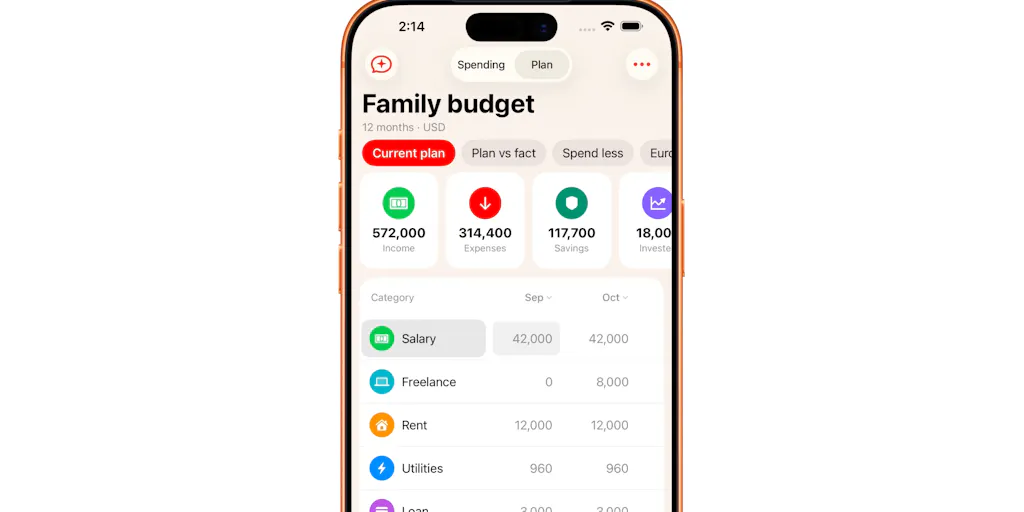
The core pitch is simple: see every subscription you’re paying for, and see what it really costs — broken down by day, not just month, so the psychological friction of “it’s only $29” evaporates. The August 16th, 2026 launch builds on an earlier Subscrrr release from February 28th, 2026, which was already framed around “see where your money goes.” The new version adds three things, per maker Artur Mineev’s launch post: a financial plan you can build manually or by chatting with an AI, scenario modeling (“what if I cancel Netflix?”), and a natural-language query layer that answers “what should I cancel?”
That third feature is the interesting one. Not because it’s technically novel — every SaaS product has bolted a chat box onto its UI since 2023 — but because the output is a specific dollar figure rather than a vague admonishment. As Mineev put it in a reply to Oscar Bennett, “‘you’re overpaying’ is easy to ignore, but a specific number is easy to act on.” That single sentence is the most transferable insight in the entire launch, and I’ll come back to it.
Why this matters more to Amazon sellers than Shopify ones
Here’s a pattern I’ve watched for years: Shopify-native DTC brands tend to run lean, app-light stacks because the platform’s app ecosystem is expensive and founders feel every $49/month charge. Amazon FBA sellers, by contrast, accumulate tooling the way a warehouse accumulates pallets — a Helium 10 subscription here, a Jungle Scout seat there, a repricer, a review automation tool, a PPC management layer, a reimbursement recovery service taking a percentage cut, plus Amazon Seller Central’s own fees layered on top. Nobody cancels anything because canceling feels like removing a limb. The result is that Amazon-side operators are the ones who most need a Subscrr-style audit, and the ones least likely to do it manually.
The same logic applies to TikTok Shop sellers riding the affiliate wave — the affiliate management tools, the creative subscription bundles, the ad-spy services — and to Temu and SHEIN marketplace sellers who bolt on repricing and sourcing tools. Every one of those platforms has a subscription tail, and almost none of it gets audited.
How It Stacks Up Against the Incumbents
The subscription-tracking category isn’t empty. Rocket Money is the obvious US incumbent, and it wins on one thing Subscrr explicitly refuses to do: bank connections. Rocket Money logs into your accounts, sees everything automatically, and negotiates bills on your behalf. Trim does something similar. The tradeoff is total — you hand over credentials (or OAuth access) and accept that a third party now sees your full financial picture.
Subscrr takes the opposite bet: privacy-first, no bank login, import via screenshots. That’s a defensible niche, and it’s the same bet that Copilot Money and a handful of others have made with varying success. But it also creates the exact friction that Raphael Stanislas flagged in the launch thread: the Apple ID screenshot import only caught three subscriptions, because most of his real spend — Shopify, Netflix — is billed directly to a card, not through Apple. His verdict is blunt: “Adding everything else by hand takes away a lot of the magic, since the real value is discovering subscriptions I’d forgotten about.”
That’s the whole ballgame for a discovery product. If the discovery step is manual, you’ve built a spreadsheet with better typography.
Where the math breaks
Mineev’s response is worth reading closely because it reveals both the roadmap and the honest limits. The next update adds a “Paid by card? Add a bank statement” step — screenshot your banking app, and Subscrr extracts recurring charges and merges them with the App Store data, deduplicating as it goes. Still no bank login. PDF and CSV statement support is “on the list next.”
But here’s the tell: Mineev admits that “recognition runs through our own proxy, not fully on-device. The image isn’t stored and nothing is tied to your identity, since there’s no account.” So the privacy-first positioning is real in the sense that there’s no bank credential handoff and no persistent identity — but it’s not the on-device, zero-egress model that Stanislas assumed when he suggested “processed on-device.” For a consumer that’s probably fine. For an operator uploading a bank statement that includes supplier payments, ad spend, and marketplace disbursements, “our own proxy” deserves a hard look at the privacy policy before you send anything.
Also worth noting: the annual-savings rollup that Jason Wu asked about isn’t shipped yet. Today each finding shows monthly savings only; the yearly aggregate (“Everything found together: about $X a year”) is coming in the next update. That’s a small thing, but it’s the exact number that changes behavior.
What Cross-Border Operators Should Actually Steal From This
I don’t think most sellers should install Subscrr for their business finances — it’s built for personal subscriptions, and the import story isn’t there yet for a card-heavy commercial stack. But the mechanics are worth copying into your own vendor audit, and there are three I’d lift immediately.
1. Reframe every subscription as a daily cost
The per-day breakdown is the sleeper feature. A $299/month Helium 10 Diamond plan is $9.83/day. A $500/month Klaviyo tier is $16.44/day. A $150/month 3PL software seat is $4.93/day. When you stack twenty of those, you’re looking at a daily burn that maps directly onto your contribution margin per order. Most operators can tell you their CAC to the penny and their SaaS spend to the nearest thousand. That asymmetry is embarrassing once you see it.
2. Make recommendations dollar-specific, not adjective-specific
“Your ad spend is inefficient” is ignorable. “Canceling these three tools saves $4,320/year, which is 1.8% of your Q3 net margin” is not. This is the same principle behind why Klarna’s “4 payments of $12.50” converts better than “$50” — specificity plus decomposition changes the decision. Apply it to your internal ops reviews.
3. Model scenarios before you commit, not after
The scenario feature — “what happens if I add another subscription, cancel Netflix, change my spending” — is the thing I’d most want in a business context. Every Q4, sellers make seat-expansion decisions under peak-season panic. A simple model that says “adding two more Klaviyo seats and a second 3PL integration costs $X through December and saves $Y in manual labor” would prevent a lot of January regret.
Where My Judgment Says This Falls Short
Three honest reservations.
First, the discovery problem is unsolved. Until the bank-statement import ships and works reliably, Subscrr is a manual tracker with an AI chat on top. That’s a real product, but it’s not the product the launch copy implies. The Apple-only import path is a hard ceiling for anyone whose subscription mix looks like a real operator’s.
Second, the AI is doing arithmetic, not analysis. “What should I cancel?” is answered by looking at recurring charges and flagging the expensive ones. There’s no usage data, no overlap detection (“you’re paying for both Helium 10 and Jungle Scout and using one”), no renewal-date awareness, no negotiation. Compare that to what Ramp does on the B2B side — where the card itself becomes the discovery layer — and the gap is obvious. The consumer version of this problem is genuinely harder because there’s no card in the middle.
Third, the privacy story is softer than the marketing suggests. “No bank connection” is true. “Nothing runs on-device” is also true, per the maker’s own admission. Those two facts can coexist, but operators reading “privacy-first” should not assume the second.
What I’d Watch / Test Next
This week, before you install anything, pull your last 90 days of card and bank statements and tag every recurring charge. Not in your head — in a sheet. You’re looking for three buckets: tools you use daily, tools you use monthly, and tools you forgot existed. I’d bet the third bucket is 15–25% of your total SaaS spend, and that’s your real finding, not whatever an app tells you.
Then, if you want to test Subscrr specifically, do it on your personal subscriptions first, not your business stack — the import limitations will frustrate you less, and you’ll get a clean read on whether the AI’s dollar-specific recommendations actually change your behavior. Watch for the bank-statement import and the annual-savings rollup; both are the features that determine whether this becomes a habit or a novelty.
And regardless of what you install, steal the framing: put a daily cost next to every subscription line in your P&L, and put a specific annual dollar figure next to every “we should probably cancel that” conversation. The number is what moves people. Everything else is just a prettier dashboard.


