Why a Linux Desktop Story Matters to People Who Sell Widgets on Amazon
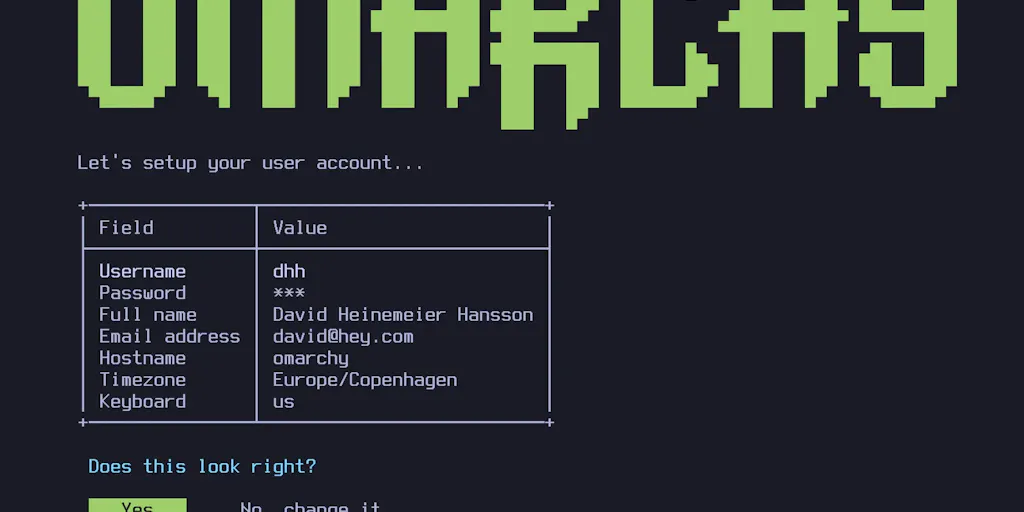
Here’s the thing about cross-border e-commerce: we are all, at our core, in the business of managing complexity. You have a supply chain in Shenzhen, a storefront in Seattle, a TikTok Shop in London, and a returns center in Warsaw. The operators who win are not necessarily the ones with the best product images or the biggest ad budgets—they are the ones who can inspect, change, and repair their operational stack faster than the market shifts. The launch of Omarchy (specifically, its v4.0.0 “Quattro” release) is ostensibly a story about the Linux desktop. But if you squint, it is actually a blueprint for how we should think about our own tooling stacks—where the “operating system” is your e-commerce backend, and the “agents” are the AI automations we are all blindly trusting to manage our inventory and ad spend. This essay is about what a system designed to be easily inspectable and repairable by AI agents means for a DTC operator who lives in Shopify and Seller Central.
The source material is a Product Hunt launch thread from Zac Zuo, the hunter, who makes a compelling case that Omarchy is starting to look like a desktop with a point of view, rather than just a beautiful Arch setup. It is a niche story, sure, but the underlying philosophy—that agents make it cheaper to disagree with the defaults—is the most relevant operational thesis for 2026.
The Problem: Your Stack is a Black Box, and It’s Costing You Margin
Let’s talk about the actual pain point that Omarchy Quattro addresses, translated into the language of a cross-border seller. For years, the Linux desktop has been a paradox. It exposes everything through files and commands—which used to mean more work for the user. You had to read config files, understand nested directories, and run terminal commands just to get Wi-Fi working. In e-commerce, we have the equivalent problem in reverse: our platforms (Shopify, Amazon) expose very little. They give us a clean GUI, but the underlying logic is a proprietary black box.
When I run my brand’s P&L, I have to reconcile data from Klaviyo, Amazon Seller Central, and Shopify’s admin. I am not looking at a config file; I am looking at a dashboard that hides the “code.” The problem with this is that when something breaks—say, a fulfillment rate drops because a warehouse in California is bottlenecked—I cannot “inspect” the system easily. I have to call support or dig through CSV exports.
Omarchy’s thesis, as articulated by the hunter, is that Linux has always exposed itself through files and commands, which used to be a burden. But with agents, that same exposure becomes a superpower. The system becomes unusually easy to inspect, change, and repair. For us, the lesson is clear: if your e-commerce backend is opaque, you are relying on hope and expensive consultants. If it is transparent—if you can see the “files” of your ad spend or your shipping logic—you can let an agent fix it.
This is why the concept of omakase computing is so interesting. In a sushi context, omakase means “I’ll leave it up to the chef.” In the context of this OS, it means DHH (David Heinemeier Hansson) makes strong choices up front for you. You don’t have to configure every pixel. But the key differentiator is that you aren’t locked in. The system is designed so that an agent can inspect those choices and change them cheaply.
Why Amazon sellers should care more than Shopify ones
If you are a Shopify seller, you are used to modularity. You can uninstall a theme, switch a payment gateway, or plug in a new app. You have a degree of control over your “config.” But if you are an Amazon FBA seller, you know the pain of a truly locked-down system. Amazon Seller Central is the opposite of Omarchy. It is a walled garden where the “commands” are hidden behind a clunky UI, and the “files” are inaccessible. When Amazon changes an algorithm or a fee structure, you have no ability to “diff” what changed. You just see the result in your payout report.
The philosophy behind Quattro—that agents make it cheaper to disagree with the chef—is a direct challenge to the Amazon model. It suggests that the future of operations is not about accepting the defaults of a marketplace, but about having an agent that can inspect the rules, suggest a deviation, and execute it. For Amazon sellers, this is aspirational. We cannot currently “inspect” the A9 algorithm. But we can build our own systems around it that are as transparent as Omarchy. We can ensure that our internal dashboards treat Amazon data as a “file” that can be read and modified, rather than a sacred text.
How Quattro Differs from the Incumbents
To understand why this matters, we have to look at the existing options. In the Linux world, the incumbent is usually a stock Arch Linux setup or a distribution like Fedora. These are powerful, but they require a “do-it-yourself” ethos that is akin to building your own ERP from scratch. It is powerful, but it is a time sink. On the other side, you have the “managed” approach—think ChromeOS or macOS. These are beautiful, but they are restrictive.
Omarchy sits in the middle. According to the release notes for v4.0.0, this is where the system starts to feel less like a beautiful Arch setup and more like a desktop with its own point of view. It is designed as one thing.
Let’s map this to the e-commerce tooling landscape.
The “Arch Linux” of e-commerce is the custom headless setup: a Next.js storefront, a custom inventory management system, and a Kafka queue for order processing. It gives you total control, but you are constantly fighting dependencies. The “macOS” of e-commerce is something like Shopify Plus with no custom code. It is beautiful, but you hit a ceiling.
Quattro represents the “Agentic Middleware” layer. It is the equivalent of a platform that gives you strong defaults (like Shopify) but exposes its guts through an API that an AI agent can read and write to. The hunter notes that @dhh can make strong choices up front without locking you into them. In our world, this is the difference between a tool that says “we handle shipping logic for you” versus a tool that says “we handle shipping logic for you, and here is a natural language prompt that will let you disagree with the default logic for your EU warehouse.”
The comment from Gal Dayan on the Product Hunt page highlights the rollback concern: “If an agent reshapes a chunk of your config while you’re not watching and it’s subtly wrong, is there a clean way to diff what changed and revert just that?” This is the exact fear we have with AI in e-commerce. We are afraid to let AI touch our ad budgets or our pricing because we fear the “subtle wrongness”—the agent might change a bid strategy that works 90% of the time, and we won’t notice until the end of the month.
The answer, as suggested in the thread, is that we need to treat our dotfiles (our configs) as being in Git. We need version control for our business logic. If you are running a DTC brand, you should be able to answer this question: “What changed in my pricing algorithm on Tuesday at 3 PM?” If you can’t answer that, you are running a system that is not ready for agents.
What Cross-Border Sellers Can Borrow from Omarchy
We are not going to install a Linux distro to run our Shopify store. But we can borrow the philosophy of “inspectability” and “repairability” to build a better operational stack.
1. Treat your standard operating procedures (SOPs) as code. The hunter mentions that Linux exposes itself through files. Your business should too. If you have a standard process for handling a return from a German customer, write it down. But don’t just write it down in a Google Doc—structure it so that a machine can read it. Define the inputs (SKU, reason code, customer tier) and the outputs (refund amount, return label provider, restocking fee). When you let an AI agent handle returns, it will need to read this “file.” If your SOP is vague, the agent will either fail or, worse, make a “strong choice” that you don’t agree with.
2. Build a “disagreement” interface. The most compelling line from the launch is that agents make it much cheaper to disagree with him. This is the Omarchy Skill. In e-commerce, this translates to having a “human-in-the-loop” review process that isn’t a bottleneck. If your AI suggests a new ad creative or a price drop, you need a mechanism to say “no” or “not yet.” The cost of that disagreement should be near zero. If it takes you two days to manually override an AI decision in your ERP, the AI is not actually helping you—it is just creating more work. Look for tools that allow for “git-style” merges of AI suggestions. You want to be able to see the diff between “current state” and “AI proposed state” and accept or reject with one click.
3. The “Steam” Moment: Vertical Integration. The hunter’s postscript mentions that you can install Steam right from the menu. This is a small detail, but it signals a massive shift in user experience. Omarchy is not just a collection of packages; it is curated. For sellers, this translates to the idea of “integrated logistics.” Don’t just use a random 3PL and a random last-mile carrier. Find a platform that has “Steam in the menu”—where the heavy lifting of integration is done for you, but you still have the ability to sudo apt-get install a different carrier if you need to. The tools that win in 2026 will be the ones that offer a curated marketplace of integrations but allow for deep customization underneath.
Where the math breaks
Let’s be brutally honest about where this analogy falls apart. The commenter Grace Gui asks a sharp question: “Do people usually stick pretty close to the default setup, or does everyone end up turning Omarchy into their own thing?” This is the eternal tension.
In e-commerce, the math breaks when you try to apply “omakase” to your entire supply chain. You can let the chef (the AI) decide your ad spend allocation. You can let it handle the initial triage of customer emails. But you cannot let it make the final decision on whether to air-freight a shipment vs. sea-freight when inventory is low. The cost of a bad “config” in the OS is a corrupted desktop. The cost of a bad config in your logistics is a stock-out during Q4.
The “diff” tool for an OS is Git. The “diff” tool for e-commerce is a P&L statement. But the problem is that the P&L is a lagging indicator. By the time you see the red in the profit column, the agent has already reshaped your config in a way that is “subtly wrong.” The math only works if you have real-time observability. You need to know the second a shipping rate changes, not at the end of the month. If you are running an agentic operation, your dashboard needs to be a live feed of “changes committed,” not a static report of “results.”
The Judgment Call: Where Omarchy (and the Trend) Falls Short
I am a fan of the direction, but I have reservations. The Product Hunt thread is full of enthusiasm from “Likely AI” commenters—which always makes me a bit suspicious. It feels like we are in a hype cycle where “agents” are the solution to everything.
My judgment calls on this specific launch and the broader trend:
1. The Rollback Problem is Real. Gal Dayan’s comment is the most astute observation in the thread. He points out that we are “relying on dotfiles being in git and hoping you committed recently.” This is a massive issue for e-commerce. Most sellers are not running their business logic in a version-controlled repository. They are running it in the brains of their operations manager. If you let an agent “reshape a chunk of your config” for your Amazon listings, and it is subtly wrong (maybe it changes the bullet points to include a keyword that is technically relevant but grammatically awkward), can you revert it? Most likely, you will have to manually edit the listing back. The tooling for “agent rollback” in the e-commerce space is nascent at best. Until we have a robust “git for business logic,” agents will only be trusted for low-stakes tasks.
2. The “Point of View” is a Luxury. The hunter praises Omarchy for having a “point of view.” This is great for a desktop OS. But in cross-border e-commerce, a “point of view” is often a liability. You need to be agnostic. You need to sell on Shopify, but also on TikTok Shop. You need to use Amazon FBA, but also a 3PL for your DTC site. A system that is “designed as one thing” might be beautiful, but it might also be rigid. The best operators are those who can stitch together disparate systems. Omarchy is a monolith with a strong opinion. E-commerce is a chaotic mess of marketplaces. I worry that the “designed as one thing” ethos leads to a lack of flexibility when the market shifts (which it does every 6 months).
3. The Hardware Question. The thread mentions the Linux desktop and the ability to install Steam. This is clearly aimed at a consumer or prosumer audience. But cross-border sellers are not running their warehouses on Linux desktops. We are running on AWS and Google Cloud. The “agent OS” for e-commerce will not be a desktop; it will be a set of APIs that allow agents to interact with our ERPs, our ad platforms, and our logistics providers. The Omarchy philosophy is relevant, but the execution is in the wrong layer of the stack for us. We need this philosophy to be embedded in the tools we use daily, not in a separate OS we have to install.
What I’d Watch / Test Next
Enough theory. Here is what I am going to do this week, and what I suggest you do too, to test whether this “agentic OS” philosophy has legs for your operation.
Audit your “dotfiles” for your ad accounts. Log into your Meta Ads Manager and your Amazon Advertising Console. Ask yourself: If I had to revert to the ad strategy from January 1st, how long would it take? If the answer is “more than an hour,” you are not ready for agents. Spend time this week documenting your current ad structure in a shared doc that an AI tool could read. Define your “defaults” (your bidding strategy, your targeting exclusions). This is your baseline “config.”
Test a “disagreement” workflow with your AI writing tools. If you use AI to generate product listings or emails, force yourself to use a tool that shows a “diff” or a “track changes” view. Don’t just accept the output. Practice the act of disagreeing with the AI. The point is to build the muscle memory of “reviewing the config” before you “commit.” This will be crucial when the stakes are higher than a product description.
Check your version control for your Shopify theme and your Amazon feed. If you are not using a tool like GitHub for your Shopify Liquid files, start now. If you are manually updating your Amazon inventory feeds via Excel, stop. The “rollback” concern raised by Gal Dayan is only solved if you have a history of changes. I am going to ensure that my team commits a weekly snapshot of our pricing rules and our feed logic to a private repository. This is the only way we can safely let an agent drive.
Watch the Omarchy Skill manual. I am going to read the Omarchy Skill documentation to understand how they propose to handle “disagreement.” Even if the implementation is desktop-focused, the logic of “how to let a user safely override an AI” is directly transferable. If they solve the rollback problem elegantly, I will look for e-commerce tools that adopt the same pattern.
The bottom line is that Omarchy Quattro is not a product we will use, but it is a mirror for our own operational maturity. The future of cross-border trade belongs to those who can treat their business like a system that is inspectable, changeable, and repairable—not by a lone genius, but by a team of humans and agents working together. If your stack feels like a black box, the agents will only make it a faster, more expensive black box. If your stack feels like a well-documented config file, the agents will make you unstoppable.


