The Real Bottleneck in Cross-Border E-Commerce Isn’t Traffic — It’s Explanation
Every cross-border operator I know has the same quiet problem, and it has nothing to do with ad spend or supplier margins. It’s that we have to explain things — constantly — to audiences who don’t share our language, our cultural context, or our product intuition. A German Amazon buyer wants to know why a kitchen gadget works differently than the one they returned last month. A TikTok Shop viewer in the US needs a 20-second reason to trust a brand they’ve never heard of. A new VA in Manila needs to understand a fulfillment SOP before peak season. A wholesale prospect on Alibaba wants a walkthrough of a spec sheet they can’t parse. Video solves most of this, and video is exactly what most of us never produce, because scripting, recording, and editing is a second job we didn’t sign up for.
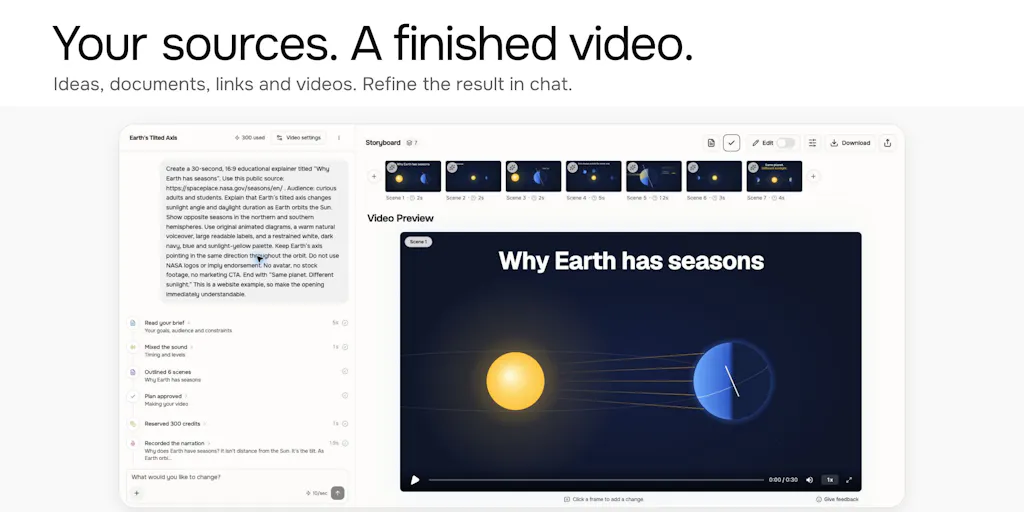
That’s the lens I read ngram’s new AI Explainer Video Maker through when it hit Product Hunt on May 13th, 2026. The maker, Rishikesh Ranjan, frames it simply: bring the material you want to explain, tell ngram who it’s for, choose how much detail to cover, and the tool generates script, narration, and animated scenes. For a cross-border seller drowning in listing assets, onboarding docs, and ad creative, that’s not a novelty. It’s a potential line item in the ops budget.
What ngram Actually Solves (And Why “Explainer Video” Is a Loaded Term)
Let’s strip the marketing language. The core workflow is: source material in (research paper, slide deck, product documentation, screen recording, even a text-heavy X thread via @askngram), audience and depth as parameters, video out. The output includes an AI-narrated script and animated scenes, and it runs on ngram’s existing plans and credits — meaning if you already have an ngram account, this isn’t a separate subscription.
The interesting design choice is the audience-and-depth parameter. As one commenter, Oleksii Sekundant, noted, “The same source material needs a different story for someone new to it.” The maker’s reply is the part worth underlining: “It should change the explanation itself, not just make the same script shorter.” That distinction matters enormously for cross-border work. A video explaining a product to a first-time US buyer is not the same video as one explaining the same product to a repeat customer in Japan who already knows the category. Most AI video tools treat length as a slider. ngram is at least claiming it treats framing as the variable.
Where This Sits Against the Incumbents
If you’ve shopped for video tooling in the last eighteen months, you’ve probably trialed Synthesia, HeyGen, Descript, or InVideo. The honest comparison:
- Synthesia and HeyGen are avatar-first. You get a talking head, often a very good one, but the burden of scripting and structuring the explanation is on you. They’re presentation tools.
- Descript is editing-first. Great if you already have footage; useless if you don’t.
- InVideo is template-first. Fast for social clips, weak on long-form explanation with narrative arc.
- ngram is material-first. You feed it a document and it produces the narrative. That’s a different job.
The closest overlap is actually with screen-recording walkthrough tools, which is why the maker’s framing around product updates makes sense. The pitch isn’t “make any video.” It’s “turn the thing you already wrote into the thing you never got around to recording.”
Why Amazon Sellers Should Care More Than Shopify Ones
This is where my judgment diverges from the Product Hunt comment thread, which was dominated by SaaS people talking about feature launches. For Shopify DTC brands, video is mostly a marketing asset — you need it for Meta ads and PDPs, and there are a hundred agencies who’ll produce it. The marginal value of a new tool is real but not existential.
For Amazon FBA sellers, the calculus is different. You’re operating inside a marketplace where A+ Content, Brand Story modules, and Sponsored Brands video are gated behind Brand Registry, and where the buyer’s decision window is brutally short. A one-minute explainer embedded in your A+ Content can move conversion in a way a static infographic cannot — and Amazon’s own video specs are forgiving enough that an AI-generated animated explainer with clean narration fits the format. The same asset can be repurposed for your TikTok Shop listing, your Etsy shop’s About section, and your eBay listing’s description. One input, four marketplaces. That’s the arbitrage.
What Cross-Border Operators Can Actually Borrow From This
The launch itself is less instructive than the workflow it implies. Here’s what I’d take from it, regardless of whether you ever sign up for ngram.
Treat Your Existing Docs as a Video Library Waiting to Happen
Most sellers are sitting on an untapped asset base: supplier spec sheets, internal SOPs, return-handling guides, compliance documentation, FAQ pages, and the long-form listing copy you spent weeks refining. Every one of those is a script draft. The ngram pitch — “turn a research paper into an explanation of its main findings, a training deck into a lesson for your team, or product documentation into a video for customers” — is a prompt to audit what you already have. Before you buy any tool, spend an afternoon listing every document you’ve written in the last year that a customer, VA, or wholesale partner has ever asked you to clarify. That list is your video backlog.
Audience-First Framing Is a Discipline, Not a Feature
The single most useful idea in the entire launch thread is the audience/depth parameter. Cross-border sellers chronically under-segment their messaging. The same product page tries to serve a bargain hunter and a premium buyer. The same onboarding email tries to serve a first-timer and a power user. If you adopt one habit from this tool’s design, make it this: before you write any asset — video, email, listing, ad — write down who it’s for and how much they already know. The maker’s claim that this “should change the explanation itself, not just make the same script shorter” is the correct standard. Test it against your own copy. If your “beginner” and “advanced” versions differ only in length, you haven’t segmented anything.
The GitHub Integration Points at a Bigger Pattern
The makers confirmed a GitHub integration is coming, with the stated goal of turning each pull request into an explainer video showing what changed — initially for internal teams, with customer-facing changelogs to follow. For cross-border sellers, the analog isn’t GitHub. It’s your product change log, your supplier update emails, your platform policy changes. Every time Amazon Seller Central changes a fee structure or Temu adjusts a compliance requirement, someone on your team has to explain it to everyone else. A workflow that auto-generates a short explainer from a written change note is genuinely useful — and it’s the kind of thing you could approximate today with a template and a tool like this.
Where My Judgment Says It Falls Short
I want to be fair to the makers, because the launch thread is unusually candid about limitations. But there are real gaps a cross-border operator needs to weigh.
The Accuracy Question Is Unanswered
Commenter Aryan Mehta asked the sharpest question in the thread: “How do you make sure the narrations and visuals stay accurate to the original materials?” No maker reply appears in the source. For a tool that turns a spec sheet into a customer-facing video, this is not a minor concern — it’s the whole ballgame. If ngram hallucinates a feature or misstates a material, you’ve shipped a compliance problem to four marketplaces at once. Until there’s a documented review workflow or a source-citation feature, I’d treat every output as a draft that a human must verify line by line. That’s still faster than recording from scratch, but it’s not the “set and forget” the launch copy implies.
The AI Avatar Trust Problem Is Real and Documented
Commenter Nika dropped the most operationally valuable observation in the thread: “When we used AI-created people, users churn. When we reduced AI, we had more conversions, trials successfully finished etc.” This is a warning worth taking seriously. Cross-border buyers are already primed to distrust unfamiliar brands. An obviously synthetic presenter can read as “this company is a dropshipper” — the exact association most FBA brand owners are trying to escape. The animated-scene approach ngram leads with may sidestep this better than avatar-first tools, but the risk is real. For trust-sensitive categories — supplements, baby products, anything with a safety claim — I’d lean toward narration-over-animation with no human face at all, or a real founder on camera.
The Positioning Is Genuinely Muddy
Commenter Liav Lewitt called it out directly: the main description centers on product updates, but the rest of the copy frames it as a general explainer-video generator. The maker conceded the point: “The descriptions could connect those dots more clearly.” For a buyer, this matters. Is this a tool for internal team communication, or a tool for customer-facing marketing assets? The workflows, review requirements, and quality bars are different. Until ngram picks a lane — or clearly documents both — you’re partly buying a promise.
The Sync Problem Is Acknowledged, Not Solved
Iman Koma’s question about keeping video in sync when product UI changes got a straight answer from the maker: “Today, you’d provide an updated recording when the UI changes.” That’s honest, but it means the “living video” idea is aspirational. If your product changes monthly, you’re regenerating monthly. Factor that into the cost math against a traditional editor.
What I’d Watch / Test Next
Three concrete moves for this week, in order of effort-to-payoff.
First, run a 48-hour audit. Pull every document your team has produced in the last six months that a customer, VA, or partner has asked you to clarify. Rank them by how often the question recurs. The top three are your pilot videos — and you can test ngram against them on existing credits if you already have an account, since the maker confirmed it “uses our existing plans and credits.”
Second, run a trust A/B on one live listing. Take one Amazon A+ module and swap in an animated explainer with narration but no human face. Watch conversion and return rate for two weeks. Then test a version with an avatar presenter. Nika’s churn observation suggests the second will underperform — but your category and audience may differ, and this is cheap to test.
Third, pressure-test accuracy before you scale. Take your most compliance-sensitive product and generate one explainer. Have someone who doesn’t know the product fact-check every claim against the source document. If the error rate is low, expand. If it’s high, you’ve learned something important before you shipped it to four marketplaces.
The tool is interesting. The workflow discipline it forces — audience, depth, source material — is more valuable than the tool itself. Watch the GitHub integration when it lands; that’s where the real cross-border use case, auto-explaining platform and supplier changes to your own team, will either prove out or fall flat.


